
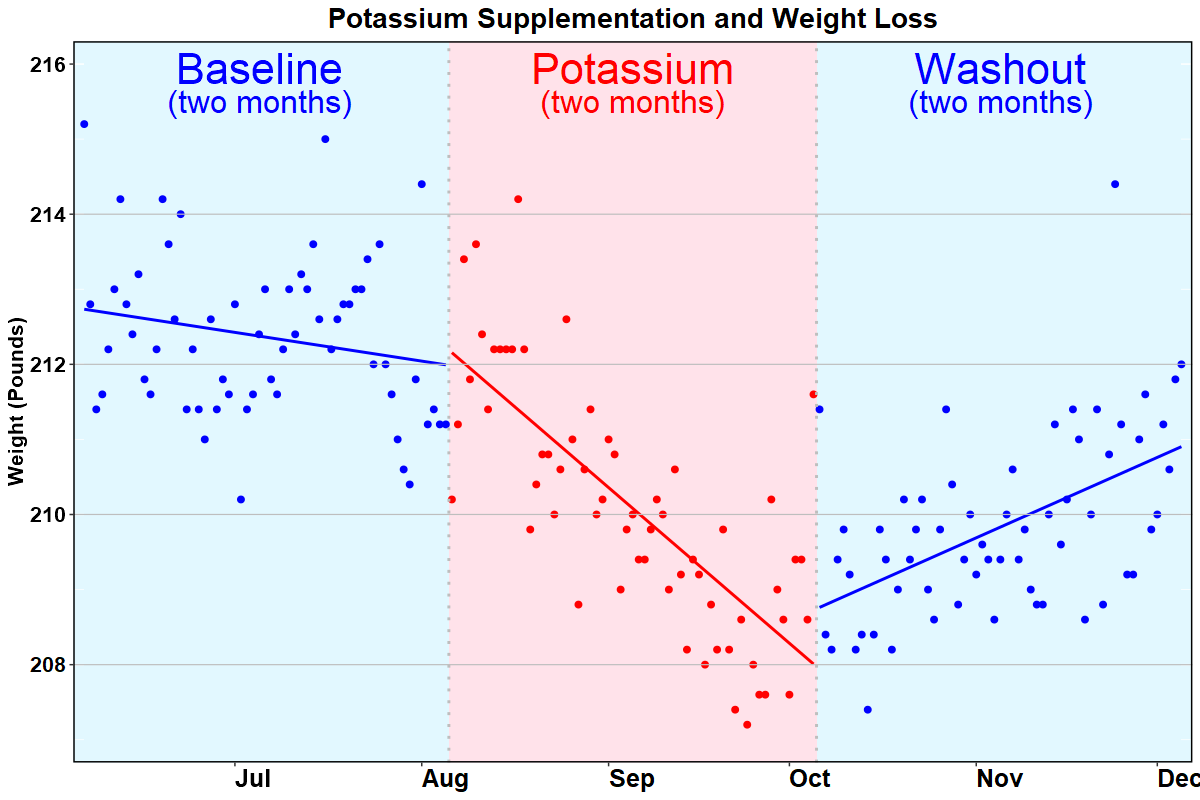
potassium-weight-loss.org — Alex Chernavsky conducts a N=1 study of potassium supplementation taking ~8000 mg of potassium a day for two months, loses about 4.2 lbs:
We Used To Eat A Lot More Without Becoming Obese by Sven Schnieders:
The mainstream theory regarding the obesity crisis is that people consume excessive calories and move insufficiently – “calories in, calories out.” Alternative nutritional perspectives, such as Keto and Veganism, challenge this narrative only to some extent. Keto proponents attribute obesity primarily to excessive carbohydrate intake, while vegan advocates point to excessive meat consumption. Despite divergences on the impact of specific food groups, there is a near-universal consensus on the overconsumption of sugar in modern diets.
A problem with all of these theories is that historically we used to eat a lot more – including a lot more carbs or sugar.
Unraveling the Mystery of San Francisco 7-Eleven Stores Selling Onigiri With the Mayor’s Face on Them. This was not a real program by the city of San Francisco — in fact, it was a project by Danielle Baskin to manifest 7-11 onigiri in America. Excellent scheme, we hope it works.
Victorians loved redwood trees and decided to plant them all over the UK. In fact, they planted so many that there are now more redwoods in the UK than in America. “The Victorians were so impressed that they brought seeds and seedlings from the US in such large numbers that there are now approximately 500,000 in Britain … [while] California has about 80,000.” Like most trees, redwoods start out small. But they do not end up small. At their full potential they would be about three times taller than any other species in the UK, and they have recently started to outgrow the surrounding native trees.
Seeds of Science — Doing the Science Ourselves
Newspapers and Thinking the Unthinkable:
There is one possible answer to the question “If the old model is broken, what will work in its place?” The answer is: Nothing will work, but everything might. Now is the time for experiments, lots and lots of experiments, each of which will seem as minor at launch as craigslist did, as Wikipedia did, as octavo volumes did.
…
Society doesn’t need newspapers. What we need is journalism. For a century, the imperatives to strengthen journalism and to strengthen newspapers have been so tightly wound as to be indistinguishable. That’s been a fine accident to have, but when that accident stops, as it is stopping before our eyes, we’re going to need lots of other ways to strengthen journalism instead.
When we shift our attention from ‘save newspapers’ to ‘save society’, the imperative changes from ‘preserve the current institutions’ to ‘do whatever works.’ And what works today isn’t the same as what used to work.
(Warning: Spiders) @abcdentminded: “Found this guy on youtube who intentionally gets bitten by black widows and brown recluses to prove that spiders are innocent and all necrotic wounds are just misdiagnoses or infections. He holds them against his skin to get several-second bites that deliver >x3 the normal venom load. I honestly believe him at this point.” Wild if true; obvious alternative explanations include 1) he’s built up some kind of an immunity, or 2) people’s bodies are different enough that some people can shrug off venomous spider bites and other people fucking die. The channel is Jack’s World of Wildlife, and is obviously not for the faint of heart.
Why are Americans getting shorter? Very strange, and holds true even among native born white Americans who are not seniors. Also notable, this is yet another thing that seems to influence women more than men:

Blogger @anabology starts longestlevers.com, a collection of “static protocols for dynamic lives”. See for example the page on the honey diet.
I wanted a diet where I could eat as much as I possibly could, as a fairly lean individual already, and still lose weight. This is my attempt at that. It seemed to work — eating 1 lb of honey + 1/2 pound of dates a day, I lost 10 lbs in a month or so, and my bloodwork just got better.
Benefits I experienced: – I ate as much as I could and still lost weight. – My cortisol and estrogen both went down. My DHEA went up. Blood biomarkers generally looked better. – Never had so few migraines. – Good constant energy and mental clarity.
Drawbacks: – Honey was not very tasty. If I did it again, I’d diversify with more simple sugary fruits. – Near the end, I was committed on the “1 lb of honey a day” thing, and some days I had a lower appetite due to lack of sleep from work. I still forced myself to eat all the honey, but if I did it again, I would never force myself to eat when I’m not hungry. Just not worth it from the insulin perspective.
There is way too much serendipity — “It is therefore a fact of the world that virtually all the popular synthetic sweeteners were discovered accidentally by chemists randomly eating their research topic.”
Ars Technica — Surprising link found between niacin and risk of heart attack and stroke
Object permanence in newborn chicks is robust against opposing evidence:
Newborn animals have advanced perceptual skills at birth, but the nature of this initial knowledge is unknown. Is initial knowledge flexible, continuously adapting to the statistics of experience? Or can initial knowledge be rigid and robust to change, even in the face of opposing evidence? We address this question through controlled-rearing experiments on newborn chicks. First, we reared chicks in an impoverished virtual world, where objects never occluded one another, and found that chicks still succeed on object permanence tasks. Second, we reared chicks in a virtual world in which objects teleported from one location to another while out of view: an unnatural event that violates the continuity of object motion. Despite seeing thousands of these violations of object permanence, and not a single non-violation, the chicks behaved as if object permanence were true, exhibiting the same behavior as chicks reared with natural object permanence events. We conclude that object permanence develops prenatally and is robust to change from opposing evidence.
 SLIME MOLD TIME MOLD
A response to the niacin study. My scientist friend is the first author on the response. He has done many research experiments with niacin over the years.
http://www.orthomolecular.org/resources/omns/v20n03.shtml
Sent from Proton Mail for iOS
LikeLike