
[PROLOGUE – EVERYBODY WANTS A ROCK]
[PART I – THERMOSTAT]
[PART II – MOTIVATION]
[PART III – PERSONALITY AND INDIVIDUAL DIFFERENCES]
[PART IV – LEARNING]
[PART V – DEPRESSION AND OTHER DIAGNOSES]
[PART VI – CONFLICT AND OSCILLATION]
[PART VII – NO REALLY, SERIOUSLY, WHAT IS GOING ON?]
In 1796, Astronomer Royal Nevil Maskelyne noticed that his layabout assistant, David Kinnebrook, was getting measurements of celestial events that were a whole half-second different from his own. Maskelyne told Kinnebrook he had better shape up, but this didn’t help — Kinnebrook’s errors increased to around 8/10 of a second, so Maskelyne fired him.
Later astronomers looked into this more closely and discovered that there was actually nothing wrong with poor Kinnebrook. The issue is that people all have slightly different reaction times. When a star passes in front of a wire, it takes you some very small amount of time to react and record your observation. So when different people look at the same celestial event, they get slightly different results. You might even say that the fault is not in our stars, but in ourselves.
More importantly, these differences aren’t random. Kinnebrook’s measurements were always slightly later than Maskelyne’s, and always later by about the same amount. This is a consistent and personal bias, so they came up with the term “personal equation” to describe these differences.
As astronomers learned to measure these personal equations with more and more accuracy, they found that people can’t distinguish anything less than 0.10 seconds, which eventually spiraled into what has been called the tenth-of-a-second crisis. Further investigation of this effect, combined with similar research in physiology and statistics, eventually led to the invention of a new field: psychology.

The personal equation is frequently mentioned in psychology from the 19th and early 20th century. Edwin G. Boring devoted an entire chapter of his 1929 book to the personal equation, the story of which, he said, “every psychologist knows”. Even as late as 1961, he was writing about “the sacred 0.10 sec.”
Or take a look at this passage from the introduction of Hugo Münsterberg’s 1908 book, Essays on Psychology and Crime. He says:
Experimental psychology did not even start with experiments of its own; it rather took its problems at first from the neighbouring sciences. There was the physiologist or the physician who made careful experiments on the functions of the eye and the ear and the skin and the muscles, and who got in this way somewhat as by-products interesting experimental results on seeing and hearing and touching and acting; and yet all these by-products evidently had psychological importance. Or there was the physicist who had to make experiments to find out how far our human senses can furnish us an exact knowledge of the outer world; and again his results could not but be of importance for the psychology of perception. Or there was perhaps the astronomer who was bothered with his “personal equation,” as he was alarmed to find that it took different astronomers different times to register the passing of a star. The astronomers had, therefore, in the interest of their calculations, to make experiments to find out with what rapidity an impression is noticed and reacted upon. But this again was an experimental result which evidently concerned, first of all, the student of mental life.
All three of these examples, including the personal equation, are about perception — physiologists studying the sense organs, and physicists studying the limits of those senses. Given this foundation, it will come as no surprise to hear that for most of its history, psychology’s main focus has been perception. Even in the early days of psychology, perception was baked in.
This was most obvious in the earliest forms of psychology. In 1898, E. Bradford Titchener wrote a paper describing the layout of his psychology lab at Cornell. This lab not only had a room for optics, but separate rooms also for acoustics, haptics, and one “taste and smell room”. Olfactometry does not come up much in modern psychology, but the Cornell psychologists of the 1890s had an entire room dedicated to it:
Room 1, the ‘optics room,’ is a large room, lighted from three sides, with walls and ceiling painted a cream. Room 2, intended for the private room of the laboratory assistants, now serves the purposes to which room 12 will ultimately be put. Room 3 is the ‘acoustics,’ room 4 the ‘haptics room.’ Room 5 is a dark room employed for drill-work, demonstration and photography. Room 6 is the ‘work,’ and room 7 the ‘lecture-room’. Room 8 is the director’s private room ; room 9 the ‘reaction,’ and room 10 the ‘taste and smell room’. Room 11, which faces north, will be fitted up as a research dark room; room 12 will be furnished with the instruments used in the investigation of the physiological processes underlying affective consciousness, —pulse, respiration, volume and muscular tone.
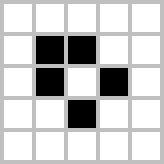
Even today, the closest thing to a true law of psychology is the Weber-Fechner law, about the minimum possible change needed to be able to distinguish between two similar stimuli; in other words, about perception. And the most impressive artifacts of psychology are still visual illusions like this one:

During the cognitive revolution, a lot of sacred cows were tipped, but not perception. Instead, perception was reaffirmed as the absolute main topic of psychological study. Ulric Neisser’s 1967 book Cognitive Psychology consists of:
- One introductory chapter, titled “The Cognitive Approach”
- Five chapters on visual processes
- Four chapters on hearing
- And one last chapter, about which he says: “The final chapter on memory and thought is essentially an epilogue, different in structure from the rest of the book.”
That’s it!
In a footnote, Neisser apologizes… for not covering the other senses. “Sense modalities other than vision and hearing are largely ignored in this book,” he says, “because so little is known about the cognitive processing involved.” But he doesn’t apologize for skipping over nearly every other aspect of psychology, which seems like a stunning omission.
At least Neisser is self-aware about this. He makes it very clear that he knows many different directions psychology could take, and that he is picking this one, cognition, over all the others. It’s just that he is fully committed to the promise of the cognitive approach, and that means he’s fully committed to the idea that perception should hold center stage — not just top billing, but to the point of excluding other parts of psychology.
Even given psychology’s previous hundred years of focus on perception, this was a pretty radical position. Titchener would probably be scandalized that Neisser didn’t include a chapter on taste and smell.
But the most surprising omission of all might be “individual differences”, the psychologist’s fancy term for personality. Because once upon a time, personality was almost as central to psychology as perception was.
Recall that the personal equation, one of the problems that kicked off psychology in the first place, was itself an idea about individual differences — every individual had a personal difference in their reaction times when looking at the celestial spheres. You can’t have a personal equation without individual differences, so as much as the personal equation came with an interest in the laws of perception, it also came with a committed interest in personality.
Almost as old as the personal equation is the idea of mental tests. Most of the credit and the blame for these goes to Sir Francis Galton. After hearing about the theory of evolution from his cousin, Charles Darwin, Galton started wondering if mental traits ran in families. He became obsessed with measuring differences in people’s minds and bodies, and these ideas directly led to the invention of IQ tests (and also eugenics). These unpleasant grandchildren aside, for a long time mental tests were a really central part of psychology. Until one day they weren’t.
Neisser does offer a defense of his position in the last chapter of his book. We think the final paragraph is especially interesting, where he says:
It is no accident that the cognitive approach gives us no way to know what the subject will think of next. We cannot possibly know this, unless we have a detailed understanding of what he is trying to do, and why. For this reason, a really satisfactory theory of the higher mental processes can only come into being when we also have theories of motivation, personality, and social interaction. The study of cognition is only one fraction of psychology, and it cannot stand alone.
Cybernetics
Norbert Wiener coined the term “cybernetics” in the summer of 1947, but for the full story, we have to go much further back.
Wiener places the earliest origins of these ideas with the 17th century German polymath Gottfried Wilhelm Leibniz. “If I were to choose a patron saint for cybernetics out of the history of science,” Wiener wrote in the introduction to his book, “I should have to choose Leibniz. The philosophy of Leibniz centers about two closely related concepts—that of a universal symbolism and that of a calculus of reasoning. From these are descended the mathematical notation and the symbolic logic of the present day.”
Simple control systems have been in use for more than two thousand years, but things really picked up when Leibniz’ early math tutor, Christiaan Huygens, derived the laws for centrifugal force and invented an early centrifugal governor.
Over the centuries people slowly made improvements to Huygens’ design, most notably James Watt, who added one to his steam engine. These systems caught the attention of James Clerk Maxwell, who in 1868 wrote a paper titled “On Governors”, where he explained instabilities exhibited by the flyball governor by modeling it as a control system.
When explaining why he chose to call his new field “cybernetics”, Wiener wrote, “in choosing this term, we wish to recognize that the first significant paper on feedback mechanisms is an article on governors, which was published by Clerk Maxwell in 1868, and that governor is derived from a Latin corruption of κυβερνήτης.”
Using this background, Norbert Wiener and Arturo Rosenblueth sat down and made the field explicit in the 1940s, and gave it a name. Then in 1948 Wiener published his book Cybernetics: Or Control and Communication in the Animal and the Machine, and the field went public.
The new field went in a number of directions, many of them unproductive, but the one most important to us today is the direction taken up by a certain William T. Powers.
Loop Me In
Psychology and cybernetics were making eyes at each other across the room from the very start. “The need of including psychologists had indeed been obvious from the beginning,” wrote Wiener. “He who studies the nervous system cannot forget the mind, and he who studies the mind cannot forget the nervous system.” And the psychologists returned Wiener’s affections: Kurt Lewin, one of the founders of modern social psychology, attended the first “Macy Conference” on cybernetics, all the way back in 1946, before it was even called cybernetics, and Weiner mentions Lewin (and some other psychologists) by name in his book.
But in the 1940s and 1950s, psychologists felt they were doing pretty all right. Lewin and the social psychologists were a relatively small slice of psychology, the minority faction by far, and their interest didn’t carry much weight. Cybernetics might be nice to flirt with at the party, but there was no real chance of inviting it home.
But fast forward to the 1970s, and psychology was in crisis. For a long time psychology had been ruled by behaviorism, a paradigm which took the stance that while behavior could be studied scientifically, the idea of studying thoughts or mental states was wooly nonsense. Mental states like thoughts and feelings were certainly unworthy of study, and possibly didn’t exist.
Behaviorists also thought that animals are born without anything at all in their brains — that the mind at birth is a blank slate, and that everything an animal learns to do comes from pure stimulus-response learning built up over time.
Behaviorism seemed like a sure bet in the 1920s, but those assumptions were looking more and more shaky every day. People had discovered that animals did seem to have inborn tendencies to associate some things with other things. They learned that you could make reasonable inferences about mental states. And the invention of the digital computer made the study of mental states seem much more scientific. The old king was dying, and no one could agree who was rightful heir to the throne.

The son of a “well-known cement scientist”, William T. Powers wasn’t even a psychologist. His training was in physics and astronomy. But while working at a cancer research hospital, and later while designing astronomy equipment, Powers started pulling different threads together and eventually came up with his own very electrical-engineering-inspired paradigm for psychology, which he called Perceptual Control Theory.
In 1973 Powers published both a book and an article in Science about his ideas. While Powers was obviously an outsider, psychologists took this work seriously. Even in the 1970s, fringe ideas didn’t get published in a journal as big as Science — Powers and his arguments were mainstream, at least for a little while.
Psychologists really thought that cybernetics might be one of the ways forward. Stanley Milgram, who did the famous experiments on obedience to authority — the ones where participants thought they might be delivering lethal electric shocks to a man with a heart condition, but mostly kept increasing the voltage when politely asked to continue — even includes a brief section on cybernetics in his 1974 book about those studies. “While these somewhat general [cybernetic] principles may seem far removed from the behavior of participants in the experiment,” he says, “I am convinced that they are very much at the root of the behavior in question.”
And Thomas Kuhn himself, the greatest authority on crisis and revolution in science (he did write the book on it), wrote a glowing review of Powers’ book, saying:
Powers’ manuscript, “Behavior: The Control of Perception”, is among the most exciting I have read in some time. The problems are of vast importance, and not only to psychologists; the achieved synthesis is thoroughly original and the presentation is often convincing and almost invariably suggestive. I shall be watching with interest what happens in the directions in which Powers points.
But there were a few problems.
The first is that Powers’ work, especially his 1973 Science article, doesn’t exactly make the case that cybernetics is a good way of thinking about psychology. It’s more of an argument that cybernetics is better than behaviorism. The paper is filled with beautiful and specific arguments, but they’re arguments against the behaviorist paradigm. The article is even titled, Feedback: Beyond Behaviorism.
You can see why Powers would frame things this way. As far as he could tell, behaviorism was the system to beat, and his arguments against behaviorism really are compelling.
Unfortunately, by 1973 behaviorism was already on its way out. Six years before, in 1967, Ulric Neisser wrote:
A generation ago, a book like this one would have needed at least a chapter of self-defense against the behaviorist position. Today, happily, the climate of opinion has changed, and little or no defense is necessary. Indeed, stimulus-response theorists themselves are inventing hypothetical mechanisms with vigor and enthusiasm and only faint twinges of conscience.
Powers’ work arrived early enough that psychologists were still interested in what he had to say. They still felt that their field was in crisis, they were still looking around for new tools and new perspectives. They were still willing to publish his paper, and everybody read his book.
But it came late enough in the crisis that there was strong competition. New schools of thought were already mustering their forces, already had serious claims to the throne. People were already picking sides. And most people were already picking cognitive psychology.
It’s not entirely clear exactly why cognitive psychology won, but there are a few things that made its claim especially strong. For one, some of the strongest evidence against behaviorism came from an information theory angle, and this looked really good for cognitive psychology, which proposed that we think of the mind in terms of how it handles and transforms information.
Maybe most importantly, the metaphor of the digital computer promised to provide the objectivity that behaviorism was never able to deliver. Whatever else might be going on in human minds, computers definitely exist, they can add and subtract, and that looks a lot like thinking! Cognitive psychology eventually won out.

Another problem is that cybernetics is what they call “dynamic”. This is a distinction people don’t usually make any more, but Ulric Neisser gives this definition:
Dynamic psychology, which begins with motives rather than with sensory input, is a case in point. Instead of asking how a man’s actions and experiences result from what he saw, remembered, or believed, the dynamic psychologist asks how they follow from the subject’s goals, needs, or instincts.
Cybernetics makes for a dynamic school of psychology because, however you slice it, control systems are always about getting signals back in alignment, so they’re always about goals (what’s the target value) and needs (which signals are controlled). If you think about psychology in terms of control systems, whatever you come up with is going to be dynamic.
Dynamic theories were very popular in the first half of the 20th century, but they ended up falling out of favor in the back half. Again, we’re not entirely sure why this happened the way it did, but we can provide some reasonable speculation.
The most famous dynamic school of psychology is Freudian psychodynamic therapy. If you’ve ever wondered, this is why it has “dynamic” in the name, because it’s a paradigm that focuses on how people are motivated by drives and/or needs. Freudians originally saw all behavior as motivated by libido, the sex or pleasure principle. But later on they added a second drive or set of drives called mortido, the drive for death.

Most schools of psychology are more dynamic than they would like to admit — even behaviorism. Sure, behaviorists had an extremely reductive understanding of drives (mostly “reward” and “punishment”), but at their heart they were a dynamic school too. Reward and punishment are a theory of motivation; it’s only one drive, but it’s right there, and central to the paradigm. And behaviorists did sometimes admit other drives, most blatantly in Clark Hull’s drive reduction theory, which allowed for drives like thirst and hunger.
Behaviorists have to accept some kind of dynamics because they assume that reward and punishment are behind all behavior, except perhaps the most instinctual. Even if they didn’t tend to think of this as a drive, it’s clearly the motive force that behaviorists used to explain all behavior — organisms are maximizing reward and minimizing punishment.
(In a totally different kind of problem, dynamic psychology is always a bit risky because it’s inherently annoying to speculate about someone’s motives. The Freudians really ran afoul of this one.)
The point is, by the time William Powers was arguing for cybernetics, dynamic psychology was on the downswing. Its reputation was tainted by the Freudians, and maybe it also smelled a bit too much like the behaviorists, with their focus on reward and punishment. This might be another reason why cybernetics was passed over in favor of something that seemed a bit more fresh and promising.
It’s not like people hated cybernetics, but it’s interesting to see how conscious the decision was. Near the end of his book, Neisser says:
An analogy to the “executive routines” of computer programs shows that an agent need not be a homunculus. However, it is clear that motivation enters at several points in these processes to determine their outcome. Thus, an integration of cognitive and dynamic psychology is necessary to the understanding of the higher mental processes.
But the rest of cognitive psychology did not inherit this understanding, and this integration was never carried out; as far as we know it was never even attempted. In any case, dynamic paradigms were out.
Other schools like social psychology, neuroscience, and psychiatry kept going with what they were doing, since they were not seen to be in crisis, and they gained more sway as behaviorism fell apart. Or perhaps a better read on things is that the ground previously held by behaviorism was partitioned, with cognitive psychology gaining the most, social psychologists also receiving a large chunk, clinical psychologists gaining some, etc. Cybernetics received none, and fell into obscurity.
Or possibly it was diluted into a vague branch of the humanities. The full title of Wiener’s book was Cybernetics: Or Control and Communication in the Animal and the Machine. Some anthropologists may have taken the “communication” part too seriously — they started using the term more and more vaguely, until eventually they used it to refer to anything at all involving communication, which is probably where the internet got the vague epithet of “cyberspace”.
Today, psychology generally acts as though drives do not exist. If you look in your textbook you will usually see a brief mention of drives, but they’re not a priority. For example, one psychology textbook says,
All organisms are born with some motivations and acquire others through experience, but calling these motivations “instincts” describes them without explaining how they operate. Drive-reduction theory explains how they operate by suggesting that disequilibrium of the body produces drives that organisms are motivated to reduce.
But the very next sentence concludes:
Neither instinct nor drive are widely used concepts in modern psychology, but both have something useful to teach us.
The subtext in today’s psychology is that there is only one real drive, with two poles, reward and punishment. When psychologists explicitly name this assumption, they call it “the hedonic principle”. Despite any lip service paid to other drives, simple hedonism is the theory of motivation that psychologists actually use.
A cruel irony is that modern cognitive psychology, as far as we can tell, inherited this theory of motivation directly from behaviorism. This is just good ‘ol reward and punishment. Even though they held the cognitive revolution to throw out behaviorism and replace it with something new, they weren’t able to disinherit themselves of some of the sneakier assumptions.
The other funny thing is that when outsiders come up with their own version of psychology, they usually end up including drives. Our favorite example continues to be The Sims. To get somewhat realistic behavior out of their Sims, Maxis had to give them several different drives, so they did. Even psychologists can’t help inventing new drives by accident. If you hang around psychology long enough, you’ll run into various “need for whatever” scales, like the famous need for cognition.
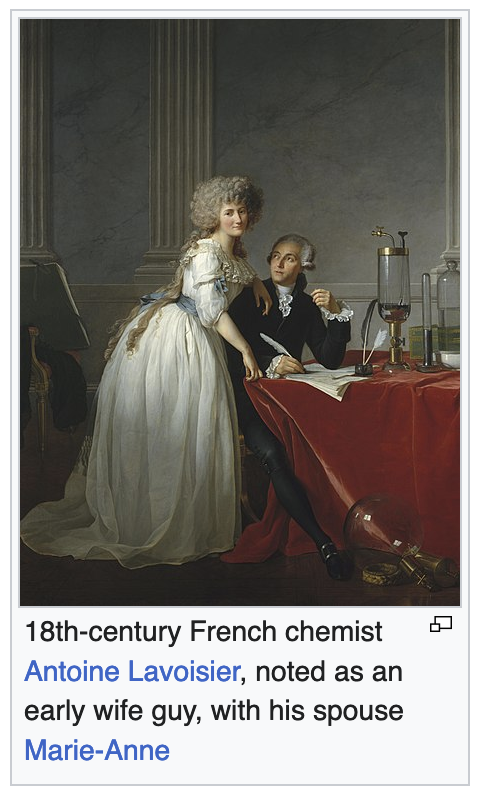
This reminds us a lot of what happened in alchemy. Alchemists were supposed to believe in air, fire, water, and earth, and explain the world in terms of those four elements. But belief in four elements was impossible, and the alchemists told on themselves, because they couldn’t stop inventing new ones. In the preface to his book on chemistry, Lavosier says (emphasis added):
The notion of four elements, which, by the variety of their proportions, compose all the known substances in nature, is a mere hypothesis, assumed long before the first principles of experimental philosophy or of chemistry had any existence. In those days, without possessing facts, they framed systems; while we, who have collected facts, seem determined to reject them, when they do not agree with our prejudices. The authority of these fathers of human philosophy still carry great weight, and there is reason to fear that it will even bear hard upon generations yet to come.
It is very remarkable, that, notwithstanding of the number of philosophical chemists who have supported the doctrine of the four elements, there is not one who has not been led by the evidence of facts to admit a greater number of elements into their theory. The first chemists that wrote after the revival of letters, considered sulphur and salt as elementary substances entering into the composition of a great number of substances; hence, instead of four, they admitted the existence of six elements. Beccher assumes the existence of three kinds of earth, from the combination of which, in different proportions, he supposed all the varieties of metallic substances to be produced.
So likewise, notwithstanding the number of psychologists who have supported the doctrine of reward and punishment, there is not one who has not been led by the evidence of facts to admit a greater number of drives into their theory.
Let’s not beat around the bush. This series is an attempt to introduce a new cybernetic paradigm for psychology, and cause a scientific revolution, just like the ones they had in chemistry and astronomy and physics, just like Thomas Kuhn talked about.
We think that cybernetics will allow an angle of attack on many problems in psychology, and we’re going to do our best to make that case. For example, one of psychology’s biggest hidden commitments is that for most of its history, it has focused on perception, sometimes to the exclusion of everything else. But perception may not be the right way to approach the study of the mind. Problems that remain unsolved for a long time should always be suspected as questions asked in the wrong way.
Cybernetics benefits because it doesn’t have such a strong commitment to perception — instead, it’s dynamic. The fact that dynamics is so different from the perception-based approach that has dominated psychology for most of the 200 years it’s been around seems like reason for optimism.
A lot of what we have to say about cybernetics comes from cyberneticists, especially Wiener and Powers. Some of what we say about psychological drives comes from earlier drive theorists. And some of what we think of as original will probably in fact turn out to be reinventing the wheel. Finally, everything we say comes from treating previous psychology as some mix of thesis, antithesis, and synthesis.
To most psychologists, asking “what emotions do rats have?” would be rather vague. But to a cybernetic psychologist, it makes perfect sense. It also makes sense to ask, “what emotions do rats and humans have in common?” From a cybernetic standpoint, there’s probably a precise answer to such questions.
Some of these questions may be disturbing in new and exciting ways. Are fish thirsty? Again, there may be a precise answer to this question.
There is something new in this work, but it’s also contiguous. We don’t want this to come across as though we’re saying this is unprecedented; this is all firmly grounded in historical traditions, it’s all inspired by things that have come before.
[Next: ARTIFICIAL INTELLIGENCE]













 SLIME MOLD TIME MOLD