
[PROLOGUE – EVERYBODY WANTS A ROCK]
When the hands that operate the motor lose control of the lever;
When the mind of its own in the wheel puts two and two together…— Thermostat, They Might Be Giants
There are lots of ways to die.
To avoid biting the dust, lots of things need to be juuuust right. If you get too hot or too cold, you die. If you don’t eat enough food, you die. But if you eat too much food, you also die. If you produce too much blood, or too little blood, if you [other thing], if you [third thing], dead dead dead.
It’s a miracle that organisms pull this off. How do they do it? Easy: they make thermostats.
Go to Zero
A thermostat is a simple control system.
Thermostats are designed to keep your house at a certain temperature. You don’t want the house to get much hotter than the target temperature, and you don’t want it to get much colder.
To make this happen, the thermostat is designed to drive the temperature of the house towards the target. If you’re not too allergic to anthropomorphism, we can say that the goal of the thermostat is to keep the house at that temperature. Or we can describe it as a control system, and say that the thermostat is designed to control the temperature of the house, keeping it as close to the target as possible.
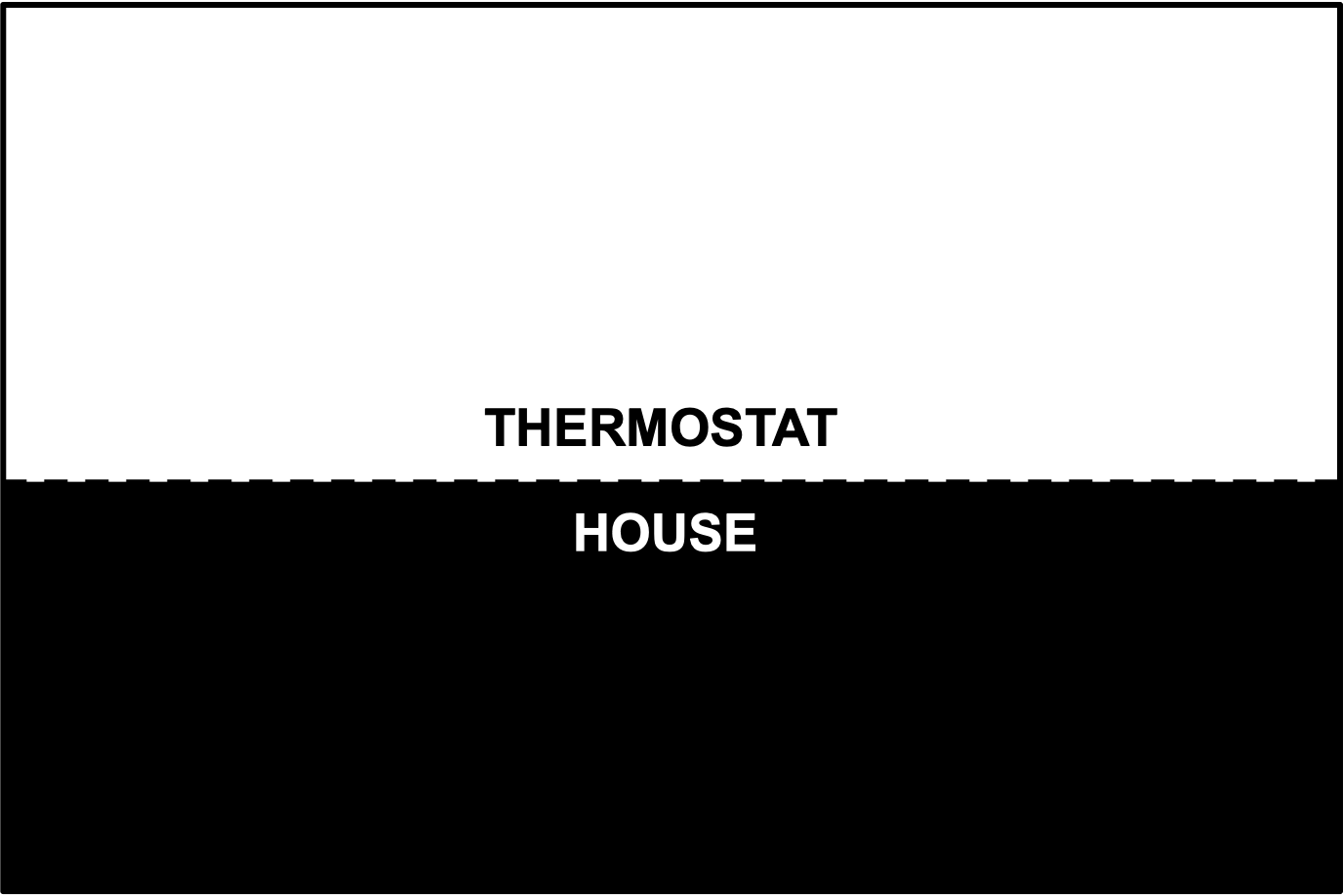
The basic idea is simple. We divide the world into the inside of the thermostat and the outside of the thermostat, like so:
To begin with, we need some kind of sensor (sometimes called an input function) that can read the temperature of the house and communicate that information to the inside of the thermostat.
Some sensors are better than others, but it doesn’t really matter. As long as the sensor can get a rough sense of the temperature of the house and transport that information to the guts of the device, the thermostat should be able to do its job.
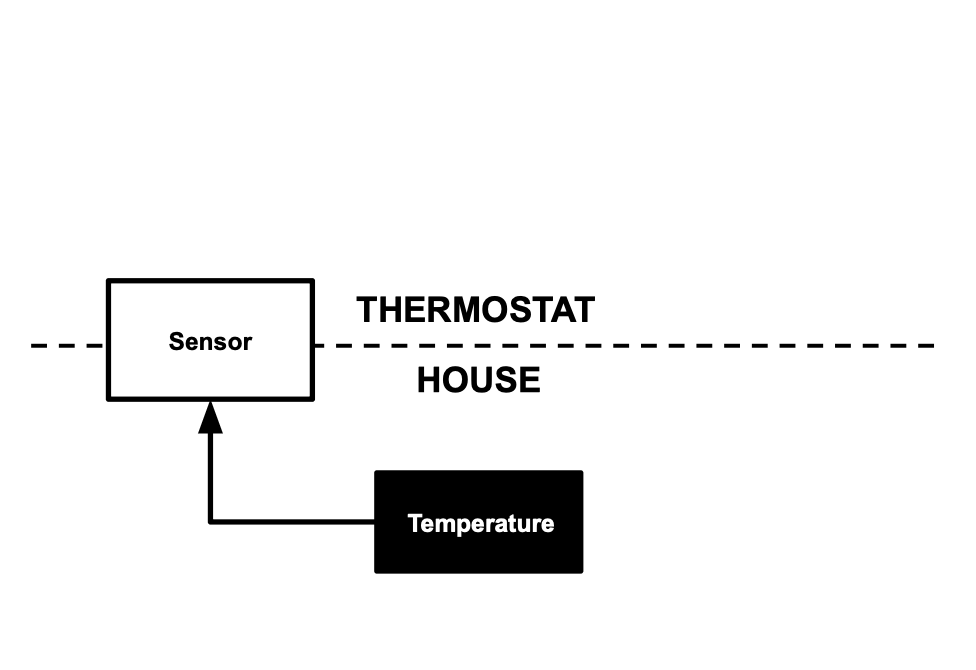
The sensor is a part of the thermostat, so we color-code it white, but it interacts with the outside world, so the box sticks a little bit out into the house.
The sensor creates a signal that we call a perception. In this case, the sensor perceives that the house is 68 degrees Fahrenheit.
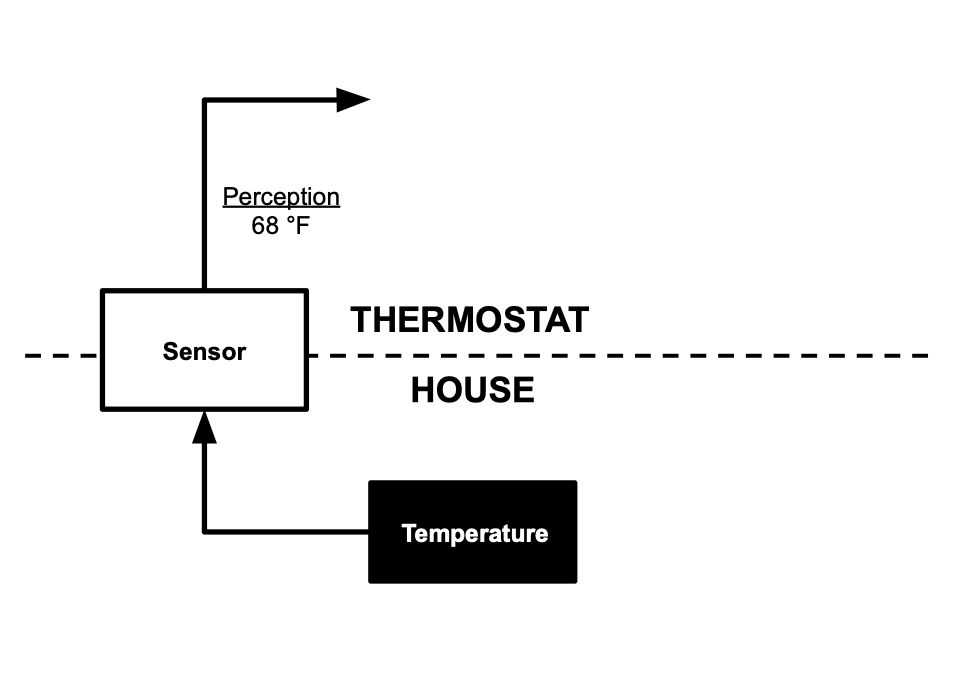
The sensor can be very simple, like a thermometer that measures the temperature at one spot in the house. Or it can be very complicated — for example, a network of different kinds of sensors all throughout the house, feeding into a complex algorithm that references and weighs each one, providing some kind of statistical average.
The important thing is that the sensor generates a perception of the thing it’s trying to measure, the signal the control system is aiming to control. In this case, the sensor is trying to get an estimate of the temperature in the house, and it has sensed that the temperature is about 68 ºF.
The thermostat also needs a part that can interpret the signal coming in from the sensor. This part of the thermostat is usually called the comparator.
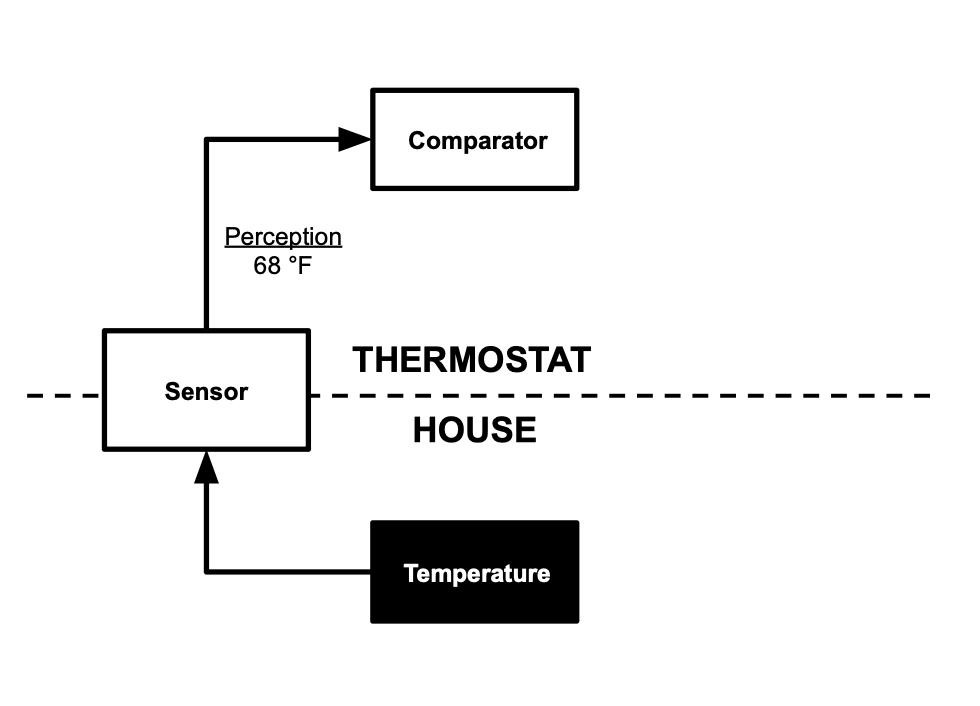
We call this part the comparator because its main job is to compare the temperature perception coming from the sensor to the target temperature for the house. To compare these two things, the thermostat needs to know the target temperature. So let’s add a set point.
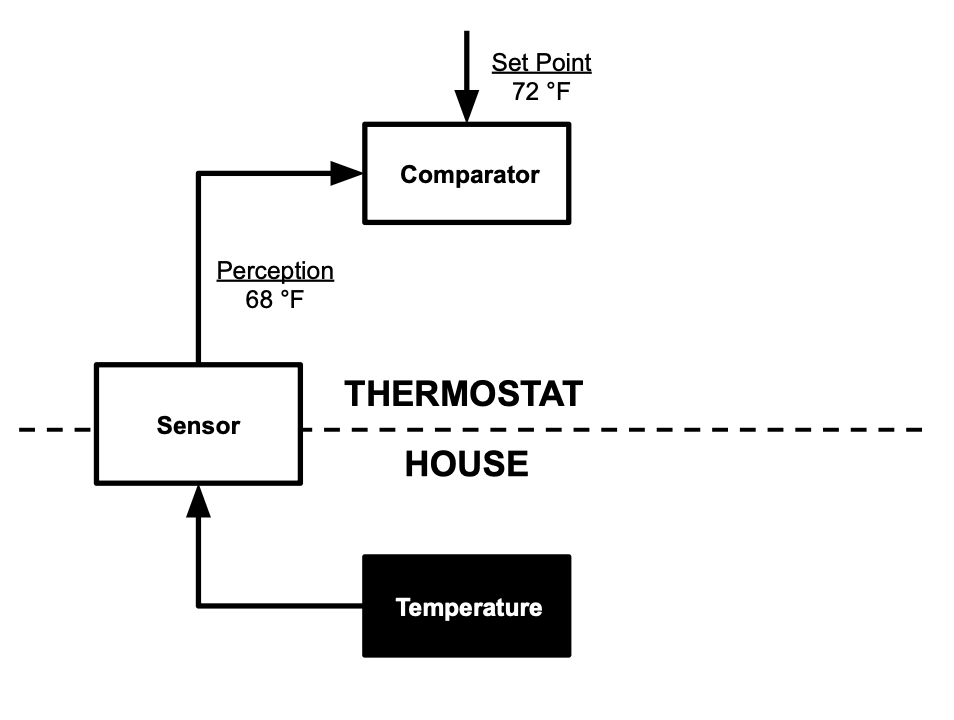
The target is set by a human, and in this case we can see that they set it to 72 °F. So the set point for the thermostat is 72 °F.
If the set point is 72 °F and the sensor detects a temperature of 72 °F, the thermostat doesn’t need to do anything. Everything is all good. When the perception from the sensor is the same as the set point, then assuming the sensor is working correctly, the house is the correct temperature. There is a difference of 0 °F.
But sometimes everything is not all good. Sometimes the set point is 72 °F but the sensor is only reading 68 °F, like it is here.
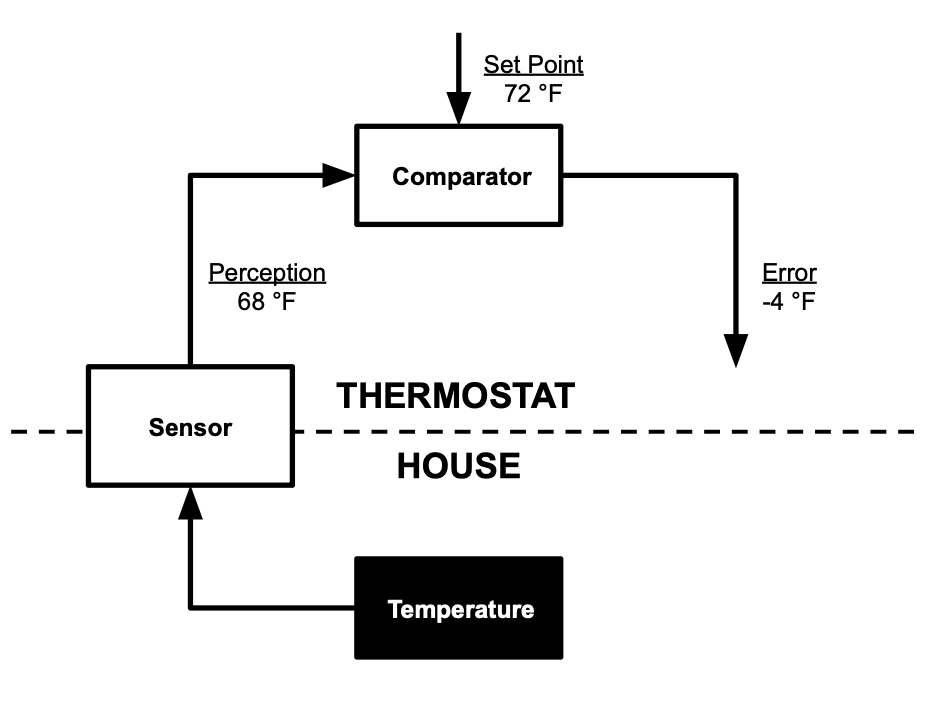
In this case, the comparator compares the set point (72 °F) to the perception (68 °F) and finds that there is a difference of -4 °F. The perception of the house’s temperature is four degrees colder than the target, so the house itself is about four degrees colder than we want it to be.
Having done this math, the comparator creates an error signal, which is simply the difference between the perception and the set point. If there’s no difference between the perception and the set point, then the error signal will be zero, i.e. no difference at all. If the error is zero, the thermostat doesn’t need to do anything. But in this case, the difference between the perception and the set point is -4 °F, so the error signal is -4 °F too.
For the thermostat to do its job, we need to close the loop. The final thing the thermostat needs is some way of influencing the outside world. This is often called the output function or the control element, which is the name we will use here:
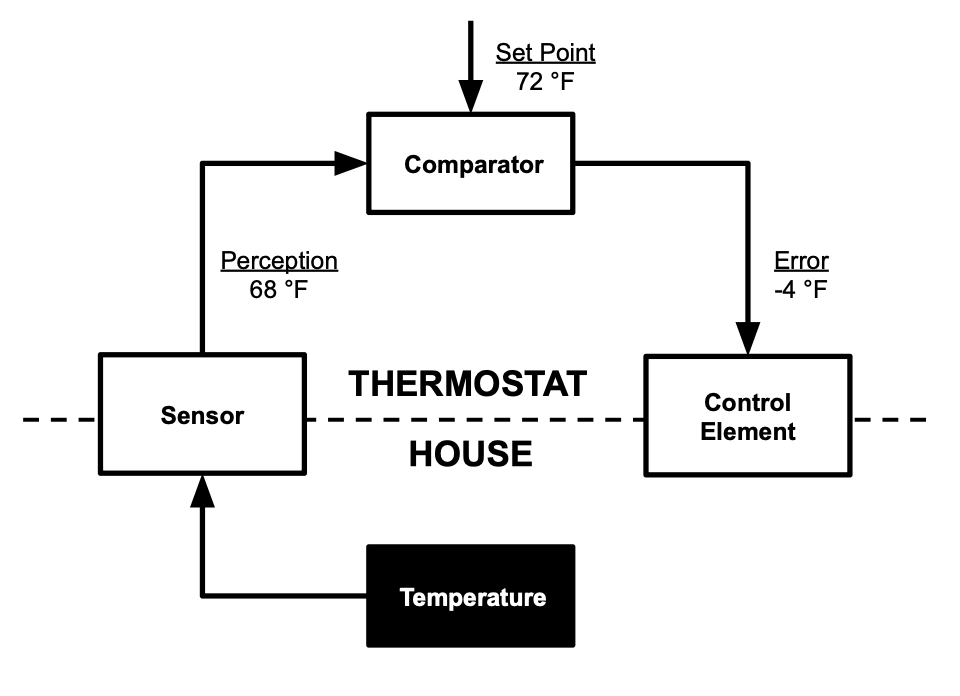
Like the sensor, the control element sticks out into the exterior world, to indicate that it can interact with things outside the thermostat.
But you’ll notice that the loop is still not closed. The control element needs ways to influence the outside world.
A really simple thermostat might have only one way to influence things — it might only be able to turn on the furnace, which will raise the temperature:
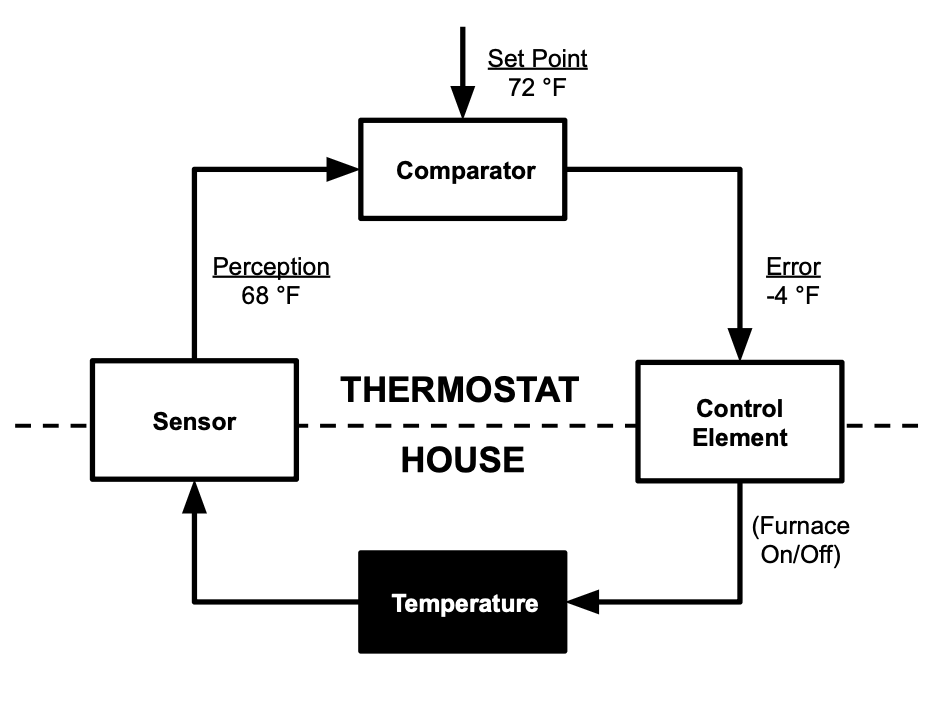
But this is a pretty basic thermostat. It can’t control how hot the furnace is running, it can only turn it on or off.
It will do better if we give it more options. We can improve this thermostat by installing three settings for the furnace, like so:
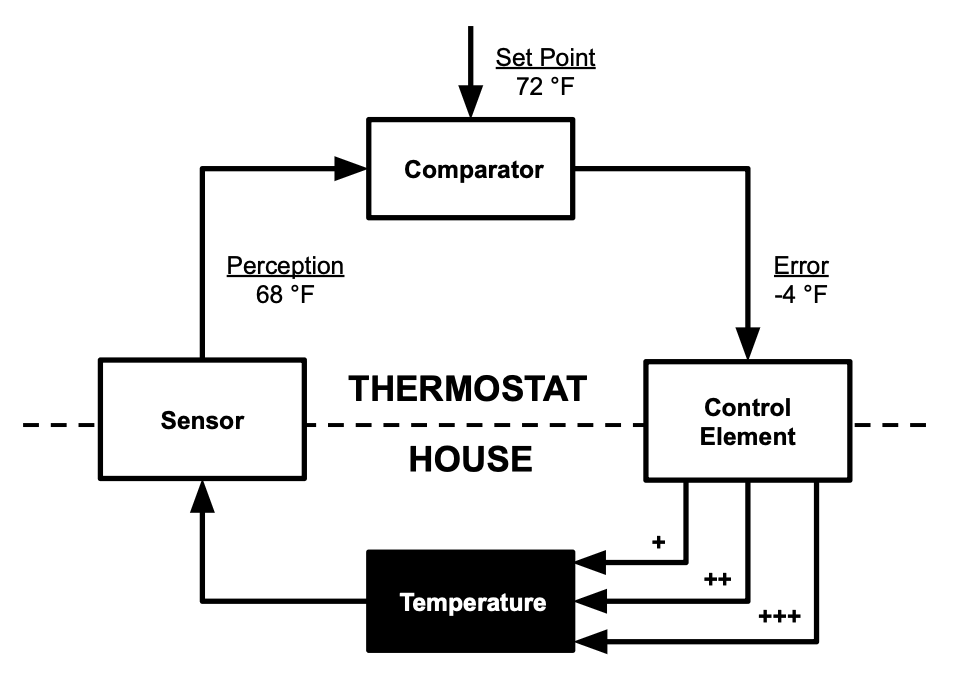
This is much better. If the house is just a little cold, the control element can turn on the lowest furnace setting. This will keep the thermostat from overshooting the set point and sending the temperature above 72 °F. But if the house is freezing, it can turn on the turbo setting, and drive it to the set point much more quickly.
But there’s still a problem: our poor thermostat still has no way to lower the temperature. If the house goes above 72 °F, it can’t do a thing. The temperature will go above the set point and stay there until it comes down on its own; the thermostat is powerless.
This is unacceptable. But we can fix this problem by giving the thermostat access to air conditioning:
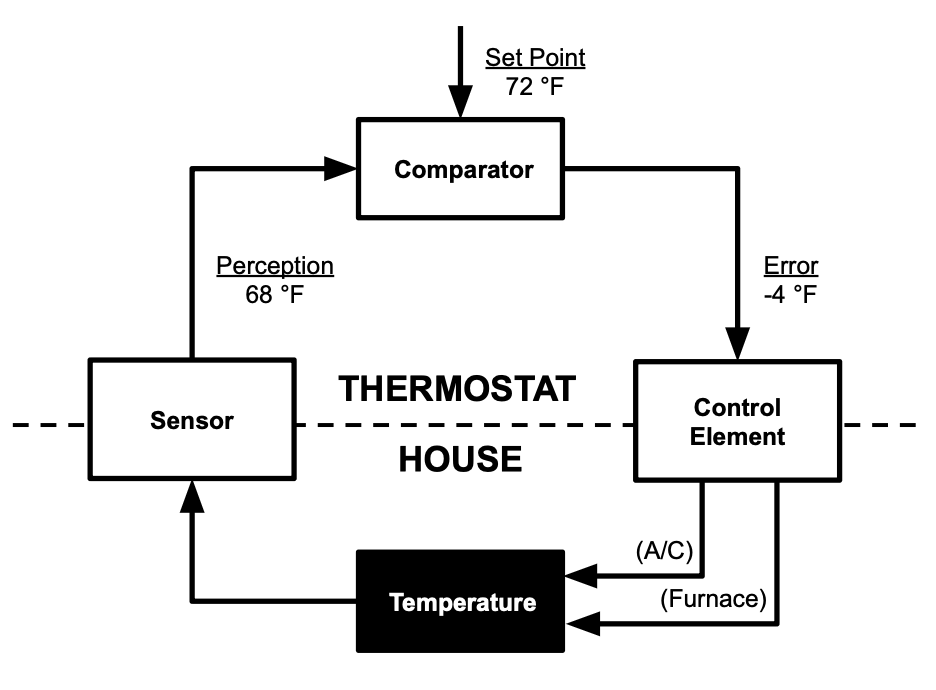
The control element can have many different possible outputs. Its job is to measure the error signal and decide what to do about it, and its goal is to drive the error signal to zero, or as close to zero as it can manage.
Similar to the sensor, the control element can be very simple or very complex. A simple control element might just turn on the heat any time the error signal is negative, or when the error signal is below some threshold. A more complicated control element might look at the derivative of the change in temperature over time and try to control the temperature predictively.
A very smart control element might use machine learning, or might have access to information about the weather, time of day, or day of the week, and might learn to use different strategies in different situations. You could give it a bunch of output options and just let it mess around with them, learning how different outputs influence the error signal in different ways.
More sophisticated techniques will give you a more effective control system. But as long as the control element has some way to influence the temperature, the thermostat should work ok.
Back in our example thermostat, the temperature in this house is too low, so the control element turns on the furnace. This raises the temperature, driving the error signal towards zero:
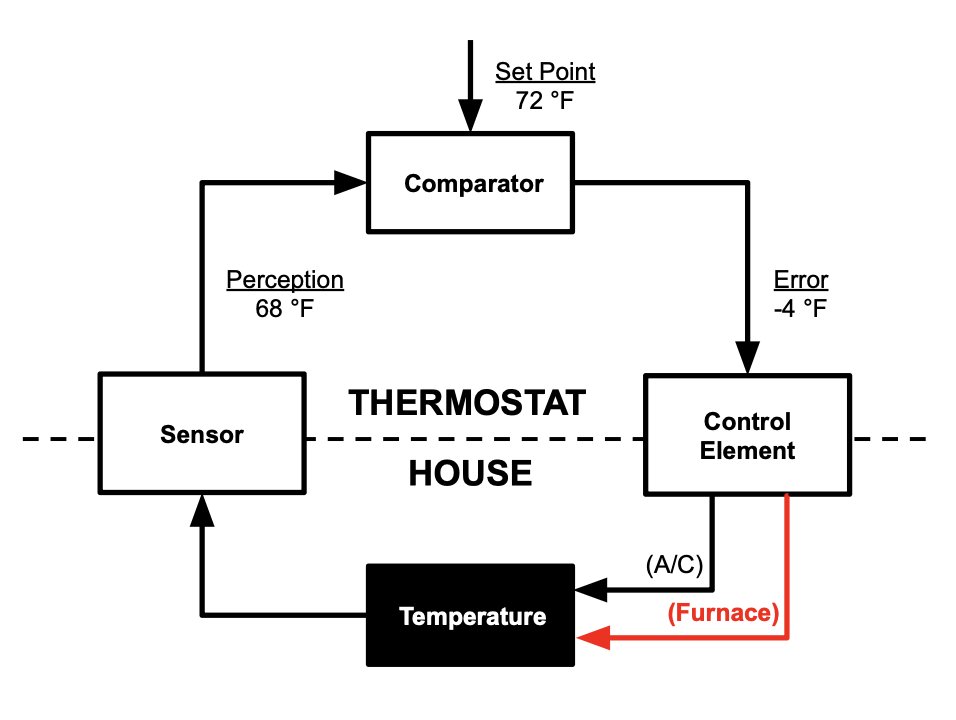
Once the error signal is zero, the control element turns off the furnace:
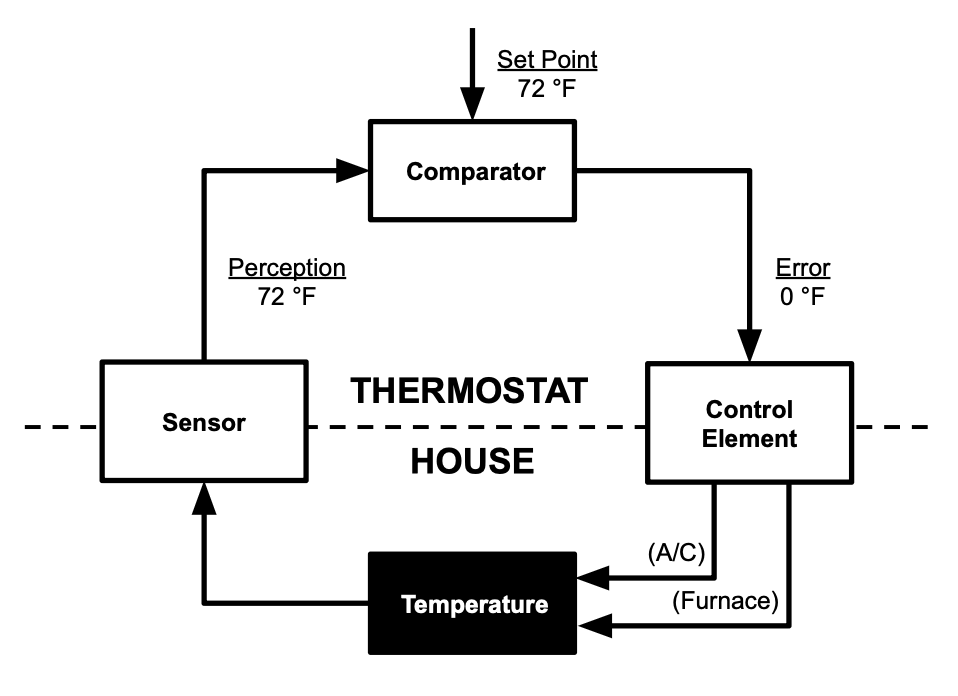
But even with this success, it’s important for the loop to remain closed. Even when the thermostat has driven the house’s temperature to the set point, and driven the error signal to zero, the house is still subject to disturbances. People open the door, they turn on the oven, they spill ice cream on the floor. Some heat escapes through the windows, the sun beats down on the roof. Let’s add disturbances to the diagram:
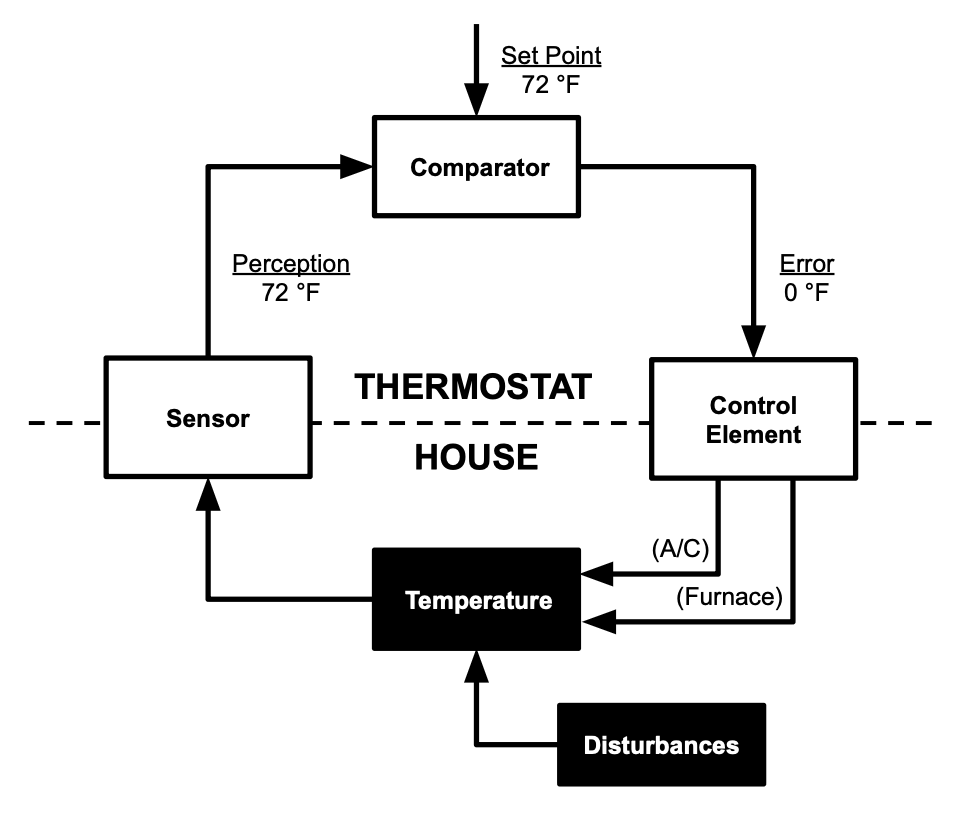
Because of these outside disturbances, the temperature of the house is always changing. To control the house’s temperature, to keep it near the set point in the face of all these disturbances, the control system needs to remain active.
This makes it easy to tell whether or not the thermostat is working like it should. Successful behavior drives the temperature (or at least the perception of that temperature) to the set point, and drives the error signal to zero. In the face of disturbances, it keeps the error signal close to zero, or quickly corrects it there.
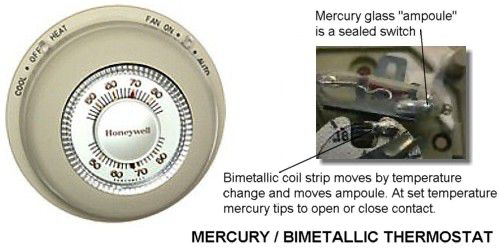
In many older thermostats, the sensor is a bimetallic coil of brass and steel. Because of differences in the two metals, this coil expands when it gets warmer and contracts when it gets cooler. If this is all set up properly, the coil gives a decent measure of the temperature and helps the rest of the mechanism drive the house’s temperature to a given target.
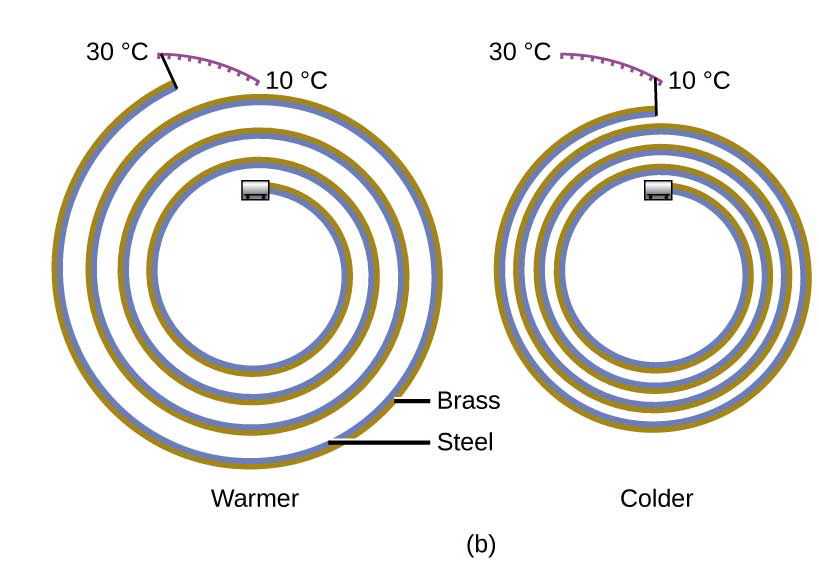
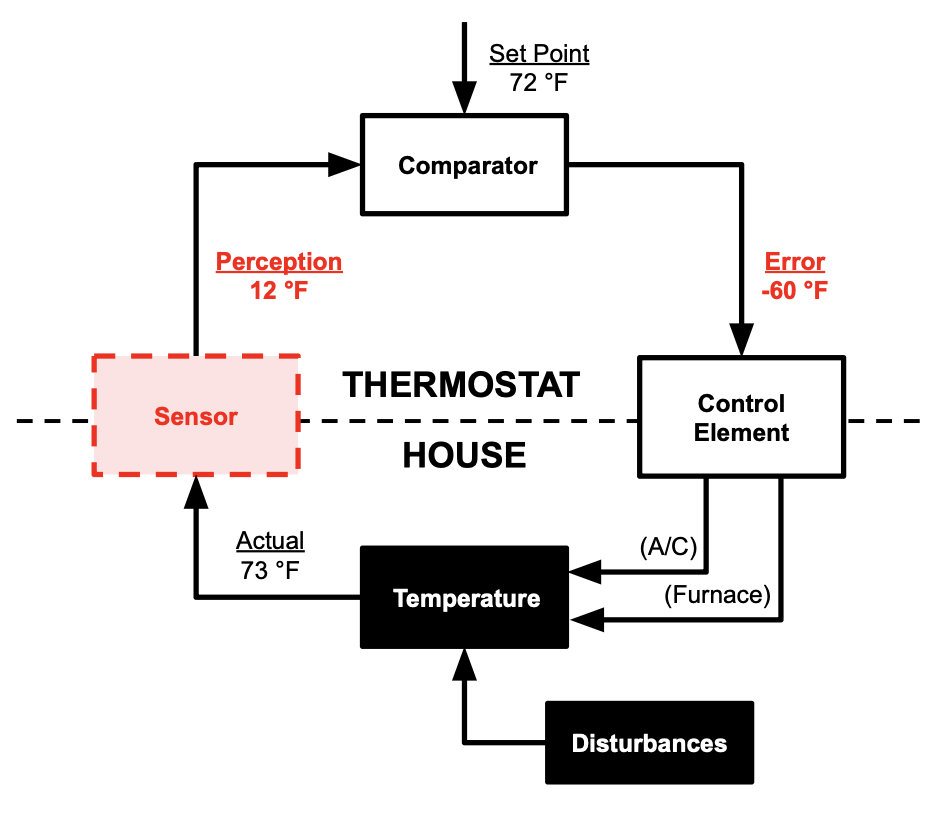
But if you were to hold this coil closed, or tie a string around it and pull it tight enough to give a reading of 60 °F, the system will behave as though the temperature is always 60 °F. If the set point is 72 °F, the system will experience a large error signal, just as though the real temperature of the house was 60 °F, and will make a futile attempt to raise the house temperature, pushing as hard as it can, forever, until the thermostat breaks or the coil is released.
The thing to hold on to here is that every control system produces multiple signals.
- There will always be some kind of sensory signal as input.
- There will always be some kind of reference or target signal serving as the set point.
- And there will always be an error signal, which under normal conditions will be the difference between the other two signals.
Dividing a control system into individual parts helps us understand what happens when a control system breaks in different ways:
- If something goes wrong with the sensor in a thermostat (like the coil example above), the control system will try to reduce the error between the set point and the perceived temperature, not the actual temperature.
- If something goes wrong with the comparator, producing an incorrect error, then the control system will try to drive that error signal to zero.
- If something goes wrong with the output function, any number of strange things can happen.
Hello Governor
The thermostat is just an example; control systems are everywhere. The technical term used to describe control systems like these is “cybernetic”, and the study of these systems is called cybernetics.
Both words come from the Ancient Greek κυβερνήτης (kubernḗtēs, “steersman”), from κυβερνάω (kubernáō, “I steer, drive, guide, act as a pilot”). Norbert Wiener and Arturo Rosenblueth, who invented the word, chose this term because control systems steer or guide their targets, and because a steersman or pilot acts as a control system by keeping the ship pointed in the right direction.
The English word “governor” comes from the same root (kubernetes -> gubernetes -> Latin gubernator -> Old French gouvreneur -> Middle English governour), so control systems are sometimes called cybernetic governors, or just governors.
Most famous of these is the centrifugal governor used to regulate the speed of steam engines. Look closely at any steam engine, and you should see one of these:
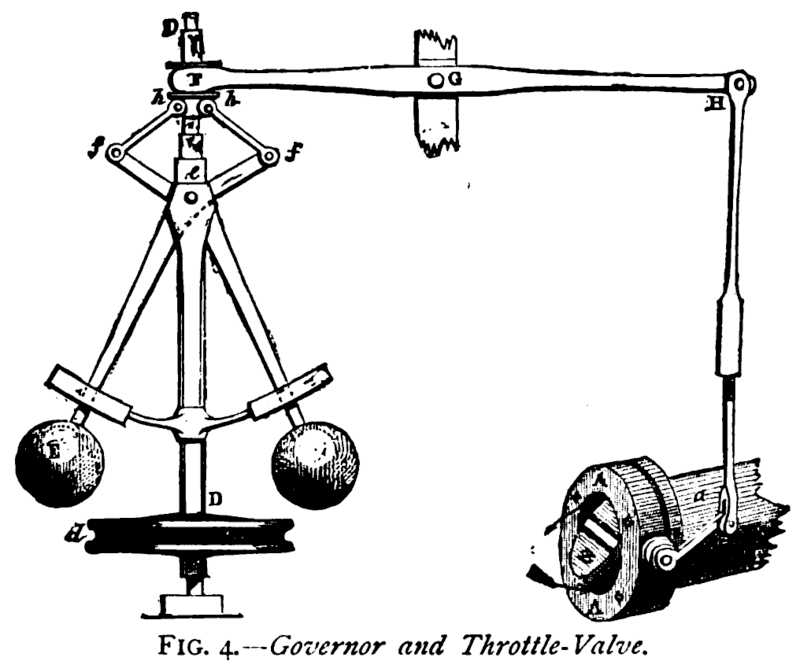
The engine’s output is connected to the governor by a belt or chain, so the governor spins along with the engine. As the engine starts to speed up, the governor spins faster, and its spinning balls gain kinetic energy and move outward, like they’re trying to escape.
This outward movement isn’t just for show; if the motion goes far enough, it causes the lever arms to pull down on a thrust bearing, which moves a beam linkage, which reduces the aperture of a throttle valve, which controls how much steam is getting into the engine. So, the faster the engine goes, the more the governor closes the valve. This keeps the engine from going too fast — it controls the engine’s speed.
Control systems maintain homeostasis, driving a system to some kind of equilibrium. A thermostat controls the temperature of a house, a centrifugal governor controls the speed of a steam engine, but you can control just about anything if you put your mind to it. As long as you can measure a variable in some way, influence it in some way, and you can put a comparator between these two components to create an error signal, you can make a control system to drive that variable towards whatever set point you like.
Control in the Organism
Every organism needs to make sure it doesn’t get too dry, too hot, too cold, etc. If it gets any of these wrong, it dies.
As a result, a lot of biology is made up of control systems. Every organ is devoted to maintaining homeostasis in one way or another. Your kidneys control electrolyte concentrations in your blood, the pancreas controls blood sugar, and the thyroid controls all kinds of crap.
The brain is a homeostatic organ too. But the brain does homeostasis with a twist. Unlike the other organs, which mostly drive homeostasis by changing things inside the body, the brain controls things with external behavior.
Thirst
One of the first behavioral control systems to evolve must have been thirst. All animals need water; without water, they die. So the brain has a control system that aims to keep the body hydrated.
This is a control system, just like a thermostat. Hydration is the goal, but that goal needs to be measured in some way. In this case the input function seems to be a measure of plasma osmolality, as detected by the brain. This perception is then compared to a reference value (in humans this is around 280-295 mOsm/kg), which generates an error signal that can drive behaviors like finding and consuming water.
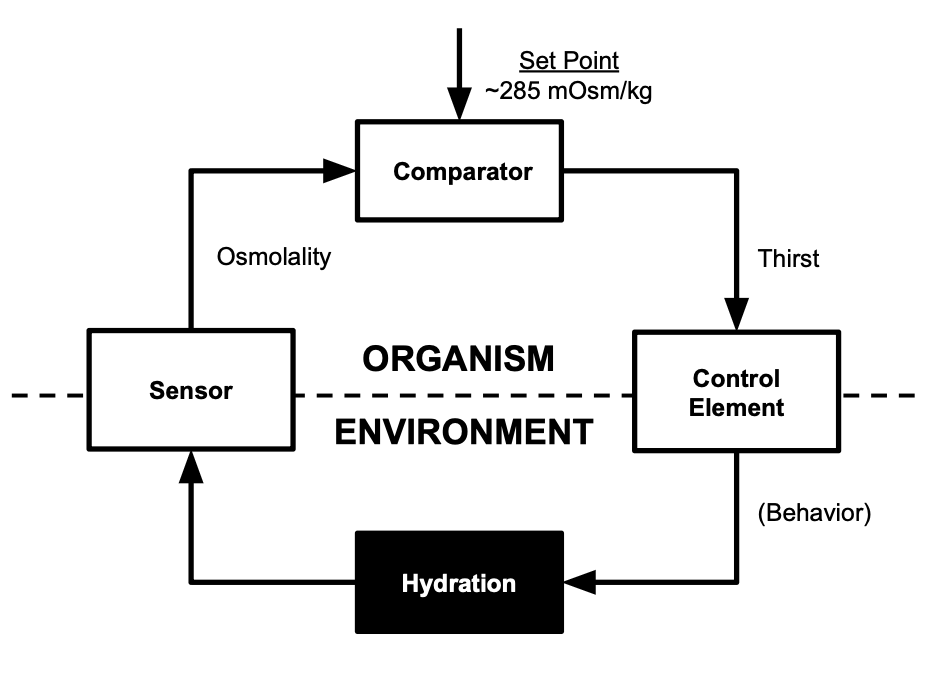
As we see in the diagram, in this control system the error signal is thirst. We can tell this must be the case because successful behavior drives thirst to zero. The perception of osmolality can’t be the error signal, because osmolality is driven to 280-295 mOsm/kg, which is how we know that number is the target or set point. Whatever value is driven towards zero must be the error signal.
Just like with a thermostat, the output function can be very simple or very complex. Organisms with simple nervous systems may have only one output; they drink water when it happens to be right in front of them. Animals that live in freshwater streams and ponds may execute a program as simple as “open your mouth”, since they are always immersed in water that is perfectly good for them to drink.
Organisms with complex nervous systems, or that are adapted to environments where water is more scarce, will have more complex responses. A cat can go to its water bowl. In the dry season, elephants search out good locations and actively dig wells. Humans get in the car and drive to the store and make small talk while exchanging currency to purchase Vitamin Water®, a very complex response. But it’s all to control plasma osmolality by reducing the error signal of thirst to zero.
Hot and Cold
Organisms need to maintain a constant temperature, so the brain also includes systems for controlling heat and cold.
This adaptation actually consists of two different control systems — one that keeps the body from getting too warm, and another that keeps the body from getting too cold. We have two separate systems, rather than one system that handles both, because of the limits of how neurons can be wired up. “Neural comparators work only for one sense of error, so two comparators, one working with inverted signals, would be required to detect both too much and too little of the sensor output level.” (Powers, 1973)
We can also appeal to intuition — it feels entirely different to be hot or to be cold, they are totally different sensations. And when you are sick, sometimes you feel both too hot and too cold, something that would be impossible if this were a single system.
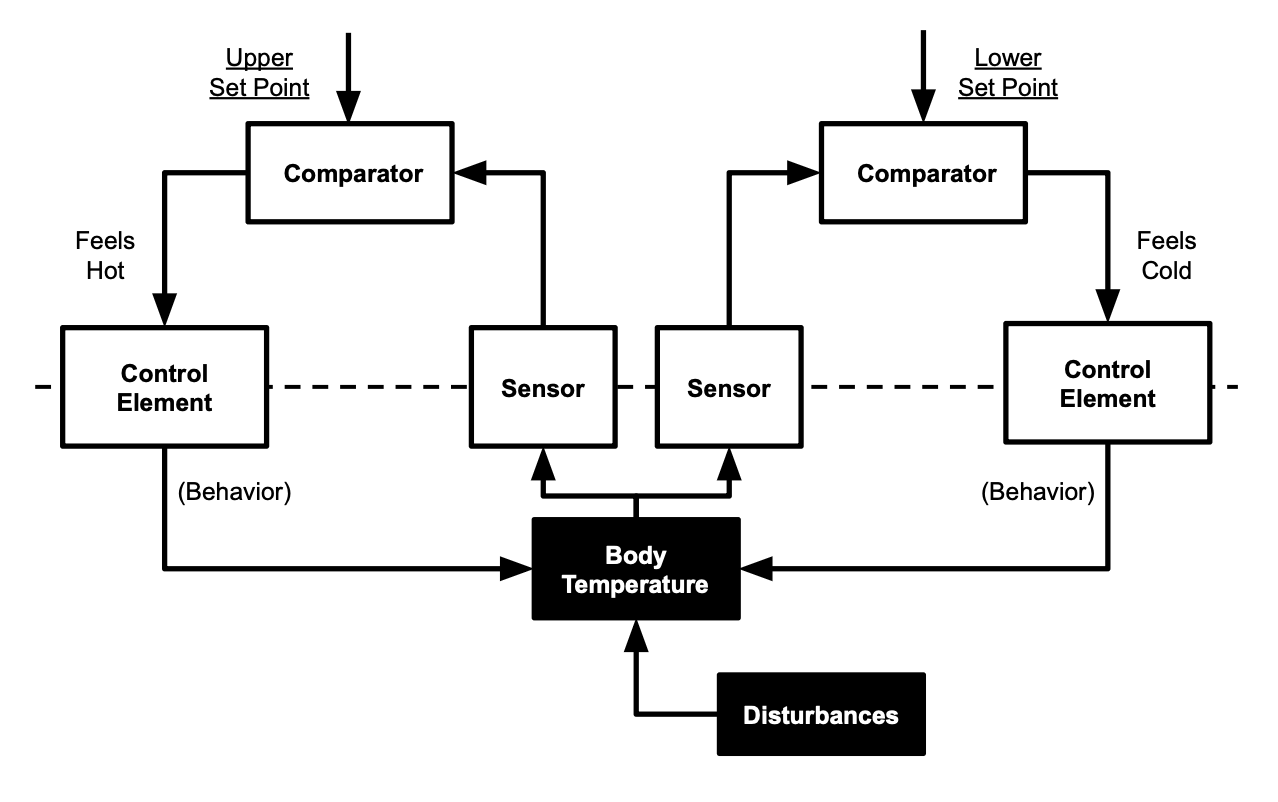
As usual, the output function can be simple or complex. Some responses are relatively automatic, like sweating, and might not usually be considered “behavior”. But other responses, like putting on a cardigan, are definitely behavior.
This is a chance to notice something interesting. A human can shiver, sweat, put on a coat, or open a window to control their temperature. But they can also… adjust the set point on the thermostat for their house! One way a control system can act on the world is by changing the set point of a different control system, and letting that “lower” system carry out the control for it.
Pain
Organisms need to keep from getting injured, so they have ways to measure damage to their bodies, and a system to control that damage.
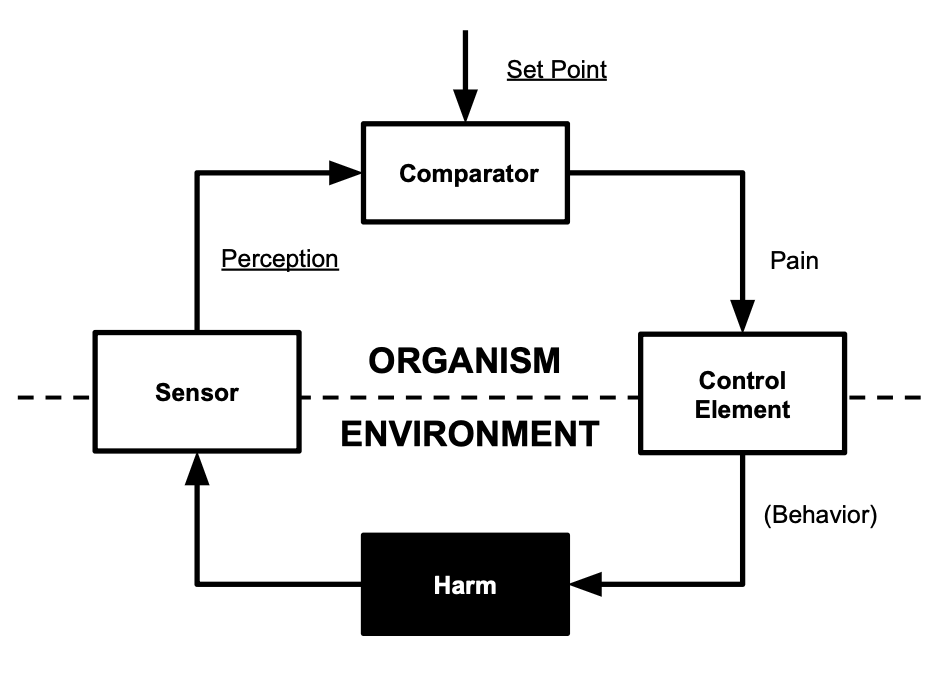
Again, we see that pain is the error signal that’s generated in response to some kind of measure of damage or physical harm.
A very simple control system will respond to pain, and nothing else. This might be good enough for a shellfish. But a more complex approach (not pictured in this diagram) is for the control system to predict how much pain might be coming, and drive behavior to avoid that pain, instead of merely responding. Compare this to a thermostat which can tell a blizzard is incoming, and turns on the furnace in anticipation, before the cold snap actually hits.
Hunger
Most organisms need to eat in order to live. Once the food is inside your body there are other control systems that put it to the right use, but you need to express some behavior to get it there. So there’s another control system in charge of locating nutritious objects and putting them inside your gob.
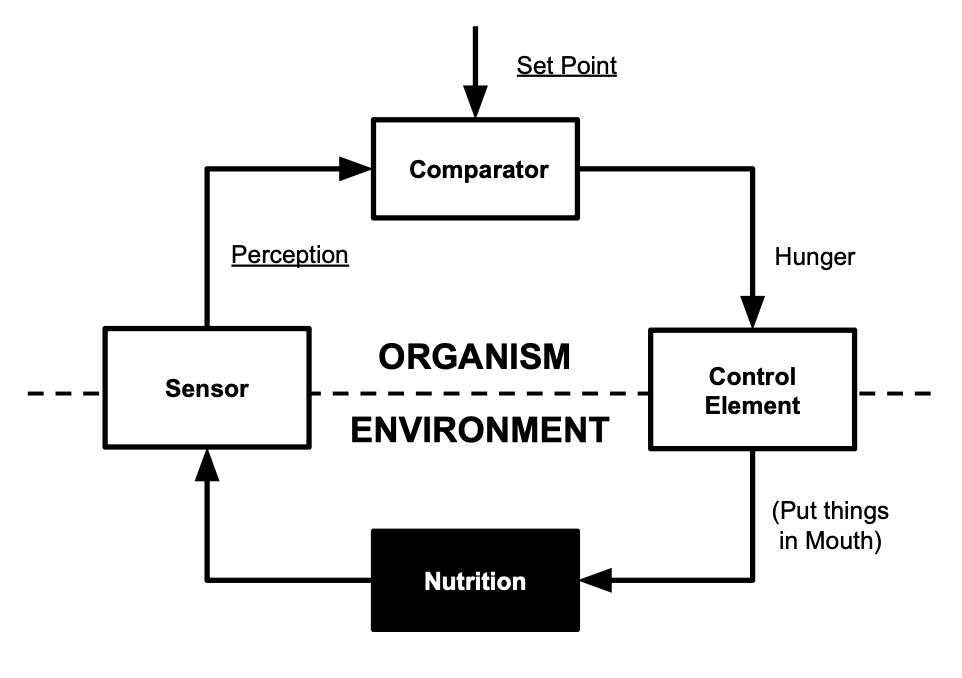
Obviously in this case, the error signal is hunger — successful eating behavior tends to drive hunger to zero.
More realistically, there is not one eating control system, and not one kind of hunger, but several. There might even be dozens.
One control system probably controls something like your blood sugar level, and drives behavior that makes you put things with calories inside your mouth.
But man cannot live on calories alone, and neither can any other organism. For one thing, you definitely need salt. So there must be another control system that drives behavior to make you put salty things (hopefully salty foods, though perhaps not always) inside your mouth. This is confirmed by the fact that people sometimes crave salty foods. If you’ve ever had a moose lick the salt off your car, you’ll know that we’re right.
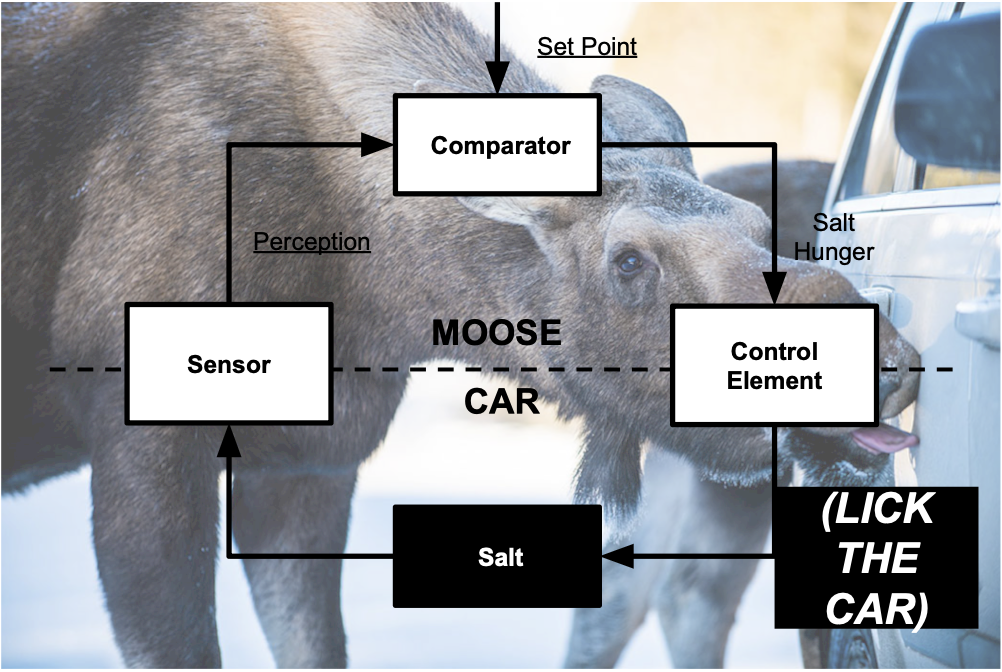
It’s hard to tell exactly how many kinds of hunger there are, but humans need several different nutrients to survive, and we clearly can have cravings for many different kinds of foods, so there must be several kinds of hunger. The same goes for other animals.

Fear
Organisms also need to avoid getting eaten themselves. This is somewhat more tricky than controlling things like heat and fluid levels, but evolution has found a way.
To accomplish this, organisms have been given a very complicated input function that estimates the threats in our immediate area, by weighing information like “is there anything nearby that looks or sounds like a tiger?” This input function creates a complicated perception that we might call “danger”.
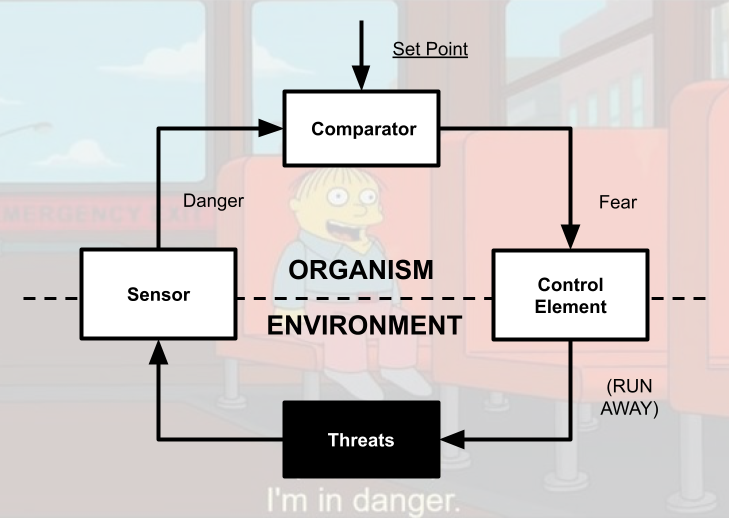
This danger estimate is then compared to some reference level of acceptable danger, creating the error signal of fear. If you are in more danger than is considered acceptable, you RUN AWAY (or local equivalent).

Disgust
Getting eaten is not the only danger we face. Organisms also need to avoid eating poisonous things that will kill them, and avoid contact with things that will expose them to disease.
Like fear, the input function here is very complicated. It’s not as simple as checking the organism’s blood osmolality or some other internal signal. Trying to figure out what things out there in the world might be poisonous or diseased is a difficult problem.
But smelling spoiled milk or looking at a rotting carcass clearly creates some kind of signal, which is compared with some reference level, and creates an error signal that drives behavior. That’s why, if you drink too much Southern Comfort and later puke it up, you’ll never want Southern Comfort again.
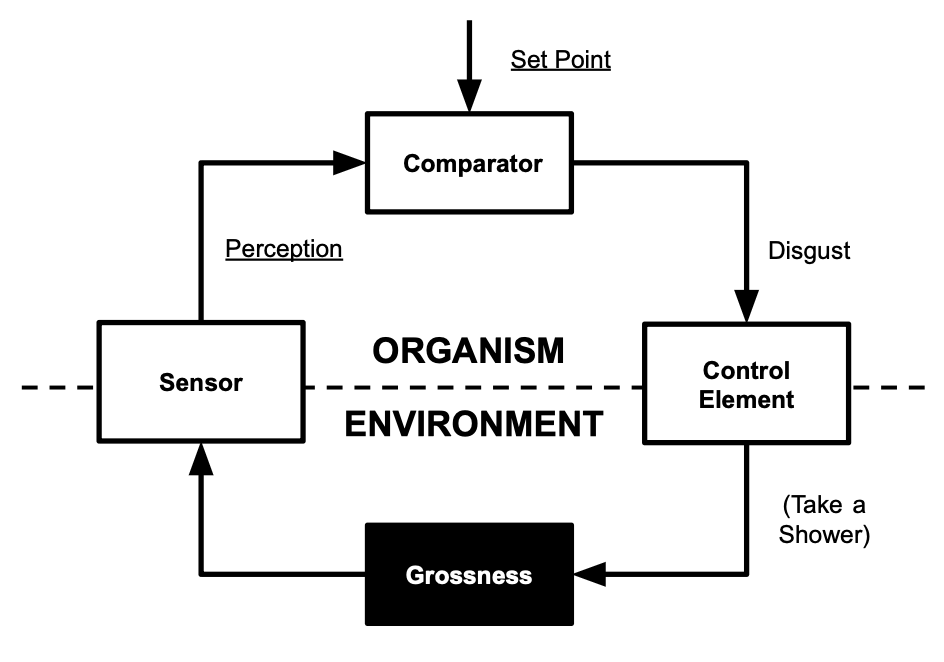
In this case, the error signal is disgust.
Shame
Every organism needs to maintain internal homeostasis in order to survive. Organisms that can perceive the world and flop around a bit also tend to develop the ability to control things about the outside world, things like how close they get to predators. This improves their ability to survive even further.
Social organisms like humans also control social variables. It’s hard to know exactly what variables are being controlled, since they are not as simple as body temperature. They are at least as complicated as an abstract concept like “danger” — something we certainly perceive and can control, but that must be very complicated.
However, we can make reasonable guesses. For one, humans control things like status. You want to make sure that your status in your social group is reasonably high, that it doesn’t go down, that it maybe sometimes even goes up.
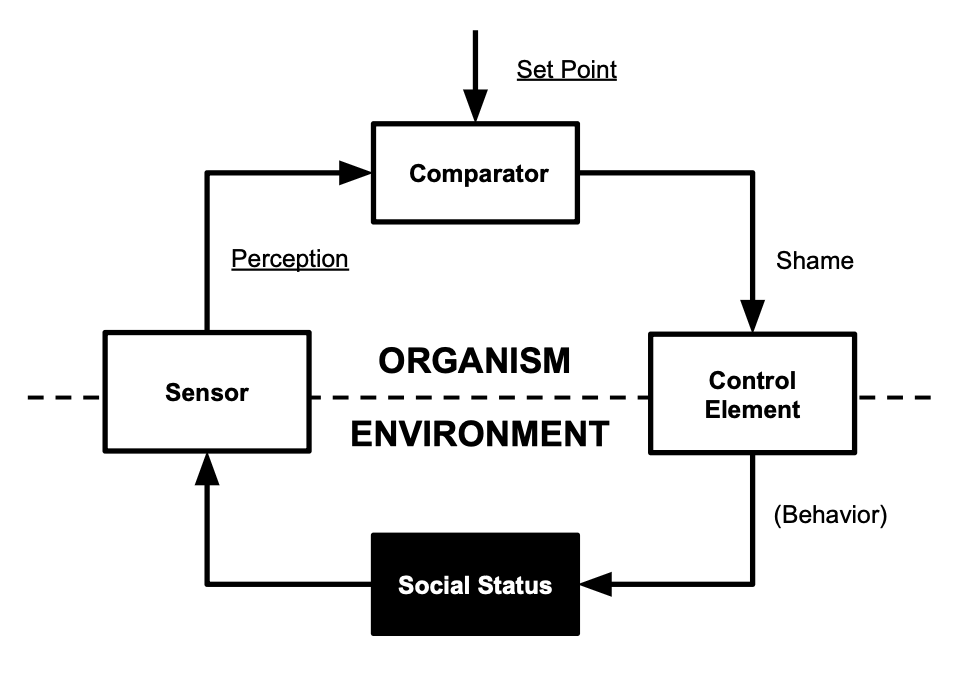
In this case, the error signal when status is too low is probably something like what we call shame. Sadness, loneliness, anger, and guilt all seem to be error signals for similar control systems that attempt to control other social variables.
Cybernetic Paradigm
Every sense you possess is an instrument for reacting to change. Does that tell you nothing?
― Frank Herbert, God Emperor of Dune
Control of blood osmolality leads to an error signal we call thirst. This drives behavior to keep you hydrated.
Control of body temperature leads to error signals we know as the experiences “hot” and “cold”. These drive behavior to keep you comfortable, even cozy.
Control of various nutritional values leads to error signals that we collectively call hunger. These drive behavior that involves “chowing down”.
While they can be harder to characterize, control of social values like status and face lead to error signals we identify with words like “shame” and “guilt”. These drive social behavior like trying to impress people and prove our value to our group.
All of these things are of the same type. They’re all error signals coming from the same kinds of biological control systems, error signals that drive external behavior which, when successful, pushes that error signal towards zero.
All of these things are of the same type, and the word for this type is “emotion”. An emotion is the error signal in a behavioral biological control system.
We say “behavioral” because your body also regulates things like the amount of copper in your blood, but there’s no emotion associated with serum copper regulation. It’s regulated internally, by processes you are unaware of, processes that may not even involve the brain. In contrast, emotions are the biological control errors that drive external behavior.
Thirst, hot, cold, shame, disgust, fear, and all the different kinds of hunger are all emotions. Other emotions include anger, pain, sleepy, need to pee, suffocation, and horny. There are probably some emotions we don’t have words for. All biological error signals that are in conscious awareness and that drive behavior are emotions.
Some emotions come in pairs that control two ends of one variable. The emotions of hot and cold are a good example. You try to keep your body temperature in a certain range, so it needs one control system (and one emotion) to keep you from getting too cold, and another control system (and another emotion) to keep you from getting too hot.
Feeling hot and feeling cold are clearly opposites, two emotions that keep your body temperature in the right range. There’s also an opposite of hunger — the emotion you feel when you have eaten too much and shouldn’t eat any more. We don’t have a common word for it in English, but “fullness” or “satiety” are close.
But for many goals, there’s only a limit in one direction. You just want to make sure some variable doesn’t get too high or too low. You’ll notice that “need to pee” is an emotion, but it doesn’t have an opposite. While your bladder can be too full, it can’t be too empty, so there’s no emotion for that.
This is counterintuitive to modern psychology because academic psychologists act as though nothing of interest happens below the neck. They couldn’t possibly imagine that “hungry” or “needs to pee” could be important to the study of psychology — even though most human time and energy is spent on eating, sleeping, peeing, fuckin’, etc.
In contrast, when the goal is to model believable human behavior, and not just to produce longwinded journal articles, these basic drives and emotions come about naturally. Even The Sims knew that “bladder” is one of the eight basic human motivations.
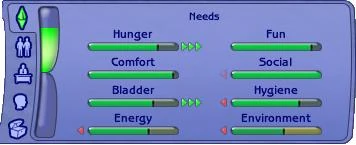
This is a joke; there are more than eight motivations. But frankly, the list they came up with for The Sims is pretty good. It’s clear that there are drives to keep your body and your living space clean, and it seems plausible that these might be different emotions. We don’t have words for the associated emotions in English, but The Sims calls these motivations “Hygiene” and “Environment” (originally called “Room”).
Happiness and Other Signals
Emotions are easy to identify because they are errors in a control system. Like any error in a control system, successful behavior drives the error to zero. This means that happiness is not an emotion.
After all, it’s clearly not an error signal. Behavior doesn’t try to drive happiness to zero. That means it’s not the same kind of thing as the rest of these signals, which are all clearly error signals. And that means happiness isn’t an emotion. Happiness is some kind of signal, but it’s not an emotion.
Now you may be thinking, “Hold on a minute there, SMTM. I was on board with you about the biological control systems. I understand how hunger and cold and whatnot are all the error signals of various control systems, that’s very interesting. But you can’t just go around saying that pain and thirst are emotions, and that happiness isn’t an emotion. You can’t just go around using accepted words in totally made-up new ways. That’s not what science is all about.”
We disagree; we think that this IS what science is all about. Adapting old words to new forms is like half of the project.
For starters, language always changes over time. The word “meteor” comes from the Greek metéōron, which literally meant “thing high up”. For a long time it referred to anything that happened high up, like rainbows, auroras, shooting stars, and unusual clouds. This sense is preserved in meteorology, the study of the weather, i.e. the study of things high up. But in common use, “meteor” is now restricted to space debris burning up as it enters the atmosphere. And there’s nothing wrong with that.
Second, changing the way we use words is a very normal part of any scientific revolution.
Take this passage from Thomas Kuhn’s essay, What Are Scientific Revolutions?:
Revolutionary changes are different and … problematic. They involve discoveries that cannot be accommodated within the concepts in use before they were made. In order to make or to assimilate such a discovery one must alter the way one thinks about and describes some range of natural phenomena. … [Consider] the transition from Ptolemaic to Copernican astronomy. Before it occurred, the sun and moon were planets, the earth was not. After it, the earth was a planet, like Mars and Jupiter; the sun was a star; and the moon was a new sort of body, a satellite. Changes of that sort were not simply corrections of individual mistakes embedded in the Ptolemaic system. Like the transition to Newton’s laws of motion, they involved not only changes in laws of nature but also changes in the criteria by which some terms in those laws attached to nature.
The same is true of this revolution. Before this transition, happiness and fear were emotions, while hunger was not. After it, hunger is an emotion, like shame and loneliness; happiness is some other kind of signal; and other signals like stress may be new sorts of signals as well.
As in any revolution, we happen to be using the same word, but the meaning has changed. This kind of change has been a part of science from the beginning.
Kuhn can be a little hard to follow, so here’s the same idea in language that’s slightly more plain:
Ontologically, where “planet” had meant “lights that wander in the sky,” it now meant “things that go around the sun.” Empirically, the claim was that all the old planets go around the sun, except the moon and the sun itself, so those are not really planets after all. Most troublingly, the earth too goes around the sun, so it is a planet.
The earth does not wander in the sky; it does not glow like the planets; it is extremely large, whereas most planets are mere pinpoints. Why call the earth a planet? This made absolutely no sense in Copernicus’ time. The claim appeared not false, but absurd: a category error. But for Copernicus, the earth was a planet exactly in that it does wander around the universe, instead of sitting still at the center.
Maybe heliocentrism would have succeeded sooner if Copernicus used a different word for his remodeled category! This is a common pattern, though: an existing word is repurposed during remodeling. There is no fact-of-the-matter about whether “planet” denoted a new, different category, or if the category itself changed and kept its same name.
So just like Copernicus, our claims aren’t false, they’re absurd. In any case, it’s too cute to hold so closely onto the current boundaries for the word “emotion”, given that the term is not even that old. Before the 1830s, English-speakers would have said “passions” or “sentiments” instead of “emotions”. So to slightly change the meaning of “emotion” is not that big a deal.
In any case, we can use words however we want. So back to the question at hand: If happiness isn’t an emotion, or at least isn’t a cybernetic error signal, then what is it?
The answer is quite simple. People and animals have many different governors that try to maintain a signal at homeostasis, near some target or on one side of some threshold. When one of these signals is out of alignment, the governor creates an error signal, an emotion like fear or thirst. The governor then does its best to correct that error.
When a governor sends its signal back into alignment, correcting an error signal, this causes happiness. Happiness is what happens when a thirsty person drinks, when a tired person rests, when a frightened person reaches safety.
Consider the experiences that cause the greatest happiness. A quintessential happy experience might be finishing a long solitary hike in the February cold, arriving at the lodge freezing and battered, and throwing open the door to the sight of a roaring fire, soft couches, dry socks, good company, and an enormous feast.
The reason this kind of experience is so joyous is because a person who has just finished a long winter’s hike has driven many of their basic control systems far out of alignment, creating many large error signals. They are cold, thirsty, hungry, tired, perhaps they are in a bit of discomfort, or even pain. The opportunity to correct these error signals by stepping into a warm ski lodge leads to 1) many errors being corrected at once, and 2) the corrections being quite fast and quite large.
When errors are corrected by a large amount, or they are corrected very quickly, that creates more happiness than when they are corrected slowly and incrementally. A man who was lost in the desert will feel nothing short of bliss at his first sip of cool water — he is incredibly thirsty, and correcting that very large error creates a lot of happiness.
Imagine yourself on a hot summer day. To quaff a tall glass of ice water and eliminate your thirst all at once is immensely pleasurable. To sip the same amount over the course of an hour is not nearly so good. More happiness is created when a correction is fast than when it is slow.
Or consider:
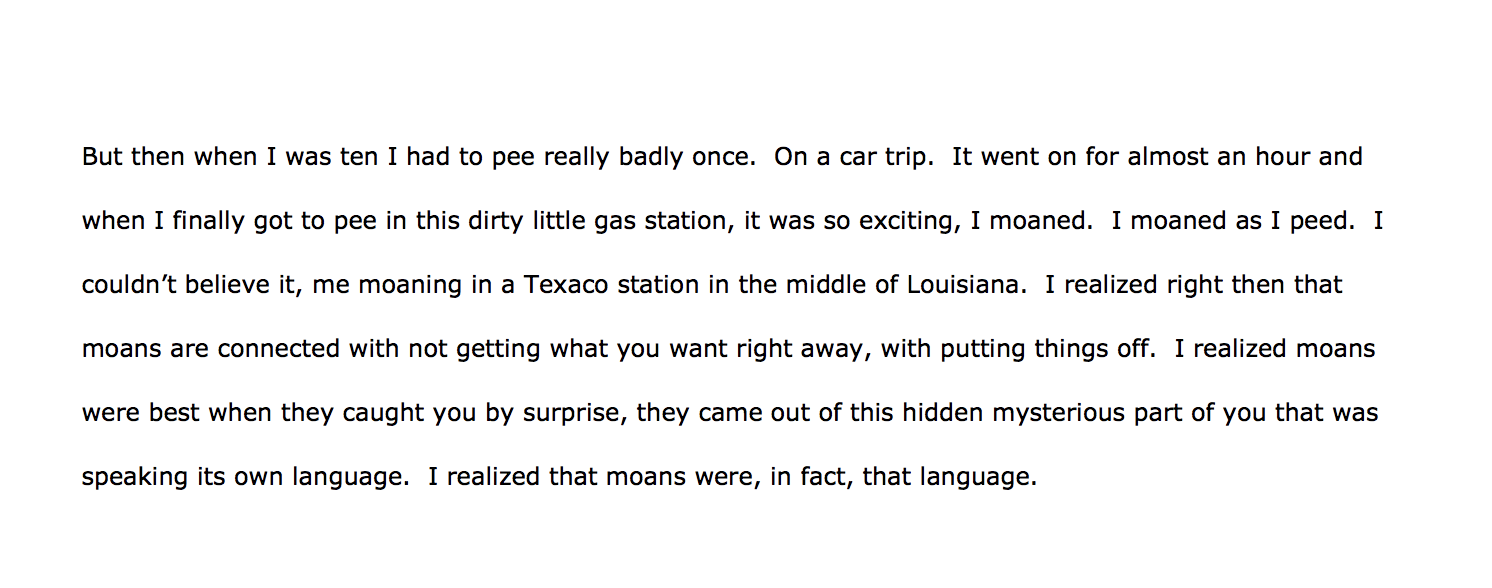
Here we see some confirmation that “need to pee” is an emotion. We also see evidence of the laws of how error correction causes happiness. Since the error signal was so big, and since it was resolved all at once in that dirty little gas station bathroom, the correction was both large and sudden, which is why peeing made the author so happy. “Moans”, or happiness in general, “are connected with not getting what you want right away, with putting things off.” Or take Friedrich Nietzsche, who asked: “What is happiness? The feeling that power is growing, that resistance is overcome.”
Correcting any error signal creates happiness, and the happiness it creates persists for a while. But over time, happiness does fade. We don’t know the exact rate of decay, but if you create 100 points of happiness today, you might have only 50 points of happiness tomorrow. The next day you will have only 25, and eventually you will have no happiness at all.
But in practice, your drives are constantly getting pushed out of alignment and you are constantly correcting them, and in most cases this leads to a steady stream of happiness. You get hungry, thirsty, tired, and you correct these errors, generating more happiness each time. As long as you generate happiness faster than the happiness decays, you will be generally happy on net.
You can think of this as a personal happiness economy. Just like a business must have more money coming in than going out to stay in the black, you’ll feel happy on net as long as errors are being corrected faster than happiness decays.
In this model, there are as many ways to feel bad as there are things that are being controlled. But there’s only one way to feel good. Which would mean that all of our words for positive emotion — joy, excitement, pride — are really referring to the same thing, just in different contexts.
Happiness is also related to the concept of “agency”, the general ability to affect your world in ways of your choosing. A greater ability to affect your world means more ability to cause large changes in any context. If you have a lot of ability to make things change, you can make big corrections in your error signals — you can take the situation of being very hungry and correct that error decisively, leading to a burst of happiness.
(It may also be the case that even an arbitrary exercise of agency can make you somewhat happy, since people do seem to gain happiness from meeting some very arbitrary goals. But this is hard to distinguish from social drives — maybe you are just excited at how impressed you think everyone will be when they see how many digits of pi you have memorized.)
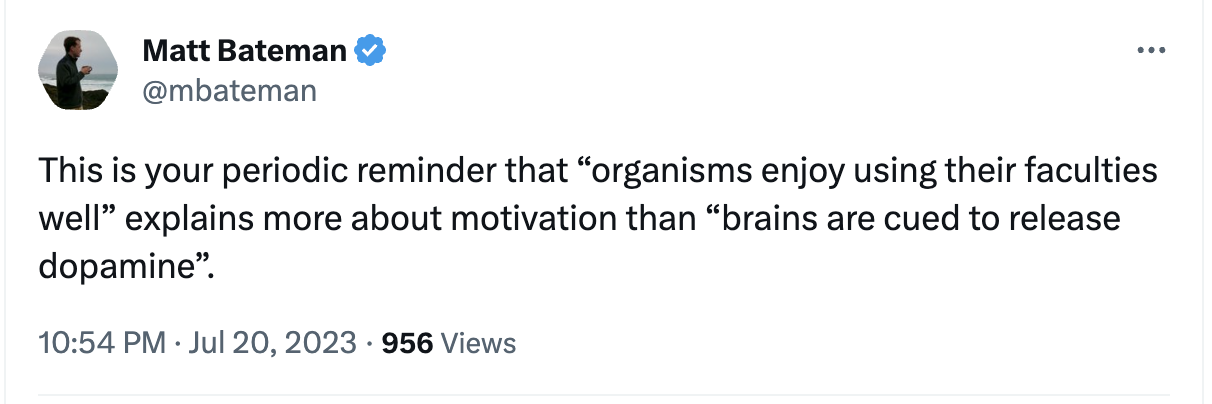
People are consistently surprised to find that living in posh comfort and having all your needs immediately met isn’t all that pleasurable. But with this model of happiness, it makes perfect sense. Pleasure and happiness are only generated when you are out of alignment in a profound way, a way that could legitimately threaten your very survival, and then you are brought back into alignment in a way that is literally life-affirming.
This is why people who are well-off, the idle rich in particular, often feel like their lives are pointless and empty. To have all your needs immediately met generates almost no happiness, so the persistently comfortable go through life in something of a gray fog.
Does this suggest that horrible experiences can, at least under the right circumstances, make you happy and functional? Yes.
See this section about the Blitz during World War Two, from the book Tribe (h/t @softminus):
On and on the horror went, people dying in their homes or neighborhoods while doing the most mundane things. Not only did these experiences fail to produce mass hysteria, they didn’t even trigger much individual psychosis. Before the war, projections for psychiatric breakdown in England ran as high as four million people, but as the Blitz progressed, psychiatric hospitals around the country saw admissions go down. Emergency services in London reported an average of only two cases of “bomb neuroses” a week. Psychiatrists watched in puzzlement as long-standing patients saw their symptoms subside during the period of intense air raids. Voluntary admissions to psychiatric wards noticeably declined, and even epileptics reported having fewer seizures. “Chronic neurotics of peacetime now drive ambulances,” one doctor remarked. Another ventured to suggest that some people actually did better during wartime.
The positive effects of war on mental health were first noticed by the great sociologist Emile Durkheim, who found that when European countries went to war, suicide rates dropped. Psychiatric wards in Paris were strangely empty during both world wars, and that remained true even as the German army rolled into the city in 1940. Researchers documented a similar phenomenon during civil wars in Spain, Algeria, Lebanon, and Northern Ireland. An Irish psychologist named H. A. Lyons found that suicide rates in Belfast dropped 50 percent during the riots of 1969 and 1970, and homicide and other violent crimes also went down. Depression rates for both men and women declined abruptly during that period, with men experiencing the most extreme drop in the most violent districts. County Derry, on the other hand—which suffered almost no violence at all —saw male depression rates rise rather than fall. Lyons hypothesized that men in the peaceful areas were depressed because they couldn’t help their society by participating in the struggle.
Horrible events can also traumatize people, of course. Being bombed by the Luftwaffe is dangerous to your health. But in other ways, being thrust into catastrophe can be very reassuring, even affirming. We were put together in an era of constant threat, it should be no surprise that we can be functional in that kind of environment.

Don’t Worry, Why Happy
So happiness isn’t an emotion, and doesn’t drive behavior. The natural question has to be, why does happiness exist at all? What function does it serve if it is not, like an emotion, helping to drive some important signal to homeostasis.
We think happiness is a signal used to calibrate explore versus exploit.
The exploration-exploitation dilemma is a fancy way of talking about a basic problem. Should you mostly stick to the options you know pretty well, and “exploit” them to the fullest extent, or should you go out and “explore” new options that might be even better?
For example, if you live in a city and have tried 10 out of the 100 restaurants in the area, when you decide where to go to lunch, should you go to the best restaurant you’ve found so far, for an experience that is guaranteed to be pretty good, or should you try a new restaurant and maybe discover a new favorite? And how much time should you spend with your best friend, versus making new friends?
It’s a tradeoff. If you spend all your time exploring, you never get the opportunity to enjoy the best options you’ve found. But if you exploit the first good thing you find and never leave, you’re likely to miss out on better opportunities somewhere else. You have to find a balance.
This dilemma makes explore versus exploit one of the core issues of decision-making, and finding the right balance is a fundamental problem in machine learning approaches like reinforcement learning. So it’s not at all surprising that psychology would have a signal that helps to tune this tradeoff.
Remember that in this model of happiness, behavior is successful when it corrects some error, and creates some amount of happiness. This makes happiness a rough measure of how consistently you are correcting your errors.
If you are reliably generating happiness, that means you’re correcting your errors all the time, so your overall strategies for survival must be working pretty well. Keep doing what you’re doing. On the other hand, if you are not frequently generating happiness, that means you are almost never correcting your errors, and you must be doing rather poorly. Your strategies are not serving you well — in nature, you would probably be on the fast track to a painful death. In this situation, you should switch up your strategies and try something new. In a word, you should explore.
When you’re generating plenty of happiness, you are surviving, your strategies are working, and you should stick with them. When you’re not generating much happiness, your strategies are not working, you may not be surviving long, and you should change it up and try new things in an attempt to find new strategies that are better.
All this makes sense in a state of nature, where sometimes you have to change or die. But note that in the modern world, you can survive for a long time without generating much happiness at all. This is why modern people sometimes explore their way into very strange strategies.
(Tuning explore vs. exploit is just one theory. Another possibility is that your happiness is a signal for other people to control. For example, a parent might have a governor that tries to make sure their child has at least a certain level of happiness. There are reasons to suspect this might be the case — we are much more visibly happy and unhappy than we are visibly hungry or tired. If this is true, then our happiness might be more important for other people than for ourselves.)
Psychologists don’t usually think of happiness in these terms, but this perspective isn’t entirely original. See this Smithsonian Magazine interview with psychologist Dan Gilbert from 2007. The interviewer asks, “Why does it seem we’re hard-wired to want to feel happy, over all the other emotions?” Dan responds with the following:
That’s a $64 million question. But I think the answer is something like: Happiness is the gauge the mind uses to know if it’s doing what’s right. When I say what’s right, I mean in the evolutionary sense, not in the moral sense. Nature could have wired you up with knowing 10,000 rules about how to mate, when to eat, where to seek shelter and safety. Or it could simply have wired you with one prime directive: Be happy. You’ve got a needle that can go from happy to unhappy, and your job in life is to get it as close to H as possible. As you’re walking through woods, when that needle starts going towards U, for unhappy, turn around, do something else, see if you can get it to go toward H. As it turns out, all the things that push the needle toward H—salt, fat, sugar, sex, warmth, security—are just the things you need to survive. I think of happiness as a kind of fitness-o-meter. It’s the way the organism is constantly updated about whether its behavior is in support of, or opposition to, its own evolutionary fitness.
As for terms like “unhappiness”, we think they should be defined out of existence. When people use the word “unhappy”, we think they mean one of two things. Either their happiness levels are low, in which case they are not-happy rather than un-happy; or some error, like fear or shame, has just increased by a large amount. This is unpleasant, and there is a sense of being more out of alignment than before, but it’s always linked to specific emotions. It’s not some generic deficit of happiness, and happiness cannot go negative; there is no anti-happiness.
Recap
- Control systems maintain homeostasis, driving a system to some kind of equilibrium.
- Every control system produces multiple signals.
- There will always be some kind of sensory signal as input.
- There will always be some kind of reference or target signal serving as the set point.
- And there will always be an error signal, which under normal conditions will be the difference between the other two signals.
- Dividing a control system into individual parts helps us understand what happens when a control system breaks in different ways:
- If something goes wrong with the sensor in a thermostat, the control system will try to reduce the error between the set point and the perceived temperature, not the actual temperature.
- If something goes wrong with the comparator, producing an incorrect error, then the control system will try to drive that error signal to zero.
- If something goes wrong with the output function, any number of strange things can happen.
- A lot of biology is made up of control systems. Every organ is devoted to maintaining homeostasis in one way or another. Your kidneys control electrolyte concentrations in your blood, the pancreas controls blood sugar, and the thyroid controls all kinds of crap.
- The brain is a homeostatic organ too. Unlike the other organs, which mostly drive homeostasis by changing things inside the body, the brain controls things with external behavior.
- This is the main unit of psychology: biological control systems that help maintain homeostasis by driving behavior.
- The error signals generated by these control systems, signals like fear, shame, and thirst, are known as emotions. An emotion is the error signal in a behavioral biological control system.
- In the face of disturbances, a governor keeps its error signal close to zero, or quickly corrects it there. Successful behavior drives the error signal to zero. Whatever value is driven towards zero must be the error signal.
- Because happiness isn’t driven towards zero, happiness isn’t an error signal, which means that happiness is not an emotion.
- When a governor sends its signal back into alignment, correcting an error signal, this causes happiness. Happiness is what happens when a thirsty person drinks, when a tired person rests, when a frightened person reaches safety.
- Happiness probably exists to tune the balance between explore and exploit.
- The technical term used to describe control systems like these is “cybernetic”, and the study of these systems is called cybernetics.
[Next: MOTIVATION]
 SLIME MOLD TIME MOLD