Links for June 2023

Submissions to the SMTM Mysteries Contest close July 1st! We’ll take a few weeks to look over all entries and share them with the judges, and will start putting out finalists after that. 

N of 2: Identical Twins Hugo and Ross Turner did the same workout for three months, but one worked out for 20 minutes and the other worked out for 40 minutes. There was almost no difference in their results.   

Disentangling the Dark and Bright Side of Constructs with a Bright and Dark Side — a somewhat in-the-weeds post about factor analysis, but relevant if you’re interested in issues of representation and ontology.

The US is getting its first new nuclear reactor in 40 years

In some cases, symptoms “clinically indistinguishable from schizophrenia” are actually caused by lupus. Probably a good example of how diseases with identical symptoms may not have identical causes / etiologies.

In 2009, Grimes “load[ed] a homemade houseboat with chickens, a sewing machine and 20 pounds of potatoes and (briefly) sail[ed] it down the Mississippi while being tailed by Minneapolis park police” (via @caseydarnell_)

@granawkins on twitter recently hacked together long-time dream project eloeverything.co, a site where you compare two things over and over and pick your favorite, so that all things can be given an ELO rating (the ranking algorithm from chess). There have been more than 500k votes as of this writing. The leaderboard is especially fun. 

Simon Sarris: Do children today have useful childhoods?

Links for May 2023

One month left in the mysteries contest! Get your submissions in by July 1st. Good luck! 🙂 

ExFatLoss: The Slightly Complicated Theory of Obesity 

In a sense, nutrition science has maneuvered itself into a corner here. Due to the religious insistence on randomized controlled trials and using a large number of people for studies, it’s pretty much impossible to find any solutions unless they apply to everybody.

If we insisted on the same methods [for] car mechanics, we would have to declare that there is no solution for cars stranded on the side of the road.

After all, we did a large study: we took a sample of 10,000 cars stranded on the side of the road, and we attempted all popular ways of fixing them. We put gas into them, we pumped up their tires, we topped off the oil, and we checked for any engine errors.

Yet not a single one of these repairs made more than 15% of the cars run again!

Clearly, cars cannot be repaired. That’s just science. Gasoline in, gasoline out!

Also from ExFatLoss: Looking for ex150 trial volunteers. ExFatLoss is trying to expand his self-experiment into an n of small study. We encourage you to consider signing up, especially if you tried some version of the potato diet and that didn’t work for you — the potato diet also didn’t work for ExFatLoss, so maybe there’s a common factor.

Old but good piece from The Atlantic: Roller Coasters Could Help People Pass Kidney Stones, though apparently only some rollercoasters work. Specifically, Big Thunder Mountain works pretty well but Space Mountain and Aerosmith’s Rock ‘n’ Roller Coaster don’t work at all. As usual, tumblr provides excellent commentary:

Land Ownership Makes No Sense — new WIRED piece on Georgism / land value tax, by friend of the blog Uri Bram. “Under Georgism, you would pay the same tax for your home as for an equivalent vacant lot in the same location.” Very nice framing!

A Simple Exercise to Strengthen the Lower Esophageal Sphincter and Eliminate Gastroesophageal Reflux: An Autobiographical Case Report (h/t Andrew Quist on twitter). This guy was struggling with gastroesophageal reflux and, after trying and becoming dissatisfied with some traditional treatments (“even after several refinements, the bed wedge remained intolerable”), came up with a form of resistance training for his lower esophageal sphincter, i.e. tried eating with his head below his stomach. It took several months but this intervention seems like it worked for him: “A 24-hour pH and manometry test was done, which yielded completely normal results. I then discontinued the use of the bed wedge and now have no symptoms that I can attribute to gastroesophageal reflux.” Not something we are going to focus on in the near future, but this seems like a good candidate for an n of small study, or even a full community trial. In particular, it’s nice because the intervention is very low-risk. Eating with your head below your stomach should be pretty harmless. If you have GERD or are otherwise plugged into the GERD community, you should consider running a study, we’d be happy to advise! 

A Cartography of Encounters:

Let me ask you again to draw your life but now with a slight shift in perspective. Do not draw a line. Draw a map of the encounters you have had with animals, insects, birds, weather systems, microbes that have metamorphically rearranged your matter. Draw a constellation of these encounters. What shape does your life take on when it is no longer articulated by the grammar of human progress?

Why Do So Many Book Covers Look the Same? Blame Getty Images

Strong opening salvo in this year’s ACX book review contest: Your Book Review: Cities And The Wealth Of Nations/The Question Of Separatism. Touches on a number of our interests, viz. Jane Jacobs, Quebecois separatism, balkanization, and cybernetics. Highly recommended! Here’s an excerpt:

Our breathing rate is regulated through a feedback mechanism. Too much carbon dioxide in the blood, or too little oxygen, and the brain stem commands the diaphragm to accelerate breathing. Once the levels are back to normal, the brain stem receives this feedback and slows breathing down again.

Now, Jacobs asks, imagine an impossible creature: ten people, all doing their own thing, but whose breathing is somehow regulated by a single brain stem. The feedback the brain stem receives is a consolidated average of everyone’s carbon dioxide and oxygen levels, and the breathing rate the stem decides on is applied to all ten people, regardless of whether they’re sleeping or playing tennis. 

This, to put it mildly, wouldn’t work.

Porphyrios (Greek: Πορφύριος) was a large whale that harassed and sank ships in the waters near Constantinople in the sixth century. Active over a period of over fifty years, Porphyrios caused great concern for Byzantine seafarers. Emperor Justinian I (r. 527–565) made it an important matter to capture it, though he could not come up with a way to do so. Porphyrios eventually met its end when it beached itself near the mouth of the Black Sea and was attacked and cut into pieces by a mob of locals.”

Relatedly: Whales are huge. So why don’t they get a ton of cancers? (h/t @JSheltzer)

Some research on how microplastics may impact digestion (h/t @ellegist; we think this is the original paper), though the design is not exactly the most realistic: “The team added nanoplastics to a slurry that contained proportions of protein, fat, carbohydrates, sugar and fibre comparable to the average US diet. The researchers then added heavy cream to boost the fat content. To simulate digestion, they passed this solution through three other liquids containing enzymes and molecules present in the mouth, stomach and small intestine.” Also of interest might be this similar paper, from one of the same authors, on the impact of titanium dioxide on lipid digestion. The in vitro methods are pretty whatever, but sharing these just in case.

The Problematic Myth of Florence Nightingale:

…like most lone-hero narratives, this one is not entirely true: For one thing, Nightingale herself trained with a group of German deaconess nurses, something she could hardly have done if she invented nursing. She did become famous for advocating for nursing as a trained profession, but as she did so, she shrank nursing into a restrictive, exclusionary Victorian corset, constructing a version of nursing that conformed to rigid social mores, one divided by class, race, and gender—a reimagining of nursing palatable to British colonialism.

Tempus Nectit Knitting Clock — “Wilhelmsen’s clock was designed as an art project that showed the passage of time by knitting a stitch every half hour, a row every day. At the end of a year the machine would drop a 365-row scarf from the bottom.”

More evidence of possible meteor deaths from the premodern era: 1490 Ch’ing-yang event

​​Merriam-Webster: “Hey ding-dongs, let’s have a chit-chat about Ablaut reduplication.” We’re happy to report that the dictionary continues to be one of the best poasters [sic] on twitter.

One of our first posts to break containment was a very long essay titled, Higher than the Shoulders of Giants; Or, a Scientist’s History of Drugs. If you read this piece, you’ll be familiar with Vin Mariani, a popular “tonic wine” of the late 19th century, and by “tonic wine” we mean a man named Angelo Mariani put cocaine in wine and then sold it to the feverishly twitching masses. Well, we’re happy to report that Babco Europe brought back Vin Mariani in 2017, and it appears to be still available, though we see that it is “fortified with de-cocainised Peruvian Coca leaf”. Disappointing but not surprising. 

Queen of Pigs

Links for April 2023

This is the two-months-left reminder for entries to our MYSTERY CONTEST. There are already two entries, and you still have two months to write and submit yours! 

Speaking of mysteries: Jeff Wood’s story of diagnosing his ME/CFS as a mechanical problem with the craniocervical junction, the place where your skull connects to the first two vertebrae (h/t JG in the comments on N=1: Symptom vs. Syndrome). He found a treatment that worked for him, and as far as we’ve heard, he is still in remission. Most interesting for the simple, obvious diagnostic test; if you have ME/CFS symptoms, try wearing a neck brace or just pull up on your head and see if your symptoms get better. See also the CCI + Tethered cord series from Jennifer Brea. 

Still speaking of mysteries: “Paranasal sinuses are a group of four paired air-filled spaces that surround the nasal cavity… Their role is disputed and no function has been confirmed.” Also, why do they (reportedly) generate nitric oxide? The Wikipedia talk page on this one is also amusing. “more details of structure please. they are just empty pockets of air? how does the air get there? are they lined with tissue or Moo Hog are they just bone? hoopenings does each have? how do they becom e ‘pressurized’? etc etc-” writes User:Omegatron in 2005. Maybe the sinuses are well-understood by experts, but in that case, the Wikipedia page itself is a mystery. 

No longer speaking of mysteries: We made a tumblr, in case the bird site dies or becomes unusable. 

Adam Mastroianni argues that science is a strong-link problem. See also this excellent elaboration on the point, A Model of Quality Control in Strong Link Science, from Maxwell Tabarrok.

Salt, Sugar, Water, Zinc: How Scientists Learned to Treat the 20th Century’s Biggest Killer of Children. Like the story of scurvy, a clear example that eventual cures may look no more than vaguely promising at first, before we figure out the details of how to make them work reliably. Also, a lesson on following up on leads, even if they look weird or dumb or inconsistent at first. It doesn’t have to take 140 years!

The Ineluctable Smell of Beer — Part 1 in a fascinating series about the rise of healthcare costs (h/t Krinn). Really about the costs and reasons for “coordinative communication”. Kind of argues that bureaucracy is a symptom of bad things rather than the cause of them? You normally look at a dysfunctional, bureaucratic system and assume, “the bureaucracy caused the dysfunction”. But: “maybe it should take us aback that our health care system incurs such extreme coordinative communications costs, that paying all those people to handle it is actually more cost effective than not.”

The Atlantic: Could Ice Cream Possibly Be Good for You? (or here to avoid the paywall). “The dissertation explained that he’d hardly been the first to observe the shimmer of a health halo around ice cream. Several prior studies, he suggested, had come across a similar effect. Eager to learn more, I reached out to Ardisson Korat for an interview—I emailed him four times—but never heard back. … Inevitably, my curiosity took on a different shade: Why wouldn’t a young scientist want to talk with me about his research? Just how much deeper could this bizarre ice-cream thing go?” lol

Tyler Ransom did a N=1, T=1166 self-experiment where he lost 15 lbs in four months. 

A School of Strength and Character:

The institution builders of the Civil War embodied a type of excellence that foreign observers of their era described as characteristically American. … But less than a century after the Civil War, American life did become dominated by centralized and professionally managed bureaucracies. The two world wars only served to entrench this way of life in business and politics. The population, in response, became increasingly conditioned to lobbying for centralized decisions instead of self-organizing. Those who introduced managerial bureaucracy to American life understood the “great strength” bureaucratic tools would grant them. But these tools destroyed the conditions that made them so adept at institution building in the first place. The first instinct of the nineteenth-century American was to ask, “How can we make this happen?” Those raised inside the bureaucratic maze have been trained to ask a different question: “how do I get management to take my side?” 

Someone tracked down the original take of the Wilhelm Scream.

Weinersmith on political hobbyism

AI and the American Smile: How AI misrepresents culture through a facial expression

On the unexpected joys of Denglisch, Berlinglish & global Englisch

The great Milk Diet experiment results are in (h/t anon). Compare for sure to ExFatLoss’s +80% cream diet. Do be careful of excessive calcium intake, drinking this much milk may not be good long-term (though ExFatLoss seems to be doing ok?).

Links for March 2023

The Sixth Stage of Grief Is Retro-computing (h/t Visakan)

ExFatLoss on measurement: a “Regular, Boring Scale” is the best way to measure body weight for weight loss. “All other methods are either less precise, more prone to user error, or too impractical/expensive to do daily. It doesn’t matter which scale you buy. Just get any $20 model from Amazon. No smart/body fat sensing required. All scales are imprecise. Still good enough. Yea, yea, the scale isn’t perfect. Most scales aren’t that accurate. … But everything else I’ve seen is worse. And I’ve tried a lot.”

The Fosbury Flop Changed Athletes’ Bodies – “the coach can impart important principles, but my sense of great coaches is that they also allow — or encourage — some freedom for the learner to experiment and find a personal solution within the bounds of the task. … I think there’s an analogy for coaches or mentors or bosses of any kind: we should all think about how we can use our influence essentially to underwrite smart risk-taking and experimentation, even within the confines of a well-defined goal.”

Most descriptions of sumptuary laws (historical laws that, among other things, limit who can wear what) focus on how these laws keep common people from imitating those of higher status. If we pass a law that only dukes are allowed to wear cloth-of-gold, then rich merchants can’t pretend to be as important as a duke just because they can afford it. But we have this long-standing suspicion that sumptuary laws also kept rich people from pretending to be lower status than they really are. Think of it as a combination of the king wanting to know who is flush enough to tax heavily, and enforcing noblesse oblige, with everyone being able to tell who is fortunate enough to have an especial obligation to the less fortunate. Anyways: You Can’t Even Tell Who’s Rich Anymore

In Turmoil Over Tampons, Scientists See a Need for More Study

Black Women Say Products for Black Hair Are Dangerously Toxic

A forthcoming visual novel “supposedly actually prepares your 2022 US federal tax return through romancing an anime girl.”

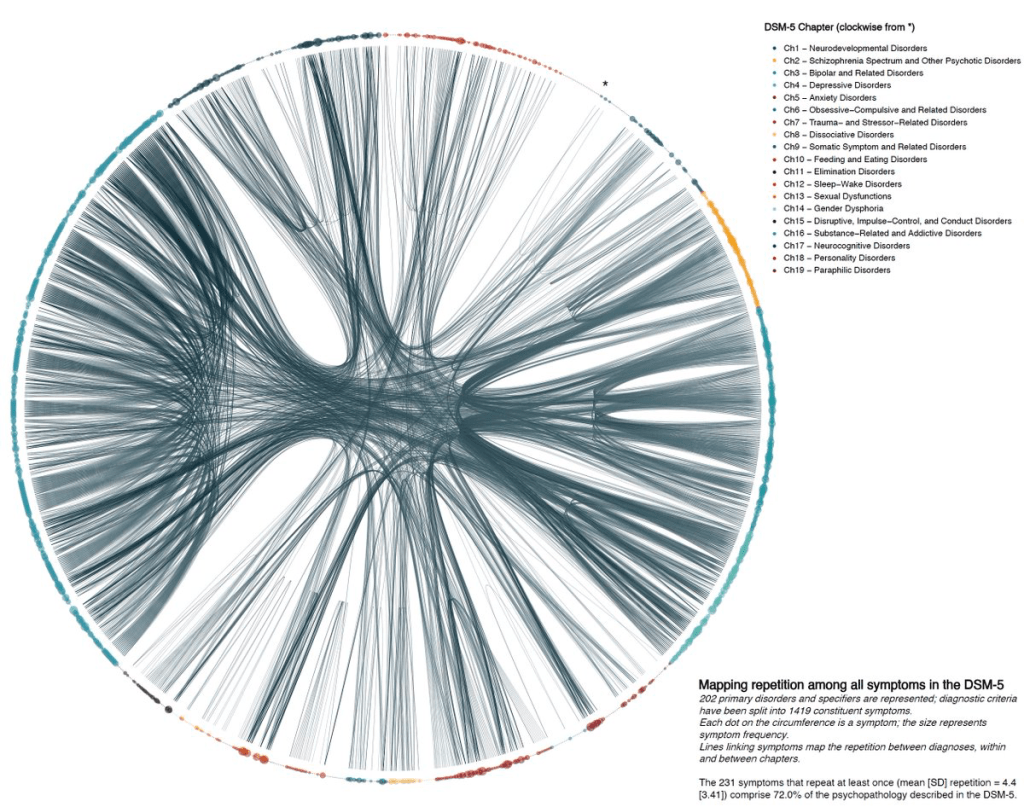
Annals of medical ontology: “Ever wondered how many symptoms make up all of adult psychopathology described in the DSM-5? It’s 628! How many do you think repeat across multiple diagnoses? If you answered 231 symptoms repeating a total of 1022 times (median 3 times per symptom, range 2-22), good job!

“more than a third of the diagnoses have *every* symptom repeating in at least one other diagnosis”

Church of Reality: Barbara McClintock on Scientific Mysticism and Plant Consciousness from Gaurav Venkataraman, who describes the piece as, “some notes on McClintock, who is in my view the greatest scientist of all time.”

Are Iranian schoolgirls being poisoned by toxic gas? – BBC News (compare to our recent speculations about gender gaps in chronic illness)

“The spread of cases across the country and the fact it has been predominantly affecting schoolgirls, with fewer boys and adults falling ill, were central to his conclusion, he said. The nature of the symptoms and the fact most patients quickly recovered were also key, he said.”

Links for February 2023

How to Achieve Long Term Success on the Potato Diet from Critical MAS. We don’t agree with the conclusions, but this is the kind of criticism we’d like to see more of — disagreement on specific theoretical points that we could maybe try to resolve empirically. MAS if you are reading this, we’re curious to know what you think of the half-tato diet.

​​Also related to our work: No-one knows whether or not a neutral-tasting nutrient-sludge diet leads to enormous weight loss. You could try to replicate this with some friends.

Declining Sperm Count: Much More Than You Wanted To Know. People ask us all the time about doing a deep dive on sperm count — now Scott at ACX has done it, concludes that the evidence is mixed but maybe favors pesticides as a cause, “I’m pretty split about how concerned to be”. We are glad he did it so we didn’t have to.

People love the genre of tweet that goes ‘I’m the author of this article, and you’ve misrepresented it’ so much that they failed to check if the person in question really WAS the author! Extraordinary.

Clever study design: recruit people who are already purchasing psychedelic drugs on the black market and give them a self-blinding protocol to get a placebo controlled study. The results: microdosing likely has no pharmacological benefits.” (h/t Basil Halperin)

Gary Wolf meditates on the fact that in the study of health, rarity is common.

Erika Updates #0: A Publishing Experiment

Depression researchers rethink popular mouse swim tests (from 2019): 

Nearly every scientist who has used mice or rats to study depression is familiar with the forced-swim test. The animal is dropped into a tank of water while researchers watch to see how long it tries to stay afloat. In theory, a depressed rodent will give up more quickly than a happy one — an assumption that has guided decades of research on antidepressants and genetic modifications intended to induce depression in lab mice.

But mental-health researchers have become increasingly sceptical in recent years about whether the forced-swim test is a good model for depression in people. It is not clear whether mice stop swimming because they are despondent or because they have learnt that a lab technician will scoop them out of the tank when they stop moving.

Obesity seems like it would be bad for your health and would make you more likely to die from things like heart attacks. But many studies find no effect of BMI on mortality — this is sometimes called the obesity paradox. However, a new paper argues that this can be explained by simple statistical biases. The paper concludes, “the mortality consequences of overweight and obesity have likely been underestimated, especially at older ages.”

How to Live Near Your Friends

Claims about fascia and chronic pain. Some parts seem plausible but also sounds a lot like any miracle cure claim, so, dubious. We’d be interested in hearing points for or against.

Is Everything an MLM? Only tangentially about MLMs, also about e.g. the false lure of graduate school:

But academia … does something different. Like my yoga teacher, it affirms what so many of us wanted to believe about ourselves: that we’re good enough, smart enough, potential-filled enough, to go to grad school. Maybe it started when you wrote a paper you were particularly proud of, and your professor told you, off-handedly, “maybe you should think about grad school.” Maybe someone else in your life — the parent of a friend, someone you nannied for, your parent — told you the same. When my undergrad professor told me as much, it was like someone had unfogged the windshield of my life: oh, yes, there’s the road in front of me! Everyone I met in grad school had some version of this story.

Leonardo da Vinci’s forgotten experiments explored gravity as a form of acceleration

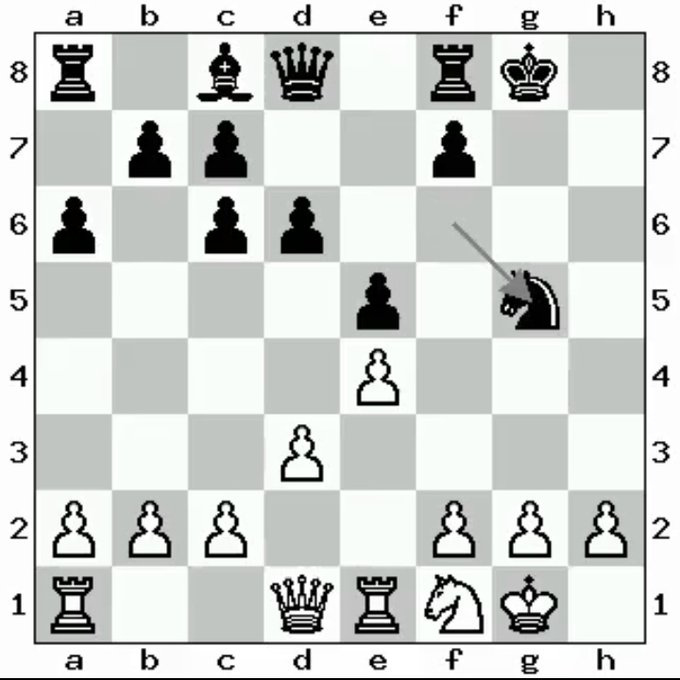
User on r/AnarchyChess placed Stockfish (white) against ChatGPT (black). ChatGPT invents moves, cheats blatantly, still loses. Full transcript here. Things go ok until… well, take a look: 

looks like a regulation move to me, boss

Eminem becomes a Second Century Warlord — basically a crash course in Romance of the Three Kingdoms

Mike vs ADHD 2023. Interesting prediction-market-based N=1, luck-based medicine self-experiment. Will Mike regret using nicotine gum? You predict, Mike decides.

Thread about Chinese linguist Yuen Ren Chao’s innovative 1872 Chinese translation of Lewis Carroll’s “Jabberwocky”.

New Lives in the City: How Taleban have experienced life in Kabul. Complaints include:

“Another thing I don’t like, not only about Kabul but broadly about life after the fatha, are the new restrictions. In the group, we had a great degree of freedom about where to go, where to stay, and whether to participate in the war.

However, these days, you have to go to the office before 8 AM and stay there till 4 PM. If you don’t go, you’re considered absent, and [the wage for] that day is cut from your salary.”

​​Some insects I found inside dried Turkish figs from Trader Joe’s. DON’T READ if you are squeamish about the idea of bugs in your food. Seriously.

Rob Sheridan: I Have a Confession to Make. Rob comes clean about being the one to create The Dancing Baby.

I took my new revelation to a friend older than I, a game designer who’s been involved with internet technology since the beginning. He too was amazed by my confession, but from a different angle I’d never considered: one of an internet historian. “I think you made the first true meme,” he told me. We looked through lists of the earliest internet memes, and although several preceded The Dancing Baby (like the Hamster Dance), their popularity had remained contained within the internet. The Dancing Baby was the first meme to truly permeate meatspace.

Links for January 2023

@MegaDarren on twitter: “Just learned that Dutch scientists left a hamster wheel outside in 2014 and saw that tons of wild mice used it just for fun as well as frogs and slugs? All the creatures of the forest wanted a turn?? Absolutely phenomenal” @EvilCactus comments: “I hear the Rocky theme play in my mind every time I look at that photo of the snail. Might print it out and use it as a motivational poster.” Original paper is here.

Phytomining for lithium: “…the team also studied which plants could accumulate lithium from the soil at high concentrations. Starting with 34 candidates, the scientists eventually whittled the list down to just three: cabbage, rapeseed and sunflower.” The original paper appears to be Induced Plant Accumulation of Lithium. From the abstract: “The question we sought to answer was, can any of the plant species investigated accumulate Li at levels high enough to justify using them to agro-mine Li. Results show maximum accumulated levels of >4000 mg/kg Li in some species.” 

Joseph Rotblat reflects on why he left the Manhattan Project in 1944.

N = 1 study on improving finger strength, with wild results (h/t Applied Divinity Studies). Warning: don’t try this at home if you don’t have lots of climbing experience.

​​​​Ray Bradbury on the Mysteries of the Universe

Teen Vogue profile of Goddard College

Unusual proposal: Status Microtransaction Paradigm of Psychology. Probably not the grand paradigm we’re looking for, but we like how fresh it is. 

“It seemed absolutely crazy. The idea that an Iowa housewife, equipped with the cutting-edge medical tool known as Google Images, would make a medical discovery about a pro athlete who sees doctors and athletic trainers as part of her job?” Doesn’t seem crazy to us! Extremely condescending tone aside, this is an interesting read. The most recent update we were able to find is this GoFundMe from October 2022.

“Wild how little is known about the genes at the top of the [list of genes with the strongest effects on obesity] (UBR2, GPR75); the Wikipedia pages for these genes are ~5 lines”

​​Great investigative work by Ivan Vendrov on twitter:  

The famous “36 questions that lead to love”… don’t. The NYT and everyone else reported a different set of questions from the same authors, modified to be less romantic! The original set of *40* questions wasn’t online, but I emailed the authors and got a copy. 

In particular we want to emphasize the moral Ivan draws from this story, which seems to us entirely correct: 

I continue to be amazed at the incredibly high returns to “just check the original source”. Thanks to @alexeyguzey, @slatestarcodex, @ArtirKel and the o.g. Noam Chomsky for hammering this lesson over and over again until it stuck with me.

weird medieval guys on twitter: “a lot of people in medieval england paid their rent in eels. if you live in england, you can use this map of real, documented eel rents to possibly find out how many eels your home town was worth….thank me later!” Our English readers are encouraged to find out for themselves the answer to this pressing question: “were your ancestors getting scammed out of their precious eels by greedy landlords?” Eel Value Tax fixes this.

And for those of you not on the rainy isles, you may be as surprised as us to hear of this daring UK jewelry heist from 2015. “It was reported that the burglars had entered the premises through a lift shaft, then drilled through the 50 cm (20 in) thick vault walls with a Hilti DD350 industrial power drill. … video showed people nicknamed by the newspaper as ‘Mr Ginger, Mr Strong, Mr Montana, The Gent, The Tall Man and The Old Man’.”

Argument: Because the borders of an empire can’t be more than one month of travel away from the capital, Earth will keep the moon colony but Mars will become independent. Important implications for Gundam fanatics.

Benzene as another candidate for the cause of the obesity epidemic? Low Grade Benzene Exposure Induces Metabolic Dysbalance and Hypothalamic Inflammation in Mice (h/t @sparrowhawkcap on twitter)

Soviet leadership reportedly had nightmares about nuclear war

Stanisław Leszczyński: Wins the throne of Poland in a civil war, loses it, another civil war happens, wins back the throne, yet another civil war, loses it again, ends up as Duke of Lorraine, dies when his silk robe catches fire when he falls asleep by the fireplace. Still somehow the longest-living Polish king. 

Before Scooby-Doo there was The Famous Five, a series about four children and their dog Timmy who go on adventures or solve mysteries. Apparently this series was wildly popular at the time, but we’ve never heard of it. The five are led by George, who “gets cross when anyone calls her by her birth name” and “[asks] that her name be prefixed with Master instead of Miss.”

Rodney Brooks makes predictions and scores predictions from past years about three topics: 1) self driving cars, 2) artificial intelligence, machine learning, and robotics, and 3) space travel. His conclusion: “In the last couple of years I have started to think that I too, reacted to all the hype, and was overly optimistic in some of my predictions. My current belief is that things will go, overall, even slower than I thought five years ago.” Only time will tell, but take a look at this updated view from 2018 if you need an antidote to the hype around some of these subjects.

Tamara and Tess are running a self-experiment on remissions they experienced in their ME/CFS (Myalgic Encephalomyelitis/Chronic Fatigue Syndrome) symptoms after taking antibiotics. The first phase of the project is fully funded but they are still accepting donations.

60 Minutes covers semaglutide, gives some mainstream attention to the fact that doctors don’t understand obesity, and to the idea (widely accepted in the research world) that diet and exercise aren’t the end-all be-all of treatment, that willpower isn’t the issue. This is the one you can show to your mom (figuratively or literally). 

Is director James Cameron the greatest living anthropologist? 

Unusual claim that foods containing more potassium are also better at sating hunger (h/t InquilineKea on twitter). Not sure about where these figures come from, and they make a number of strange claims, but we’re sharing this link just in case.

Michael Nielsen on discovery fiction. We like this idea a lot, someone should write a set of textbooks that are all discovery fiction (there are a few similar books already). We might do this at some point, but in the meantime if you’re interested in writing or funding such a project, let us know, maybe we can put people in touch.

Links for December 2022

We commented on this in an earlier links post, now Aella goes off on the same point: ​​You don’t need a perfectly random sample for useful data, jfc. She’s right by the way, as is Scott Alexander. See also Eigenrobot on twitter: “the biggest problem in both statistical practice and criticism of statistical practice is braindead insistence on following form rather than consideration of whether adherence to form is sufficient to produce the desired insight or necessary to produce any insight respectively”

The Genealogy of Chinese Cybernetics

how and why to be ladylike (for women with autism) — contains dune quotes as promised 

Bad words get more differenter over time, especially adjectives: The word for good is similar in English (“good”) German (“gut”) and Faroese (“góðan”) But the word for bad is “bad” in English, “schlecht” in German, and “illur” in Faroese. In new research, we show that this is a broader pattern that we call “valence-dependent mutation”

@selentelechia on twitter has been trying an “old 4chan iodine theory on fast food salt cravings”, which is about as crazy as it sounds, but she’s experienced some pretty good outcomes: “I’ve been doing this for two days and my hands aren’t cold anymore, nor are they taking half an hour to warm up after coming inside … I don’t feel a constant low level impulse to lie down”. Seems interesting.

Collin Lysford uses the example of IQ to point out how weird patterns of association plus noise can look like pretty generic correlations.

“Many cell lines that are widely used for biomedical research have been overgrown by other, more aggressive cells,” begins Wikipedia’s list of contaminated cell lines. “For example, supposed thyroid lines were actually melanoma cells, supposed prostate tissue was actually bladder cancer, and supposed normal uterine cultures were actually breast cancer … Estimates based on screening of leukemia-lymphoma cell lines suggest that about 15% of these cell lines are not representative of what they are usually assumed to be. … Contaminated cell lines have been extensively used in research without knowledge of their true character. For example, most if not all research on the endothelium ECV-304 or the megakaryocyte DAMI cell lines has in reality been conducted on bladder carcinoma and erythroleukemia cells, respectively.” (h/t @MasterTimBlais)

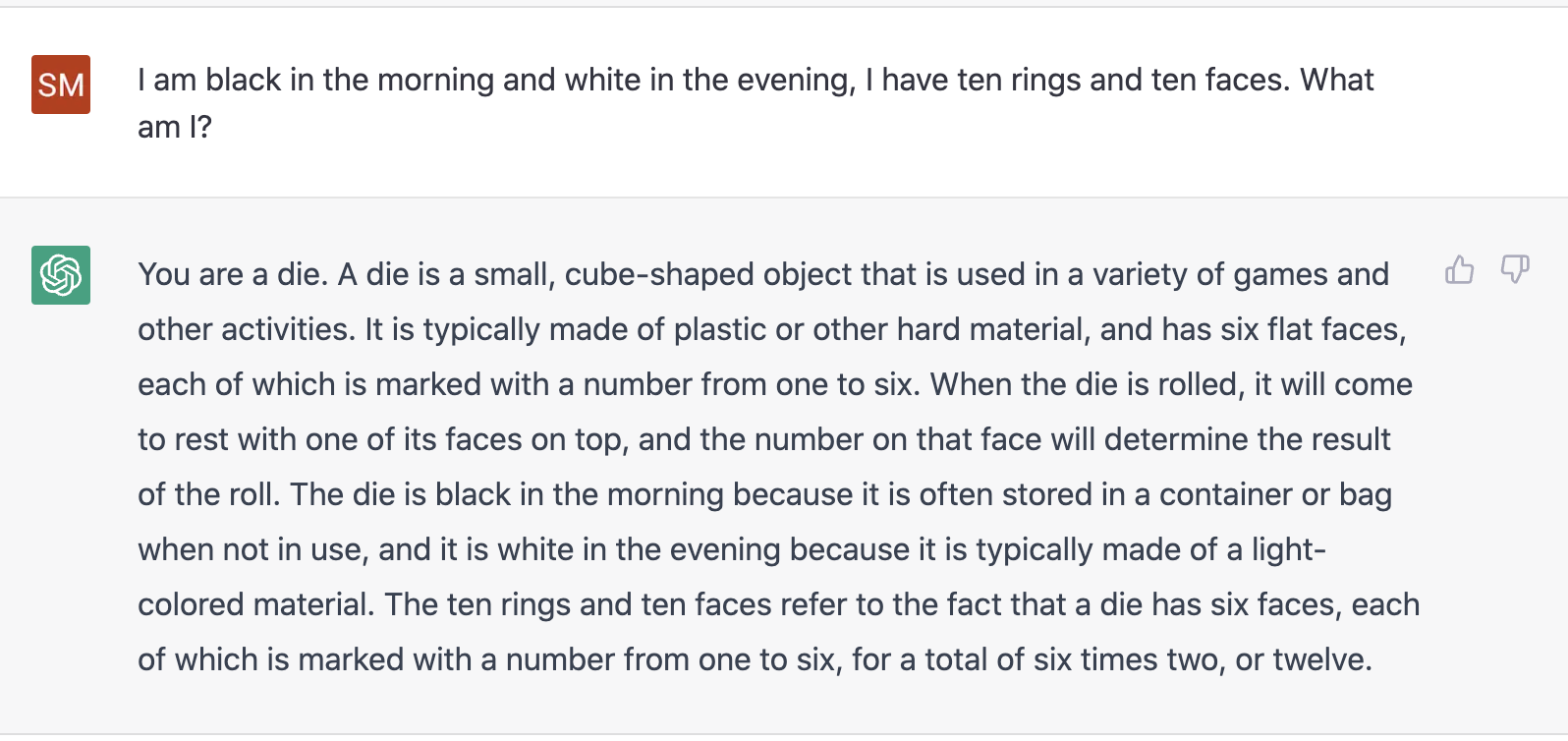
Chat GPT: Weirdly good at correcting OCR errors in historical texts. Good at condensing mind-numbing academic research into something you can actually read, just ask it to “rewrite this obtuse paper as a children’s book”. Ok at riddles until you give it a riddle with no right answer, in which case it confidently comes up with a completely nonsensical explanation. In this example, it can’t even count:

At-home caffeine analysis by a coffee YouTuber, with some surprising findings (h/t “Rachel” on twitter) 

@goblinodds asks twitter, “do both of your eyes see the same colors or is one’s input cooler-toned than the other?”, finds that 20.9% report different temperature input from different eyes. Uh???

Missed opportunity: You could have owned CHARLES DICKENS’ PICKLE FORK, for the low low price of $6,120!

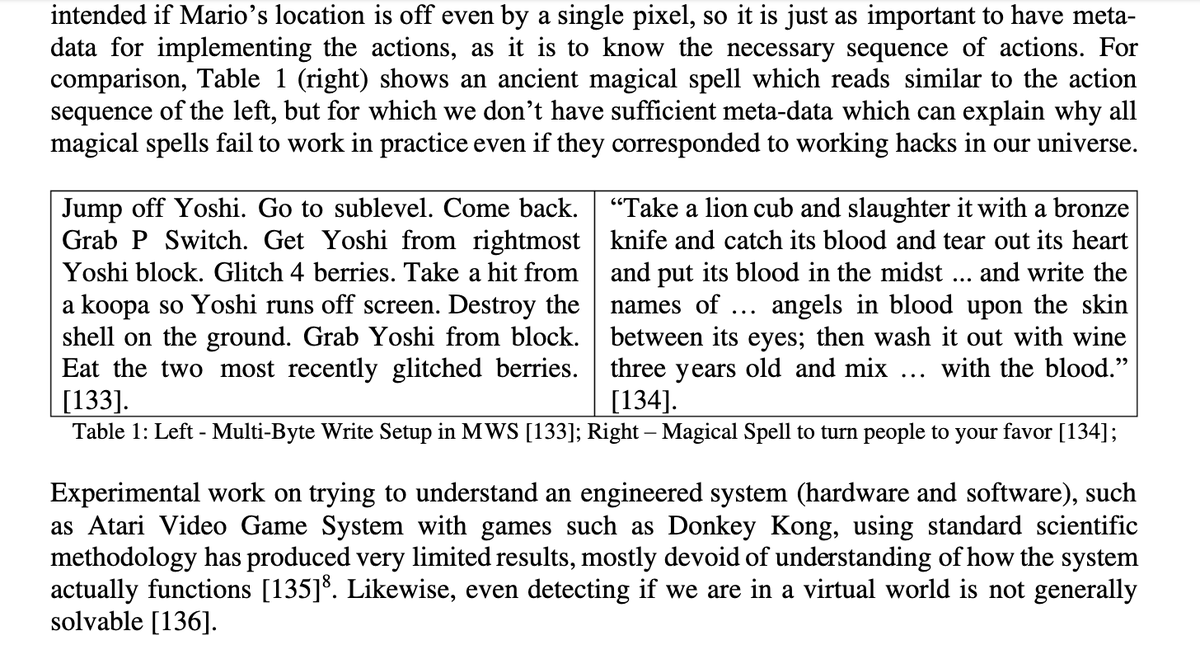
“Many researchers have conjectured that the humankind is simulated along with the rest of the physical universe – a Simulation Hypothesis. In this paper, we do not evaluate evidence for or against such claim, but instead ask a computer science question, namely: Can we hack the simulation?” Science Banana draws particular attention to Table 1:

Doing science online – A view on science blogging from back in 2009. And from the same author very recently: Exploratory notes: Community as the unit of scientific contribution 

“I think of the spider whom, sitting like the iris inside a lacy eye, tugs and flexes and tightens its grip on different strings, creating an interrogative experience with web and with world. Scientists have likened this behavior to the activity of a brain itself, sifting through and reacting to stimuli. Each tug is a question, each returning vibration a reply. … extended cognition researcher Hilton Japyassú has shown that cutting a part of the silk dramatically shifted and disoriented the behavior of the spider, and seemed to imitate the effects of a lobotomy. This begs the question. Where is the spider’s mind? Is it inside the spider’s actual brain? Is it in its spinnerets or legs? Is it in the web itself?”

Great bloggers are rare, weird, and not team players. Showing our biases here, but we actually think that this is an argument for teams of bloggers, like yours trulies. For one person to be a great blogger they may indeed need to be obsessed about writing all the time & very widely read & interested in just about everything & willing to work for relatively low wages, but if your blogging team is two people, you only need to have that combination of traits between the two of you. If you can make a blogging collective of four people, you only need one person who has each of those traits! Maybe it’s a crazy scheme but we’re the ones with the hive mind over here.

If you ask ChatGPT to behave like a Linux terminal and start feeding it Linux commands, it will invent an entire fictional machine, complete with an entirely hallucinated internet that exists only inside ChatGPT’s language model. If you look in the letters folder, you can (sometimes) find John Doe’s resume.

horrifying-pdf-experiments/master/breakout.pdf (h/t @andy_matuschak)

Links for November 2022

Jeff Nobbs and Zero Acre Farms released a white paper titled How Vegetable Oil Makes Us Fat, which is partially a response to the questions we raised in response to Nobbs’ previous work in Interlude E: Bad Seeds of A Chemical Hunger. We’ve read the new piece and are going to discuss it with Jeff and the rest of his team, and we’ll put out more posts if the discussion changes our mind about the role of vegetable oils in the obesity epidemic.

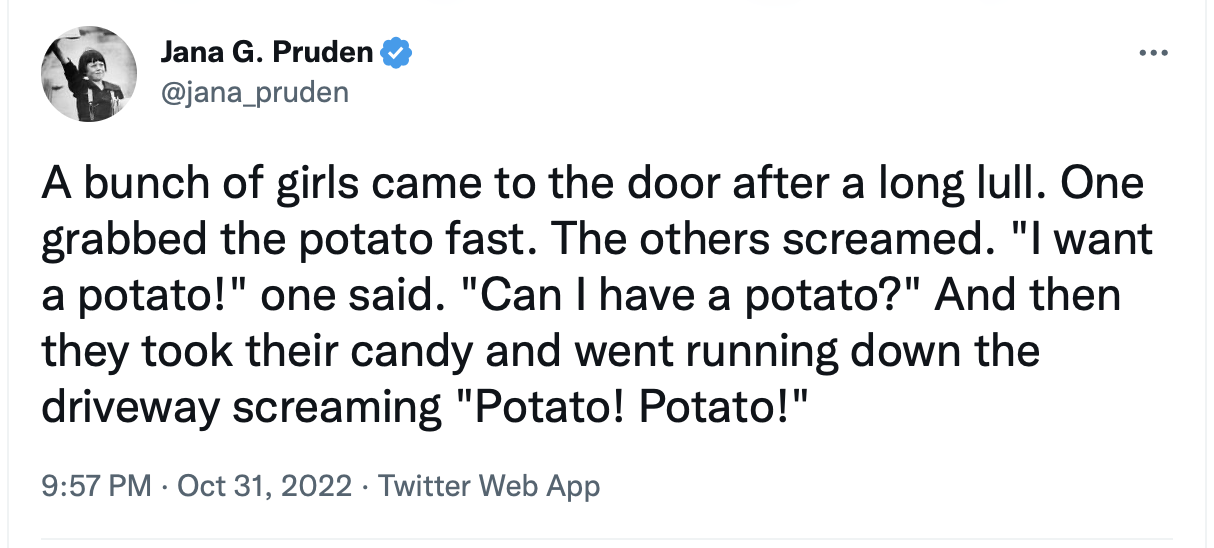
Do children prefer candy or potatoes? It’s not the most rigorous experiment of all time, but this informal halloween study by @jana_pruden suggests that many if not most children prefer the potato (as do 77% of twitter respondents). Someone should do a replication, maybe next halloween? 

Hacker News comment claiming that it is 100x brighter outside than inside. “I bring this up because one of the largest factors in myopia development appears to be outdoor light exposure in childhood.”

The Washington Post interviews “Twitter king” @dril. Speaking of @dril: time to get a new car, the Eminem song.

If you’re worried about the death of twitter, why not move to Twitter 2, a Google form and Google doc maintained by a math professor at the University of Toronto.

Early tech queen Susan Kare draws in MacPaint. This woman can do more with an ellipse tool than most of us can do with all of Photoshop. 

Big new investments in induction stoves. This is crazy exciting if it pans out (get it? pans???) because seriously, when was the last time we saw a common household appliance get 10x faster? This will probably be really good for indoor air quality, our free tip for the induction stove teams is to measure nitrogen dioxide and shit and use that comparison in your marketing materials. You’re welcome 😉 

Roman Emperor previously believed to have been fake may have been real — Authenticating coins of the ‘Roman emperor’ Sponsian

Maarten Sap argues that large neural networks like GPT-3 don’t seem to develop theory of mind, a basic element of human social cognition.

Ada Palmer writes a post about one of the most radical ideas of the American Experiment: that all people can benefit from education. “If given a good teacher, a good reading list, and some newspapers, all human beings, or at least the overwhelming majority of them, will become capable of wise judgment and self-rule.”

National Library of Scotland tool that lets you peer through modern satellite photos into old maps, among other neat features.

Simon Sarris on twitter argues that B12 deficiency is common, and may be the cause of what is often diagnosed as anxiety, executive dysfunction, depression, and even autism. If he’s right, this would be pretty easy to study and would be an amazing finding. We haven’t gotten a chance to take a close look yet, curious to know if people think this theory is plausible.

A reader sent us this: Tire particles can impact fresh water

@CollinLysford shares an interesting test from @qkate that claims to reliably distinguish between chronic fatigue and depression. Ask your patient, “if you felt completely better tomorrow, what would you do?” If they go, “idk”, it’s depression. If they describe a huge list of things they would love to pursue, it’s chronic fatigue. Whether or not this test actually works for depression vs. CFS, Collin is entirely right that this is the kind of “ontological firepower” we need more of.

Command+F to search documents for text strings has changed scholarship. Tools like this OpenAI API from Dwarkesh Patel will change it even more.

Vice: Feds Seize One of the Largest Sites for Pirated Books and Articles, Z-Library

Historicizing the Self-Evident: An Interview with Lorraine Daston

The Guardian: ​​No one in physics dares say so, but the race to invent new particles is pointless. (We’d be curious to hear thoughts on this one from physicists in the audience.)

What it’s like to dissect a cadaver

Dapplegrim is a Norwegian fairy tale collected by Peter Christen Asbjørnsen and Jørgen Moe in their Norske Folkeeventyr. A man comes home to find that his parents are dead and his elder brothers have split up the family fortune — all he’s inherited are 12 mares, each of which has just had a foal. He praises the most beautiful foal, which tells him he should kill all the other foals and let it drink the milk of all 12 mares for a year. The young man is like “sure sounds reasonable” (“Yes, the lad was ready to do that; so he killed all those twelve foals, and went home again”), kills the other foals, and comes back a year later to find the foal “so fat and sleek, that the sun shone from its coat”. Events escalate to the point where the man and the giant horse go to hell and kidnap the Devil’s horse to win the hand of the princess in marriage.

Links That Go Bump in the Night (October 2022)

Nicky Case is doing an unofficial Potato Diet 3-Month Follow-Up Survey, at that link. Nicky is doing this because she’s “too impatient for the 6-month follow-up, and also because a 6-month follow-up wouldn’t be able to tell the difference between ‘weight regained at fast as the original weight loss’, and ‘weight regained at 1/6 the rate as the original weight loss’.” If you participated in the potato diet and you’re interested, consider filling it out! 

Related: Nicky did 50 days of half-potato diet and found it was about half as effective as the full potato diet.

🪨📜✂️ — comments say, “This was a wild ride from start to finish”

Vice — Students Are Using AI to Write Their Papers, Because Of Course They Are

Alligators Exposed to PFAS Show Autoimmune Effects (h/t @owenfuckem on twitter)

Paper from 2020: negative association between percentage of obese people and water hardness in water purification plants (in Japan, which may not be all that representative.) The correlation is about r = 0.5, but the sample size is only 9 regions. The paper says this is statistically significant but unless we’re missing something, r = 0.5 shouldn’t be significant with n = 9. So probably don’t take this one too seriously but still, food for thought.

​​Dana Fischer “is an American Magic: The Gathering player. She is tied for the youngest to make the second day of a Grand Prix tournament (at age eight) and is the youngest to win cash at a Grand Prix (at age nine). … Her father started teaching both daughters Magic when they were very young, before they could read the card text. They learned to play by memorizing the cards. … After they learned to read, the process went faster.” Inevitable comparison to the Polgár Sisters.

r/dune bans AI-generated art — “Butlerian Jihad indeed”

Nikon photo contest reveals fantastic microscopic world that surrounds us, and specifically, reveals the terrifying faces of the ants. Robert Hooke would be proud, you know, probably.

Metaculus gets in on the replication crisis — which psych studies will replicate?

Friend of the blog @atroyn is starting a new grant program: “if you sleep on a mattress on the floor anywhere in the bay area, if accepted someone will come to your house and install a bed frame” (actually by this point applications are closed)

Old reddit post speculating that Pennywise the Clown and Mary Poppins “are members of the same species of monster, and they work on the rules set out by Monsters Inc”. Surprisingly strong argument.  

Living plant controls a machete through an industrial robot arm. “Plant machete has a control system that reads and utilizes the electrical noises found in a live philodendron. The system uses an open source micro-controller connected to the plant to read varying resistance signals across the plant’s leaves.”

Demo piece for utonal just intonation guitar

Over 200 Chinese poems can be found on the walls of the detention barracks at the Angel Island Immigration Station. Here’s just one:

*Poem by One Named Huie from Heungshan Encouraging the Traveler*

Just talk about going to the land of the Flowery Flag and my countenance fills with happiness.
Not without hard work were one thousand pieces of gold dug up and gathered together.
There were words of farewell to the parents, but the throat choked up first.
There were many feelings, many tears flowing face to face, when parting with the wife.
Waves big as mountains often astonished this traveler.
With laws harsh as tigers, I had a taste of all the barbarities.
Do not forget this day when you land ashore.
Push yourself ahead and do not be lazy or idle.

​​AI comes for most unlikely job of all: boxing judges

“For many, the concept of a department as something along the lines of 50 autonomous professors with 50 separate bank accounts working more or less on their own projects feels like a natural default.” But: “A physics department with $20 million and two elite scientific directors able to allocate all resources as they saw fit could do remarkably different research than a department of 50 physicists with about $400,000 each. The model is also flexible in a way that makes intuitive sense for scientific work.”

Links for September 2022

Pig music

What is this cartoon? Tens of thousands of people on twitter looked, and for a long time, no one could identify it. But eventually they managed to track it down — it’s a still from a 1991 TV movie about how “’soulmates’ from another planet” teach Earth people that confidence can help to save Christmas. Sometimes it takes a million eyes to solve a mystery, but on the internet, we HAVE a million eyes.

Middle schoolers in Rhode Island come together on Discord to document how their teacher treated female classmates. Now the Discord archive is in the hands of the US attorney’s Office, the state Department of Children, Youth, and Families, the state Department of Education.

Normally in English you can turn a verb into a noun by adding “-er” to the end (travel -> traveler, rule -> ruler, etc.). You can also make compound nouns by giving the verb an object and putting the verb second (fight fire -> firefighter). But there are also a couple dozen “exocentric verb-noun compound agent nouns”, where the noun starts with the verb and ends with the object. Almost all these nouns are vaguely unsavory (like pickpocket, cutthroat, and sellsword), almost all of them were coined in the same 150-year period, and we don’t really know where they came from.

Aella releases the results of a new study where she “asked trans people how much their preference for various sexual things changed after hormone replacement therapy”. She describes her sample size as “real low”, but 300 is much higher than most psychology studies (which famously often have a mere 20 people per condition). Some criticism from Liminal Warmth on twitter here — Lim says “I don’t think much at all can be drawn in terms of generalizable or solid conclusions from this data set” and points out that there are alternative explanations for Aella’s findings. This is true, but we think it’s the wrong way to look at things. There are always alternative explanations, and the value of a study usually depends on how many explanations it rules out, how much it narrows things down, not how many alternatives are left. Someone might predict, for example, that taking estrogen would make a person much less interested in most sexual preferences, but Aella’s results provide pretty strong evidence against that story. There are limitations to the dataset but there was basically nothing before and now there’s something, so kudos to her. This is what research looks like, and we’re excited to see what Aella does next.

Minimum Viable Airships

One of the earliest pieces to argue against the use of tobacco is the treatise A Counterblaste to Tobacco, written by King James VI of Scotland / I of England. James blames Native Americans for this public-health scourge, but you have to admit that he writes with some style — he calls smoking “a custome lothsome to the eye, hatefull to the Nose, harmefull to the braine, dangerous to the Lungs, and in the blacke stinking fume thereof, neerest resembling the horrible Stigian smoke of the pit that is bottomelesse.”