
Humanity has mapped the earth, so you can’t discover any new continents, mountains, oceans, or rivers. We’ve mapped the stars, and though we haven’t named every single asteroid, the major planets and comets are already taken.
We’ve filled in the periodic table, so you can’t discover any new elements. No chance to name Nobelium or Curium after one of your heroes, no chance to get your name on the Wikipedia page for Ytterbium. But you can still discover the drives.

Being sleepy, hungry, and horny are all different from each other, different kinds of motivation that point towards different behaviors and are satisfied by different things. They are different drives. We have drives for food, water, sex, safety, status, and more.
Maybe a lot more. Because that’s the thing. We don’t know how many drives we have, and we certainly don’t know what each drive is for. Every single thing you do, from eating an omelette to renting a jetski, is backed by some kind of motivation. At minimum we should have a list, but we don’t, which seems like a glaring omission.
Worse, some of the drives that come to mind are probably more than one drive. Everyone agrees that hunger is distinct from other drives like fatigue or pain. But it’s hard to explain things like cravings for specific foods without admitting more than one kind of hunger. It’s hard to explain why you might crave chocolate one day and cheese the next, and ramen the day after that, if there aren’t separate drives for multiple different nutrients.
If you had just a single hunger drive for calories, you would just eat whatever the highest-calorie food available was, maybe literally handfuls of sugar. Instead, people eat and crave a wide variety of foods, suggesting a variety of distinct hunger drives for different nutrients. It’s hard to explain the “dessert stomach” — where, after a filling dinner, you unexpectedly find room for dessert — without accepting that you might satisfy your drive for savory foods and still have an unsatisfied drive for sweets.
At minimum, there’s a drive for salt. We like salty food, to the point where there’s a shaker of pure salt sitting on most kitchen tables around most of the world. No one remarks on this because it’s so common; but if hunger were just about calories, we wouldn’t prefer salty food, and we certainly wouldn’t sprinkle pure salt over our scrambled eggs. But we do, so it looks like we have a dedicated drive for salt.
So we probably have more than one kind of hunger drive, maybe dozens. The same is probably true for other drives. People clearly have a drive for safety, which is expressed as fear. But is the fear of social exclusion you feel when you worry about getting kicked out of your pickleball league the same as the fear you would feel if you were dropped into a cage with a hungry tiger? We know that people are motivated by status, but is there exactly one drive for one kind of status, or do you get different kinds of status from being a rock star vs. a reliable pillar of your community? Are these supported by different drives? No one knows.
This is basically the same situation we faced at the start of chemistry. Everyone agreed on the existence of some elements, usually earth, air, water, and fire. But closer inspection usually pushed people to accept there were more elements, like mercury or sulphur. Without these extra elements, it was hard to explain why some kinds of “earth” would melt when exposed to heat, and others would burn.
This came to a head when careful examination of combustion began to show that there were many different “airs” with totally different properties, leading Van Helmont to coin the term “gas”. It became hard not to suspect that maybe these different gases might themselves be different elements. Finally Lavoisier comes out and says, we clearly don’t know how many elements there are, but maybe there are a lot of them. Like, ten or more! And from that point, chemistry as we know it was born.

It would be hard to take care of yourself in a society that doesn’t distinguish between being hungry and being thirsty. You’d be pretty blind, sometimes you’d be like “what’s wrong with me” and have a hard time figuring it out. You might eke it out in day-to-day life, but you might also pack lots of granola bars and zero water for your three-day hike in the desert. Imagine if we didn’t know that being afraid was different from being tired, or that being too warm was different from being pissed off. Imagine how fucked you would be.
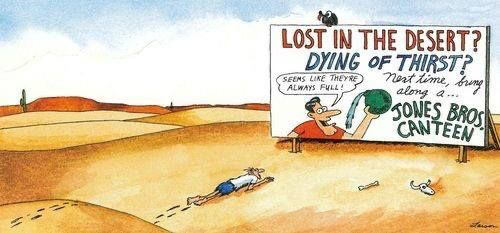
But that’s the situation we’re in right now. Right now! There are lots of drives that we haven’t discovered, and the distinctions we have are totally informal. There’s no process or set of criteria that helps us establish whether two drives are different, or link a drive to a behavior. The distinctions we use just cropped up in our language and culture and now we’re like, yeah fear and desire seem different. But we still have pointless debates about things like “is love different from lust”. This is because these distinctions are unexamined and unstudied — but this is something we can fix.
We agree that there’s a sex drive, but how much do we know about it? Is there just one sex drive, or might there be more than one? People don’t just fuck, they also cuddle. Sometimes a lot. Seems like there might be a separate cuddle drive.
We come up with informal language around the psychological drives all the time — this is where we get terms like “touch starved” or “hangry”. It’s hard to live in a body and not notice some of this stuff, notice that it’s obviously true. But our ontology hasn’t caught up. Again, this is a lot like the situation we were in before we started looking for the elements. Imagine how far you could go in chemistry without knowing about oxygen. We want to discover the cuddle drive, and we want to document it rigorously. They say a double-blind cuddle puddle is impossible, but how can they be so sure? We want to know, what does it mean to be hangry?
Born Too Late to Explore the Earth, Born too Early to Explore the Galaxy, Born Just in Time to Discover the Drives
The list of human psychological drives is just as fundamental as “how many continents are there on Earth” or “what is the genetic code made of, how many letters” or “how many chemical elements are there”. There are a finite list of drives, and with some work we can discover and name them all. But unlike the continents and the elements, which people already got to in the 19th century, the list of drives is basically undiscovered.
Like the 18th century chemists, we will have to invent new research methods for our new questions. But we already have a rough sense of how that would work.
As one example: in issue 1 of THE LOOP, Chandler Garret writes about how he craved “gimme®” brand roasted seaweed snacks, but noticed that they contained almost no nutritional value — just a tiny amount of salt, fiber, and fat, which he could equally well get from any other food. So why did he crave them?
Well, they do contain a pretty good dose of iodine, 55 mcg or 35% of the FDA daily value. He thought this might be good evidence for an iodine drive — without an iodine drive, it’s not clear why he would be interested in these snacks at all, since they barely contain anything else! To test this, he supplemented high doses of iodine solution for 27 days. The result? “I found that seaweed snacks now tasted like dry plastic,” he wrote on day 18. “Almost no appeal at all.”
This is a sample size of just one, but it’s already pretty strong evidence that at least this one person has a drive for iodine; and if one human has that drive, other humans probably have it too. It’s not clear why he would crave seaweed snacks if he didn’t have a drive for something in the snacks. Seaweed snacks contain very little nutrition, so it’s hard to imagine what that nutrient could be if it wasn’t iodine. And it’s hard to explain why supplementing iodine for a couple weeks would make the seaweed snacks repulsive, unless he finally satisfied his iodine drive and quieted the only part of his mind that wanted to put sheets of dried algae in his mouth in the first place. Who thought that was a good idea? Well, the iodine drive did.

Institute for Drive Studies
We’ll level with you: this is a funding proposal, to do the first step in the work that we described in The Mind in the Wheel.
We think that the list of psychological drives is one of the most important open questions in science, and if we got a no-strings-attached budget, this is one of the main things we would work on. If you’re disappointed that you missed out on astronomy, physics, and chemistry, this is another bite at the apple.
People think about discovering chemistry and they imagine things like atomic number or isotopes or atomic weight. Those are all pretty important. But before you can discover this information for each element, you need a list of the elements in the first place!
Imagine it’s 1789 and you’re an early chemist. Starting from 1789, it will take 150 years and untold resources to discover the periodic table and fill it in. But you have no idea how long the whole process will take, let alone how long it will take to discover the next element, because no one has ever done this before.
It won’t take us as long to discover the drives as it did for chemists to discover the elements, because we have their example to guide us, and we also have computers. We think that some big discoveries might happen very, very fast. But it will still take a long time and it’s kind of hard to scope. This is a pretty big project.
But the fact that it’s such a huge fundamental question is part of the appeal. If you had the chance to go back and fund the discovery of Carbon and Oxygen, and maybe get them named after yourself — wouldn’t you?


If I wwere starting this, I would begin with mineral deficiencies and maybe later move into vitamin deficiencies. Get that figured out first.
I hhave heard plenty of stories about people craving salt. I have also heard about sailors with scurvy craving green plants of any kind.
LikeLiked by 1 person
Mineral deficiencies seem like a strong starting point because elements are so discrete.
Can you find the source for those stories of sailors with scurvy craving green plants? We’d suspected that there might not be a drive for vitamin C but this would be strong evidence in the opposite direction.
LikeLike
Excess hunger as a kind of pics, eating food looking for nutrients in the wrong places. Interesting idea.
I don’t fully recall where I heard about the sailors, but a quick search (er… ChatGPT) gives examples like:
Pardon, I meant pica, above. Excess hunger as a disordered hunger drive.
But which hunger drive? Very interesting question.
LikeLike
Watercress is known to be high in vitamin C. Capt. Scott of the Discovery planted watercress during a scurvy outbreak among his crew, which cured their scurvy symptoms for a time. From a quick google search it looks like the other vegetables listed are also high in vitamin C, and have 25-35% of the recommended daily value in a serving. This doesn’t seem like pica, it seems like a specific drive for vitamin C.
LikeLike
Ok; here’s a model.
1. Many biochemical pathways have a plan A and a plan B, because humans have lived in highly variable environments and not having a plan A results in being dead more often.
2. Many plans B trigger a small number of warnings chanels to higher authority. Distress from mineral deficiency and distress from vitamin C deficiency might or might not share a warning chanel.
3. Receiving the warnings feeds into <unspecified, how percepts are generated> so that <by a mechanism that I am abstracting> increases in the level of warning are unpleasant and decreases are pleasant.
4. Part of <unspecified> is learning to do more of whatever leads to <abstract> pleasantness.
5. Sailors who have been on long journeys, have usually been on shorter journeys, and have <operated the abstracted mechanism> to learn that greens feel good afterwards.
6. The equivalent, more severe, situation also triggers the <abstracted> learning.
By ‘drive’, do you mean the learning, or the warning channel? It has a significant effect on how stable your results will be.
LikeLike
I’ve been thinking on and off for the past year about what drive discovery could look like. I feel like the natural conclusion one comes to after thinking about it for a while is that this will likely be orders of magnitude more challenging than assembling the periodic table. This is because there are likely hundreds of drives, and our command of neurobiology is not yet strong enough that we can engage in a rote enumeration of pathways (ignoring obvious concerns about combinatorial explosion). I think this becomes quite clear when, for example, considering the possible malfunctions of drives that lead to sensory disorders like the autism spectrum or ARFID.
Going from careful self-observation to an even remotely detailed specification of a governor (let alone “proving” that the drive does indeed exist and is irreducible) will likely be quite the team effort, and will become more and more challenging when the genetic lottery inevitably forces us to eventually study people with “rare” (i.e. undetectable on average across a population) drives.
A deep understanding of sociology will likely also be needed to speed up drive discovery by taking advantage of and reinterpreting humanities research and folk literature done decades to millennia ago. For example, to add to the discussion of sex drives: the goal of unbundling sex and romance is a core part of relationship anarchy. It is popular to refer to “the” ontology of drives as a “smorgasbord.” I make no attempt to link to one here because (perhaps in the spirit of anarchism) there is no community consensus on what the ontology should be. Depending on how intense a particular ontologist wants to be, a smorgasbord can contain dozens of possible drives.
If there is any silver lining to the above, it is that drive discovery, unlike similar classification programs in the natural sciences, will not at the outset need to consist entirely of basic research. Given my personal experience with researching ARFID in my free time, there is much to be gleamed by studying existing literature, with much of it freely accessible through preprint servers like PubMed and the various rXivs. Honestly, the hardest part of getting something like this off the ground is figuring out where to start since a project like this is so inherently expansive. I imagine a small but competent team of diverse researchers could probably put together a v0.1 of a map of drives (perhaps structured like a diagnostic manual) in a year just by reading and thinking from first principles. (Perhaps something like this already exists and we’re all horrible at web searching.) This would be absurdly helpful for getting people involved, methinks, since it gives everyone something tangible to argue about and makes blind spots clear. Perhaps one of those researchers ought to be me. Shrug.
LikeLiked by 1 person
Always a pleasure to read a piece by you guys.
The parallel with the 4 elements reminded me of the theory of the 4 temperaments, which is sort of its psychological equivalent from the middle ages — and our current theories of emotional drives are indeed not much better!
When it comes to nutrition I’ve always assumed that mineral and vitamin imbalances in the body would orient your tastes at a given time, which is actually somewhat esoteric and unproven. Could we apply this logic to our emotions too? Including the “bad” ones, like how some people seem to need some amount of drama in their lives?
Is there a reason you’re not on Substack ? I guess you could reach much more people. I blog occasionally and I’ve been keeping my own website to keep my independence but it limits my reach.
LikeLike
Thanks!
If you’ve seen the rest of The Mind in the Wheel, you’ll see that we think that cravings are the exact same thing as emotions, or rather a type of emotions. All of them are the error signal in a control system, so the exact same logic should apply.
People sometimes encourage us to move to Substack. We have a preference for keeping our independence and we’re not really trying to maximize reach right now, so it hasn’t happened. Maybe if something changed or Substack made us some kind of offer we would consider it. Or maybe at some point we’ll put up a mirror so people can also read us there.
LikeLike
Further to slimemoldtimemold, I’m currently reading “How Emotions Are Made” by Lisa Feldman Barrett. She claims that there is good science for:
– affect is (until proven otherwise) hardwired in the brain, and it is very simple: good/bad X aroused/calm
– all other emotion-like states are recognitions, using the ordinary recognition process for e.g. partially visible objects, of combinations of affect, circumstance, and thought
– experiential blindness is a condition of being in a combination for which there is not yet a recognition, so it reads as buzzing confusion
– the subset of lived experience that is not buzzing confusion, is an experience of simulating the world that is predicted by the recognitions
This fits with my prejudice that definitional work is required in parallel with the empirical work, to clarify what counts as a drive and where it fits on the paths between sensation (including internal sensations) and action.
LikeLike
Further to HyperTorless, do you mean Gretchen Rubin’s theory, which may still be on the happiness blog, but I’ve found something more like a book review:
https://gretchenrubin.com/books/the-four-tendencies/
?
LikeLike
No I was thinking of Hippocrates’ “humorism”:
https://medium.com/@d.rovnyi/the-four-temperaments-of-personality-c9cdd659340b
LikeLike
And 97% of bugs crawling or flying or doing whatever insects do on earth…
very nice post. Thank you.
LikeLike
Incredible article. Really enjoyed it.
Would definitely read a book about this, might even be tempted to write something myself.
To the point some others have made, mineral deficiencies are certainly a place to start, but that wouldn’t be all. What about love / lust as you mentioned, or cuddle neediness? There’s a drive in some to be loved, where others don’t have the same drive. Likewise, there’s a drive in some to prove themselves, whilst others again, might not have that.
LikeLike
Excited to see you post again, and again on an interesting and provocative subject.
Recommend minerals/micronutrients as a focus.
Why don’t I hear reports of highly-flavored multivitamin cravings?
Observation: our drives can be out-sourced to our food sources. I don’t need to have an iodine meta-governor etc. if I eat cows and they have good iodine control.
If minerals/micronutrients, perhaps looking at other lifeforms first would be easier?
LikeLiked by 1 person
Good question about multivitamins! There are a couple of potential answers, and it could be some combination: we’re already topped up on most of the things in the multivitamin, they’re not in a bioavailable form, they’re not in the form the drive looks for, we don’t have drives for most of the things in multivitamins (if we did, we wouldn’t need the vitamins!), something about the pill format (size, no chewing, no distinct flavor, etc.) keeps the drive from making the connection.
LikeLiked by 1 person
Coming back to the Gimme example – if we prospectively attribute the seaweed craving as due to iodine (serving size = 35% RDV), and an iodine solution fixed that craving, it sure seems like a multivitamin with 100% RDV would have been a great alternative fix.
To your point: it could be that multivitamin iodine is not-bioavailable (or even get digested differently). But my point isn’t about Gimme/iodine, it’s about craving/drives i general and multivitamins in general. Even if one or more of the specific ingredients in a multivitamin is a lousy source (for instance, not bioavailable), it seems for all the cases of weird cravings I’ve heard people have that we would all like to attribute to a biological drive, some such have been “fixed” by a multivitamin and driven a craving. (Meaning, not everything in a multivitamin seems like it can be not-bioavailable and not-drive-associable.)
So then I really like your point that it could have been that the brain has some weird wiring that can only do subconscious cause-effect linkages (and create a meta-governor drive-association) on things that have unique taste/feel/smell, and a bland pill is incapable of that. But there are flavored, gummy multivitamins?! And I haven’t heard of anyone quenching a Gimme-like craving even with flavored, gummy multivitamins.
So then my fallback would be to say perhaps that even the fake/simple flavor and texture of the gummy vitamin must somehow be insufficient. Bland artificial fruit-like flavoring, bland gelatin gummy, whatever are somehow too weak, or too boring, or too artificial to imprint a craving for? But that’s fixable and testable. Where does one cross a line on the spectrum of multivitamin-as-un-crave-able to Gimme-crave-able? (and what parameter was it that changed to make it crave-able?)
The reason I dwell on this:
If that storyline is right (and a multivitamin could be crave-able if only it had a little more distinctive taste/bouquet/texture, in the same way that Gimme became) – that is an unbelievably important financial (and health) observation with a (relatively speaking) unbelievably small financial cost associated with figuring it out.
(Aside: My recollection was that as a youth I remembered seeing a lot of highly processed foods as touting their fortification. White breads. Cereals. If any of those additives were capable of having a drive associated with them, the (boring corn-flake commodity-like) brand that fortified vs. the brand that didn’t should have presumably attracted a following of folks who hankered to satisfy a craving. If there was distinction by fortification, it should have driven a unique attention. If not, then at least that whole class of products should have driven a unique attention (“Man, I’m sure hungry for a piece of white bread of any brand”). I’m not sure if any such observations were made, but the entire history of fortification screams out as offering possible value in a hypothesis test here.)
Seems a rich vein to mine here.
LikeLiked by 1 person
Great points. In the case of the Gimme example, notice that the iodine solution ended up curing the craving, but the author never reports craving the solution itself! Despite being a great source of iodine, the drive didn’t pick up on the iodine solution as the solution (or didn’t pick up on it yet). Would an iodine-rich drink with a distinctive flavor be recognized? Is the fact that it’s a liquid the problem? Is it something about potassium iodide specifically? Is it too much of a bolus dose and the extended-release form of the seaweed essential? No one knows, but quite a set of research questions!
LikeLiked by 1 person
If the conditions for developing a craving include a current, urgent-ish distress (ie I’m campaigning for the mechanism/metaphor above), then the procedure for craving the iodine solution would be:
LikeLike
I like your example of fortified foods 🙂
It’d be interesting to know if any pregnant women have ever craved multivitamins.
In fact, in general, it might be interesting to look at what strange foods pregnant women have found themselves craving 🙂
LikeLiked by 2 people
The fact that this seems a reasonable expectation (that a richly fortified food might drive substantial cravings) yet doesn’t seem consistent with my layperson observations confuses me.
(a) Maybe no one has made a good richly fortified food spanning interesting ingredients that are capable of generating “drives” (if so, that’s an immediate and easy commercial opportunity); if someone pursues this, let me know.
(b) Maybe I grossly misunderstand drives and craving (likely!)
(c) Maybe the feedback loop is painfully more complicated on the sensor side. Maybe the sensor doesn’t just sense “iodine deficiency” or “correction to the iodine deficiency circuit.” Biochemistry is painful. Maybe it is more like sense the balance of pair of transmitters and output a signal that is proportional to overall hunger less thirst and … Which could have weird implications like iodine rich foods don’t scratch the itch unless they are also simultaneously low in (sodium) or fiber or…
(d) Maybe the feedback loop is painfully more complicated on the mental-imprint side to mark the drive as a craving. Meaning it’s richer than just “I won’t remember a pill” but perhaps “I won’t remember (and mark as crave-able) anything I ingest unless it is: very odd to my typical diet, very pungent and/or rich in taste (meaning has at least 10 unique sensory attributes), and doesn’t trigger my list of previous associations (i.e., I don’t register it as rich in calories, rich in sodium, rich in fat, etc. because I already have a catalog of the ways to solve those problems and really need mental markers on things that do something new).”
To clarify, this isn’t me saying this isn’t an extraordinarily rich opportunity. It’s me saying the payoff for this may be huge, but it might require a lot more attention to the details than my simple model would have liked. (But maybe not?)
LikeLike
> the brain has some weird wiring that can only do subconscious cause-effect linkages (and create a meta-governor drive-association) on things that have unique taste/feel/smell
In that case, pornography use disorders should be brittle in the face of changing to a laptop with a different case design. I don’t have data. I’m used to assuming that people are more internally consistent than that.
LikeLike
My dad craved salt, to the excessive degree that he drilled out the holes in the salt shaker to make the salt come out faster. I am the opposite: I rarely salt any of my food. My wife complains about my cooking, and adds salt to everything I make. I suspect there is a genetic slider in the metabolism of multicellular animals as to how much salt you automatically retain.
I’m a keeper, Dad was a dumper.
LikeLike
I’m used to a story that potassium availability affects people’s ability to excrete sodium. Does either of you eat something significant separately, which would cause a difference in your potassium budgets?
LikeLike
Imagine a person shows up every day at the same time to a park to play chess. Imagine we can take any measurements we need at whatever precision and accuracy. Further, imagine we can run any experiments regardless of ethics or expense. Let’s say we have a device to rewind time so we can even examine the effects of drastic interventions.
Could we isolate a drive in this extremely simple, bounded setting with extremely favorable conditions for observation?
If the player leaves the park upon finding the chess set missing, that would be good evidence that the drive involves the chess set.
From there we could do endless experiments on what constitutes a sufficient chess set. Is it OK if it’s missing a few pieces? What if the set is too big or too small? What if it is made from an uncomfortable material? All these questions implicate who-knows-how-many drives for tactility, comfort, cleanliness, beauty, etc.
Once we get into the game as social interaction things really explode. Is there a drive toward checkmate? Early game chess is computationally intractable for humans so they must be driven by something different early on. Maybe there is a drive to threaten more spaces than the opponent? Advanced chess programs assign values to board states so perhaps players are seeking better board positions based on a heuristic? But then why don’t people just skip the playing and just set up the pieces in a winning position right from the start? Part of the drive of playing chess evidently involves an opponent. Now we have to account for social drives. Is there a drive to dominate the other? Or is it status seeking? Are the players in part driven to entertain one another?
I hate to be negative because I love the chutzpah of the framing but if analyzing a game of chess is this complicated, I’d definitely want to scope early studies down to things that seem required for biological survival, like the vitamins/minerals/nutrients other commenters have mentioned.
Once we start having to sniff out individual drives from social situations, I think the analysis gets flooded with endogenous factors that cannot be reasonably isolated even in the most favorable circumstances.
LikeLike
If you want to avoid social context, in order to get a cleaner example, then I suggest sudoku.
LikeLike