potassium-weight-loss.org — Alex Chernavsky conducts a N=1 study of potassium supplementation taking ~8000 mg of potassium a day for two months, loses about 4.2 lbs:
The mainstream theory regarding the obesity crisis is that people consume excessive calories and move insufficiently – “calories in, calories out.” Alternative nutritional perspectives, such as Keto and Veganism, challenge this narrative only to some extent. Keto proponents attribute obesity primarily to excessive carbohydrate intake, while vegan advocates point to excessive meat consumption. Despite divergences on the impact of specific food groups, there is a near-universal consensus on the overconsumption of sugar in modern diets.
A problem with all of these theories is that historically we used to eat a lot more – including a lot more carbs or sugar.
Victorians loved redwood trees and decided to plant them all over the UK. In fact, they planted so many that there are now more redwoods in the UK than in America. “The Victorians were so impressed that they brought seeds and seedlings from the US in such large numbers that there are now approximately 500,000 in Britain … [while] California has about 80,000.” Like most trees, redwoods start out small. But they do not end up small. At their full potential they would be about three times taller than any other species in the UK, and they have recently started to outgrow the surrounding native trees.
There is one possible answer to the question “If the old model is broken, what will work in its place?” The answer is: Nothing will work, but everything might. Now is the time for experiments, lots and lots of experiments, each of which will seem as minor at launch as craigslist did, as Wikipedia did, as octavo volumes did.
…
Society doesn’t need newspapers. What we need is journalism. For a century, the imperatives to strengthen journalism and to strengthen newspapers have been so tightly wound as to be indistinguishable. That’s been a fine accident to have, but when that accident stops, as it is stopping before our eyes, we’re going to need lots of other ways to strengthen journalism instead.
When we shift our attention from ‘save newspapers’ to ‘save society’, the imperative changes from ‘preserve the current institutions’ to ‘do whatever works.’ And what works today isn’t the same as what used to work.
(Warning: Spiders) @abcdentminded: “Found this guy on youtube who intentionally gets bitten by black widows and brown recluses to prove that spiders are innocent and all necrotic wounds are just misdiagnoses or infections. He holds them against his skin to get several-second bites that deliver >x3 the normal venom load. I honestly believe him at this point.” Wild if true; obvious alternative explanations include 1) he’s built up some kind of an immunity, or 2) people’s bodies are different enough that some people can shrug off venomous spider bites and other people fucking die. The channel is Jack’s World of Wildlife, and is obviously not for the faint of heart.
Why are Americans getting shorter? Very strange, and holds true even among native born white Americans who are not seniors. Also notable, this is yet another thing that seems to influence women more than men:
I wanted a diet where I could eat as much as I possibly could, as a fairly lean individual already, and still lose weight. This is my attempt at that. It seemed to work — eating 1 lb of honey + 1/2 pound of dates a day, I lost 10 lbs in a month or so, and my bloodwork just got better.
Benefits I experienced: – I ate as much as I could and still lost weight. – My cortisol and estrogen both went down. My DHEA went up. Blood biomarkers generally looked better. – Never had so few migraines. – Good constant energy and mental clarity.
Drawbacks: – Honey was not very tasty. If I did it again, I’d diversify with more simple sugary fruits. – Near the end, I was committed on the “1 lb of honey a day” thing, and some days I had a lower appetite due to lack of sleep from work. I still forced myself to eat all the honey, but if I did it again, I would never force myself to eat when I’m not hungry. Just not worth it from the insulin perspective.
There is way too much serendipity — “It is therefore a fact of the world that virtually all the popular synthetic sweeteners were discovered accidentally by chemists randomly eating their research topic.”
Newborn animals have advanced perceptual skills at birth, but the nature of this initial knowledge is unknown. Is initial knowledge flexible, continuously adapting to the statistics of experience? Or can initial knowledge be rigid and robust to change, even in the face of opposing evidence? We address this question through controlled-rearing experiments on newborn chicks. First, we reared chicks in an impoverished virtual world, where objects never occluded one another, and found that chicks still succeed on object permanence tasks. Second, we reared chicks in a virtual world in which objects teleported from one location to another while out of view: an unnatural event that violates the continuity of object motion. Despite seeing thousands of these violations of object permanence, and not a single non-violation, the chicks behaved as if object permanence were true, exhibiting the same behavior as chicks reared with natural object permanence events. We conclude that object permanence develops prenatally and is robust to change from opposing evidence.
From deep within the metabolic mire, “Leo” sent us a transmission on a potato riff: SWAMP TATERS. Potatoes as high fat, high carbs, low protein. The exchange is reproduced below, lightly edited for clarity.
First Exchange
Leo:
Hey y’all:
A friend of mine and I have been doing an unsanctioned potato-riff (didn’t get around to signing up, didn’t get a good initial weigh-in). Also I can’t remember what day we started but it was probably around January 8.
I’m down 10+ pounds (from somewhere around 240 to 227; used different scales before I started going to a nearby pharmacy every day or so to use the big ‘health station’) and he’s down probably 20 to 375 (he doesn’t have a scale big enough, is also going to the pharmacy), but was 390+.
The riff is potatoes + saturated fat (mostly butter, some coconut oil), with calories from the fat no more than maybe 40%. We’ve been strict even about cheat days — only having protein refeeds using bone broth powder for the BCAA restriction as in Brad Marshall’s emergence diet, with a tiny bit of cheese. (The refeed meal is potatoes au gratin boulangeres, with broth in the potatoes and pepper-jack on top). So far a success — we’re both visibly thinner and feeling good.
A couple of notes:
I seem to lose -more- weight after refeed meals. If this keeps up, I’ll experiment with adding bone broth every day.
I ate a bag of potato chips one day, and then fried up a bunch of potato chips in coconut oil the next day, then went up 4 pounds next weigh-in. Possibly just noise, but have religiously avoided both since.
He hasn’t eliminated alcohol during this trial, and is still making progress.
Oh and to make it explicit — we’ll be continuing with the potatoes until we reach our goal weights, and our data for the second month will be better than the first.
SMTM:
So good to hear from you! This is wonderful news.
We’re very interested in this observation about refeeds. We’ve wondered for a while if there might be some kind of second fuel that is the limiting factor, to whatever is causing the weight loss from potatoes. If there were, that would maybe explain why half-tato sometimes works, but often doesn’t, and why some people have so much more success with the potato diet than others.
We like the idea of adding bone broth every day for a week, but then maybe consider following up with a week off, followed by a week adding it back in or something, like an ABA model. If that shows support for bone broth making a difference, maybe folks can riff from there.
We can also imagine that bone broth might have an impact once per week but not the same if done daily. In this case, alternating weeks would also be helpful — you’d see a big weight drop on the first few days of a bone broth week and then less effect after that.
Leo:
Good thoughts. let’s see:
On the refeeds:
The motivation behind adding the bone broth was diet adherence: I’m a lifelong lifter, and my (very large) co-experimenter is a now-crippled former athlete, so we both have a history eating a TON of protein. I implemented the refeed protocol in response to him reporting a tendency to cave late at night and eat cheese sometimes, which matched a certain interior discomfort I had been experiencing. Quite possibly just psychological, but we’ve been maintaining adherence better/easier since implementing them.
My understanding of Brad Marshall’s bone broth (in his emergence diet) is to get enough protein without any of the obesogenic BCAAs. I helped a friend out yesterday in the kitchen but the timing was off — by the time my potatoes were done everyone else was eating burritos, and I ended up eating several spoonfuls of cooked hamburger. Weight went up a pound or so this morning and I don’t believe that’s an accident.
You’re right about A:B testing. I’ll buy some cream today (I tend not to keep it on hand because it’s too easy to overserve yourself adding it to beverages) and try making the au gratin for a week with no broth and no cheese (the cheese was a confounder, anyway). A recipe I’ve invented for the purposes of this diet is a low-protein au gratin dauphinoise that involves making the ‘crust’ on the top (gratin means crust) out of potato flakes mixed with cream. It works as well for the crustiness without the casein. What I expect is that this will have no effect on weight loss in either direction, assuming we control for cheating.
Comments on palatability:
Fries defeat the satiating nature of potatoes. Maybe the hot oil and the thin cut allows the heat to more easily destroy the protease inhibitors in potatoes, but i’d have to see the interior temp of potatoes cooked different ways accurately compared to even fully guess this is the case. What I do notice is that even oven-‘fried’ potatoes, if I do them just right, become a food I can eat a ton of without noticing whether or not I’m still actually hungry.
The cheeseless au gratin + colcannon appear the best currently-demonstrated goldilocks option for palatability vs calories. If bone broth clears further trials I’d say that collagen-broth potato chowder and au gratin boulangeres (broth instead of cream) would be the best. Colcannon (mashed potatoes with minimal vegetables in it, traditionally cabbage) requires a lot of butter or cream for appropriate texture.
SMTM:
Great, the ABA designs should tell us a lot! Testing the bone broth is a good starting point. You might also at some point test some of the hypotheses about causes. For example, your results so far are consistent with the BCAA restriction hypothesis, but not very specific evidence for it.
That hypothesis suggests that you should be able to add anything that doesn’t contain BCAAs to this diet without any negative effect, so you could try adding in non-BCAA foods one at a time or something. You could also do an ABA design where you add BCAA powder to your meals directly, to (hopefully) avoid confounders. Hamburger contains BCAAs but it contains a lot of other things too (including lithium, as far as we can tell), it’s suggestive but not a clean test of the hypothesis.
The most interesting test from a scientific standpoint will be the one where we think there’s a chance one of the conditions might stop the weight loss — see our post about biting the bullet if you haven’t already. From a practical standpoint it’s annoying to interrupt your weight loss, but will be the best sign that we’re getting close to finding the “switch” (or one of the switches at least).
Looking forward to hearing how it goes! 🙂
Leo:
Ah, yes! I hadn’t read your N=1 series but I agree entirely.
I’d from the beginning been planning on running this in an ABBB[…]BBBA form, in the sense that I started out making food that was at least 50% potato by calorie, with the rest being saturated fat and cabbage/onions/garlic (sometimes in the form of sauerkraut that I make), with the intention of increasing the tater until I started losing weight. That’s the B. When I reach my goal weight (which barring some miracle will be far sooner than my friend will, given he’s got 150 pounds and negative-6 inches on me, though he’s built like a bull) I’d just add back beef to my own portions (but not his) until I stopped losing weight.
I’d been thinking of beef as the most obvious source of isoleucine, but you make a good point about the lithium. I have in the past bought bulk BCAA powder and empty capsules and filled them myself (eight years ago on a stint of strictly lifting in the morning despite intermittent fasting on a 20:4 pattern — in retrospect the whole thing was laughable but that’s what I get for not biting the bullet), so I might just buy a big bottle of BCAA tablets and see if I can stop the weight loss with them instead of beef.
I can already say that adding cabbage (cooked or fermented) appears to have no effects on weight loss, nor does eating massive amounts of capsaicin.
Another thing: I’m experiencing something approaching normal satiety for perhaps the first time in my life. I’ve been doing intermittent fasting for a long time just because once I start eating I don’t stop, and once I eat I crash. So usually I go all day on decaf coffee with butter in it, then eat 4500 kcal of e.g. greasy beef tacos on corn tortillas fried in butter, then become dead to the world. I was never able to lift, barely able to hike after eating.
That’s all changed. I can eat a bunch of potatoes and lift, or even wait a couple of hours and do sprints or burpees. My IBS is much better, my testosterone levels seem more consistent over the whole day (judging by steady libido and no maudlin period in the evening), and have been sleeping through the night better (less ‘maintenance’ insomnia). I’m a convert already — potato is life.
Second Exchange
Leo:
Brethren:
Apologies for the long delay, and for this not being as robust a run as I’d intended. I’ve had a lot going on. Only got 3.5 weeks of good weigh-ins. Started a week earlier at probably 240-2, but not on a good scale.
My ‘riff’ was adding saturated fat. I wanted to test the metabolic ‘swamp’: high fat, high carbs, low protein. Other potato riffs had reported some dairy, some french fries, etc., but I wanted to control and report the fat intake.
Protocol was ~7+ pounds of potatoes and at least one stick of butter (often 1.5). After initial weight loss demonstrated that this was working, I wanted to see if additional non-BCAA aminos (i.e. bone broth) would halt it. It didn’t, and I intended to flip that and add just BCAAs, but it’s a good thing I didn’t — I hit a plateau that lasted a week, and would surely have attributed the stoppage to the BCAAs if I’d been taking any.
17 pounds down in four weeks is a good proof-of-concept of swamping, though. Note that I’m a big guy, and fairly metabolically healthy (I’m barely overweight at 221 and have a fair bit of lean body mass). I was doing this with a friend who was eating roughly equivalent food (slightly less fat) but not weighing in daily. He estimates he lost 15-20 pounds, but he has more LBM than I do. I’d love to see a chart of potato-diet weight loss by LBM rather than by total weight.
Other consistent elements of the diet were the use of seasonings including MSG and KCl, copious hot sauce, and homemade sauerkraut. Both of us engaged in some kind of intermittent fasting daily as well — my fat intake daily was higher due to blending butter in my coffee in the morning, he just wasn’t eating before noon.
Other notes: a couple of women who ate the same swamp-tater diet a few days reported a reduction in weight of a few pounds, but this isn’t much of a sample.
Towards the end of the plateau, I was wondering if my metabolism was slowing down (I felt tired and cold more often — this may have been illusory). A couple of days I experimented with stimulating FGF21 in the mornings by eating ~500 calories of table sugar in the am (and no butter). I felt amped while fasting all afternoon, but then ate just as much for supper as I would have eaten between dinner and supper. Probably gained a couple pounds but wasn’t weighing those days.
I’ll start being more strict with the swamp tater protocol again soon. Overtrained a bit the last few days and hurt all over. Just trying not to psych myself into eating protein as recovery fuel. I should mix up some collagen right now.
Oh, here are my three most successful ‘swamp tater’ recipes.
Colcannon: (peeled) red potatoes boiled barely enough, then whipped with butter or cream (roughly half stick per five pound bag). while potatoes are boiling, sautee a small head of cabbage, two or three onions, five cloves of garlic pressed (or granulated), and maybe a sliced jalapeno or two. (for sliced, use a mandolin, i’ll link below)
Au gratin: mandolined (peeled) russet potatoes, (optional) cream, hot water, and low-protein bullion (and garlic powder). liquid goes up slightly more than halfway in the taters. then a TINY bit of cheese on top, just barely enough to seal in moisture
Sheet-baked wedges: quartered (peeled) gold potatoes. heat them up by pouring boiling water over them in a bowl, stir until separated and warm, then drain. toss them in a wok with the following: heat a third of a stick of butter, whisk in some frank’s red-hot, a little bullion powder, and granulated garlic. toss them until they’re coated, then put onto baking sheets and cook at 400 until crispy. (do not make these smaller than quarters or they will become ‘fries’ and derange your satiety signaling).
Leo:
I’ve had a lot going on since shortly after I emailed you last, and have found it more or less impossible to stay on any diet. I’ve been largely eating potatoes, sometimes eating a little bread, often eating sugar.
It feels a bit as I have after weight loss in the past, like what could imagine the experience of an embattled person with an outraged lipostat and part-empty WAT cells might be. Hard to say, beyond 1) fructose sure doesn’t work for me, next time I experiment with using sugar to upregulate my metabolism it’ll be pure glucose; 2) haven’t seemed to suffer as a result of not having more protein; 3) I can now cliff-young-shuffle in zone two (i.e. not even noticing my breathing) as long as I’m not going uphill. This hasn’t been the case for a while, might just be that I’ve been doing a lot of cardio and am 20 pounds lighter; 4) potatoes still taste fine.
I’m interested in helping map brinespace and will be acquiring a big bucket of confectioner’s glucose as well as bulk supplement bags of magnesium and potassium (maybe in citrate form — KCl makes my teeth hurt).
I’ll spare you any further reflections I have, as I’ve become a fanatic on linoleic acid (falling short of the colloquial definition of a fanatic: someone who can’t change his mind and won’t change the subject).
Eating a diet of nothing but potatoes (or almost nothing but potatoes) causes quick, effortless weight loss for many people. It’s not a matter of white-knuckling through a boring diet — people eat as much (potato) as they want, and at the end of a month of spuds they say things like, “I was quite surprised that I didn’t get tired of potatoes. I still love them, maybe even more so than usual?!” (Actual quote from a participant!) And some people lose a similar amount even when eating only 50% potato.
Why the hell does this happen? Well, there are many theories. To help get a sense of which theories are plausible, try to find some boundary conditions, or just more randomly explore the diet-space, we decided to run a Potato Diet Riff Trial. In this study, people volunteer to try different variations on the potato diet for at least one month and let us know how it goes. For example, they might eat nothing but potatoes and always cook their potatoes in olive oil. Or they might eat nothing but potatoes and leafy greens. Or they might eat nothing but potatoes and always eat their potatoes with ketchup.
The hope is that this will help us figure out if there are other factors that slow, stop, or perhaps accelerate the rate of weight loss we saw on the full potato diet. This will get us closer to figuring out why potatoes cause weight loss in the first place, and might get us closer to curing obesity. We might also discover a new version of the diet that is easier to stick to or causes even more weight loss, or both.
In the first two months after launching the riff trial, we heard back from ten riffs. Those results are described in the First Potato Riffs Report. Generally speaking, we learned that Potatoes + Dairy seems to work just fine, at least for some people, and we saw more evidence against the mono-diet and palatability hypotheses.
Since then, we’ve heard back from seventeen new riffs. (Specifically, these are the riffs we heard back from between January 5th and March 18th, 2024.) We will describe these findings in a minute.
More people have their riffs underway or are planning to start soon, so there are more riff trial results in your future. And signups are still open if you want to get involved. But let’s see what we’ve learned so far.
First we’ll review the overall results, and talk about our interpretation. Then, at the end we’ve included the actual riff proposals and reports from all seventeen participants in an appendix, if you want to read about them in more detail.
Unless otherwise indicated, weight loss numbers are over a period of about 28 days, comparable to the original Potato Diet Community Trial.
Potatoes + Dairy
Potatoes + Dairy continues to be the most popular riff. Let’s get right to it.
82546219 ate Potatoes + Milk, specifically “because I wanted to prove whoever said ‘no dairy’ wrong”, and lost 19.8 lbs.
(As before, all these plots have a span of 24 lbs on the y-axis so they can be compared directly.)
32223622 ate Potatoes + Dairy, always potatoes but “dairy … perhaps not every meal but when the mood strikes me!” Results: “Though I struggled to keep a long stretch without cheat days I do not attribute this to the diet itself, rather my work-life balance went to crap and I hardly had the wherewithal to prepare food. This is not typical and was just unfortunate timing for it to happen during this study. In any case, I am happy with the resulting ~5 lbs lost.” This person’s partner also tried the riff and while she did not feel comfortable recording her data, experienced a somewhat stronger effect (see the many interesting details in appendix).
84290728 ate Potato + Dairy, “mainly butter, soured cream, cream; some yoghurt, milk) + ocassional wine”. However, they felt very ill and had to stop after a couple of weeks, and they were not able to record any data. This is an important reminder that some people can’t stand eating this many potatoes, and naturally the potato diet does not work at all for them, even with dairy.
79886833 ate Potatoes + Yoghurt. The verdict? “I really enjoyed it.” See plot:
37809513 ate Potatoes + “Butter (lots of it)”. A few interesting details here. This participant had previously tried an all-potato diet and wasn’t able to stick with it, but was able to make it through on this riff, though still found it a bit unpleasant. He mostly ate his potatoes steamed, which is notable. In the end he lost 5.3 lbs.
Potatoes + Dairy + Others
Some people also tried versions of Potatoes + Dairy plus some other stuff, usually vegetables.
90594710 said, “I’m planning to do the (understandably popular) potato+dairy diet for the first two weeks, and then add in leafy greens for the following two weeks, crossover study style.” This participant had previous success on the potato diet, and notes that while they did lose weight, there was “clearly lost less weight in this riff trial than in my original trial.”
81281674 ate Potatoes + Carrots + Dairy + some other foods, see the appendix for full detail. But safe to say, it was mostly potatoes. They lost 6 lbs in total.
10455414 was an interesting one: Potatoes + Dairy + “Three Sisters”. This participant explains, “I’d like to do the pure potato+dairy for two weeks to see what happens. One cheat day per week. Then add in corn. If that seems to work, I’ll add in the other two of the three sisters: squash and beans. I’m a member of the Cherokee Nation and think that ‘New World’ grains and veggies are better for you, and that the European additions like beef, chicken, wheat, etc. have screwed up our digestive systems.” He did lose some weight, but he had to deviate from his plan (“I never added the corn. I had some digestive issues so added broccoli, carrots, green beans, and cauliflower.”) and overall this protocol didn’t seem to cause much weight loss:
Potatoes + Protein(s)
Many people have been interested in getting more protein, or concerned about its absence, so we were happy to see several riffs testing the inclusion of various kinds of protein.
12582676 ate Potatoes + Chicken + White Wine according to a defined protocol (see appendix). He experienced some swings in overall weight but no consistent weight loss, and had problems with energy. “As much as I tried to like this approach, I felt pretty low energy and this is probably not sustainable for me long-term … I need to have energy during the day, and somehow I didn’t end up feeling like I could sustain the required energy level.”
04194992 ate Potato + Red Meat + Dairy. Unfortunately they had to stop after only two weeks, from running out of willpower. This may not reflect on the riff, as this participant is unusually hungry. “I haven’t felt satiety since puberty, e.g. I always want to eat more (I had normal satiety reaction as a child, but this was suddenly lost). … To be honest, I don’t think I would’ve done better with just potato and dairy, I’m too hungry by nature. The amounts of potato and dairy I could consume if allowed to do so ad libitum, are large.”
37791108 ate Potato + Vegan Protein, “either a protein shake or a protein bar with each potato meal… My preferred protein powder is pea protein.” She reports: “I would consider the potato + plant protein a success. I lost 10 lbs/month on full tato but I suspect that I lost muscle during this as well. On potato riff I lost 6 lbs at day 24 but I did not feel like I lost muscle.” She says she might continue this riff so maybe we will hear from her again in a few months! :)
41470698 ate Potatoes + Eggs, though he says, “in hindsight I believe it’s more fair to say I ate three things: Potatoes, Eggs and Olive Oil.” While there was some movement, he generally maintained his starting weight.
Esoteric Riffs / Other
Finally, there were a few riffs that are hard to categorize or are on a theme all their own.
If the whole food hypothesis is correct, eating these processed foods should make the potato diet much less effective. But if you lose weight on potatoes + gummy worms, that’s evidence against the whole foods hypothesis.
22293376 took us up on this with the Potatoes + Skittles riff. “I intend to follow this for a month and see what happens,” he said at the start. “My reasoning is that I believe adherence will be easier when allowing occasional treats, and because I don’t think that refined sugar has a moral valence.” He was right. In fact, “I was astonished at just how well it went.” The last few cheat days here were simply a poorly-timed vacation, but as you can see it didn’t really matter. Check it out:
32602136 went back to that standard potato diet, “plain potato diet, salt, black pepper, nothing else.” As you can see, there were some breaks, but there was also mostly steady weight loss while on the diet:
75452454 tried a “Whole Foods” + Chocolate diet. This is not really a potato diet, though she did say about 10% of her diet each day was potatoes. In her report she says, “To be honest that was pretty bad, I couldn’t stick to the diet I’d planned for the life of me and definitely gained some weight. If it’s all good I’m going to try a different tact and see how that goes.”
She then did another riff, under the ID 75462073. This was a complex riff, “potatoes + other vegetables + fruit + limited proteins (soy, eggs, fish) + limited dairy (butter)”. She did lose some weight but overall describes the experience as “middling results!”
98821299 ate a diet of fried potatoes supplemented with other foods (e.g. breadrolls, pasta, rice, gingerbread, mayo, soy skyr, toast, etc.). This was more like a half-tato diet as far as we can tell. On this protocol they gained weight pretty consistently:
Interpretation
Potatoes + Dairy continues to work for many people. However, it doesn’t work for everyone. Adding other ingredients, even fruits and vegetables, seems like it may be enough to interfere, though this is based on just a few cases.
So far we don’t see a big winner on adding protein, though vegan protein does seem to do better. The egg riff and the meat riffs didn’t work, at least not for these people. This is pretty interesting given that meat and eggs are probably both high in lithium, though in such a small sample size there are many complicating factors. It would be good to see more protein riffs, especially riffs where someone starts off on the all-potato diet (to show that it works for them) and then adds a protein halfway through. We’d also like to see someone else try lentils, since they are high in protein and there was a big Potatoes + Lentils success in the first round of riffs.
Potatoes + Skittles has a proof of concept. It works just fine, at least for this one participant. More evidence against “mono” and “palatability” as well as “potatoes are a whole food” explanations. We’d love to see more processed sweets riffs, maybe even a Potatoes + 1 Cup Sugar/Day riff!
We’re not entirely sure what to make of the other riffs.
So far it looks like dairy is compatible with the potato diet, or at least some forms of dairy. Vegan protein and sweets, or at least skittles, may be compatible as well.
Going forward, we are most interested in the following kinds of riffs.
The first is a riff where you add just one thing to the potato diet, and show that you still lose weight. This shows that the new ingredient can be compatible with the potato diet, and if we get a couple of riffs like that, like we have with dairy, it suggests that the new ingredient is broadly compatible. We’d love to do a random walk towards the efficient frontier of fat loss, and maybe there is some super version of the potato diet that has yet to be discovered. (Perhaps Potatoes + 1 Cup Sugar/Day 👀)
The second is a riff that clearly shows that some ingredient stops the potato diet. To do this convincingly, you need to first show that you lose weight on the potato diet (since some people simply don’t), and that you stop losing weight when you add this new ingredient. The most interesting riffs going forward might start with 1 or 2 weeks of the classic potato diet as baseline, so it’s clear that the original version works for you. Then you can add one or two ingredients and see if they stop the effect.
However, ruling foods in or out isn’t our main interest. What we really want is to make theoretical progress towards the question, why does the potato diet work (and sometimes not work)? Similarly, we would love to know why the half-tato diet works great for a few people but has a tiny effect on average. Maybe it has to do with what you’re eating in the other half?
We feel that the riffs so far have ruled out explanations like “the potato diet is a mono diet (and those work for some reason)”, “the potato diet is low-palatability, ignore the people who say how delicious it is”, and “on the potato diet you are eating nothing but whole foods.” However, if you disagree and feel that you can make a coherent case for why, we’d love to hear from you. Same if you have other explanations that might be tested by some new riff(s).
Sign Up Now
Signups for the potato riff trial are still open, and will probably stay open for all of 2024. You can read the original blog post here and sign up at the bottom. Feel free to replicate one of the riffs described above, try an extension, or invent your own riff. It’s up to you!
We’ll be back in a couple months when we have a new batch of riff trials big enough to report. For now, enjoy the full riff reports below. :)
82546219 – Potatoes + Milk
Riff
I plan to eat only potatoes and drink one cup of milk per day. CuoreDiVetro mixed dark chocolate with 250ml of milk in their trial. While it’s highly possible the dark chocolate is the active ingredient, I want to isolate the milk as a variable. Milk also contains Stearic Acid so it will be interesting to see whether it’s enough on its own. Europeans have been drinking milk far longer than they’ve been eating chocolate so I’m also curious about that component. Also by drinking milk I won’t have to supplement as much b12.
Report
Thanks for this! I’ve been following you from the very early days. I watched the original potato diet with much fascination and so it was great fun to be involved in this round.
Here’s my report as such, it’s more just a rambling account on how I went rather than anything resembling scientific rigour. I’m quite interested in the science of it all but content to be a data point this time around.
I’m a pretty stubborn person. These kinds of extreme diets seem to suit me as I’m largely incapable of moderation or calorie restriction but very good and really firm rules. I’m also the designated waste disposal unit at any dinner table. A feature which is used by every friend group I’m in. I’m always the residual consumer who finishes all the food at the table. Partly because I hate to see anything go to waste, partly because I like it, and partly because that is the role I’ve come to assume in these friendship groups.
I chose potato and milk because I wanted to prove whoever said “no dairy” wrong. It just didn’t make sense to me why dairy would negate any effect the potatoes had. I liked the various theories about stearic acid and given milk is a good source of it thought that would put it to the test. I didn’t know that pretty much all your other participants were going to try something similar. I also very much thought the Riff trials were about isolating a single particular item. So when the first batch of Riff trials were released a few days into my experiment I was shocked to see others had done dairy as an entire category, what I would have done for a little cheese.
In saying that the first few weeks of the potato and milk diet were enjoyable. In a weird way there was a freedom in knowing I couldn’t eat anything else. I actually love both milk and potatoes and eating them exclusively almost wasn’t a challenge. At least not for the first few weeks. Experimenting with different ways of doing potatoes was fun and knowing I could eat as much as I wanted didn’t make it a chore. I’m a reasonably active person and my biggest worry was that this would effect my energy levels or performance in training, fears that were largely misguided. Towards the end I had one day where I felt incredibly faint after exercise but this may be more likely down to dehydration. I definitely had a bit of trouble with dehydration early in the diet, my urine was incredibly dark, I assume that’s from a drop in water content from what I was eating. I just doubled the amount of water I was drinking until I felt I was back to my baseline level of hydration.
I got many incredulous looks when telling people I was only eating potatoes. Most people were excited to see how it would pan out, many however didn’t believe it was “possible”. I deliberately kept it from my immediate family because they would think it was stupid. This was borne out when they did find out at the end of the 4th week and told me as much. Once I got known as the potato guy things also got easier because people stopped pushing me to eat other things or putting me through the Spanish Inquisition.
Probably the hardest part of the diet was prepping enough potatoes to take to work and for after work events. I play trivia several times a week, go to a weekly dinner at a friend’s place, and do a couple of group exercise things at night. Not having anything prepped meant it would be fries or packets of chips for dinner, both I grew quite sick of. In saying that I treated myself to some KFC chips on 3 different occasions. Something I normally reserve for when the State of Origin and NRL Grand Final are on.
The routine I came up with was to roast about 8kg of potatoes on the Sunday evening and box them up to be reheated through the week. I also boiled some potatoes on Sunday and boxed them, they could then be cut into discs and fried (my favourite format) or just eaten whole in a pinch. On top of this I tried hasselbacks, mash, baked, chips, and rosti’s. You’d think I would have eaten a lot of mash given my milk allowance but I actually wanted to drink the milk separately. Partly because it was often the highlight of my day, partly because I wanted to keep the variables as low as possible, and partly because I only actually felt like mash a couple of times. I originally planned to drink exactly 250ml of milk but that proved too difficult to measure when not in my own kitchen. So some days I was having about a litre and some days a small cup. All the milk I drank was full cream, I find skim too watery.
In terms of how many potatoes I ended up eating I wish I’d been able to count each one and weigh them all. I’d say my biggest day I had around 5kg of potatoes and my smallest around 200g. One thing I definitely think happened for me is I actually just ate less calories. As I could no longer provide clean-up service at dinners with other people, particularly my partner, that was a massive drop in consumption. I also have a big sweet tooth and the removal of refined sugars probably could have made me lose weight on its own. I definitely felt full more easily from straight potatoes. I guess I was also in diet mode and therefore was watching my consumption quite closely.
Towards the end of the diet I was quite keen for it to end. Mainly because I was really starting to crave fresh fruit and vegetables. I couldn’t stop thinking about fresh granny smith apples. I was also craving citrus. My partner started joking I had scurvy given how much I was talking about grapefruit, limes, and lemons. I did notice in the last two weeks I started to develop mouth ulcers, something that I don’t normally experience. By the end they were quite bad. I was taking a B multivitamin and as one of my friend’s loved to say the potato is nearly nutritionally complete so I’m not completely sure what the cause of that could have been. I wondered if it was a change in the bacteria in my mouth. I often thought about my gut biome and the starving little guys who feasted on my usually very diverse diet having only potatoes to eat.
Overall I lost 19.8 Pounds or 9kg. The first 10 pounds were easy and I knew I’d plateau for a bit and then I tend to have a few weeks lag before my body realises it’s a new regime and then it starts responding. So I wasn’t surprised when I lost the rest of the weight in that final week. I’m really happy with that and it’s a great start to the year. I should mention that going into this I’d had a huge Christmas. Every year I put on around 5kg over the Christmas holidays. That weight always seems to come off quite rapidly regardless of the approach because it’s just freshly put on and my sort of resting bitch weight seems to be 110kg. I also decided to do the potato diet about two weeks out and basically gave myself a hall pass to eat however poorly I wanted to in the lead-in. My main task was trying to chop through all the chocolate I got for Christmas so it wasn’t in the house come potato time. This meant I rolled up to the start line at 115kg and I lost that 5kg in the first week alone.
It was tempting on day 29 to keep going but I need at least a week to reset. It’s certainly nice to poop properly again. The social component of it was actually the hardest part, going out to dinner or to friend’s places and only being able to eat potatoes is not easy after the novelty wears off. It is however a good diet trick to have up my sleeve given I’m getting married at the end of the year and I’ve still got a bit to lose before I get to a weight I’d be comfortable waiting at the end of the aisle with.
Regards,
82546219
32223622 – Potatoes + Dairy
Riff
I will be having dairy with my potatoes. Perhaps not every meal but when the mood strikes me! I am open to suggestions however. I want to do potatoes for 28 days regardless, figure I could collect some data along the way :)
I would like to start as soon as possible so please let me know!
Report
Hello,
I am writing to inform you that I have completed 28 days of the potato diet (and a final weigh-in on day 29). Overall, this diet was a great experience and while I don’t think I will be as strict going forward, I will definitely continue to eat more potatoes than I used to. Though I struggled to keep a long stretch without cheat days I do not attribute this to the diet itself, rather my work-life balance went to crap and I hardly had the wherewithal to prepare food. This is not typical and was just unfortunate timing for it to happen during this study. In any case, I am happy with the resulting ~5 lbs lost.
As for going “potato mode” like previous subjects have described, I do think I experienced it a little bit. Days where I was not hungry at all but had to remind myself to eat were common, especially in the beginning. As much as I love(d) cheese and sour cream, these honestly weren’t that enticing on this diet, so personally the added dairy component of this riff didn’t do much for me. Aside from butter, still love butter! And I am so happy living in Canada where I can get poutine just about anywhere. Feels more like a “meal” than just a large order of fries.
My partner, who decided to tag along for this diet (but absolutely hates data collection and diets so did not want to record anything for this study haha), definitely experienced more of the “potato mode” than I did. Any comfort foods she ate, she says the flavour was enhanced by a thousand. Despite that, she still had trouble finishing these cheat meals. Interestingly, she does not like her favourite chocolates that much anymore, as now the chocolate tastes off, and the fillings are too heavy (O’ Henry’s with reese’s peanut butter). I had the same thought, and I enjoyed these chocolates previously as well! Note that she didn’t know about this “effect” of the diet until she experienced it and I told her about it. She is 5’0″ and started at 156 lbs and ended at 149.
What’s most shocking to me in all this is how my perception of food has changed. I would actively avoid potatoes at most fast food places, instead opting to get, for example a chicken sandwich and nuggets. Because “common sense” was that potatoes have too many carbs and carbs = bad and protein = good.
84290728 – Potato + Dairy
Riff
30 days, potato + diary (any – but mainly butter, soured cream, cream; some yoghurt, milk)+ocassional wine.
Thinking: satiety effect due to proteinase inhibitors, v high in potatoes. I have previously noticed high satiety when eating significant amounts of whole wheat (also high in proteinase inhibitors) + soured cream. Expect normal protein levels to moderate the effect – hence low protein. High fat diary is in there to make the carbs palatable. Wine to maintain social life whilst doing it.
Would like to run 30 days, whole wheat + diary and 30 days oats + diary, on same principle.
Report
Just an update – I am afraid after trying various things over the past two weeks or so I have given up on eating potato + diary .
Reason is feeling ill on it – eating anywhere over half kg potato per day would make me nauseous, extremely thirsty, mildly dizzy, within 2/3 hrs of eating. My digestion also went from perfect to diarrhea every couple of days and cramps. Looks like potatoes do not agree with me if eaten every day in substantial amounts. I don’t have any explanations for this – maybe my ancestors did not evolve to eat potato?
I have tried having salty water & eating pickles as I thought electrolite imbalance may be the problem – this resulted in a slight improvement, but not substantial enough to make it manageable. Peeling the potatoes did not help much either.
Have not put anything on spreadsheet as I basically ‘cheated’ every day due to potato ‘side effects’. On average I ate about 400-500g potato / day with some days of no potato due to feeling unwell. More than one meal of potato per day was not manageable for me. When not eating potato, I have reverted to eating wholewheat. I have lost 2.6kg over 2 weeks, mostly within the first few days presumably water weight? My appetite was relatively low throughout, eating around 1600-1700kcal on average.
What’s next? Probably doing this with wholewheat + diary instead of potato, as I know I can tolerate it?
79886833 – Potatoes + Yoghurt
Riff
Potatos + cream/yoghurt / I think that’s a marvelous combination and I know I may not have enough of it thus it will help me to keep it up to the very end of the experiment.
Report
Hi!
I have finished my four weeks. My riff was only yoghurt eventually. I really enjoyed it. My sheet is ready for you.
I hope it will help you!
37809513 – Potatoes + Butter (lots of it)
Riff
I’ll be doing potatoes + butter, for 4 weeks.
I’ve tried a potato diet before, and lasted about a week as I found pure potatoes too unpalatable, and too much work to peel all that everyday.
My rationale is that I’m pretty sold on the low PUFA + low BCAA idea, even though I didn’t lose weight on a rice-based high-carb low-fat low-protein supplemented with bone broth diet and all kind of pills before.
I wanted to do another trial, without supplement this time, just in case one of them sabotaged my weight loss, but I don’t feel comfortable doing that on mostly nutrient-devoid white rice. I also wanted to try high fat instead of low fat, as I experienced some increased inflammation during the low-fat diet, which I blame on the PUFA released from my body fat (the symptoms I experienced went away when I went PUFA-free, and made a come back on a low-fat diet).
Also, potatoes cooked in butter are delicious!
Report
Hi!
Just updating you about my potato riff trial! It went well! I lost 5.3 lbs, which isn’t as much as many others, but I’m still pretty happy with it given that I’ve tried and fail to lose weight with keto, the emergence diet and intermittent fasting this last year, without success.
So what did I do? My riff was potatoes + butter (lots of it).
My typical meal would be steamed potatoes, slathered with butter, seasoned with salt, pepper, and either dijon’s mustard or apple cider vinegar.
I tried other ways to cook potatoes for variety (over roasted, sauteed, …), but in the end the steamed ones were the ones that felt the most satisfying. I didn’t grow tired of them, and still found this meal delicious at the end of the trial. Mid-trial I started to add 15g of fire in a bottle’s stearic a day, melted in the butter, which I replaced with a couple squares of dark chocolate a day for the few last days. I also had some alcohol throughout the trial, mostly bailey’s and vodka mixers (technically, it’s dairyfat and potatoes, right?).
How did I feel? Honestly, not too great. I was a bit bloated at the beginning, but that faded quickly. I tried eating baby potatoes with the skin once, which is a mistake I never did again as it gave me horrible bloating all night, and a bad aftertaste that’d come back anytime I thought about them. Mid-trial, I started to have some mild feeling of nausea and distaste for potatoes between meals, which weirdly disappeared completely once I started eating (potatoes…). I went from feeling like I was sick of potatoes while I had an empty stomach to loving them once the first bite was in my mouth. During the last week, I had a headache pretty much every day, and the thought of any protein-rich meal would be extremely appetizing, even things I don’t particularly like (like lentils). So when the 4 weeks were over, I broke the diet immediately.
In conclusion? There is definitely something magic about the potato diet, which isn’t impaired by butter. But based on my symptoms, and cravings on the last week, I think this version was too low in protein for me (after all, the butter is diluting the potatoes’ protein). Maybe in some other nutrients too. I might also be reactive to the solanine or other nightshade compound. I tried a full-potato diet before, and I lasted less than a week. The butter allowed me to do this one for the full 4 weeks.
I’m a bit tired of weird restrictive diets at this point, so I’m back on my usual one, but I’ll probably try other riffs in the future, this time focused on trying to reap the weight loss benefit while still feeling good.
Thanks a lot for organizing this, this was a lot of fun to do, and I love reading about people’s various attempts at solving the puzzle that is metabolic disease!
I’m planning to do the (understandably popular) potato+dairy diet for the first two weeks, and then add in leafy greens for the following two weeks, crossover study style.
Report
My 4 weeks of data are in! Was, of course, fun as always. … I didn’t do any precise measurement for the leafy greens, but can weigh a sample of spinach and then back-estimate how much of that I ate during a given day with spinach indicated. I also have weight data for the 12 days before I started if that would be of any use. (Interesting note: I dropped more weight in this period, Jan 1st to Jan 13th, than I did during my actual trial, without doing anything special. Just holiday weight going away? Unsure.)
For context, I did the original potato diet (though I allowed myself dairy during that time) and went from ~165lbs to ~158lbs–in other words, it worked pretty alright for me. (I’m on the taller side, so reminder, lower starting BMI -> lower expected % weight loss.) I’ve mostly fluctuated around the midpoint of that range since then. My starting weight for this riff trial was near the lower end of that, at ~159lbs.
Ok, with that out of the way, my riff was that dairy was once again fair game, but this time, I would also allow green leafy vegetables for the last two weeks. No particular reason for this, beyond that I had started craving them during my original trial–a bit of an odd craving, as I’m usually not as good about getting my greens as I should be, though I do also get that craving sometimes even when I’m not thinking about what I eat. Well, that and that leafy greens are “healthy”, so… something something, should make the diet work better, maybe? Turns out my answer to that is “Ehh, looks inconclusive to me.” I did lose weight overall during both the (potato+dairy) and the (potato+dairy+greens) periods: 1.1lbs and 0.4lbs, respectively. Losing less weight while eating greens doesn’t score a ton of points for that approach. However, those numbers can be a bit misleading, as they’re sensitive to local noise at the endpoints of the time periods. The slope of the trendline was more negative when I did have greens: -.0146 without greens vs -.0538 with them.
So I clearly lost less weight in this riff trial than in my original trial. Why? Well, it wasn’t the greens; even if I had lost 1.1lbs in the second half of my riff trial like I did in the first half, that still only gets me to about a third of what I lost in my original trial. One answer might lie in the types of potato preparation I did. In my original trial, my usual diet was hash browns for breakfast, and baked potatoes with a bit of cheese and/or sour cream for lunch and dinner. During my riff trial, I had way more of what people usually consider unhealthy potatoes: hash browns for breakfast, frozen -> oven-baked fries for lunch, and often milk-and-butter-heavy mashed potatoes for dinner; also, about one bowl (like, cereal bowl sized, not popcorn bowl sized) of potato chips a day. I also had way more dairy than in my original trial, snacking on cheese, putting cheese in my hash browns, putting whole milk in my coffee (which I always drank black during my original trial), and so forth. My deviations from these typical meals in the original diet were also fewer and less drastic; I’d occasionally have fries for dinner, but then be back to 2 meals a day of baked potato, whereas during my riff, the exceptions were more along the lines of “cook some potatoes and spinach in a boatload of heavy cream” and then that would be what I ate for the next couple days. Lastly, my vegetables when I had them were–while I did stick entirely to leafy greens–underwhelming from an “eating healthy veggies” perspective. I went through about a pound of spinach, a little over 4lbs of Brussels sprouts (some steamed, but mostly roasted with oil), and one 12oz bag of romaine lettuce. Not too terribly much healthy greenery for a 2-week span where greenery is one of the 3 types of food I can eat. I don’t think exercise was a factor; the only real exercise I did during either trial was go for the occasional walk, and I strongly suspect I got more walking in during my riff than my first trial.
Anyway, first and foremost, this was delicious and fun (and very easy). If you’re still thinking about doing a riff trial and don’t feel strongly about which one to do, I endorse this one as being enjoyable. (Probably less so than potatoes and chocolate, but hey.) If I were to do it again, the changes I would make are:
– Measure more stuff. In my original trial I tracked about a dozen variables and eventually found it a bit tedious. I overcorrected in my riff trial though, only really tracking my weight and a freeform notes field. I definitely wish I’d done more quantitative measurements, such as precise amounts of dairy and greens.
– Lean harder into the greens as a source of fresh, leafy joy rather than just yet another thing to be fried (I often threw spinach in the pan with my hash browns) or cooked with oil. I think I’d’ve had a more enjoyable time and gotten more interesting data if I’d cut out most of my roasted sprouts and instead gone through like 10 bags of romaine.
– Higher starting weight? Is that a thing I’m allowed to say I’d change? I don’t exactly have full control over it (I’ve never tried to gain weight and don’t know if I could intentionally do so–nor have I really tried to lose it outside of mad potato science) and it feels sort of dishonest to try to juice up your weight–either artificially or by waiting for a natural high point in your fluctuation–before starting a diet, even if you have a maybe-somewhat-valid reason to think it makes scientific sense to do so.
81281674 – Potatoes + Carrots + Dairy + Misc.
Riff
Nearly all potatoes, carrots, some dairy. Allow ketchup, seasoning, and oil without restriction. However, I work somewhere that provides free lunch, so if they happen not to have potatoes, I’m going to just eat a light vegetarian+chicken lunch of whatever’s available. This time around my primary goal is to lose weight, so I’m going to be conservative and stick mostly to potatoes apart from the convenience of free lunches. After I reach my goal of -15 lbs, I may try adding bread to get more data into the hypothesis that bread halts weight loss from the potato diet.
Report
Hey, I finally got around to filling in the spreadsheet (I had been tracking in a weight app and personal notes until then) and noticed I’m already four weeks in, so here’s that email.
Things seem to be going well, and I’m going to continue until I get to my goal of 155 lb, then add bread and keep going, as planned.
Eyeballing my data, it looks like I was stagnant Feb 7-12, though I can’t think of a reason for that.
FYI I’ve been subtracting the weight of my poop every morning to reduce variance. Hope that doesn’t mess you up.
Let me know if you have any questions.
10455414 – Potatoes + Dairy + “Three Sisters”
Riff
I’d like to do the pure potato+dairy for two weeks to see what happens. One cheat day per week. Then add in corn. If that seems to work, I’ll add in the other two of the three sisters: squash and beans. I’m a member of the Cherokee Nation and think that “New World” grains and veggies are better for you, and that the European additions like beef, chicken, wheat, etc. have screwed up our digestive systems.
Report
I was initially planning on doing the potato diet for a few weeks, then adding corn, squash and beans. This is a Native diet – it uses nothing from the “old world” but only what Native Americans ate before the Europeans arrived.
I never added the corn. I had some digestive issues so added broccoli, carrots, green beans, and cauliflower. I had a glass of wine most nights, and a cheat night every Friday.
Here’s what went wrong: I REALLY like potatoes. I wolfed down bag after bag of Cape Cod Kettle Cooked chips for two weeks, along with a few visits to Five Guys. I was in heaven. But I didn’t lose weight for the first two weeks. What’s amazing is that I didn’t gain any!
When I cut back on the chips and fries, and substituted more baked potatoes, my weight started dropping. I also started lifting weights, so my fat loss is probably greater than my weight loss.
The net is that I lost about 5 pounds in five weeks.
Quitting now. May go back on it later.
12582676 – Potatoes + Chicken + White Wine
Riff
My riff (description I sent in the beginning):
unlimited whole potato, maximum source of calories possible
measured doses of chicken meat (probably 20-40g of extra protein/day) in addition to potatoes because i worry that potatoes don’t give me enough protein -> muscle loss (i need ~70g pure protein according to online calculators) – might substitute for ~30g of protein from canned sardines when out of chicken (easier)
3 bottles of white wine on the weekends (fri sat sun)
likely to completely fast on Monday because it makes me feel better
Cooking:
* simply pan-fried with a bit of olive oil, OR baked in oven, OR boiled in a chicken soup (for soup will eat all of it so no minerals/nutrients are wasted)
* when eating out with friends, may eat fries to keep company but nothing else. Also may eat frozen hash browns when in super-hurry at home, but still potatoes.
* will do my best to take the potato skins off because you told me that lots of skins lead to indigestion, but that’s a lot of work, so sometimes just cut up whole
* no dairy, tomatoes, etc. – just maximum potatoes, supplemented with 20-40g of chicken protein, with measured wine on the weekends.
Report
just wanted to share some notes on my recently completed riff (12582676):
* I stuck to the rules as described in that doc pretty well, cheated only for two days or so during the holidays, as marked in there.
* There are pretty big day-to-day variations, at first because I weighed at different times, later not entirely sure why, but I diligently weighed multiple times each time and recorded everything as is.
* I can think of a few factors: some days I was too lazy to cook enough potatoes so didn’t get nearly enough calories, a few other days ate too much junk potatoes like frozen tater tots or french fries when eating out, maybe that contributed to ups/downs in the numbers
* Overall, as much as I tried to like this approach, I felt pretty low energy and this is probably not sustainable for me long-term. That’s probably the biggest problem for me, I can deal with routine and cooking, but I need to have energy during the day, and somehow I didn’t end up feeling like I could sustain the required energy level.
Fun experiment and I’m looking forward to more experiments in the future!
04194992 – Potato + Red Meat + Dairy
Riff
Potato+fatty dairy+red meat. I have chronically lowish ferritin levels so I don’t want to skip meat; I like my coffee with milk/creme, so I won’t skip dairy. Therefore, this seems to be the only potato riff diet available to me.
I’ve kept myself at normal weight my whole life with great effort; I haven’t felt satiety since puberty, e.g. I always want to eat more (I had normal satiety reaction as a child, but this was suddenly lost). When eating moderately so that I keep stable normal weight my homeostasis mechanism figures there’s a famine and downregulates heat production and immune response etc, which is not healthy. A month ago I went through a 6-week “keto-diet” (in quotation marks because I ate so much keto-food that I never really reached ketosis) and slowly lost some weight without going into famine mode. However, keto diet is awfully expensive, especially when cooking for a family of four, and also I was badly craving for starchy foods. Yet the high amount of fat may have allowed me to lose weight without physiologically starving, for the first time in my life. So I’ll try potatoes (cheap) with fat (prevents starvation), maybe this works.
I’ll try to eat meat regularly but not too much (in case high protein makes people fat*). I’ll use heavy cream in coffee, butter in food, and sometimes maybe eat peaces of pure butter from the fridge, in case I get too hungry. Potatoes either mushed, baked or fried. I’ll supplement iron, B12 (and some other Bs), C and D vitamin, that’s my usual.
Will start on 8th January, I’ll try to stay on the diet for 4 weeks, but there’s a high chance that I’ll stop earlier if it turns out to be unbearable.
___
* It looks like the human diet science has made an almost full circle, starting with blaming fat intake, then sugar and starch, and now it has reached proteins at last. I’m waiting for the blame to fall on fats again, just to be sure it goes in circles.
Report
Dear SMTM,
I’m reporting the results of my diet trial (number 04194992, potato+redmeat+dairy).
I quit my trial after two weeks, sorry. Mainly I just ran out of willpower and also I didn’t see any difference from a garden-variety calorie-counting diet. Which may be expected, as potatoes, red meat plus fatty dairy together are a diverse kind of diet, with all the usual macronutrients nicely present.
General information: I decided to keep meat consumption at around 100g a day, which is quite moderate, I thought. I also restricted dairy to reasonable amounts and ate potatoes by far the most. I started out counting calories every day just to know how much I eat and always stopped eating at around 2000 kcal. For context, online calculators tell me to consume 1800 kcal per day to stay at a constant weight. I wanted to eat much more, of course. So I never ate potatoes ad libitum. Should I eat potatoes ad libitum, I’d get very fat very soon. (I once tried to start the potato-only diet, but couldn’t last more than a week, cravings for other foods got too strong.)
This diet started with a nice clear water loss in 2-4 days, then a plateau, some more weight loss after I further reduced the intake of calories a week in (deliberately but against my will as usual). Then another plateau, an inevitable cheat day at my child’s birthday followed by weight gain, and soon after that I gave in. Started with BMI at 24.6 and ended up at 23.7.
I wasn’t horribly hungry or horribly cold, but I thought about food all the time and wanted to eat much more than I did. Also craved for fresh fruits.
So I would call this diet not working. That supports the conclusions of previous trials by other people who combined potatoes with red meat. Maybe fatty dairy and any other fat would be okay but the protein in even a small amount of meat ruins everything? To be honest, I don’t think I would’ve done better with just potato and dairy, I’m too hungry by nature. The amounts of potato and dairy I could consume if allowed to do so ad libitum, are large.
I don’t know if this is any use but it’s still a non-zero amount of information.
Cheers,
T
37791108 – Potato + Vegan Protein
Riff
I want to do potato with vegan protein. So either a protein shake or a protein bar with each potato meal. I estimate the breakdown would be 25% calories from protein, 5-10% oil or seasoning for potatoes and 65-70% potato. No restrictions on preparation of potato. My preferred protein powder is is pea protein. I also eat protein bars with peanut and soy and wheat gluten. My plan is to try it for January then re-assess.
Report
Hello Slime Molds,
I would consider the potato + plant protein a success. I lost 10 lbs/month on full tato but I suspect that I lost muscle during this as well. On potato riff I lost 6 lbs at day 24 but I did not feel like I lost muscle.
I actually screwed up the protocol on day 25 and 26 because I went on a vacation and ate like a pig. This was a really bad month for me to do this experiment. Earlier, I had 3 days where I was trapped at work and had to eat their non-potato catering. I had several social events where I ate things like birthday cake to be a part of the group. However, I did not find myself craving these “forbidden” foods so much as I wanted to participate in the gatherings.
Overall I am very happy and am going to continue the protocol, with breaks for social situations. I think even more than the weight loss, it is a huge quality of life boost to feel satiety. It sucks being hungry all the time. Even if I am not dieting, there is a constant gnawing hunger.
With bread, pasta, rice, and even salad I can go from completely full to starving in 45-60 min. With potatoes I have a more lasting satiety that can go for 2-4 hours depending on various factors.
I seasoned my potatoes so boringness was not really a factor in my diet. Eating beans or tofu for protein did not really seem to effect my results vs a straight protein bar or shake. Ketchup did not seem to effect my results but I also use a no sugar added ketchup. I used some oils and margarine to cook with but tried to use them sparingly and keep it under 5% of my total daily caloric intake.
Also I found out that I have anemia and have probably had it for years. And that I have had shitty doctors who ignored my bloodwork that whole time. I started IV iron treatments for malabsorption in the middle of the potato riff diet. But the doctor said it would take 21-28 days for new blood cells to grow, so I wouldn’t see the results of the iron treatments yet.
41470698 – Potatoes + Eggs
Riff
I want to try potato + eggs, both ad libitum.
Reasoning: I’ve previously had great success with the slow carb diet from the book the “four hour body”. Eggs were a staple breakfast item there. Because I had success I believe potato plus eggs should also work. Furthermore eggs are super tasty and contain a ton of nutrients which seems good.
Report
Hello SMTM,
I have completed the potato riff trial 4 weeks. You can publish this text anonymously in any way you see fit.
I was planning to make a detailed description of my experience, but I’m unsure how to make coherent thoughts about this experience. So I have just written down some tidbits. Make of them what you will.
This was truly novel and weird. I have never done an experiment like this.
Beforehand I set myself to only eat Potatoes and Eggs. In hindsight I believe it’s more fair to say I ate three things: Potatoes, Eggs and Olive Oil. I’m a huge olive oil enjoyer and that’s also how I like my eggs. Adding to that the oven fried potatoes to that results in a good quantity of olive oil. So I think it would be fair to say I ate a lot of olive oil. I have stayed tot the protocol almost every day of the 4 weeks.
I think I marked 3 cheat days. Probably it’s like 4, as one evening I just wanted something different.
I probably ate more eggs than my bodies was telling me to eat. At certain points during the 4 weeks I didn’t really want to eat eggs, but I also didn’t want to peel & prepare potatoes. Sometimes I then did indeed make potatoes, but sometimes I still ate some eggs instead. I should probably have eaten potatoes instead, but I didn’t have the willpower.
That was one thing that I was surprised by. The sheer amount of potatoes I had to peel. Finding the time in my schedule to do that was interesting. After a while I just started peeling 3 kilos of potatoes in one sitting. I feel like meal prep is very important for following any of these experiments.
I started trying to mark different things on the sheet, but the effort of even doing the experiment won in the end.
Recipe discovery: Spanish omelets, It’s basically eggs, potato and olive oil, perfect! Hard to make well though, I had mixed results keeping the kitchen and the floor clean.
Tidbit about eggs: In “4 Hour Body” Tim Ferriss recommends eating eggs without yolks or organic eggs. Not sure if this matters, but perhaps there is some substantial difference between organic and non-organic eggs. I stuck to organic eggs for the whole experiment. For the Netherlands, this article lists the different between our “Scharreleieren”, “Vrije uitloopeieren” and “Biologische eieren”: https://www.bnnvara.nl/kassa/artikelen/scharrel-biologisch-of-vrije-uitloopei-wat-is-nou-het-verschil. I only ate “Biologische eieren”.
Bowel movements were truly weird for the first 4-5 days. I had some weird diarrhea, that’s different from the diarrhea I regularly get with heavily processed food. I usually have it the day after when I ordered a pizza for example. With this experiment it was weird though. After eating the sweet potatoes it seems like they just passed through me with no ‘processing’ by my body. It seems that my body adjusted afterward though, because I had no issues the rest of the time. Even though I also tried sweet potatoes again later, those were completely fine.
I felt fine other than the diarrhea. I find these things hard to compare over time, because my remembering self seems so different from my experiencing self. But it seems that I wasn’t feeling much better or worse during the trial.
As for conclusions, the only one I am drawing from this experience is: When I eat only potatoes and eggs ad libitum, I will generally maintain my current weight.
Which is a little disappointing because I was hoping to lose a little. But also it’s different from the status quo, because before the trial I was eating anything a libitum and was gaining weight. So it’s a change from the mean.
22293376 – Potatoes + Skittles
Riff
Potatoes (fat and salt allowed) + skittles candies. I intend to follow this for a month and see what happens. My reasoning is that I believe adherence will be easier when allowing occasional treats, and because I don’t think that refined sugar has a moral valence.
Report
Hi there,
My riff is now complete. I was astonished at just how well it went, thanks for doing all this work!
32602136 – Standard Potato Diet
Riff
Plain potato diet, salt, black pepper, nothing else. I have already prepared an assload of potatoes for the fridge (russet, salad, baby, baking)
Report
Hi, I have some weeks of data complete, but took a break over Christmas period and taking another break now. I hope it is useful.
UPDATE
Hi, I think I will take a semi-break and cease recording data for now – overall I’ve been really pleased with the results. Added some thoughts below:
I read about Penn Jillette’s potato diet and then found SMTM and thought it sounded too good to be true, so I figured it would be worth a shot to lose some excess weight. My potato riff was to include some pepperoni, salami, chorizo and other cured meats to see if they would help with any anticipated cravings for other food and to break up the monotony of only eating potatoes. This turned out to be unnecessary, to my surprise at no point did I become bored of or frustrated with potatoes. They were delicious to start with and remained satisfying the entire time.
I chose a mix of baking, baby, sweet, and red potatoes, always with the skin left on, mostly boiled or baked. I did not use oil or butter, and usually only salt and pepper as seasonings.
I enjoyed knowing that once I had prepared the next batch of potatoes there was no meal prep left to do and nothing to fuss about. The cost of preparing weekly meals was incredibly cheap. If I wanted a snack, the potatoes were ready, if I wanted a larger meal, I would just take more potatoes. I experienced no cravings for any other type of food the entire time and would’ve been just as content with solely potatoes.
The main downside I experienced throughout the last few weeks was taking the time to prepare all the potatoes – baking especially. It often felt like a chore. Storing the cooked potatoes in suitable containers meant that I only had around 2 days worth ready to eat at any time, and I felt a slight resentment that I had to prepare more when they were running low.
I chose to pause the diet over the Christmas period as it wouldn’t be feasible with family meals and such, though after it had ended my weight had not shot back up which was a pleasant surprise.
I saw an immediate drop in weight that leveled off but has stayed off (around 6 lbs) and seemed to fluctuate at random. My lowest weight was reached on the 19th of January despite not doing anything differently, not noticeably eating less or exercising more, and taking several breaks from the diet. Going forward I think I will incorporate far more potatoes into my daily diet, knowing that I can snack on something filling and pleasant that doesn’t seem to have any negative effect on my weight is great. I think if I had solely stuck to potatoes and had no breaks I would’ve lost maybe double the amount of weight, but even though it isn’t a huge amount I am still really impressed with the whole idea. I’ve recommended it to one of my friends and he has begun his own potato diet after reading the blog, so it is pretty convincing.
75452454 – “Whole Foods” + Chocolate
Riff
I’m gonna stick to whole foods and chocolate. I originally lost a lot of weight years ago eating basically cabbage and brussels sprouts every day but during covid I gained some of that back due to stress. I want to commit to a diet of primarily roasted or raw vegetables. I’ll allow mustard, hot sauce, almost no dairy, and only chocolate when necessary.
I should’ve tracked [potatoes] independently but looking back [they] worked out to about 10% of my diet each day.
Report
Technically completed back in December but then the holidays happened and I forgot to finish the last days of the diary.
To be honest that was pretty bad, I couldn’t stick to the diet I’d planned for the life of me and definitely gained some weight. If it’s all good I’m going to try a different tact and see how that goes.
75462073 – Potatoes + Other Vegetables + Fruit + Limited Proteins (Soy, Eggs, Fish) + Limited Dairy (Butter)
Riff
I had done one before focusing on “whole foods and chocolate” but I want to narrow that down. I’m doing potatoes + other vegetables + fruit + limited proteins (soy, eggs, fish) + limited dairy (butter). I’m also going to focus on incorporating exercise since I think that helps not with hitting specific caloric goals but creating a widen margin of error for hitting caloric goals. I also think exercise’s affect on mood helps with making better food choices and sticking to a stricter diet. I’m really angling to recreate previous success I’d had losing weight with a more varied diet than just potatoes and that had involved a lot of cole crops, tofu, and avoiding grains and sweets. I intend to submit results at 4 weeks and then continue if I’m having success.
Report
Hey besties,
I just wrapped week 4 of my potato riff to some, spoiler alert, middling results!
I’ll probably keep tracking for a week or two longer but we’ll see! I don’t think at any point did I feel like I was in the potato zone. I did make a little progress, I’m 7 lbs down from when I initially filled out the form but that’s still less than the 2/week industry standard and came with a lot of ups and downs.
98821299 – Fried Potatoes
Riff
I want to try a Fried potato riff. I think fries and such are delicious. As I’ve been eating rice and pasta for the last few weeks, it’s time for a change.
I would also like to know if the amount of PUFA is more important than the amount of BCAA.
This time last year I had lost about 10kg using a table that calculates real calorie consumption based on intake and weight loss. I’ve since gained it back again, but it was stable for quite a long time. It was only when I doubled my BCAA intake from around 10g to 20g that I became heavier. However, this could also be due to strength training or an increase in my vegan butter consumption. I wasn’t aware of the concept of BCAA restriction at the time and I didn’t have much success with PUFA avoidance before.
I took part in the potassium experiment back then but didn’t stick with it. This stuff is pretty disgusting and after 1-2 weeks I lost all motivation.
I hope I can hold out this time!
I want to know i the amount of PUFA or BCAA has a bigger impact on bodyweight.
There will be some Potatoes, but also other low BCAA foods like Rice.
“However, for now it wont limit the amount of PUFA. I will use a reasonabel amount of it to cook my food. Not drink oil straigt from the jug.”
Calories aren´t counted to keep the data somewhat unbiased.
If there is something, it should work ad lib.
If BCAA´s are such important signal molecules it will be refelctet in the data.
If its neither BCAA or PUFA it shoud also show.
A multivitamin suplement is taken every day.
I´m Vegan, so if i write things like “Butter” or “Cheese” its always a Vegan version of it
Report
Hey There, i fucked around and found (something, maybe) out!
My goal with this messy riff was to find data on the relationship between BCAA, PUFA and body weight.
I recorded protein, BCAAs, fat, PUFAs, carbohydrates and fiber in addition to food eaten for 30 days. Unfortunately, it only occurred to me in the last few days that carbohydrates might also be important. I have therefore only been able to collect 2 data points from them so far. So I will continue my riff for another 30 days to get meaningful data.
I have started to analyze all the data. I may have damaged your summary. I am sorry.
Let’s start with calculated correlations of the individual macros and body data for my weight.
Protein – 0.009195770085
The amount of protein does not seem to be particularly important in my quantities. The trend line is also almost horizontal.
BCAA – 0.0171401008
The amount of BCAA per kg body weight seems to be a bit more important. In the diagram, however, the trend line is completely horizontal.
Fat – -0.5219424632
More fat made me quite reliably heavier the next day.
PUFA – -0.3515048417
The same goes for PUFA. Interestingly, the less fat and the higher the PUFA content, the less weight gain.
Steps – 0.4659220545
More weight = more energy = more exercise.
Calories – 0.3381898136
I’m not surprised either. I have to get rid of the energy somehow.
In the next step I compared the macros I ate the day before with the change in weight overnight.
As already mentioned, the amount of protein seems to have little or no relevance. Both trend lines are almost horizontal. Fats on the other hand seem to make me heavier. However, data on carbohydrates is missing for the comparison.
So what happens next?
I will also record carbohydrates and keep the amount of fat down. I may increase the amount of protein when I see results. I have put on 4 kg for science and I don’t like that.
Cholera gives you severe diarrhea, which leads to agonizing, life-threatening dehydration.
Doctors long realized that cholera patients needed electrolytes, but electrolyte solutions didn’t seem to help.In fact, giving patients electrolytes in IV or in an oral solution often made them worse.
After decades of trial and error, they discovered a mixture of water, electrolytes, and sugar that would treat the dehydration from cholera instead of making it worse. This brine came to be known as oral rehydration solution (ORS), and is now the standard treatment for extreme dehydration.
Why did [early attempts] at oral rehydration fail? It seems that the scientist[s] didn’t yet know some of the fundamental biology of how glucose and sodium was absorbed in the body. Work in the late 1950s and early 1960s had established that sugar and sodium ions are absorbed together in the gut through a sodium-glucose cotransport protein. In turn, this sodium and glucose pulls water from the gut into the body.
Another surprise is that you need to get the solution just right. You can’t just pick a random point in brinespace. As researcher Robert Allan Phillips discovered, if you choose the wrong ratio of ingredients, you kill your patients instead:
The trial was a disaster. When Phillips returned to Manila a week later he was told that five of his 30 trial participants had died. It’s not clear exactly what went wrong with Phillips’ experiment, but we do know that the oral solution he put together had far too much glucose and salt. This made the solution extremely hypertonic — it drew water out of the patients’ cells and exacerbated their dehydration.
Functional solutions for cholera exist only in a relatively small range. Go too far outside that range, and the solution hurts your patients instead of helping them.
We don’t know how narrow that range really is. But we do know you have to get the mix right, or it doesn’t work.
II.
Any combination of electrolytes in solution can be expressed as a point in high-dimensional brinespace.
We begin with a liter of water, the origin along all dimensions. A simple brinespace might define a brine by the concentrations of sodium and potassium per liter, written as [mg Na, mg K].
The point [100, 100] would indicate a brine that contains 100 mg each of sodium and potassium per liter of water. Official concoctions of ORS are more complex, but the simplest make-it-at home version of ORS is located at the point [1150, 0].
But that’s not quite right, is it? ORS contains other ingredients than just sodium and water. Most notable is sugar. If we define a new brinespace of [mg Na, mg K, g sugars], then ORS is located at [1150, 0, 25].
Gatorade is another simple brine. With 270 mg sodium, 80 mg potassium, and 34 g of sugar in a 20 oz bottle, it can easily be defined as the brine at [460, 135, 60] (with some rounding).
One “stick” of the electrolyte mix LMNT contains 1000 mg sodium, 200 mg potassium, and 60 mg magnesium. We’ll have to add magnesium to our brinespace, which we’ll now define as [mg Na, mg K, mg Mg, g sugars]. They recommend you mix this with “anywhere from 16 to 32oz of water”. Given that 32 oz is approximately a liter, this means that LMNT produces brines approximately along the line from [2000, 400, 120, 0] to [1000, 200, 60, 0].
Other electrolyte drinks can be characterized the same way. LiquidIV is located at [1060, 780, 0, 25]. Pedialyte is almost the same (at least in terms of these dimensions), resting near [1030, 780, 0, 25]. Propel (a Gatorade product), has no sugar and can be found at the coordinates [460, 120, 0, 0].
The location of “snake juice” is left as an exercise for the reader.
Even Red Bull is something of a brine. If we define a new brinespace that includes caffeine [mg Na, mg K, mg Mg, g sugars, mg caffeine], then Red Bull is located at approximately [420, 0, 0, 110, 320].
Red Bull isn’t even that unique for having caffeine. Thirst Quencher 2 (TQ2), the forbidden sequel to Gatorade, itself contains caffeine. While Quaker Oats sued to take ownership of TQ2, and then buried it forever such that it has never seen commercial release, we have what appears to be the patent, which defines TQ2 pretty well. Ignoring the phosphate, glycerol, and pyruvate for the moment, we can use the same brinespace as Red Bull. In terms of this brinespace, TQ2 appears to be at about [600, 80, 0, 40, 150], compared to standard Gatorade at [460, 135, 0, 60, 0].
TQ2 makes it pretty clear that the only sugar it contains is glucose, while in standard Gatorade the sugar is some combination of sucrose (50% glucose and 50% fructose) and dextrose. In case that makes a difference, and assuming for the moment that standard Gatorade contains only sucrose, we might want to define a new brinespace [mg Na, mg K, mg Mg, g glucose, g fructose, mg caffeine], in which case TQ2 is located around [600, 80, 0, 40, 0, 150], with standard Gatorade at [460, 135, 0, 30, 30, 0].
(This makes us wonder if glucose is functionally different than other sugars. ORS recipes specify glucose, which suggests that other sugars might not work. TQ2 claims to be an improvement on Gatorade and also specifies glucose. Does fructose not fill the same functions? Is there no sodium-fructose cotransport protein?)
The astute reader will have noticed that all the ions we’ve been talking about up to this point are cations. What’s up with that? Is there some kind of big prejudice against anions? Of all the mixes we’ve looked at so far, Pedialyte is the only one that lists chloride on its nutrition facts label, though most electrolyte solutions presumably have some chloride, since most use NaCl or KCl. Pedialyte in fact gives a percent daily value of chloride (440 mg is apparently 20% DV). We had no idea chloride even had a recommended daily value. But it is in fact an essential electrolyte — without it, you die.
Or how about iodine? That’s an essential electrolyte, it’s a anion (as iodide), but it’s never added to electrolyte drinks, never mentioned on nutrition labels. Maybe people don’t want to hear about chloride ions in their Gatorade, because it makes Gatorade sound like it’s chlorinated (which in some sense, it is), but why not iodide? Any electrolyte mix that includes iodized salt will contain both iodide and chloride, and both of them are biologically active.
Anyways, good on the Pedialyte team for being the exception
A brine might contain any number of other ingredients, and these don’t necessarily need to be electrolytes or sugars.
For example, you could define a brinespace that includes some acids. Ascorbic acid (AKA vitamin C) would be one natural choice — in this case, your brine would cure scurvy. You could also include citric acid. This is certainly found in lemonade, though it’s not clear whether it’s an active ingredient in that context.
Or how about acetic acid, better known as vinegar? The health benefits are controversial, but there are many cultural drinks that are basically just sugar + acetic acid. The ancient Greeks had oxymel, the Romans had posca. Persians have sekanjabin, England gave us “shrubs“, and New England has switchel. Lots of cultures seemed to settle on this combination independently, and kept with it for hundreds of years. Maybe there’s something to it.
Even Milk is a brine. It contains sodium and potassium, calcium, sugars, even iron. It’s an unusually complex brine, sure, but a brine nonetheless.
malk
III.
Some brines have health and wellness benefits.
ORS is the clearest example. Brines from the correct region of brinespace provide a fast and effective treatment for the intense dehydration of cholera. Go too far outside of that region of brinespace, and the brines stop working, then start making the patients worse — some brines will even kill them. It doesn’t work if the ratios are off! Finding the correct location in brinespace matters a lot.
While ORS is exceptional, we don’t think it’s unique. For starters, we have anecdotes like this one:
The extreme version of “grogginess on waking” is hangovers. If you take Pedialyte for hangovers, you are already brining. The company also believes in this application — they recently released a formulation for just that situation.
Sports drinks are another obvious example. Gatorade makes $7 billion in sales per year. Either Gatorade provides some kind of benefit, or their marketing team deserves a raise.
And there are the direct testimonials. Robb Wolf, the co-founder of LMNT, says:
Salt-deprived rats are sad. They loaf around their cages, ignoring the sugar water that usually brings them joy. It’s classic depressed behavior.
I unwittingly ran a similar experiment on myself for the better part of 20 years. I was sweating buckets—unlike pigs, who don’t actually sweat by the way—on the jiu-jitsu mat, but wasn’t consuming enough sodium to replace my losses. I felt low-energy, foggy, and, as I think back, losing passion for my sport. I wasn’t giving my body what it needed, and my mood paid the price. Getting more salt was the remedy.
Compared to other factors, the link between sodium status and mood isn’t well-publicized. I want to change that. I’m not saying salt is a cure for depression, but I do believe it’s worth considering as part of a holistic approach to mood maintenance. Mental health is the fruit of many inputs. And oftentimes many things are out of our control, but getting enough sodium isn’t one of them.
If Robb is right, then some cases of “depression” might just be a chronic lack of electrolytes. This would be simple to test.
Like ORS, Robb also claims that the wrong mix of electrolytes doesn’t work. In our terms, you need to find the correct point, or at least the correct region, in brinespace.
POPULAR PRODUCTS DIDN’T CUT IT. … When I dialed in the formulation I immediately felt my fitness, sleep, and brain functioning on new levels.
Sodium and glucose aren’t the only ingredients where you need to get the mix right. One of our friends, a physician, pointed out that for patients with low potassium (hypoK), if you don’t have enough magnesium (hypoMg), you’ll be hypoK forever unless you fix the hypoMg first, because of “some renal excretion thing I think” (his words). See also this paper, which says: “magnesium replacement is often necessary before hypokalemia and potassium depletion can be satisfactorily corrected with potassium supplements.”
Of course, most regions of any brinespace are going to be unremarkable, or slightly dehydrating. But there are reasons to suspect that some brines, in some situations, are the perfect solution.
IV.
Here are three candidates for new brines with plausible health benefits:
First, we think there’s evidence that high-potassium brines can cause weight loss.
Ketoade is a term for various concoctions of electrolyte drink, usually high in potassium, that people often drink while on ketogenic diets. People mostly seem to drink this to fight “keto flu”, which may just be the feeling of not having enough electrolytes. But ketoade might also be part of the reason that people lose weight on keto diets. Not from the diet — from the extra potassium.
When we ran the potassium trial, people took supplemental potassium, usually in water or as part of a concoction. On average, people lost weight, a mean of 0.89 lbs over 29 days (n = 104, p = .014).
Despite being statistically different from zero, 0.89 lbs obviously isn’t much in practical terms. But people who took more potassium lost more weight on average (r = -0.276, p = .005), which is additional evidence that there’s something here. And three people lost more than 10 lbs, suggesting that there might be specific ways of taking potassium that are especially effective.
These three participants seem to be more than outliers. For example, here’s one of their reports:
(77174810) First of all – holy shit! It’s amazing how well this worked and it’s also surprising that it’s never really been studied before! Thank you for the analysis and thought that you put into this. For this trial, I basically just ate whatever I felt like, went to a football tailgate party nearly every weekend with lots of beer and foods you would not associate with dieting… and still lost nearly 10 lbs!
…
I have tried every diet/exercise and variation of CICO, atkins, keto, IF, etc., etc., etc. to try and lose weight. To no one’s surprise, nothing really worked for long and the weight always came back. At the end of 2020 I was over 275. It took me three months of busting my ass to lose 20 pounds and as soon as I started eating “normally” again, I slowly started putting weight back on.
Of interest to our point today, this participant took his potassium in solution. If there is an ideal brine for losing weight, it might look something like this:
(77174810) What I discovered was that mixing [potassium] with Simply Strawberry Lemonade makes it very palatable! I dissolved the KCl and a little sea-salt in about 1 oz of water. Then added about 4-6 oz strawberry lemonade. You could damn near sip it this way! Apple cider was the second best mixer.
But the strongest evidence that high-potassium brines can cause weight loss is certainly Krinn.
After some success as a participant in the potassium trial (6 lbs lost), Krinn decided to keep going, increasing her potassium intake and searching for a protocol that she could stick to long-term. At the six month mark, she wrote a tumblr post as a report about her progress. You can read her report here and our review of that report here. Here’s how she describes her approach:
I decided to stabilize at about 10,000mg [potassium] per day … because that’s about how much potassium people were getting during the SMTM potato diet community trial. … Aiming for that amount also meant that it would be easier to compare my results to something that worked decently well and to ask questions like ‘is there something special about whole potatoes, or is it mostly the potassium?’ If it’s mostly the potassium, you’d expect my results to be closer to the full-potato-diet results than to the low-dose-potassium results — which is what happened.
We can also offer a brief update on Krinn’s progress after just over one year (shared with her permission). Take a look at the plot below. As you can see, her weight loss continued until she hit a plateau at just above her target weight, which corresponds to a BMI of 25. She tells us that she’s not sure if this is because the potassium stopped working, or if it’s as a result of external life situation reasons.
Krinn took her potassium as a brine. Specifically, she mixed potassium chloride with Gatorade. Here are the details:
I used potassium chloride powder (whatever came up first on an Amazon search since all KCl should be alike) mixed with regular Gatorade (i.e. not the sugar-free kind) to make it taste okay (I recommend blue Gatorade, it’s the closest to appealing when kaliated — the yellow lemon-lime was meh and the fruit punch red was awful). I added two heaping teaspoons of KCl powder to a 20oz. bottle of Gatorade and drank that. KCl is about 52% potassium and a heaping teaspoon of it is about 6500mg, so I rounded up a smidge and called that 6600-and-a-bit milligrams of potassium per bottle. On Thursdays and Sundays I have drank 2 full bottles and on other days 1.5 bottles. I recorded this as 10,000mg of potassium on regular days and 13,500mg on Thursdays and Sundays.
Comparing Krinn to the participant we mentioned above, who mixed their potassium chloride with strawberry lemonade, we notice a few things in common.
Both of their potassium solutions contained sodium — Krinn from the Gatorade, while the other guy added sea salt. Both of them included sugar, from the Gatorade or the strawberry lemonade. Given what we know about ORS, it seems reasonably plausible that sugar might have an important interaction with potassium. And curiously, both included citric acid, since both Gatorade and strawberry lemonade contain some citric acid.
The biggest difference is the potassium dose — Krinn was getting about 10,000 mg a day from her brine, while the other participant was getting only 3,000 mg/day or so. If there is an ideal weight-loss brine, it probably exists somewhere in the neighborhood of these two approaches.
(That said, it’s not clear that such high doses of potassium are safe for everyone, and they almost certainly are not safe if you have kidney disease or related diseases like diabetes. Do not try supplementing doses this high without consulting your physician, and absolutely do not try it if you have kidney problems or any conditions that might compromise your kidney function.)
In our review of Krinn’s post, we also noted two things. First, Krinn was getting lots of magnesium on the side, through the rest of her diet. And second, she seems to eat a diet high in stearic acid. These are both ingredients that have attracted some suspicion for possibly being related to obesity, which caught our attention. You could plausibly add magnesium to your brine without any trouble (and some brines like LMNT already include a small amount of magnesium). But stearic acid is a butter-like waxy solid, it would probably not go well in most brines, though it is found in milk. Is dairy a weight-loss brine? Well, ExFatLoss would probably say yes..
Our second brine candidate is that we suspect there might be a brine or brines for IBS.
ORS was made to treat the dehydration associated with diarrhea, not the diarrhea itself, but even so it was designed to specially calibrate your digestion. “I’ve had IBS-D,” writes u/feelslikehel, “for about 8 years. I’ve been doing the salt and water regimen for about 6 weeks now and it’s not really making me feel less dizzy but I’m finding that my IBS-D is pretty much gone.” If you have IBS with diarrhea, it might be worth mixing up some ORS. If nothing else, it will help keep you hydrated. Also compare: Large increases in sodium intake are recommended for POTS.
Or how about “Hot girls have IBS”? Hot girls tend to have something else in common — we pay a lot of attention to what we put in our bodies. No processed food, nothing that might disrupt the microbiome. Have you been avoiding salt and sugar to help with your digestion? If so, remember that both sodium and glucose are necessary for your body to absorb water from your gut.
FINALLY
Finally, our third candidate is that there might be a magnesium brine for migraines.
There’s some evidence that oral magnesium supplements can make migraines less intense and less frequent (meta-analysis). This evidence could certainly be more consistent. But as we’ve previously seen, sometimes the right mix can be a big multiplier. Perhaps there is a magnesium brine that would be so much more consistent, or more effective.
But even assuming there does exist some brine that will treat your ailment, or will just help you feel less groggy in the morning, you still need to find it. Or to put it another way, you’d need to discover its location in a high-dimensional brinespace.
IV.
The space of all possible brines is very large. To find other brines with health benefits, we will need to develop new tools.
Behold! A 3-dimensional representation of a (hypothetical) high-dimensional brinespace, with height and color indicating “impact on migraines”. The red areas of brinespace are regions of brines that will make your migraines worse; the yellow areas will make no difference; and the blue areas are regions of brines that will make your migraines disappear.
If everyone’s brinespace is largely the same, then it will take only one courageous migrainenaut to map its murky bottoms. But as we know, people are not much the same. And neither are migraines — if there are two or more kinds of migraines, those brinespaces will have to be mapped separately. Perhaps your neighbor’s biology is very different from yours, or she has the other kind of migraine, and her migraine topography looks like this instead:
Who knows what these topologies would look like in real life, how deep their local and global minima might go, how much they might differ between people or over time. But that’s the point. We are going into this with a lot of uncertainty, so we should go into this with caution, and with the right tools.
Disregard, this is Eastern California
Software for searching brinespace should be modular.
❀
The first module would be for the brine ontology, the way of defining the brinespace you want to explore.
Put simply, there are many ways to define a space of possible brines. Some are simple, like the space [mg Na, mg K]. Some are more complicated, like the space [mg Na, mg K, mg Mg, mg Ca, mg Fe, g sugars, mg caffeine].
Some brinespaces make distinctions that others do not. For example, the space [mg Na, mg K, g sugars] treats all sugars as alike, or you could say, treats them as indistinguishable. But [mg Na, mg K, g glucose, g fructose] distinguishes between two common sugars and excludes all others.
Brinespaces can also define their terms in different ways. We’ve been defining these spaces in terms of the mass or volume of the different ingredients (g, mg, L, etc.). But for the scientist mixing brines at home, it might be easier to define these spaces in teaspoons rather than grams, and ingredients like KCl or NaCl instead of the individual elements. This makes it easier to think in terms of making the brine, in terms of operations — how many teaspoons of each ingredient to add to each liter of water.
On the other hand, defining it this way can lead to ambiguous regions of brinespace, and some information may be lost. For example, a brinespace expressed in teaspoons of ingredient salts wouldn’t include the information that adding KCl and NaCl both increase Cl−. If chloride ion concentrations are important, this brinespace would obfuscate that information. With that information, it’s clear that you could add baking soda (NaHCO₃) to a brine to add sodium without any additional chloride ions, or add potassium citrate (K₃C₆H₅O₇) to a brine to add potassium without any additional chloride ions.
Finally, any brine ontology should include some kind of safety limits. A brine might reasonably contain 200 mg/L potassium, but 20,000 mg/L potassium would be dangerous. No need to explore those regions. Exactly where to set these limits is up to the architect, but they should set upper limits on all the dimensions, and set them carefully. Options should be included for special populations, like people with heart conditions, who need to avoid high levels of sodium. Lower limits are not needed — if the dimensions are all at zero, you are simply drinking water. Yum.
Perhaps over time we will find a single large brinespace that is ideal for all purposes. But we might also find that different brinespaces are better for characterizing some searches than others. It’s important that this element be modular, so different brine ontologies can be switched out and tested at ease.
❀
The second module would be the outcome measure. We imagine searching brinespace for mixes that improve health and wellness, and this is the module where we decide how to measure the elements of health and wellness we want to improve.
For example, if you were following Krinn’s example and trying to discover a brine that will help you lose weight, you will want a module that measures your weight loss. A simple measure would be “each brine is rated on how much weight you lose over the next day.” But weight loss can be very noisy, so this might be too sensitive. A better measure might be rating each brine on a weighted average of weight change over the next several days.
If you are looking for something else, you want a different measure. For example, if you have “a horrible grogginess when waking up for most of [your] life” like Romeo Stevens did, you might be looking for a waking-up brine, or a sleepytime brine, to make your mornings a little brighter. In this case you might want a simple measure like, “on a scale from 1-10, how good do you feel 10 minutes after drinking your morning brine?” Or you could do some kind of complicated measure where you test your visual acuity, strength, and reaction time. It’s all the same to us.
If you are trying to find a brine to help your migraines, you could take a simple measure like, “on a scale from 1-7, how bad were your migraines this week?” Or you might find a need for a better scale, like a weighted combination of how many migraines you have each day, and how bad each of them was. You might even include some information about specific symptoms or features.
The point is, there will be many different things that people might want to find a brine for — for weight loss, for their migraines, for after a workout, for general clarity and energy. And for each of these targets, there will be many ways to measure success and progress. Some will be simple, some will be complex, some will just be different. You will want your measures to be modular so people can slot them in and out freely, to reach their own goals as they see fit.
In addition, each module should probably include basic check questions like, “do you like this brine” and “is this brine at all palatable”, as another safety feature. If you find yourself exploring a point in brinespace that you find truly noxious, you should probably just toss that mix and rate it as a failure on all measures.
On the one hand, this approach would exclude potential brines that are disgusting, yet secretly good for you. On the other hand, we doubt that many such brines exist. If a brine is gross, it’s probably bad for you. Your body is in fact designed to deal with these things. And in reverse, if a brine mixture tastes great, that’s an early sign that it might be good for you.
(As a note, you should probably mix your brine with some kind of flavoring. If you drink your brine with water alone, you might accidentally condition yourself to expect that water is dehydrating, something we discovered in the course of our self-experiments.)
❀
Finally, the third module is for the search algorithm and its settings. This is the procedure the software will use for searching the brine ontology or brinespace (the first module you set), and looking for brines that are effective in terms of increasing or decreasing the outcome measure (the second module you set).
Despite the title of this post, the best kind of search algorithm for brinespace is probably simulated annealing. However, we would love to hear elaboration or correction from anyone with more experience in this area.
We shouldn’t assume that the topology of the brinespace will be static for any outcome. In plain language, we might be aiming at a moving target. The best brine today won’t always be the best brine tomorrow. You will be eating other things, exposed to the environment, and also aging. So the search algorithm should always include some amount of exploration, no matter how well it’s doing. It shouldn’t rest on its laurels.
❀
Assuming you define your outcome clearly enough, you choose the right kind of search algorithm, and you give the algorithm enough time, it should eventually find you the best possible brine for your outcome (as measured) within the brinespace you defined.
That’s quite a few assumptions, and assumptions that are easy to get wrong on the first try, or first few tries. If you have spent a lot of time searching with no success, you might want to try different brine ontology modules or different outcome measures, in various combinations. If the software is especially clever, it might be able to help you with this.
But a long search with no success might also mean that there’s no brine that will help with your problem. This is possible and in fact likely in many cases. There is no brine that can cure a broken heart — in fact, high levels of sodium are dangerous for those with heart conditions. But for some problems, the ideal brine or brines may yet be out there.
Special thanks to Krinn and Potassium Participant 77174810 for their pioneering work in the exploration of brinespace.
To us, coin flips are random (“Heads: I go first. Tails: you go first.”). But to an ancient human, coin flips aren’t random at all—they reveal the will of the gods (“Heads: Zeus wants me to go first. Tails: Zeus wants you to go first”). In the Bible, for instance, people are always casting lots to figure out what God wants them to do: which goat to kill, who should get each tract of land, when to start a genocide, etc.
This is, of course, a big problem for running RCTs. If you think that the outcome of a coin flip is meaningful rather than meaningless, you can’t use it to produce two equivalent groups, and you can’t study the impact of doing something to one group and not the other. You can only run a ZCT—a Zeus controlled trial.
Also Adam Mastroianni: “I’m running a prototype Science House this summer! It’s a great opportunity for anyone looking to do research outside academia. No application, just do some science, post it on the internet, and send me the link.” Full details for the science house can be found here.
AT&T gets a solid B+ on predicting the future: “You Will” Commercials (high quality) YouTube comments have it: “These are absolutely amazing. The only thing they got wrong is ‘The company to bring it to you, AT&T’.”
I’ve now had the pleasure of watching many people encounter A Chemical Hunger for the first time. Some of them get wide-eyed with wonder, and some of them make the same expression that babies make when they taste lemon juice.
Those with the lemony reactions are always certain they know why the obesity epidemic happened. Often, their explanation is something like this:
We have an obesity epidemic because food became more enticing and so people eat more of it. It’s tastier, more available, more varied, more indulgent, etc. We live in a world where you can get hot salty french fries anytime, anywhere, and that’s why we’re fatter than our forefathers.
Let’s call this the McDonald’s Hypothesis. I understand the appeal of this theory because I believed it myself. It conjures up images of, say, spindly 1930s Dust Bowl migrants sipping thin stew to stave off starvation, juxtaposed with portly 2020s Americans horking down chicken McNuggets. When you put it like that, the obesity epidemic seems to make perfect sense.
But that’s not actually the comparison that needs explaining. The obesity epidemic isn’t something that happened, it’s happening. It started pretty suddenly in the 1980s, and it hasn’t stopped since. As you point out, not only did obesity increase from 2000 to 2008, but it increasedfaster between 2010 and 2018. For the McDonald’s hypothesis to be true, people would have to start horking down chicken McNuggets starting in 1980, they’d have to hork more nuggets every single year since then, and their nugget-horking rate would have to be increasing in recent years.
Now my intuitions are all screwed up, because that doesn’t seem true at all. Extremely tasty food was already omnipresent when I was a kid, and it doesn’t seem to have gotten tastier or more omnipresent since then. I especially don’t get the sense that food was tastier in 2018 than it was in 2015. There was already a McDonald’s in the next town over, and it’s not like they’ve opened five more since then. In fact, McDonald’s predates the obesity epidemic by decades, and the number of franchises in the US has declined slightly in recent years.
Or think of it this way: is the food in the supermarket more enticing now than it was five, ten, twenty years ago? If anything, it seems easier to get “healthy” stuff, as well as local and organic food, as this article confirms. (It also mentions a new trend of smaller grocery stores that provide less variety.) But the McDonald’s hypothesis would predict the opposite––more and more foods so enticing that I can’t help but gulp them down.
Here’s one notable example where food has gotten demonstrably less tasty. McDonald’s used to make their fries in beef tallow, which was apparently delicious. Then a rich guy named Phil Sokolof had a heart attack, blamed McDonald’s fries, and launched a $15 million campaign against them. McDonald’s caved and replaced the beef tallow with vegetable oil in 1990, and then switched the oil again in 2007 to eliminate trans fats. Malcolm Gladwell famously pines for the original fries:
When I was a teenager and I went to McDonald’s all the time, I went there because of the fries. And then at a certain point, the fries didn’t taste the same. They sucked. I go back there now and they’re not the fries I grew up on.
[…]
What I do in the show is I go to the leading food research and development house in the country—place called Mattson—and I had them … do a taste test. And they made french fries just like McDonald’s would. The old-fashioned way using beef tallow, and then they made a precise replica of the modern fries, and we did a blind taste test. It’s no contest. I mean, it’s like you’re eating two completely different foodstuffs. It’s phenomenal. It blows my mind that McDonald’s would do this. So they know it better than anyone what they had to give up when they shifted from beef tallow. They were throwing away the franchise. And they must have done taste tests. And they must have said, “Oh my God, we’re taking something that’s an A+ and we’re taking it down to a B-, and even though our brand and our livelihood depends on this food item, we’re going to throw it away.”
This isn’t conclusive or anything. The point is that the McDonald’s Hypothesis seems obvious at first, and then it seems way less obvious as soon as I have to compare it to the actual facts that need explaining.
The natural fallback position from the McDonald’s Hypothesis is the Something in Food Hypothesis. In this theory, it’s not that food is tastier, or more abundant, or varied, or anything like that. It’s that there’s Something in Food now that wasn’t there before, something that’s making us fatter. McDonald’s french fry oil now tastes worse, but maybe it screws with your weight through some other mechanism. Anyone who retreats from the McDonald’s Hypothesis to the Something in Food Hypothesis should notice that they’re now in the neighborhood of the theories in A Chemical Hunger that seemed so ridiculous mere moments ago.
Another common backup theory is the Couch Potato Hypothesis: people are getting fatter because they move around less. But again, why did they suddenly start doing that in 1980, and move around less every single year since then? Why was that the year of The Great Sitting Down? Why didn’t it happen in 1953 when the majority of Americans got a TV, or in 1960 when the majority of Americans got a car, or in 2000 when the majority of Americans got a computer and started using the internet, or in 2013 when the majority of Americans got smartphones? Why is it happening faster in recent years? I guess TikTok and Netflix could be improving their algorithms every year and getting you to sit still for longer, but is that really a bigger deal than getting a car or a computer in the first place? And remember, this is adult obesity we’re talking about. Did 45-year-olds move around less this year than they did last year? With even 30 seconds of reflection, the Couch Potato Hypothesis starts to seem a little ***half baked***.
A situation like this is a good test of your epistemic immune system. If you’ve never really thought about the causes of the obesity epidemic and your immediate reaction to a new explanation is “NO WAY, IMPOSSIBLE, REJECT, I ALREADY KNOW THIS ONE,” your mental t-cells are probably too active. That doesn’t mean the new explanation is right, just that it’s a little silly to scrunch up your face at it.
The solution isn’t to be more gullible. The world is full of crazy people saying crazy things; we’re right to be skeptical. In fact, the solution is to be more skeptical, and to direct a healthy dose of that skepticism toward your own thoughts, because that’s the only way to realize when your certainty-to-evidence ratio is out of whack.
Most of my beliefs are unconsidered and unsupported. I’m not ashamed of that––who’s got the time to consider and support every single thing they think? I scrutinize the few things I care about and make my best guess on the rest. Every time I see someone react to a new hypothesis like they’ve just tasted lemon juice, it’s a helpful reminder that I need to file my guesses under “Guesses” and not under “EXTREMELY CERTAIN AND WELL-KNOWN THINGS THAT I KNOW.”
A few weeks ago we spent some time sitting around tasting different alkali metal salts with Adam Mastroianni.
To us, the difference between NaCl (sodium chloride, also known as normal table salt) and KCl (potassium chloride) seems very obvious, but Adam said they taste about the same to him.
Since this can be tested empirically, we ran some quick studies to learn more. Inspired by the design of R. A. Fisher’s lady tasting tea experiment, we decided to test batches of 8 samples at a time in randomized, single-blind designs.
TFW
Study 1
For the first study, eight cups were prepared, labeled A through H. We tested four samples of ¼ tsp dry NaCl and four samples of ¼ tsp dry KCl, randomly assigned to the eight cups. Testers were always blind to what salt was in what cup, but the experimenter was not blind.
Adam started by tasting the eight cups in order, and guessing which salt was in each cup. After tasting, he guessed that his accuracy was between 4/8 and 8/8.
In fact, Adam’s accuracy was 6/8 — he incorrectly identified Cup D as KCl when it was actually NaCl, and he incorrectly identified Cup H as NaCl when it was actually KCl. Otherwise he correctly identified which salt was in which cup (Table 1).
Following this, the eight cups were emptied, cleaned, and re-stocked with four of each NaCl and KCl again, in a new random order.
Then, one of the SMTM authors (Raccoon #3) tasted the eight cups in order, guessing which salt was in each cup. After tasting, the author estimated their accuracy was either 7/8 or 8/8.
In fact, Raccoon #3 got 8/8 correct, always identifying KCl as KCl and NaCl as NaCl (Table 2). If Fisher were there, he would have rejected the null hypothesis.
Study 2
The second study was a replication of the first, except that the ¼ tsps of salt were each dissolved in one cup of lukewarm water, yielding 8 cups of two different salt solutions, four of each, in a random order, single-blind.
Again, Adam went first. Adam started by tasting the eight cups in order and guessing which salt was in each cup. After tasting, he estimated that his accuracy was between 4/8 and 7/8.
In fact, Adam’s accuracy was once again 6/8 — he incorrectly identified Cup C as NaCl when it was actually KCl, and he incorrectly identified Cup F as KCl when it was actually NaCl. Otherwise he correctly identified which salt solution was in which cup (Table 3).
At this point one of our friends, who we will identify as RG, arrived at the apartment and also wanted to try the solutions. Since she was not present while Adam was tasting, we figured she could try his brines.
RG tasted the eight cups in order, guessing which salt was in each cup, and at the end estimated that her accuracy was 3 or 4 out of 8. In reality, her accuracy was 5/8. Like Adam, she misidentified Cups C and F, and she also misidentified Cup A as NaCl instead of KCl (Table 3).
Following this, the eight cups were emptied, cleaned, and re-stocked with NaCl and KCl solution, again four of each in a new random order.
Raccoon #3 tasted the eight cups in order. They guessed that the first three cups were NaCl, but when they reached the fourth cup, they commented that they must have been wrong, that Cup D was NaCl and the first three had to have been KCl. Based on this inference, at the end this author guessed an accuracy of 5/8.
This one is hard to score. On the one hand, as written their accuracy was indeed 5/8. However, they realized their mistake on the first three cups as soon as they reached Cup D but before being unblinded, so you could also rate their accuracy as 8/8. See Table 4 for details.
The for-profit system of academic journal publishing was created by Robert Maxwell, who also happens to be Ghislaine Maxwell’s dad. Along with other tidbits, the linked article does a good job highlighting the ways in which scientific publishing is a principal-agent problem:
You have no idea how profitable these journals are once you stop doing anything. When you’re building a journal, you spend time getting good editorial boards, you treat them well, you give them dinners. Then you market the thing and your salespeople go out there to sell subscriptions, which is slow and tough, and you try to make the journal as good as possible. … then we buy it and we stop doing all that stuff and then the cash just pours out and you wouldn’t believe how wonderful it is.
If we believe that the purpose of the Inquisition trying Galileo was to silence Galileo, it absolutely failed, it made him much, much more famous, and they knew it would. If you want to silence Galileo in 1600 you don’t need a trial, you just hire an assassin and you kill him, this is Renaissance Italy, the Church does this all the time. The purpose of the Galileo trial was to scare Descartes into retracting his then-about-to-be-published synthesis, which—on hearing about the trial—he took back from the publisher and revised to be much more orthodox. Descartes and thousands of other major thinkers of the time wrote differently, spoke differently, chose different projects, and passed different ideas on to the next century because they self-censored after the Galileo trial—an event whose burden in money and manpower for the Inquisition was minute compared to how hard it would have been for them to get at all those scientists.
We (the founding gardeners Roger, Dario, and Sergey) have always conceived of Seeds of Science as a kind of research project, with the journal serving as the first of several “experiments”. You could think of our research questions as the following:
(1) Can people outside of academia make valuable contributions if given the proper platform and support?
(2) Can we create new organizational structures that promote greater creativity and diversity of thought in science?
Nearly 2.5 years after we “planted” our first seed of science, we have some preliminary answers.
Eating a diet of nothing but potatoes (or almost nothing but potatoes) causes quick, effortless weight loss for many people. It’s not a matter of white-knuckling through a boring diet — people eat as much (potato) as they want, and at the end of a month of spuds they say things like, “I was quite surprised that I didn’t get tired of potatoes. I still love them, maybe even more so than usual?!” And some people lose a similar amount even when eating only 50% potato.
Why the hell does this happen? Well, there are many theories. To help get a sense of which theories are plausible, try to find some boundary conditions, or just more randomly explore the diet-space, we decided to run a Potato Diet Riff Trial. In this study, people volunteer to try different variations on the potato diet for at least one month and let us know how it goes. For example, they might eat nothing but potatoes and always cook their potatoes in olive oil. Or they might eat nothing but potatoes and leafy greens. Or they might eat nothing but potatoes and always eat their potatoes with ketchup.
The hope is that this will help us figure out if there are other factors that slow, stop, or perhaps accelerate the rate of weight loss we saw on the full potato diet. This will get us closer to figuring out why potatoes cause weight loss in the first place, and might get us closer to curing obesity. We might also discover a new version of the diet that is easier to stick to or causes even more weight loss, or both.
In the two months since launching the riff trial we’ve heard back from ten riffs. More people have their riffs underway or are planning to start soon, so there are more riff trial results in your future. But let’s see what we’ve learned so far.
First we’ll review the overall results, and talk about our interpretation. Then, at the end we’ve included the actual riff proposals and reports from all ten participants, if you want to read about them in more detail.
Unless otherwise indicated, weight loss numbers are over a period of about 28 days, comparable to the original Potato Diet Community Trial.
Potatoes + Dairy
The most common riff to date has been one version or another of Potatoes + Dairy, five out of the ten reports so far. Let’s take a look!
72682326 ate Potatoes + Dairy Fat (butter, heavy cream, sour cream), plus a little chocolate, and lost 11.8 lbs. “This is a new low weight for me,” she adds, “I’d say going back 15 years.”
(All these plots have a span of 24 lbs on the y-axis so they can be compared directly.)
05035476 ate Potatoes + Dairy and lost 12.9 lbs.
69159819 ate Potatoes + Dairy, mostly as mashed potatoes (prepared as “5 pounds of potatoes with 1-2 sticks of butter, plenty of milk and cream mixed in, and cheese on top”) or potatoes roasted in butter, and had coffee with lots of cream. He lost 9.7 lbs, and described the experience as “truly decadent”. This report is interesting because this participant had the lowest starting BMI (just 26.6) of all the reports so far, and because previous attempts at the full-potato diet didn’t work for him.
38440610 ate Potatoes + Cheese. “My reasoning is that I thought it would be very funny if cheesy potato would work,” he explained in the signup form, “so I wanted to try.” He ate a wide variety of cheeses (feta, cheddar, parmesan, emmental, maasdamer, etc.) and lost 5.2 lbs.
67475178 ate Potatoes + Dairy + Milk Chocolate, and lost no weight. Despite this, she reports being amazed that the scale didn’t move, given how much potatoes, butter, cheese, and chocolate she was eating. “I have lost an inch of my waist (maybe less bloated?),” she says, “despite eating copious amounts of milk chocolate daily.”
Obviously this is a small sample size, but so far it looks like Potatoes + Dairy works about as well as the original potato diet, where people lost an average of 10.6 lbs over a similar span of time. So tell your friends, “I need to eat more gratin de pommes à la dauphinoise, I’m trying to lose weight!”
78175908 ate Potatoes + Ketchup + Protein Powder (“derived from milk”) and lost 9 kg (about 19.8 lbs) in the process. He does mention that he doesn’t like potatoes, but says that satiety and energy levels were good overall.
87411834 ate Potatoes + Lentils in a “stew/soup” with butter, along with a few other minor interventions, like “two Gatorade Zeros each with an additional 1 teaspoon of Potassium Chloride per day” as inspired by Krinn. He lost 17.2 lbs over 29 days.
In addition, here are two plots he provided of the same data:
40711007 did a riff that can only be quoted: “Potato + Carrot (for vitamin A) + Fish (for B12 & protein) + Marmite (for B12) + salt (I hear it can be lacking if you just eat potato) + olive oil (…honestly it’s the fat source that I had lying around when I decided to commit to the bit) + various seasonings (it’s how I make soup taste of things) + Apples (I’m only about 90% that I’d be getting enough C from potatoes) + sugar-free fizzy drinks.” Despite this list of modifications, he lost 8.5 lbs, “and that was with four explicit cheat days, as well as at least two days with an unwise amount of deep frying even by the measure of ‘amounts of deep frying’.”
None of these riffs seemed to stop the potato effect. In fact, the first two might have accelerated it. Both of them outperformed the average weight loss in the original Potato Diet Community Trial (though they didn’t outperform the extremes; the greatest amount lost in the original study was 24.0 lbs).
It’s irresponsible to speculate too much from just two examples, but both of them do include more protein. It’s possible that more protein improves the potato diet. It’s also possible that this is just noise.
Flopped
13910399 ate Potatoes + Toast with Margarine, the toast being for breakfast and an afternoon snack. He lost only 2.4 lbs. It may be that this riff doesn’t work, but there are complicating factors — he had a cold at one point during the study, took a lot of cheat days, and all the potatoes he had were boiled.
27482609 ate Potatoes + Beef, mostly grass-fed, and using butter as cooking oil. He lost only 2.0 lbs.
Both of these participants lost weight, but neither of them lost very much. Again, we should be careful about speculating from just two examples, but this definitely makes us curious whether toast, margarine, or beef blocks the potato effect in general.
If you are interested in trying a potato riff (instructions to sign up are below), we’d be very interested to see riffs of Potato + Bread/Toast, Potato + Margarine, or Potato + Beef.
Even better would be for someone to try 100% potato for 2-4 weeks, to confirm that they lose weight on the normal potato diet. Then they would add toast, margarine, or beef for another 2-4 weeks and see if they stop losing weight. If they do, they can do another 2-4 weeks of just potato and see if they start losing weight again. This could provide strong evidence that the added food somehow stops the potato diet from causing weight loss as normal.
Interpretation
We’re interested in potatoes because we want to try to figure out the cause and cure for obesity. But you may be reading this because you’re looking for a way to lose weight. In a practical sense, if you’re trying to lose weight, you might want to start by trying Potatoes + Dairy. It seems to work about as well as the normal potato diet, and it’s probably easier to stick to. If it doesn’t work for you, you can always switch to original potato diet.
Some people think the potato diet causes weight loss because it is a mono diet, a diet where you eat mostly or entirely one food. We already found this interpretation unlikely, and the riff trials provide even more data against it. Potatoes + Cheese isn’t a mono diet. Neither are Potatoes + Dairy, Potatoes + Lentils, Potatoes + Ketchup + Protein Powder, or Potatoes + Carrots + Fish + … + Sugar-Free Fizzy Drinks. Yet all of these diets caused weight loss, for at least one person who has tried them. If you still think another mono diet would work just as well, then please do a riff of your own and send us the results.
Some people think the potato diet causes weight loss because it is boring. This is often linked to Stephan Guyenet’s perspective that very palatable (read: delicious) foods lead to overeating and weight gain. From this perspective, the potato causes weight loss because it is high-satiety and low-palatability, i.e. filling yet bland. If this were true, adding delicious foods like butter and cheese to potatoes should stop or at least slow their weight-loss powers. Right? Fuckin’ wrong!
Participant 72682326 ate potatoes, various dairy fats, and sometimes chocolate. She described the experience as “I feel like I’m stuffing myself with delicious carby potatoes”, and lost 11.8 lbs over 28 days. Participant 69159819 ate potatoes and dairy, lost 9.7 lbs, and described the experience as “truly decadent”. Participant 78175908 specifically added ketchup “for enhanced palatability” and still lost 19.8 lbs. Read the rest of the reports below to see similar details. Any kind of blandness/deliciousness/palatability hypothesis predicts the opposite: adding tasty foods to the potato diet should make it much less effective, and anyone who is having a decadent time shouldn’t lose weight. Busted.
Given this evidence, we find it hard to take the mono diet or palatability explanations very seriously. If there’s anyone out there who still defends either of these interpretations, we’d love to hear what you’re thinking.
Sign Up Now
Signups for the potato riff trial are still open! And they will probably stay open all year. If you want to help out, or just try it for yourself, you can read the original blog post here and sign up at the bottom. Feel free to replicate one of the riffs described above, try an extension, or invent your own riff. It’s up to you.
We’ll be back in a couple months when we have a new batch of riff trials big enough to report. For now, chill out and enjoy the full riff reports below. :)
72682326 – Potato + Dairy Fat
Riff
Potato + dairy fat
Report
Hi there –
I almost can’t believe that 4 weeks have gone by already but here we are. I started at 216 and today I’m at 204.2… I had 6 substantial deviation days, 2 of which were in the past week (family funerals are rough on diet experiments!)
Before I comment on the last for week, I’ll offer a little history about me. I’ve been obese pretty much my whole adult life. I’m 48F, 5’5”, hourglass-ish (ie low-ish WHR), and with one exception when I was in my early 30s, never was able to get my weight reliably below 250. By early 2022, I was up to 270 and had been in that vicinity for at least a couple of years. Before the pandemic I had gotten down just below 250 but the pandemic showed up and I gained back everything I’d lost and maybe a little more. On Feb 22, 2022 (2/22/22, I’m a fan of palindromes) I decided to get serious and lose weight, no matter what. Over the course of 2022, I lost about 50 pounds using what I refer to as my change-up diet(when I get bored, I change it up, so I cycled through CICO, low fat, high fiber, keto, vegetarian, a very brief carni stint, etc etc.) Early in 2023, I came across r/SaturatedFat and r/StopEatingSeedOils on reddit and then was kind of off to the races on that whole thing. I was having a hard time losing (and even maintaining) at that point and had some luck maintaining the weight loss on TCD. But I wanted to lose more. It was in April/May 2023 that I came across Exfatloss’s stuff and his ex150 experiment so I did that in May/June 2023, starting at 220 and ending at 206. I then had a ton of work travel and various other life events (aka summer in Wisconsin) that made it difficult to keep losing. I stayed under 210 for the most part until some work and personal stress in September/October when things started trending up again, leading to a bit of a freak out and my plan to do a potato spin off (saw someone comment somewhere on Reddit that potatoes + fat was working for them, so I figured what the heck, because I love potatoes and it’s one of the foods I’ve missed the most while doing a fair amount of low carb eating.) About a week in I told Exfatloss what I was up to and he told me about your potato riff and that’s when I messaged you.
Sorry that was a lot but I just wanted to kind of lay that all out. Here are my thoughts on the last 4 weeks.
My starting weight. The scale said 216, yes, but average wise my weight going in to this was more like 214, and it was a recent 214 from a previously lower average weight of 210ish. But I was definitely in a gaining trend that I wanted desperately to reverse.
My ending weight. This is a new low weight for me, I’d say going back 15 years. Back then the low weight that I hit was a brief victory, I got there via keto and I probably stayed that weight for a couple of weeks, if that, then lost the keto battle and put the weight back on and then some.
The food I ate: basically, I’d have coffee with heavy cream for breakfast and then potatoes and dairy fat (butter, heavy cream, sour cream) for lunch and dinner. I’d usually target eating about 200-250g of potatoes per meal depending on how hungry I was. I’d add enough fat to make it taste good. I’d also be liberal with salt and other seasonings. I would eat slowly so that if I started to feel full, I’d stop before I felt sick (I had a day where I was in a rush and ate too fast/too much and felt terrible the rest of the day.) If I felt like I needed something sweet, I’d have a square of dark chocolate or a Lindt 70% cacao truffle.
The weight I lost. As I mentioned above, I previously got down to 206 on ex150 back in May/June. My weight loss efforts always take a couple of times to stick so I’m super excited about this weight loss, it makes me think that I can keep losing. I loved the food on ex150 but that way of eating was pretty difficult to incorporate into my life. I’d say that I love this way of eating about as much and it’s easier to make work for me. Easier to make work -> easier to stick with it.
Speaking of keto. I mentioned it in my notes on the spreadsheet but there were days that I was in ketosis (my wife has a finely tuned nose for keto breath, for better and for worse.) I was really surprised by this. I know I’m not in major keto because I haven’t dropped all the water weight like I did on ex150. I feel like I’m stuffing myself with delicious carby potatoes, so how is that happening? I have a couple of thoughts on that.
1) the lion’s share of the potatoes I’m eating are yellow or red potatoes that have been cooked/cooled/reheated, so are the carbs lower than I think because of resistant starch, and/or does resistant starch have some magical quality that we haven’t quite sussed out yet
2) is the high quantity of saturated fat and/or low quantity of protein making it easier to get in to ketosis.
3) something else I’m not thinking of
Couple of last thoughts: I’m so excited about these results and my plan is to continue to eat like this for the foreseeable future (holidays might be tricky, crossing that bridge when I get there, one meal at a time). A goal I had for this year was to get to onederland, but it was not happening and I decided not to make myself crazy over the holidays by trying to lose weight. I was just going to ride it out in that average 210-215 weight zone and then attack it again in 2024. Now I’m feeling like I could maybe get to that point yet this year. I’m elated at this prospect.
That was a lot, hopefully not TMI. Is there anything else you’d like to know?
Thanks for doing this! I’m looking forward to seeing other people’s riffs.
05035476 – Potatoes + Dairy
Riff
potato plus dairy b/c i like those things and I read the ice cream hypothesis…would be very interesting if the combo helped wait loss b/c of all the negative pub on dairy in diets
Report
Hi There!
Finished my potato diet! Very happy with the results, some cheat days at the end that kept my weight a little bit up. Think I have Stockholm Syndrome now and am keeping up with the taters. Best diet ever.
Hope my data can help. Kept to potatoes plus dairy, didn’t go hard on the dairy, just supplemented my potato intake. Tried to keep it low in BCAA, but some seed oil hash browns and fries included in there.
Mood and digestion was all great during the diet. Only cranky one was my wife having to cook for herself :)
69159819 – Potatoes + Dairy
Riff
My intent is to try potatoes + dairy. This riff is particularly interesting for a few reasons. From a lifestyle perspective, this seems like a relatively accessible way to do the potato diet. I love mashed potatoes (the most delicious way to eat potatoes), most of the toppings I put on baked potatoes are dairy foods, and I don’t see any reason I couldn’t roast potatoes with butter instead of oil. Additionally, the last time I tried the potato diet (as an unregistered personal experiment), I think the olive oil I relied on to roast my potatoes upset my stomach, so I’m interested if this approach eliminates that issue.
Potatoes + dairy is also interesting to me from an ancestral health perspective. My family comes almost exclusively from the British Isles, and I recently read a book (“Highland Folk Ways”) that provided a detailed description of the diet the Highland side of my family would have followed. The historic Highland diet was ridiculously high in both dairy and potatoes! If anyone is able to thrive on just potatoes and dairy, it should be me. If I don’t lose weight/feel good (especially if a future riff without dairy does work for me), that would be particularly valuable information for my personal health.
Beyond those more personal factors, dairy seems pretty controversial in health/fitness/nutrition circles, which makes it interesting. More than I decade ago, when I was first learning about nutrition, I remember reading the strength coach Mark Rippetoe talk about putting scrawny high school boys on the Gallon of Milk a Day (GOMAD) diet, and he proposed that milk was uniquely anabolic. (I seem to recall that the proposed mechanism was Insulin-Like Growth Factor (IGF-1), but further details elude me now.) When you’re trying to put muscles on a high school kid, anabolism is good, but not so much if you’re trying to lose weight. At the same time, dairy is a staple of plenty of non-obese cultures (most of Northern Europe, for example, which is where I am genetically from). Anyway, I’ve noticed that I’m confused about dairy, and that makes it exciting.
I intend to start the day after American Thanksgiving (November 24). Thanksgiving is a big potato holiday in my family, so I’ll have plenty of leftovers to get started with. I will continue up to December 24, the next major date that has food traditions associated with it. I intend to use a mixture of russet, gold, and red potatoes. My major foods will be mashed potatoes (made with lots of milk and butter), potatoes roasted in butter, and baked potatoes with dairy toppings (butter, sour cream, cheese, etc.). I will not restrict incidental dairy in my coffee (I often put a small amount of cream or milk, or have the occasional latte), but I do not intend to eat tons of supplementary dairy (e.g., no ExFatLoss-style whipped cream desserts).
Report
I just took my 4 week weight measurement for the potatoes + dairy riff.
Overall results were surprisingly good – almost 10 pounds of weight loss despite eating massive amounts of both potatoes and dairy. Even assuming that some of the initial weight loss was water, it was impressive. I’ve included some implementation details below to add some context, or in case others want to try to replicate the riff.
Mashed potatoes were the MVP meal – 5 pounds of potatoes with 1-2 sticks of butter, plenty of milk and cream mixed in, and cheese on top, generally lasting 4-5 meals. It was truly decadent. I suspect that I ate that for something like 35-40 total meals, with potatoes roasted in butter making up another 10-15 meals. I generally did coffee with lots of cream (2-4 mugs/day) for breakfast, then had potatoes for lunch and dinner at normal times (roughly 12 and 6, but I made no effort to manipulate the times I ate, I just ate when I was hungry). Rarely (something like 5 meals, each indicated on the sheet) I would eat french fries from a restaurant, mostly for social reasons.
Compared to my previous personal experiment with the potato diet, the dairy makes this so much more accessible for me. First of all, it means fewer overall potatoes, since I was getting quite a bit of satisfaction from the hefty amounts of dairy. While I’m very excited to eat non-potato food (my wife commented last night that I have begun to stare longingly at other people’s food), I’m actually not tired of potatoes. (I actually ate leftover potatoes for lunch, despite technically ending my diet yesterday.) Second, having the dairy also pushed me to prepare almost all of my potatoes from an unprocessed state, rather than trying to justify frozen potatoes, potato chips, and various forms of fried potatoes.
The original potato diet did not seem to work for me. Besides the presence of dairy, the other major confounding factor is the preparation method – in my previous attempt, I mostly ate roasted potatoes (probably 50% peeled, 50% unpeeled, roasted with olive oil). In the dairy riff, a majority of my meals were mashed potatoes, which started with peeling and boiling. During this iteration, I noticed that when I ate roasted potatoes, my weight plateaued or went up the next day (I actually started recording that in my notes part way through). I assumed that was just water retention (maybe I just salt roasted potatoes more heavily?), but it was a very consistent pattern. I’ll also note that this argues against the “boiling potatoes removes the potassium, so boiled potatoes won’t work as well” theory from the original riff intro post!
Let me know if you have any other questions, and thanks for organizing this whole thing! I’m excited to see the results of other riffs.
38440610 – Potatoes + Cheese
Riff
My riff is potatoes and cheese. My reasoning is that I thought it would be very funny if cheesy potato would work, so I wanted to try. My plan is to do the 4 weeks, I have no idea how I will feel afterwards so it’s hard for me to say if I will continue. I know from the past two years, in which I recorded my weight to track weight-loss, that I have a much harder time loosing weight in spring time (or even just holding my weight). If this works now, I will repeat it in the spring to see if it still works then.
Side note: I just did a quick google search if it’s common to gain weight in spring and a quick search suggest the polar opposite. Might just be because I am lazy and not very social, while others are especially active during spring.
Anyhow there is one caveat for me in this: My goal is to loose weight so if this riff turns out horribly (I feel like a good cut-off point is if I gain 10 lbs total at any point relative to my starting weight) my plan is to abort this riff and transition to the traditional potato (pure-tato?) diet. I plan to document everything so hopefully it will still be useful fore someone. If the pure-tato diet also does not work for me, at least I will have suffered for science T^T
Report
thanks for organizing this riff trial. It was a great experience and a lot of fun.
I think generally potatoes + cheese works. I wasn’t very strict to begin with and when I cheated it reset my progress quite a bit.
After week two I started to get fed up with potatoes and also was pretty stressed in general. I think for me the resulting mental state was the biggest hurdle.
Even though I tended to get satiated more easily on the potato + cheese diet in general, in that time I ate more than ever and still felt hungry.
I’m stopping for now because it will be a pain during the holidays and I’m also planning to move flats in January which would make it increasingly difficult to adhere to the diet.
But I like the idea of continuing N=1 experiments after things settled down a bit.
Yours, participant 38440610
67475178 – Potatoes + Dairy + Milk Chocolate
Riff
Potatoes + dairy + milk chocolate for at least four weeks. I have chosen dairy as I would enjoy the potatoes more with butter and cheese and I’m curious as to the weight loss effects if any. Chocolate because I’m curious about that as well.
Report
Hi I have completed the four weeks off my riff! I have lost no weight, but I have lost an inch of my waist ( maybe less bloated?). Despite eating copious amounts of milk chocolate daily. My blood pressure has also gone down a bit from 138/95 to 137/87 I’m not sure if that’s of any significance.
I was amazed I didn’t put any weight on! I ate a variation of potatoes for every meal with either butter and cheese or both. Followed by some milk chocolate or a yogurt mixed with cream. Usually the potatoes were microwaved in the skin.
78175908 – Potatoes + Ketchup + Protein Powder
Riff
+Ketchup +100g protein per day (150g powder, made from milk)
Personal Experience with the Potato Diet Riff (November 1st to 28th)
Introduction
Diet Overview: Engaged in a modified version of the Potato Diet from November 1st to 28th, adding ketchup and protein powder.
Purpose: To explore the effectiveness and adaptability of the Potato Diet while maintaining muscle mass and energy levels.
Riff Details
Ketchup Addition: Included ketchup for enhanced palatability.
Protein Supplementation: Consumed 150 grams of protein powder daily, providing an additional 100 grams of protein from 563 kcal. This was to prevent muscle loss, given the low protein content in potatoes.
Results
Weight Loss: Achieved a significant reduction in weight, from 87 kg to 78 kg over 28 days, with a more rapid loss observed initially.
Hunger and Convenience: Generally, hunger was not an issue; however, the diet’s convenience was sometimes challenging, particularly during busy periods.
Potato Preparation: Utilized jarred potatoes (425 grams per jar), rinsed and microwaved for a minute, served with ketchup.
Energy Levels: Maintained stable energy throughout the diet, contrasting previous diet experiences that involved reduced eating.
Observations
Non-Palatability as a Factor: Personal dislike for potatoes and the unpleasant taste of the protein powder negatively impacted the diet experience.
Beverage Consumption: Primarily drank water, with occasional sugar-free pop.
Conclusions
Efficacy: The diet was effective for weight loss, even with the modifications.
Muscle Maintenance: The high protein intake likely contributed to preserving muscle mass during the diet. No measurements were made.
Satiety and Energy: Satiety was generally good, and energy levels remained stable.
Private factor: For privacy reasons, I’ve omitted a factor that may be important. Please don’t update too strongly on my results.
Palatability Challenges: The diet’s success might be hindered by the non-enjoyable nature of the foods consumed, suggesting a potential trade-off between effectiveness and enjoyment.
87411834 – Potatoes + Lentils
Riff
“Potato Stoop” – basically a stew/soup of potatoes, onions, celery, red lentils and butter cooked in an Instant Pot (so I’m retaining the broth and hopefully the potassium). I’ll likely add in some supplementing with potassium chloride later when I receive it from Amazon. I’m hoping to stick with it for several weeks.
Rationale: lentils will add some protein and fiber (maybe a good thing?), and the rest is to help make it tasty and “not just potatoes”. I’ll also add salt, pepper, and various hot sauces to keep it from becoming too same-y and bland.
Report
Hey,
I’ve reached the four week mark and wanted to give an update on how things have been going and why I’ll continue with this for a while longer! It doesn’t feel like it’s been four weeks…
Background
I’m a 47 year old cishet white male with a sedentary lifestyle (IT consultant) living in Canada. Over the last few years I’ve gained “The Covid 19” and then some, so this was a good opportunity to try and lose weight for myself and For Science!
Protocol
First up, some details on what I’ve been eating. My eventual-standard recipe has been:
Approx. 5 lbs yellow potatoes (i.e., eyeball half a 10 lb bag from the supermarket)
3 cups water
1 cup dry lentils – more on this shortly
1/4 cup butter
I cut the potatoes into pieces with a maximum dimension of around an inch; half go into an instant pot, then the water, then the lentils sprinkled on top, the other half of the potatoes (so now we have a half-submerged raw potato sandwich with dry lentil filling) and the butter on top. This cooks in the Instant Pot at high pressure for 11 minutes, preferably with natural release. I then “finish” things by using a wooden spoon to roughly mash the potatoes and combine in the lentils. Serve with hot sauce of choice. Do it all over again in a couple of days.
Aside Number One: Laziness aka “recipe optimization”
Originally I was also sauteing a finely diced onion and chopped celery first before doing the above steps – this added significantly to the prep time and didn’t add enough value to the experience, so I dropped it. I’ve also tried adding some herbs to the recipe but they didn’t do much for it either. Sometimes simpler truly is better. This recipe’s prep time is about five minutes.
Aside Number Two: Lentil options
At first I was using red lentils – they are a better aesthetic option as they dissolve into the cooking water and have little effect on the colour of the end product, maybe even brightening it a little. When I ran out of those I switched to green lentils – they also taste good but the colour of the result is not as inviting. Opinions will likely differ though, and it’s something I’ve adjusted to.
Aside Number Three: Potassium
I read Krinn’s experiences with Potassium supplements with great interest and decided to include this in my protocol. Starting in the middle of week two, I’ve been drinking two Gatorade Zeros each with an additional 1 teaspoon of Potassium Chloride per day. Sadly, the Costco multipack here in Canada doesn’t include “blue”.
Adherence
There have been two days when I’ve been “off” the diet. The first was an all-day industry conference, so I was eating the delicious catered food at the event. The second was after a very long day, I had an alcoholic beverage and then pigged out on the leftovers from my youngest (bagel, chicken fingers, etc…).
I’m allowing myself a “small” quantity of potato chips as part of the diet, as the meals don’t have any crunch to them and I miss that texture. I also will have things like fresh berries. All that said, I’m staying conscious of what I’m eating and staying away from what I would consider my “typical” diet.
In terms of mealtimes, I’ve sort of fallen into a 16-hour fasting period with an 8-hour feeding window. I typically have my first meal at around 11:30 in the morning, and the food day is over by 7:30PM. My potassium supplementation is generally aligned to these times as well.
This hasn’t been a hardship to adhere to because I’m giving myself some grace from being completely strict. Does that make this “riff-ish”? Perhaps, but I also feel that, outside a medical context, people are typically going to be mostly-good at sticking to a strict eating program. I would say I’m achieving the main goal, that the majority of my calories are coming from my riff. Maybe I’d have a different perspective if I was doing a more fun riff like “potatoes and Snickers bars” :)
Results
I’ve been extremely pleased with how this has gone. This first graph shows progress so far (in kilograms, the native measure of my scales) – on the first day I lost almost 3kg, which I assume is water weight. The three bars are the daily weigh-in (blue), a three-day average (orange) and a seven-day average (gray). The smoothed curves show a pretty consistent weight reduction over time after the first day’s outlier reading.
I find the sawtooth peak/drop pattern intriguing in the raw data, but prefer the smoothed data for looking at overall progress.
I also found it useful / inspirational to pull a seven-day rate of change graph for these readings:
It’s a bit of a mess because the lines all overlap, but you can see from the smoothed curves that I’m typically down between 1 and 1.5 kg (i.e. two to three pounds) compared to the reading from a week before. There hasn’t yet been a sign of a decline in the rate of change.
Next Steps
As the graphs indicate, I plan on continuing this for a couple more weeks – at that point it’ll be the holiday season and I will be fully participating in seasonally appropriate food consumption! After that I will resume the diet; it’s working, I feel good doing it, and I don’t feel like I’m missing out.
Thanks for inspiring me to give this a shot!
40711007 – Misc.
Riff
Potato + Carrot (for vitamin A) + Fish (for B12 & protein) + Marmite (for B12) + salt (I hear it can be lacking if you just eat potato) + olive oil (…honestly it’s the fat source that I had lying around when I decided to commit to the bit) + various seasonings (it’s how I make soup taste of things) + Apples (I’m only about 90% that I’d be getting enough C from potatoes) + sugar-free fizzy drinks (realistically if I try to fully abstain from Treats(TM) I might indulge further than planned on other days).
Report
Hello Slime Mold Time Mold,
This morning was the 28th measurement. As I believe you can see from the data (I suppose I’m assuming you have at least read-access to the spreadsheet that you made and then gave me a copy of), in that time I shed a net total of about 8.5lb from my body mass, and that was with four explicit cheat days, as well as at least two days with an unwise amount of deep frying even by the measure of “amounts of deep frying”.
Among other things this is enough evidence for me that on the order of 2 litres a day of aspartame juice sugar free fizzy drinks is not enough on its own to thwart the potato diet. While I would by no means recommend that anyone, ever, rely on crisps (known as “chips” in America) as a main source of any nutrient, even salt – they were close to a logistical necessity during office days, and even with far more packs a day than I’d normally have used, they weren’t a consistent factor in weight gain days.
Going forwards, obviously I’m not going to be able to stick to the exact riff rigorously over Christmas, however “getting most of the calories from taters” seems to have worked pretty well as a medium to long term stratagem – at least until the trend line stops going down. Of course, I’m most certainly adding onions and swede to the list of explicitly allowed foods (can’t really make soup without onions; can’t make tatties and neeps without the neeps), and probably chicken too as it’s a cheaper protein source compared to even the cheapest tinned fish (certainly if you measure by just grams of protein per unit legal tender). Which is to say, I’ll still be taking data, but “had chicken” is no longer going to get a tick of “majorly broke diet”.
Looking forward to analysis of the data – here’s hoping something more useful was got at this stage, beyond “you can add dietary sources of A and B12 with different macro profiles to the potatoes without totally wrecking the diet” and “in a shock not seen since the Pope was confirmed to be Catholic, excessive consumption of deep fried food is correlated with weight gain”.
Kind regards Mr Cavern
13910399 – Potatoes + Margarined Toast
Riff
My plan is to follow the potato diet but have toast with margarine for breakfast and afternoon snack. When I tried the potato diet for the first time, I had a lot of bread cravings, so it would be great if I could have it and still lose weight. I’m trying out the margarine to see if consuming seed oils hinders weight loss.
Additionally, I’ll also have mandarins and soy milk in small quantities, which are not part of the main plan, but I had them during my first attempt at the potato diet and still lost weight without any issues.
I will follow the diet for 4 weeks (unless I feel unwell or start gaining weight rapidly), and if I see that it works well, I will continue it for a longer period.
Report
I was very motivated at the start, but at the end I was cheating a lot. Also, I got a cold or something last week and I lost some weight due to that. The days I was sick have a note on the “Observations” row. And maybe relevant, all the potatoes I ate were boiled.
27482609 – Potatoes + Beef
Riff
Potato + Beef. My plan is to make potatoes the majority of my food intake, since my normal diet is very high in meat. It wouldn’t be much of a trial for me if I allowed no potato and unlimited beef. I’m not exactly sure how exactly what the restriction will be; perhaps a pound of steak and then as much potato as I want.
I will be using butter as a cooking oil, writing down how much I use per day, and I may also have beef liver on occasion.
I’d like to get back into my gym routine during the trial, and I’m not very much in the mood to experiment with a low protein diet. I also have a freezer full of grass-fed beef and I’d like to actually eat it.
Report
I’ve put my four weeks in, so I’m done. I’m sorry to say this will not be the most insightful or interesting trial you receive, but here it is. I’ve left my few thoughts and comments in the spreadsheet itself.
General notes from the spreadsheet:
I had intended to record mass of potato and steak, but I ended up messing that up enough that it wasn’t worth recording. As you can see, I was not perfect at measuring myself in the morning, either. Sorry about that.
I generally ended up eating equal parts beef and potato, sometimes large majority potato, very rarely large majority beef.
Common recipes include diced potatoes with beef, mashed potatoes with beef, sliced and fried potatoes with steak.
Of the 5 people who reported their results, weight loss are, respectively, -14 lbs, -5.5 lbs, +1 lbs, -9 lbs and -9 lbs. This is actually impressive, I just wish I wasn’t the one at +1 lbs!
So if we’re discounting the people who didn’t respond from the analysis, average weight loss is 7.3 lbs, median 9 lbs, with a 80% success rate. The median of 9 lbs loss is very close to the result of the potato diet, which is an interesting “coincidence”.
A National Evil, the story of the outrageous rates of goiter in Switzerland and how they led to the discovery of iodine fortification. As usual, it rhymes withscurvy and oral rehydration therapy. This comes courtesy of @mictter, who says, “The initial trials remind me of @mold_time and of @a_m_mastroianni calls for reform in the way we are doing science now.” We think that refers to the bit where:
Hunziker… began to devise a new kind of experiment: in an early version of a dose-response trial, he prepared table salt iodised at five different concentrations to give to five families in a goitre area for five months. He worked alone, mixing close to 100 kg of salt with his snow shovel, turning it over until he was sure the potassium iodide was evenly spread. Then, loading up his mule, he set out for Grächen, a remote village even by the standards of upper Valais.
MonadGPT is a chatbot trained on 11,000 early modern texts in English, French, and Latin, and is (in theory) very scientifically literate — up to the 17th century. MetaFilter glosses this as, “O brave new world, that has such chatbots in’t”. When we asked it what causes goiter, this was its reply:
Goitre, according to Galen, proceeds from a humour that is generated in the liver, and which, being conveyed into the blood, and thence diffused over the whole body, lodges in the throat, where it occasions a swelling: And the reason why it sometimes happens, that one person has a goitre, and another not, is, because some have more humour than others: But though this opinion is generally received, yet the learned Chyrynianus, who was a physician of the greatest skill, maintains the contrary, affirming that goitres are not caused by an excess of humours, but rather by a deficiency. He relates, that he cured one man of a goitre, who had had it twenty years, and that, by giving him a sufficient quantity of food, and regulating his diet. However, it is certain, that a deficiency of the vital spirits, or animal spirits, is no less dangerous than an excess of them; for these spirits are the principal agents in the circulation of the blood, and in the nourishment of the parts.
The B-69s are, at least according to their bandcamp page, “the world’s best band that covers modern pop songs in the style of the B-52s.” They have covers of all your favorite hits — Hey Ya, Chop Suey!, All Star, even Mr. Brightside. It’s traumatic.
Perhaps because nausea and vomiting are so common in pregnancy, doctors often overlook hyperemesis, dismissing its severe symptoms as psychological, even though it is the leading cause of hospitalization during early pregnancy … During her second pregnancy, in 1999, Dr. Fejzo was unable to eat or drink without vomiting. She rapidly lost weight, becoming too weak to stand or walk. Her doctor was dismissive, suggesting she was exaggerating her symptoms to get attention. She was eventually hospitalized, and miscarried at 15 weeks.
This perfectly captures our working relationship. No, we will not elaborate:
One of my mother’s earliest memories is of standing in her crib at the age of about 2, yanking on her 11-year-old brother’s hair. This brother, her only sibling, was none other than Richard Feynman, destined to become one of the greatest theoretical physicists of his generation: enfant terrible of the Manhattan Project, pioneer of quantum electrodynamics, father of nanotechnology, winner of the Nobel Prize, and so on. At the time, he was training his sister to solve simple math problems and rewarding each correct answer by letting her tug on his hair while he made faces.
Back from the brink: sand-swimming golden mole, feared extinct, rediscovered after 86 years. “The De Winton’s golden mole (Cryptochloris wintoni), previously feared extinct, lives in underground burrows and had not been seen since 1937. It gets its ‘golden’ name from oily secretions that lubricate its fur so it can ‘swim’ through sand dunes. … The mole has now been rediscovered 86 years after its last sighting, thanks to a two-year search by conservationists and a border collie dog called Jessie, who was trained to sniff out golden moles.” How did they train the dog to sniff out these moles if the moles hadn’t been seen since 1937? Also, how do we get the dog’s job?

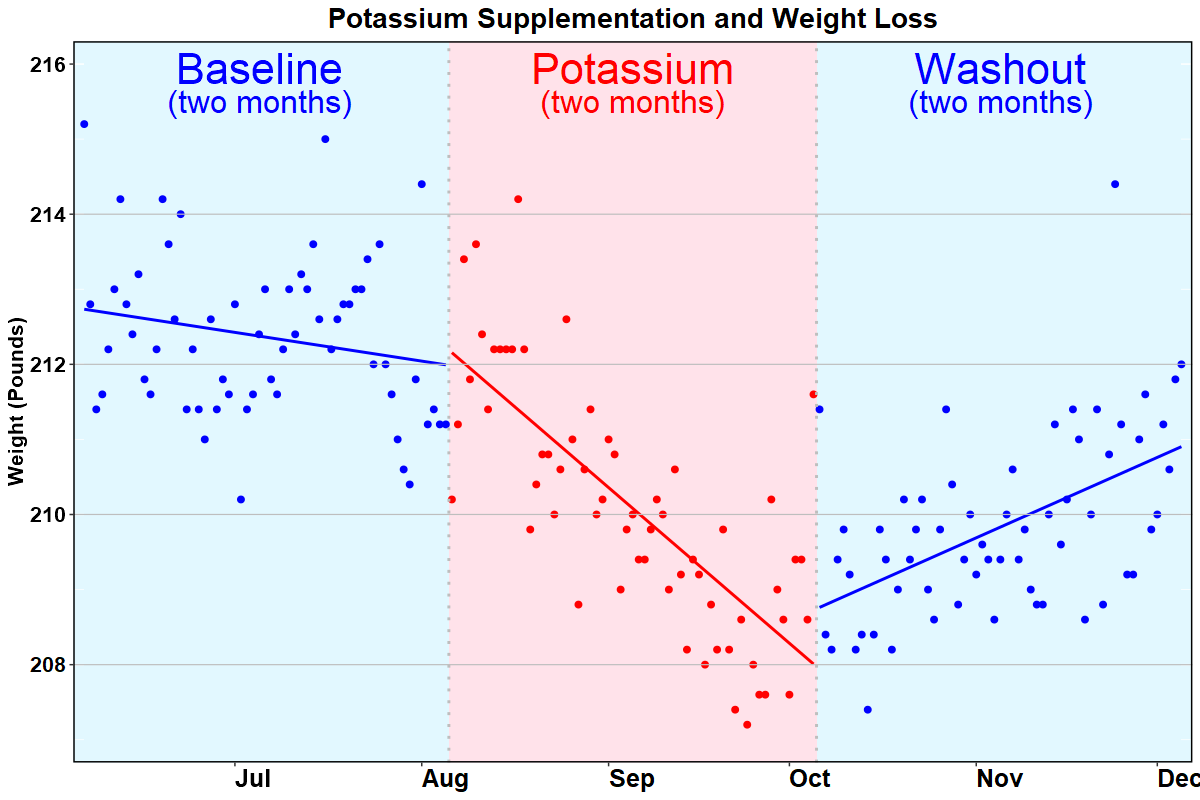


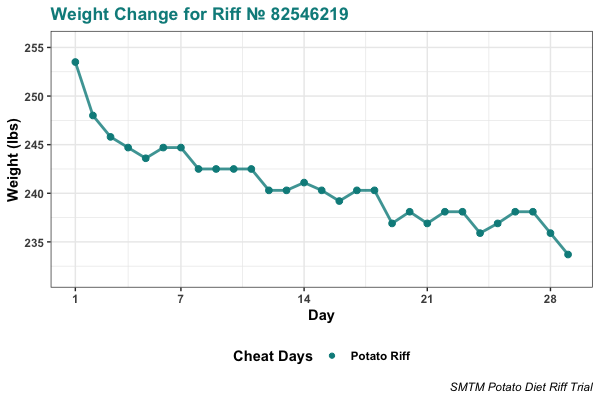


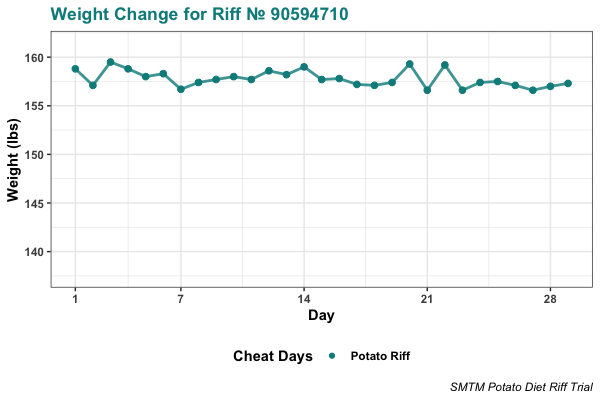


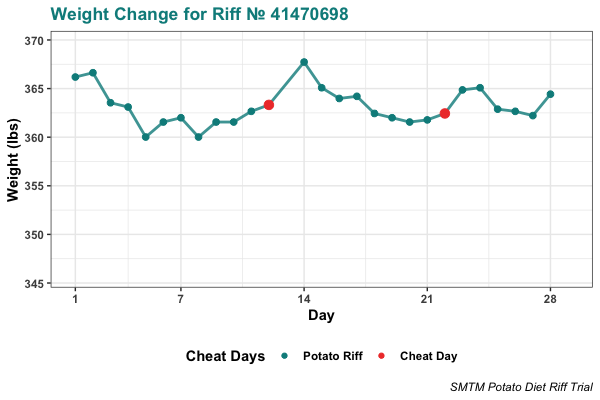

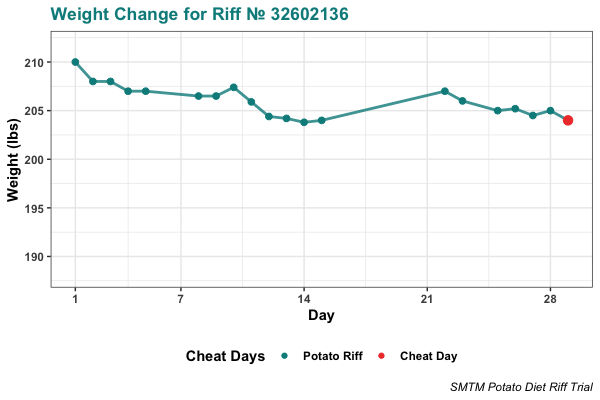
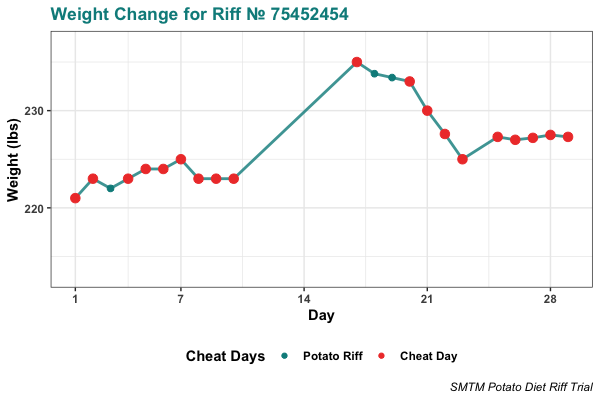

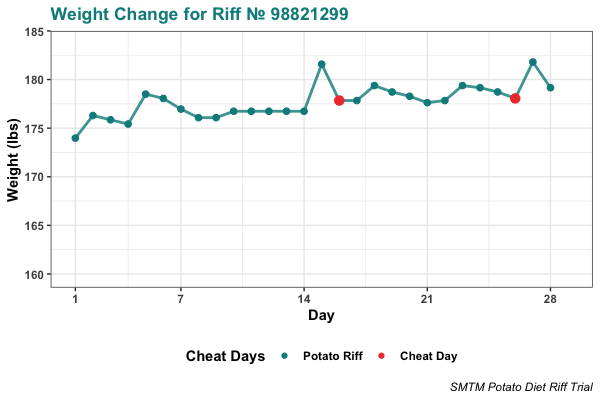
 .
.





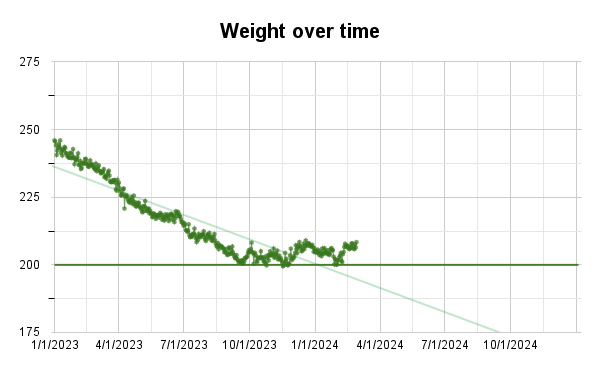






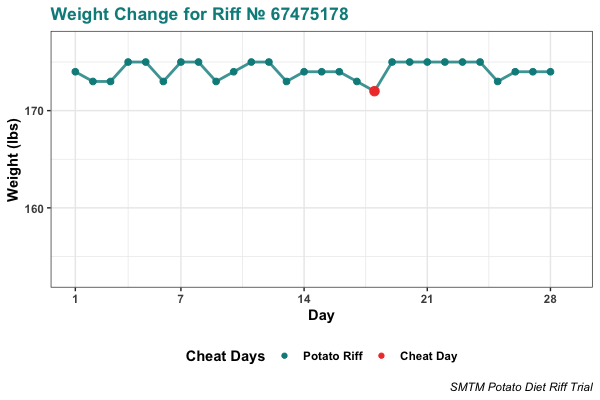




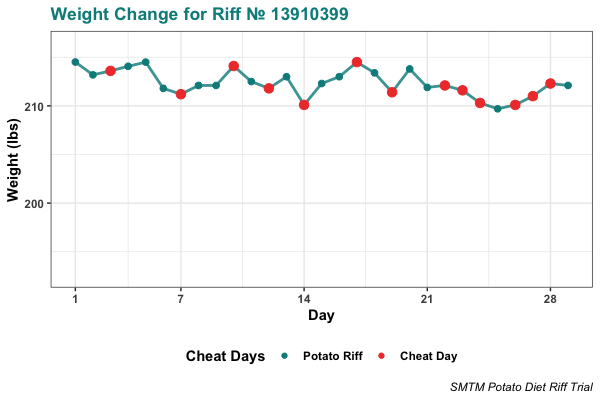





 SLIME MOLD TIME MOLD
