Of the 5 people who reported their results, weight loss are, respectively, -14 lbs, -5.5 lbs, +1 lbs, -9 lbs and -9 lbs. This is actually impressive, I just wish I wasn’t the one at +1 lbs!
So if we’re discounting the people who didn’t respond from the analysis, average weight loss is 7.3 lbs, median 9 lbs, with a 80% success rate. The median of 9 lbs loss is very close to the result of the potato diet, which is an interesting “coincidence”.
A National Evil, the story of the outrageous rates of goiter in Switzerland and how they led to the discovery of iodine fortification. As usual, it rhymes withscurvy and oral rehydration therapy. This comes courtesy of @mictter, who says, “The initial trials remind me of @mold_time and of @a_m_mastroianni calls for reform in the way we are doing science now.” We think that refers to the bit where:
Hunziker… began to devise a new kind of experiment: in an early version of a dose-response trial, he prepared table salt iodised at five different concentrations to give to five families in a goitre area for five months. He worked alone, mixing close to 100 kg of salt with his snow shovel, turning it over until he was sure the potassium iodide was evenly spread. Then, loading up his mule, he set out for Grächen, a remote village even by the standards of upper Valais.
MonadGPT is a chatbot trained on 11,000 early modern texts in English, French, and Latin, and is (in theory) very scientifically literate — up to the 17th century. MetaFilter glosses this as, “O brave new world, that has such chatbots in’t”. When we asked it what causes goiter, this was its reply:
Goitre, according to Galen, proceeds from a humour that is generated in the liver, and which, being conveyed into the blood, and thence diffused over the whole body, lodges in the throat, where it occasions a swelling: And the reason why it sometimes happens, that one person has a goitre, and another not, is, because some have more humour than others: But though this opinion is generally received, yet the learned Chyrynianus, who was a physician of the greatest skill, maintains the contrary, affirming that goitres are not caused by an excess of humours, but rather by a deficiency. He relates, that he cured one man of a goitre, who had had it twenty years, and that, by giving him a sufficient quantity of food, and regulating his diet. However, it is certain, that a deficiency of the vital spirits, or animal spirits, is no less dangerous than an excess of them; for these spirits are the principal agents in the circulation of the blood, and in the nourishment of the parts.
The B-69s are, at least according to their bandcamp page, “the world’s best band that covers modern pop songs in the style of the B-52s.” They have covers of all your favorite hits — Hey Ya, Chop Suey!, All Star, even Mr. Brightside. It’s traumatic.
Perhaps because nausea and vomiting are so common in pregnancy, doctors often overlook hyperemesis, dismissing its severe symptoms as psychological, even though it is the leading cause of hospitalization during early pregnancy … During her second pregnancy, in 1999, Dr. Fejzo was unable to eat or drink without vomiting. She rapidly lost weight, becoming too weak to stand or walk. Her doctor was dismissive, suggesting she was exaggerating her symptoms to get attention. She was eventually hospitalized, and miscarried at 15 weeks.
This perfectly captures our working relationship. No, we will not elaborate:
One of my mother’s earliest memories is of standing in her crib at the age of about 2, yanking on her 11-year-old brother’s hair. This brother, her only sibling, was none other than Richard Feynman, destined to become one of the greatest theoretical physicists of his generation: enfant terrible of the Manhattan Project, pioneer of quantum electrodynamics, father of nanotechnology, winner of the Nobel Prize, and so on. At the time, he was training his sister to solve simple math problems and rewarding each correct answer by letting her tug on his hair while he made faces.
Back from the brink: sand-swimming golden mole, feared extinct, rediscovered after 86 years. “The De Winton’s golden mole (Cryptochloris wintoni), previously feared extinct, lives in underground burrows and had not been seen since 1937. It gets its ‘golden’ name from oily secretions that lubricate its fur so it can ‘swim’ through sand dunes. … The mole has now been rediscovered 86 years after its last sighting, thanks to a two-year search by conservationists and a border collie dog called Jessie, who was trained to sniff out golden moles.” How did they train the dog to sniff out these moles if the moles hadn’t been seen since 1937? Also, how do we get the dog’s job?
Libertarians love to complain about regulatory capture. Here’s how it happens: The government doesn’t like how some industry is going, and decides to regulate it. But the regulatory agencies have to hire from somewhere, and the companies under regulation aren’t fools. Over time they find ways to staff the regulatory agencies with their own people. Eventually the regulated industry ends up in charge of “regulating” itself, and the government provides a huge subsidy in the form of all the rubber-stamping sinecures at the captured regulatory agency. To some people, this process looks all but inevitable, and it offends libertarians because it creates huge amounts of bloat with no benefit to the public.
Libertarians also love to complain about the FDA. But as Scott Alexander points out in a recent post, actually abolishing the FDA would be a huge headache, much more trouble than it’s worth. “Full abolition of the FDA would have domino effects on every other part of healthcare,” he argues. “You would have to reform the insurance system, the War on Drugs, the medical evidence system, the malpractice system, and the entire role of doctors. All of these other things are terrible and should probably be reformed anyway. But you’d have to do it all at the same time, and get it all exactly right.”
In our opinion, these two problems go together like sodium and chlorine — volatile chemicals on their own, but forming a useful salt when combined. Federal agencies are hard to remove. But they are relatively easy to capture.
Instead of trying to destroy the FDA, libertarians and other sympathetic movements, like effective altruism, should try to regulatory capture it. And when they do capture the FDA, Scott Alexander is the man to run it [1].
We understand that Scott might feel hesitant, but taking control of the FDA would be a much more effective and only slightly more painful act of charity than donating a kidney. Also, you will one-up Dylan Matthews forever, we’d like to see him beat this one.
And we have to point out — if regulatory capturing the FDA is possible, then for an effective altruist, making it happen might actually be a moral imperative.
If Scott were the head of the FDA, he could do things like…
The FDA, in its approval for esketamine, specified that it could only be delivered at specialty clinics by doctors who are specially trained in ketamine administration, that patients will have to sit at the clinic for at least two hours, and realistically there will have to be a bunch of nurses on site.
…
They want to make sure no patient can ever bring ketamine home, because they might get addicted to it. Okay, I agree addiction is bad. But patients bring prescriptions of OxyContin and Xanax home every day. Come on, FDA. We already have a system for drugs you’re worried someone will get addicted to, it’s called the Controlled Substances Act. Ketamine is less addictive than lots of chemicals that are less stringently regulated than it is. This just seems stupid and mean-spirited.
…
I wanted to finally be able to prescribe ketamine to my patients who needed it. Instead, I’m going to have to recommend they find a ketamine clinic near them (some of my patients live hours from civilization), drive to it several times a week (some of my patients don’t have cars) and pay through the nose, all so that some guy with a postgraduate degree in Watching People Dissociate can do crossword puzzles while they sit and feel kind of weird in a waiting room. And then those same patients will go home and use Ecstasy. Thanks a lot, FDA.
Professor Hillman started a company “Oragenics” and applied for FDA approval. The FDA demanded a study of 100 subjects, all of whom had to be “age 18-30, with removable dentures, living alone and far from school zones”. Hillman wasn’t sure there even were 100 young people with dentures, but the FDA wouldn’t budge from requiring this impossible trial.
My problem is: doing anything in medicine is illegal until you clear a giant hurdle. To clear the hurdle, you have to pay millions (sometimes billions) of dollars, fill in thousands of pages of forms, conduct a bunch of studies that can be sabotaged for reasons like “this drug is too good so it would be unethical to have a control group”, and wait approximately ten years. You have to clear this hurdle to do anything, even the most obviously correct actions. Everything starts out illegal, and then a tiny set of possible actions is exempted from the general illegality. The easiest name for this hurdle is “the FDA”, since they’re the agency charged with enforcing it.
These are just a selection, we’re sure Scott can come up with lots of other creative things to do with this position. He could get to the bottom of the modern IRB debacle. He could arrange it so that the names of new medications all turn out to be horrible stealth puns. You might even be able to get Adderall again!
Some of you may be concerned that his new responsibilities would cut into Scott’s available time for blogging. But we’re talking about a man who keptbloggingstraightthroughresidency. We are confident that running the FDA would only make his blog posts more interesting.
[1] : We promise to take down this post before your senate confirmation hearing, though it would be rather diverting to hear Senator Warren ask if you’re in the pocket of Big Slime. But until then, the challenge stands.
Lucent announces a contest with large cash prizes for anyone who can successfully model his meticulously collected weight-related health data. “The massive longitudinal dataset contains dozens or hundreds of overlapping micro experiments (months of keto, weekend fasts, low protein, high fiber, potatoes, waves of monotonous meals) that taken together exceed the statistical significance of weeks spent in a lab testing individual hypotheses. … If the answer to obesity requires a complex overlap or sequence of conditions, it may be hidden within and first discovered through data mining rather than invented whole cloth by a brilliant hypothesizer. You’d be hard pressed to find more or better data to mine. … It looks more like my set point moves up or down only when some conditions are met, and I’d like to find the control system at work.” Have at!
N1.tools — “Conduct simple randomised N-of-1 studies to understand what works for you!”
www.homebrew.bio — “The Homebrew Biology Club (HBC) is an experimental, digital community that unites builders in biology. It is modeled on Palo Alto’s Homebrew Computer Club.”
Speedrunning a curly hair journey | or: How I Learned to Stop Worrying and Love My Hair — a N=1 haircare study of “a week or so of trialing everything until something sticks”. May contain important lessons for using the “trialing everything until something sticks” approach to solve other problems. Also she has the right attitude. “You can buy commercial clarifying shampoo… but I don’t want to.”
Using Anki with Babies / Toddlers — Redditor describes his success using spaced repetition to teach his kids to read, write, and do math considerably ahead of schedule. Also taught them Spanish, Hebrew, and logic. Honestly not that surprising given what we know about this historical success of aristocratic tutoring, though maybe the technology will help make it more accessible. (h/t Prigoose on twitter)
When Ruthless Cultural Elitism Is Exactly the Job — Ignore the weird title. We enjoyed this interview of Andrew Wylie, in large part because of how well he handled the interviewer. Also his personal philosophy. “I thought, well, I wonder if you can build a business based exclusively on what you want to read. That led me to understand, I think correctly, that best sellers were overvalued and works that endured forever were undervalued.”
The dimensionality of color vision in carriers of anomalous trichromacy — Claims: “Some 12% of women are carriers of the mild, X-linked forms of color vision deficiencies called ‘anomalous trichromacy.’ Owing to random X chromosome inactivation, their retinae must contain four classes of cone rather than the normal three; and it has previously been speculated that these female carriers might be tetrachromatic, capable of discriminating spectral stimuli that are indistinguishable to the normal trichromat. … Our results suggest that most carriers of color anomaly do not exhibit four-dimensional color vision, and so we believe that anomalous trichromacy is unlikely to be maintained by an advantage to the carriers in discriminating colors. However, 1 of 24 obligate carriers of deuteranomaly exhibited tetrachromatic behavior on all our tests; this participant has three well-separated cone photopigments in the long-wave spectral region in addition to her short-wave cone. We assess the likelihood that behavioral tetrachromacy exists in the human population.”
Neoncube recently sent us some emails about a self-experiment where he ate mostly meat and veggies. The exchange is reproduced below, lightly edited for clarity.
Neoncube’s First Email
Dear Slime Mold Time Mold,
I’ve followed your writings with great interest, and now I’m enthused to write to you about the rather astounding success that I’ve had with a “meat and veggies” diet, where I lost 6% of my body weight in one month!
The story
Everyone had told me that when I hit 30 years old, I’d get fat, but I was still surprised when it actually happened. I’d always been skinny, and keeping off weight wasn’t something that I’d had to worry about much. Two years after I hit 30, though, I was 176lb (80kg), with a BMI of 25 and the beginnings of a belly.
Despite all this, I still wasn’t taking my weight very seriously. Things finally came to a head when I attended an aerobics class where I had to exercise in front of a full length mirror for an hour. The hour was rather torturous. Neither my physique nor my stamina were what I had imagined. I was fat and out of shape, and something needed to change.
After my shock, I decided to depart on a meat and veggies diet. My sister had used this diet and “lost so much weight that [she] had to stop”, and the person who had told her about the diet (my brother) has never been anywhere close to fat.
It seemed there was hope! And thus, I began the meat and veggies diet.
The diet
The rules of the diet were simple: Eat only meat and veggies, all day, every day. No sugar, no carbs, no fruit, and no dairy. The meat should be lean, and the veggies should be cooked. Try to eat a good mix of veggies.
That might sound a bit boring, and truth be told, it was, but the insane amount of weight loss per day made for strong motivation to keep going!
Pictures
Breakfast, afternoon snack(s), and after dinner snack(s) generally consisted of one or two prepackaged, preseasoned, microwaveable chicken breasts. These are available in all of the convenience stores in Taipei, which made my life a lot easier! My favorite flavors were “smoke flavoring” and “black pepper” (pictured below).
Lunch was meat and veggies. I often would get chicken breast and another type of meat, as in the picture below. The leanness of the meat was, at times, arguable! Perhaps eating slightly fattier meat sometimes was a good thing, though?
For dinner, I generally ate the same meal, at the same restaurant, every day, because it was really good and relatively filling! The vegetables were different every day, depending on what the restaurant had on hand:
Looking at the above picture, you can see that I was pretty flexible with my definition of “veggies.” I considered cooked potatoes and cooked sweet potatoes to be fine.
I didn’t eat any tomatoes that were included in my meals, because I don’t like tomatoes, but I did sometimes eat tofu, considering it a sort of protein, although I later regretted this.
Dinner came with a small bowl of miso soup and a small block of spongy cheese cake, which I happily ate. This didn’t seem to affect the diet.
Results
The graphs below are provided in both pounds and kilograms.
I started my diet around 177lb (80.1kg) and ended around 165lb (74.8kg). Over 30 days, I’d lost 11.5lb (5.3kg), for an average loss of ~0.4lb (0.177kg) per day!
I did take a five day vacation during the diet, where I gained 2.5lb (1.1kg), but amazingly, I lost it all again the first day that I returned to the diet!
I feel like the vacation clutters the graph a bit, so here’s another version with it omitted:
If we don’t count the vacation, then I only dieted for 25 days and averaged a loss of 0.5lb (0.18kg) per day. I’m not sure that’s a fair way to look at the data, but it’s interesting to consider.
Analysis
On the very first day, I broke the diet (lol) and had some bread with lunch but still lost weight.
Other than the first day, I gained weight whenever I broke the diet. This was a bit surprising. I would have imagined that eating curry rice for lunch, spicy tofu rice for dinner, or a strawberry cream puff as an afternoon snack would have resulted in less significant weight loss for the day, but instead it made me gain weight. Not only that, but every time I broke the diet, it took another day or two to start losing weight again! Another way to say this is that pretty much every time I broke the diet, even minorly, it derailed my weight loss for about three days.
On days where I actually stuck to the diet, though, I lost 0.7lb (0.3kg) per day, which was insane.
Feelings
I’d like to talk about how the diet felt.
The diet felt hard. I often felt like my blood sugar was low, causing me to break out in sweat. My energy was lower than normal. Sometimes I had heart palpitations. I’d get heat flashes a couple of times a day, and my body temperature sometimes felt higher than normal.
The saving grace was that losing 0.7lbevery day that I kept to the diet was very motivating. I’d be tempted to quit nearly every day, but I’d convince myself to at least wait until the next morning. On days where morning came and I’d lost a ton of weight, I had good motivation to keep going, and on mornings where I hadn’t lost any weight, at least I knew it was probably because I’d recently broke the diet.
The general flow of the diet felt something like this: Diet hard for several days. Feel as though I just could not continue and eat some carbs. Resume the diet but not lose weight for 2-3 days. Start losing weight again. Repeat.
Although my overall memories of the diet were that it was hard and I often wanted to quit, I also remember having a few positive feelings. Having a goal and working hard towards that goal felt really good. It’d been a while since I’d had a goal that I’d worked hard towards. I also remember having feelings of being “healthy” and “clean,” although those feelings were usually soon overshadowed by hunger.
Other thoughts
Especially in the afternoon, I’d often experience strong feelings of anger or sadness and would break out in cold sweat. In my experience, these are signs of having low blood sugar. The solution was simple: Even if I wasn’t hungry, eat a couple of chicken breasts.
I think this bears repeating: If you attempt this diet, you may find yourself getting very emotional, perhaps even dangerously so. Please be very careful, and go eat if you’re feeling terrible! And if you feel like you’re dying, consider stopping the diet!
During the diet, I drank much more caffeine than normal, mainly black coffee, very strong black tea, and very light green tea. In my experience, caffeine can act as a blood sugar regulator, and that may have been particularly important during this diet.
Back when I was skinny, I used to consume a lot more caffeine, and I remember thinking several times during the diet “This is how I felt during college!” Perhaps there’s something to be said for eating little and drinking lots of caffeine.
I was also amazed at how much fuller eating large amounts of cooked veggies made me feel. Indeed, I think there is much potential for designing a diet centered around eating a massively increased amount of cooked veggies.
Future improvements
If I were to do this diet again, I’d probably try to avoid tofu. It felt like every time I ate tofu, I either gained a bit of weight or didn’t lose as much as I should have. I didn’t keep good enough notes to be sure of this, though.
Thanks
Thanks be to God, always!
Thanks to my brother for teaching my sister this diet, and thanks to my sister for teaching it to me! And thank you to Slime Mold Time Mold for publishing this! 🙂
Closing thoughts
Although I did lose an insane amount of weight during the meat and veggies diet, I’m not sure I’d advise other people to try it. There were several times where I literally felt like I was dying (did I mention the heart palpitations?), and I think it’s possible that if I hadn’t broken the diet as many times as I did, I might not have made it.
I did learn quite a bit from this diet, though. Chicken breast is now my go-to breakfast food and snack, and I try to work a lot more cooked veggies into my diet.
If you do attempt this diet (or a variation of it), I’ve created r/meatveggiesdiet for people to share their experiences, or feel free to use the #meatveggiesdiet hashtag on Twitter/Instagram. Again, I’m not recommending that people try this diet, but if you do, it might be good to have a support group!
Finally, I’d like to include some more pictures of what I generally ate each day. Eating lean meat and veggies doesn’t have to be boring!
Chicken breast with black pepper seasoning:
Chicken breast with green onion (scallion) sauce:
Steamed/boiled ground pork (This was one of my fattier meals, and I didn’t eat this often):
SMTM’s Response
Hi Neoncube!
Amazing, this is so cool! We did have a few questions:
First, what do you normally eat? This looks kind of like it works by elimination, so it would be interesting to know what you are eliminating. A lot of bread? Omelettes? Rice? Tofu?
Second, we can’t remember, have you tried the potato diet before? It would be interesting to know whether or not that works for you, given that meat + veggies works.
Your Friends, SLIME MOLD TIME MOLD
NeonCube’s Response
Yay, I’m glad you like it! ^_^
About a year ago, I tried the potato diet for 13 days (with a few cheat days), losing 2.3kg (5lb). The potato diet and the meat and veggies diet had some similarities, with me experiencing heat flashes, sudden depression/anger, and general feelings of weakness during both diets.
It’s interesting that you mention this possibly being an elimination diet. I’d done some thinking along those lines, too, although most of my thinking for this diet had focused on a different question: Why did this diet make me lose weight so quickly? I have a few theories:
Protein is a complex molecule. Perhaps every time I ate, a significant portion of the meal’s energy was spent on breaking down the protein in the meal.
Perhaps the diet allowed me to run a caloric deficit without putting my body into starvation mode.
Perhaps a diet of all meat and veggies is lacking something that the body needs, and it has to tap into its fat stores to get that crucial element.
Let me gather some pictures of what I used to eat. I think that’ll be more entertaining and informative than just descriptions. … Here they are, pictures of what I often ate before starting the meat and veggies diet!
Breakfast was the same every day: A light, unfilled piece of bread called a “cow horn”:
My favorite lunch was curry (chicken, carrots, and potatoes) and rice:
Dinner varied a lot, but one of my mainstays was this Mexican rice bowl. I may have been adding grated cheese and guacamole:
I also split something like this with my girlfriend a couple of times a week (tofu, stir-fried beans, Kung Pao chicken, and 1-2 bowls of rice):
For dessert, the convenience stores have soft-serve ice cream:
Shaved ice was also another option. Pictured here: Unsweetened ice with chocolate syrup, cereal flakes, bananas, sweetened condensed milk, and pana cotta.
P.S.
A random thought: I drank a fair amount of Chinese bitter tea (“kucha” – 苦茶) during this diet. Specifically, I drank about 3/4cup of it once every 2-3 days, pretty much always immediately after dinner. I think bitter tea is supposed to be somewhat of a dieting drink. For me, it seemed to have a stabilizing effect on my blood sugar levels, and it also had the effect of very quickly inducing bowel movements. (I can’t find much English information about bitter tea, but Wikipedia has an article about Theacrine, which is apparently the tea’s active ingredient. Interestingly, that article says that Theacrine is similar to caffeine, which I also found helped me regulate my blood sugar levels).
SMTM’s Response to the Response
This is great!
One other question: We’re wondering if this diet would work in other places (like the USA) or if it would only work in Taiwan. The other people you mention who had success with this approach are your brother and your sister (already interesting since they’re close genetic relatives) — do they live in Taipei, or did they try the diet while living somewhere else?
Neoncube’s Response to the Response to the Response
Good question! Both my brother and sister were in the U.S.A. when they did diets like this one. My brother was in Boise, Idaho. I’m not sure which part of the U.S. my sister was in.
I do know of one non-relative who’s done this diet: My Taiwanese ex-girlfriend. I didn’t mention her, because when she did the diet, she went hardcore and combined the meat and veggies diet with intermittent fasting. If I remember correctly, she ate just two meals each day, both consisting of meat and veggies, with the meat often being chicken breast or fish. I think she would also drink a liter of Coca-cola when she felt her energy was low, and she might have done some light snacking, as well. She did this for at least six months and was still doing it the last time that we spoke. I honestly don’t know how she did it. She did lose a ton of weight, though.
When we finished the Potato Diet Community Trial, we found ourselves in a pickle. The diet worked — people lost 10.6 lbs on average over only four weeks — and we had basically no idea why. No idea what parts of the protocol were essential, and what parts were optional.
We had no idea what would make it work better. We had no idea what might make it work worse. And we had no idea of the boundary conditions. We told everyone to avoid dairy, but was that really necessary? Is the potato diet very strict, and you need to stick closely to the original protocol? Or is it very lax? When does it stop working, and why?
We could keep going like this, running one study at a time. But honestly, that would take forever. The problem is that you can easily come up with 100 different hypotheses for what’s going on. Ok, so you run 100 different studies to test each one. But studies take a long time to run — let’s say 6 months per study. Congratulations, you’ve just locked yourself into 50 years of studying nothing but iterations on the potato diet. There has to be a better way.
So today we’re introducing a new kind of study we call the riff trial. Let’s see how it works!
Variations on a Meme
In a normal study, everyone follows pretty much the same protocol. In some kinds of studies, like randomized controlled trials, participants are randomly assigned to a small number of very similar protocols.
Instead of making protocols standard, the riff trial makes protocols different. In a riff trial, you start with a base protocol, and every participant follows a different variation. Everyone tests their own riff on the original protocol, and you see what happens.
To give credit where credit is due, the blogger known as ExFatLoss did something like this first. He ran a study where 10 people signed up to try his ex150 protocol. In practice, however, most people tried minor riffs on the original protocol, like adding an “illegal” carrot salad, and they still generally lost weight. This is a better test of the robustness of his protocol, and it’s a more efficient way to explore the design space.
Now it’s our turn. Today we are starting a Potato Riffs Trial, and we’re looking for people who want to try their own riff on the potato diet.
A riff trial takes advantage of the power of parallel search. Some riffs will work better than others (or at least differently), and parallel search helps you find these differences faster, especially if the differences are big.
Or if you prefer, it uses the power of evolution. The original protocol goes out with mutations and we see how they do in the face of natural selection. If you want, you can even run a second riff trial on the most successful riff(s), to explore the space even further. In this way, the riff trial is the atomic gardening of study design.
Some riffs will be more compelling than others. If you do a riff and lose weight on that version of the potato diet, this suggests the potato diet is robust to that difference. If you do a riff and don’t lose weight, that’s tricker, because we know the potato diet doesn’t work for some people — maybe you are just one of those people.
But even when individual riffs don’t prove much, together they can be suggestive. If ten people try potatoes + bacon and they all gain weight, that’s pretty strong evidence that bacon is the anti-potato. You could also account for this by doing a few weeks of the original potato diet to demonstrate that it works for you under normal conditions, and then starting the riff to see if anything changes.
A riff trial is scientific fun for friends and family. If a husband and wife living in the same house try different potato riffs, and have different results, we know the differences aren’t a result of their environment, since they live in the same house and sleep in the same bed and so on. If adult siblings living in different cities try the same potato riff and have different results, the differences are probably due to differences in their cities, since the siblings are closely related and are doing the same protocol.
This is also a way to put your money where your mouth is, so to speak. We love all y’all people on the internet, but some of you talk a lot and experiment very little. Science needs to be more competitive — not in the sense of arguing (bleh!) but in the sense of people actually doing studies to go after their disagreements rather than just theorizing about them. This is your chance to get your hands dirty.
And as always, this is a chance to PLAY with your ideas, to PLAY WITH SCIENCE, to JOIN the INTERNET HIVE MIND and MESS AROUND WITH YOUR FRIENDS. This can be your way to help welcome the 21st century scientific revolution you so desperately crave.
Science is a freaking blast!
Tl;dr, we’re looking for people to volunteer to eat almost nothing but potatoes (depending on your riff) for at least four weeks, and to share their results. You can sign up below. For more detail, read on!
Potato Riffs
As a reminder, here is our version of THE POTATO DIET (more detail can be found in the original post):
Drink mostly water. You can also have other beverages like tea or coffee. Just don’t take them with cream or sugar and try not to get too many calories from your drinks.
Eat potatoes. Start with whole potatoes and cook them yourself when you can, but in a pinch you can eat potato chips or fries if you need to. You can calculate how many potatoes to eat (a potato is about 100 calories, so if you need 2000 kcal/day, eat about 20), but we think it’s better to eat the potatoes ad libitum — make a lot of potatoes and just eat as much as you want.
Perfect adherence isn’t necessary. If you can’t get potatoes, eat something else rather than go hungry, and pick up the potatoes again when you can.
Seasonings are ok. Do what you can to keep yourself from getting bored.
Oil is ok.
Take a daily B12 supplement, since potatoes don’t contain any. We like this version but use whatever you like. Take vitamin A if you’re not eating sweet potatoes. A multivitamin would also be fine as long as it contains B12.
Your mission, should you choose to accept it, is to try the potato diet plus some kind of variation of your choice for at least four weeks. You can try any riff you like, but for inspiration, here is a list of ideas:
Before you sign up, let’s highlight some riffs we might be especially interested in:
Mono-Diet
Some people think the potato diet causes weight loss because it is a mono diet, a diet where you eat mostly one food. We think this is wrong! If it were true, 1) any other mono diet would also work, and 2) the half-tato diet wouldn’t work because you eat more than one thing. But the half-tato diet does seem to work, at least for some people. Also there was so much cheating in the original potato diet (by design!) that we’re not sure even most of those would could as a mono diet really:
So one very simple riff you can do is the potato diet plus some other food of your choice. Potatoes and apples. Potatoes and lettuce. Potatoes and carrots. If the mono-diet hypothesis is true, adding these other foods should stop the potato diet from working. If it keeps working, that’s a major problem for the mono-ness hypothesis.
Deliciousness
Some people think the potato diet causes weight loss because it is bland. We think this is wrong too. First of all, potatoes are delicious. Second of all, this doesn’t make any sense. Why would that happen.
However, one riff you could do is potatoes plus one or two foods you think are especially delicious. This seems like a good deal. You get to eat potatoes and one or more of your favorite foods, as much as you want for a whole month, and you might lose weight for your trouble. If you do lose weight eating potatoes and a favorite food, that’s a major problem for the blandness hypothesis. Also it makes sense.
Potatoes + Whole Foods or Unwhole Foods
Some people think the potato diet causes weight loss because potatoes are whole foods — they are totally unprocessed, unadulterated, torn directly from the bosom of Mother Earth. This might be part of it, though it makes us wonder what it might be about “whole foods” that would make them cause weight loss.
Anyways, one way to test this would be to try eating potatoes plus some other whole food, like almonds or bananas. If the whole food hypothesis is correct, this should cause as much weight loss as the normal potato diet, maybe more.
Or you could do the opposite, and try eating potatoes plus some highly-processed food, like snickers bars or Big Macs. If the whole food hypothesis is correct, eating these processed foods should make the potato diet much less effective. But if you lose weight on potatoes + gummy worms, that’s evidence against the whole foods hypothesis.
...yes
Potatoes + Cream
ExFatLoss has lost a lot of weight on a diet that is mostly heavy cream. When he recruited ten other people to try the same thing, most of them lost weight too. If potatoes cause weight loss, and cream causes weight loss, maybe potatoes and cream together will cause even more weight loss?
Worth trying, at least, especially since in the original Potato Diet Community Trial, we asked people to avoid dairy. Maybe that was the wrong move. You could also do potatoes + light cream or potatoes + milk, to see if milkfat matters. Or just a general potatoes + dairy, where you eat both potatoes and any dairy products ad libitum.
Potatoes + Various Fats
Some people think that seed oils are the cause of the obesity epidemic, and/or are bad for you in general. From this perspective, the reason the potato diet works is that it cuts all the seed oils out of your diet — you’re too busy eating potatoes. As we’ve previouslyargued, we don’t find this theory very convincing. But it’s easy enough to test. We wrote:
It would be easy to run a variation of the potato diet where half the participants are randomly assigned to eat their potatoes with butter, and the other half are randomly assigned to eat their potatoes with sunflower oil. (Or substitute these for whatever fats the seed oil theorists think are best and worst.) If the seed oil theory is correct, then the participants eating potatoes + butter should lose weight much faster than the participants eating potatoes + sunflower oil. If the seed oil theory is wrong, there should be basically no difference.
This would be a good subject for riff trials. If they want to, some people can sign up to eat olive oil with all their potatoes, some can sign up to eat butter with all their potatoes, some can sign up to eat canola oil, etc. Then we can see if there are big differences between people who choose different fats.
If seed oil theorists are really confident in their theory, they should sign up and demonstrate that seed oils kill the potato weight loss effect, and other fats don’t.
Potatoes and Suspected Blockers
The potato diet may work by adding things to your diet, like huge doses of potassium. But it may also work by removing things from your diet. (It might also do both.) This suggests that there may be some foods that “block” the potato weight loss effect. You can test this in a riff by trying the potato diet plus one of these foods, to see if it keeps working or not.
One prime suspect is tomato and tomato products like ketchup. Ketchup came to our attention as a result of some anecdotes from the original Potato Diet Community Trial, stories where people felt that eating ketchup kept them from losing weight. As Jack Peterson noted, tomatoes blocking the effect “would explain why no one ever noticed [the weight loss properties of potatoes] prior to Chris Voigt’s stunt: because potatoes are usually eaten with ketchup”. And we were surprised to see that in the Half-Tato Diet Community Trial, weight loss was correlated with tomato consumption, r(36) = 0.37, p = .021 (also significant when removing the extreme outlier, r(35) = 0.36, p = .031). Plot here:
So you could try a potato diet with ketchup in particular, or with tomato products in general. If you still lose weight, that would show that tomato isn’t necessarily a blocker. If you don’t lose weight, that’s pretty interesting. You could also try alternating weeks with and without tomatoes, to see if you can make the effect turn on and off at whim. Whee!
Tomatoes are our top bet, but other possible blockers might be: wheat, bread, grains more generally, maybe meat. Carbs stand out because on the potato diet you are getting a lot of carbs. So even if you do take a cheat day, you probably won’t be cheating with bread, because you probably won’t crave that. Some people think sugar might be a blocker, so you could try potatoes + white sugar (but maybe not together, ew). Eggs or goji berries might also be blockers because they seem to be high in lithium. So one kind of riff would be trying potatoes and one of these foods and seeing how it goes.
Potatoes + Chocolate
CuoreDiVetro recently published a self-experiment where they followed a very simple form of the potato diet, replacing one meal per day with a meal of just potatoes, supplemented by additional doses of potassium chloride (based off of a potassium:sodium ratio hypothesis that has been floating around). This worked very well for them at first — then they discovered that it appeared to work even better when they included chocolate, like so:
I bought dark baking chocolate (100% cacao) with a high concentration of potassium (just in case it was the potassium). I made my hot cacao by melting ~36g of dark chocolate (containing roughly 750 mg of K) in roughly one cup (250ml) of milk (containing roughly 350 mg of K) and sweetening it to taste.
According to CuoreDiVetro, they lost weight four times faster when they were eating one hot chocolate per day in addition to their meal of potatoes.
This could be something about chocolate in particular. But it might also be yet another pointer to stearic acid, a waxy fat common in foods like tallow, lard, butterfat, and cocoa butter, which for some reason keeps showing up in weight loss research. If you’ve heard of this fat before, it’s likely from Fire in a Bottle (FIAB), a website/program/theory which argues that a diet high in stearic acid can cause weight loss. This is sometimes called The Croissant Diet (TCD), presumably in the hopes of confusing readers — you do not actually eat nothing but croissants. In fact, you don’t have to eat any croissants at all. But you do ideally eat lots of foods high in stearic acid, sometimes supplementing with additional stearic acid, and some people seem to lose weight when they do this.
There are other reasons to think that stearic acid might be involved. ExFatLoss and co must be getting a lot of stearic acid from the huge quantities of milkfat they’re consuming. And Outlier 17 from our Half-Tato Diet Community Trial, who lost way more weight than anyone else in the trial, often took straight stearic acid as a supplement.
So you could supplement stearic acid on top of your potatoes and see what that does. Or you could try potato + chocolate, which seems more delicious. But to each their own.
You could also try CuoreDiVetro’s riff exactly, or riff further off that riff. It appears to be 1) one meal per day as a meal of just potatoes, 2) potatoes are salted with 3.2 g KCl, 3) avoid adding NaCl (normal table salt) to potatoes, 4) at least one hot cacao per day, per the recipe above, and 5) otherwise eat as normal. This is really several riffs away from the main protocol and might not be as illuminating, but would give another similar data point for comparison.
Preparation
We think the potato diet might cause weight loss because of the super high doses of potassium you get when you eat tons of potatoes. We also hear that boiling potatoes removes a lot of their potassium, because it drains out of the potato and into the boiling water. If this is the case, then eating nothing but boiled potatoes would probably cause much less weight loss than eating nothing but baked or roasted potatoes, which should still have all their potassium. Unless you boiled your potatoes as a soup and then drank all the broth.
Doing a riff where you only ate one kind of preparation, whether those be boiled, baked, fried, steamed, roasted, mashed, or souped potatoes, might illuminate this question. But it might be kind of boring.
Half-Tato Accelerator
Many people lose weight on the half-tato diet, like M, Nicky Case, Outlier 17, and CuoreDiVetro. We say “half-tato”, even though many of these people were getting less than 50% of their food from potatoes. But when we ran a community trial of the half-tato diet, most people barely lost any weight.
What gives? Maybe there’s some extra step required to make half-tato work. If we could figure out that extra step, people could lose weight with much less hassle. So if your riff seems to be working on full-tato, you could switch to half-tato and see if it keeps working just as well. Or you could try various riffs on half-tato and see if any of them serve as the switch.
Get Confused
They say that the most exciting phrase to hear in science is not “Eureka!” but “That’s funny…” So the best thing that could happen would be if you find something really weird. For example, it would be very weird if people found that taking iron supplements makes the potato diet totally ineffective… unless you take iron supplements AND magnesium supplements, in which case it starts working again (we have no reason to think this would happen, just a wild hypothetical). If that happened and it were robust, it would be very surprising, and trying to puzzle it out would get us closer to an answer.
So if you have some other weird potato diet riff you want to try for some reason — we say, go for it!
Sign Up
Ok researchers, time to sign up.
The only prerequisites for signing up are:
You must be 18 or older;
In generally good health, and specifically with no kidney problems;
Willing to do some version of the potato diet, as described above, for at least four weeks, and;
Willing to share your data with us — you can publish it as a philosophical transactions post on our blog if you like, or publish it somewhere else on your own.
As usual, you can sign up to lose weight, lower your blood pressure, get more energy, or see one of the other potential effects. But you can also sign up to help advance the state of medical science. This study will hopefully get us much closer to understanding why the potato diet causes weight loss. It might lead to a practical weight-loss intervention that’s much easier than the 100% potato diet, and it might lead to curing obesity for good.
And beyond that, running a study like this through volunteers on the internet is a small step towards making science faster, smarter, and more democratic. Imagine a future where every time we’re like, “why is no one doing this?”, every time we’re like, “dietary scientists, what the hell?”, we get together and WE do it, and we get an answer. And if we get a half-answer, we iterate on the design and get closer and closer every time. That seems like a future worth dreaming of. If you sign up, you get us closer to that future.
Eating this much potato may sound a little daunting, but people who have tried it say that it is much easier than they expected, and delicious to boot. Here’s our suggestion: If you are at all interested in trying a potato diet riff, go ahead and sign up and start collecting your data. Collect your baseline measurements for two weeks, then try the first day or two of the potato diet and see how it feels. If you hate it and have to stop, we would still love to have that data.
If at any point you get sick or begin having side-effects, stop the diet immediately. We can still use your data up to that point, and we don’t want anything to happen to you.
We are mostly interested in weight loss effects for people who are overweight (BMI 25+) or obese (BMI 30+), but if you are “normal weight” (BMI 20-25) you can also sign up.
And for everyone, please consult with your doctor before trying this or any other weight loss regimen.
We realize that anyone who starts a potato riff soon will overlap with Thanksgiving and/or Christmas. So you’re welcome to wait and sign up later, we will keep signups open at least through January, maybe longer. But also, it’s not a problem if you overlap with the holidays, and it might be a good way to see how robust your riff is. Someone doing an “I ate potatoes and whatever holiday treats I wanted” would honestly be an amazing study.
In general, signups will be open for a while, and it’s all rolling signups. Pick out a riff and join whenever.
If you were part of previous SMTM studies, please feel free to sign up for this study as well! Just mention it, and provide any previous subject numbers, when you’re signing up.
How do you decide what riff to choose? Here are three approaches to consider:
Put your money where your mouth is. This is a chance to test your theoretical bone to pick, whatever that might be. If you think the potato diet works because it is low sugar, then potatoes + sugar shouldn’t work. You can try that and test your idea. If you think the potato diet works because it is a seed oil elimination diet, then potatoes + sunflower oil shouldn’t work, while potatoes + coconut oil should work as normal. You can recruit three friends and test it. You might be surprised.
You can choose “randomly”. What sounds funny? What is no one else doing? Go with that.
Anyways, to sign up:
Fill out this google form, where you give us your basic demographics and contact info. You will assign yourself a subject number, which will keep your data anonymous in the future. You will also tell us what riff(s) you’re interested in.
We will clone a version of this google sheet and share the clone with you. This will be your personal spreadsheet for recording your data over the course of the diet.
On the first day, weigh yourself in the morning. If you’re a “morning pooper”, measure yourself “after your first void”; if not, don’t worry about it. We don’t care if you wear pajamas or whatever, just keep it consistent. Note down your weight and the other measures (mood, energy, etc.) on the google sheet.
Do your version of the potato diet for at least four weeks.
When you reach the end of the diet (whether you’re ending the diet early, reaching the end of 4 weeks, or reaching the end of a longer span), send us an email. Let us know if you want to publish your results yourself (in which case send us a link to your post) or if you want to publish your results on SMTM as a philosophical transactions post (in which case send us a detailed email about your protocol, results, and thoughts).
Remember that it is ok to end the study early if you need to, for example if you get sick. It’s also fine to reach the end of 4 weeks and keep going if you’re having a good time. Just make your intentions clear in the comments on your data sheet and send us an email whenever you decide to finish, we’d love to hear from you.
We plan for this to be somewhat more relaxed and more casual than our previous studies, so please understand if we take a few days to sign you up or get back to you about anything.
As always, if you think this is an interesting idea, please tell your friends!
Figure 3 is the plot of my BMI for the first 4 months or so. The rising trend at the end is the Christmas holiday season. As you can see, there are a few plateaus (circled) but generally speaking, my weight just kept decreasing almost linearly until I fell below a BMI of 25.
This was extremely surprising for me. I had always thought that losing weight was supposed to be very difficult and require a lot of willpower and effort. This was nothing of the sort, it was the easiest thing ever. It only required me eating exactly as I used to before but replacing one meal per day with a meal of “just” potatoes (on average, I only did it when it was convenient for me, some days I took two meals of potatoes if it was convenient, others none if it didn’t fit my plans, I still ate three meals a day, the other two meals being exactly the same type of meals I used to eat before the start of this experiment) which I salted with, on average, 2 mL of KCl (I took on average 2mL of KCl per day, sometimes with potatoes, sometimes with something else, some days I took no potatoes but still had KCl some days I had potatoes but no KCl). I also allowed myself to put butter, and spices, and hot sauce, and anything else I wished to add flavour. The only thing I tried not to add to my potatoes is NaCl (normal table salt).
When it comes to rats winning your heart, let me not hold back: rats can learn to play hide-and-seek with humans. They will do so for no other reward than tickles and fun. And they will laugh.
We’ve often wondered if it’s legal for state and local governments to issue their own currency. (In part because if Jane Jacobs is right, city regions might benefit from controlling their own fiscal policy.) We still wonder, and this project may help us find out: “The Current, an alternative currency recognized by the IRS that can only be used within the Hudson Valley at member businesses. By using the Current, we ensure that our money stays local and is used to strengthen businesses in our community.” Does this work? Is it backed by something, or is this a fiat currency? Is it actually legal? We don’t know, but we’re curious to hear more.
Although migraine symptoms have been described since antiquity, doctors still struggle to understand their cause. For much of the early 20th century, migraine was thought to be a vascular condition, something that could be treated by restricting blood vessels. Now, most neurologists argue that migraine is a disorder of the trigeminal nerve system, where overactive cells in the face and head respond to benign input (light, sound, smell) by releasing chemicals that transmit pain. But doctors still can’t offer reliable relief.
The best treatment available is prevention, so my doctor tells me about possible triggers—stress, menstruation, sleeping too much, sleeping too little—so that I can do my best to change my behavior. Beyond that, treatment is a process of trial and error.
Gatorade’s inventors went on to develop new sports drinks. Gatorade’s owners sued to acquire rights to these new products, but they never made them available publicly.
First, Shires and Cade developed Go!, a drink that, unlike Gatorade, contained protein to stimulate muscular recovery. Stokley-Van Camp paid “a fee to have the exclusive rights for some period of time, but they never did develop it”.
In 1989, Dr. Cade created a new sports drink that he claimed was more effective than Gatorade. The new product was called TQ2, shorthand for Thirst Quencher 2. The patent application read:
“The invention described here is a novel fluid composition which surprisingly and advantageously maintains blood volume at levels well above those observed in the absence of fluids or even with Gatorade.”
In an experiment with cyclists, Cade found that TQ2 allowed athletes to endure for 30% longer than Gatorade.
Cade pitched the TQ2 product to Pepsi and other beverage companies. Meanwhile, Gatorade’s owner Quaker sued Cade. After years of legal proceedings, Cade was forced to sell TQ2 to Quaker in 1993. Quaker “bagged” TQ2, never releasing it to the public. Gatorade claimed that its research found that TQ2 was not an improvement over the original Gatorade formula. Cade, on the other hand, continued to stand by his product. He accused Quaker and Gatorade of stifling the publication of the research behind TQ2.
The Truth about College Costs — College sticker prices keep going up. But this analysis argues that in practice, colleges give out so many “scholarships” (not real money, just discounts) that students are paying less for college today than they did in 2004. Most private colleges “discount their published tuition by 60% or more for virtually every student.”
The current model of nutrition science is that nutrition is a struggle of mind over body. You just need to find the discipline to completely ignore your instincts, to avoid what you enjoy and restrict all the stuff you like. The more you like it, the more you should probably restrict it. You should ignore and suppress the signals your body is sending you and do exactly the opposite instead.
What if we flip that on its head, and assume that your mind is silly while your body is wise? Notice what feels good, things you enjoy and respond well to, then ramp up those?
This seems to have worked well for both Elizabeth Van Nostrand and ExFatLoss (and his participants so far). Elizabeth eats all the watermelon she wants, and in her own words, her health is “obviously doing much better” than before. ExFatLoss loves cream, eats almost nothing but cream, and is currently down more than 50lbs.
Our potato diet came from a similar place. Seeing all the case studies where people lost a ton of weight did pique our interest. But we also just love potatoes, and we were kind of curious if we could eat nothing but potatoes and never get tired of them. Turns out, we pretty much can. Even after months of dedication, we still love potatoes. And so do many of our participants:
(16832193) I was quite surprised that I didn’t get tired of potatoes. I still love them, maybe even more so than usual?!
(57875769) My wife and I went out to eat with a friend and I expected to use today as a cheat day, but honestly potatoes sounded like the best thing on the menu so I ordered hash browns and french fries. The hash browns were very filling on their own so I didn’t eat many of the fries.
There are lots of different methods you can use to estimate the lithium in a sample of food. This usually involves some kind of chemical liquefication (“digestion” in the parlance) paired with a tool for elemental analysis. You need digestion to analyze food samples, because some analysis techniques can only be performed on liquids, and as you may know, many foods are solids or gels. Mmmmm, gels. *HOMER SIMPSON NOISES*
Most modern studies use ICP-MS for analysis of metals like lithium, combined with digestion by nitric acid (HNO3). ICP-MS is preferred because it can analyze many elements at once and it is considered to be especially sensitive. HNO3 is preferred because it is fast and cheap compared to alternatives.
Studies that use HNO3 digestion with ICP-MS tend to find no more than trace levels of lithium in their food samples — only about 0.1 mg/kg lithium in most foods, and no foods above 0.5 mg/kg. Examples of these studies include Ysart et al. (1999), which surveyed 30 elements in a wide variety of UK foods and found no more than 0.06 mg/kg lithium in any food; Saribal (2019), which measured the levels of 19 elements in cow’s milk samples from supermarkets in Istanbul, and found less than 0.04 mg/L lithium in all samples; and Noël et al (2006) which surveyed the levels of 9 elements in “1319 samples of foods typically consumed by the French population”, finding 0.154 mg/kg or less lithium in all foods (though they reported slightly higher amounts in water).
But as we’ve reviewed in previous posts, the literature as a whole is split. Studies that use other analysis techniques like ICP-OES or AAS, and/or use different acids like H2SO4 or HCl for their digestion, often find more than 1 mg/kg in various foods, with some foods breaking 10 mg/kg. Examples include studies like Ammari et al. (2011), which found 4.6 mg/kg lithium in spinach grown in the Jordan Valley; Anke, Arnhold, Schäfer, and Müller (1995) which found more than 1 mg/kg lithium in many German foods, including 7.3 mg/kg lithium in eggs; and in particular we want to mention again Sievers & Cannon (1973), which found up to 1,120 mg/kg lithium in wolfberries (a type of goji berry) growing in the Gila River Valley.
1.1 State of the Art Isn’t Great
From the existing literature alone, it’s hard to say what concentrations are present in today’s food. Different papers give very different answers, and often seem to contradict each other. It’s hard to get oriented.
We don’t want to give the impression that there’s a consensus to be boldly defied, or that there are two opposing camps. It’s more like this: hardly anyone has even tried to do a decent job of even looking for lithium in food or taking it seriously, and we are here to smack them and tell them to pay attention to something that has been ignored. This is not a well-studied question. It is a subject that has been the topic of few papers and even fewer authors. It is a small literature and very confused.
Hardly anyone can even be bothered to look for lithium. When it does appear in a study, half the time it feels just tacked on to a list of things that the authors actually care about (like in the France study above). Many of these studies are really looking for toxic metals like lead and cadmium, which are obviously important things to check for in our food. But this makes lithium an afterthought. And when authors don’t care, fundamental issues of analysis can easily be overlooked. The assumption seems to be that you can just throw everything into the same machine and get a good measurement for every element without any extra effort. But as we’ll see in a moment, that may not be the case.
As we hinted at above, the analytical methods may be the root of the problem. Studies that use HNO3 digestion with ICP-MS report minor trace levels of lithium in food. Studies that use other forms of digestion or other analytical techniques report much higher levels, often above 1 mg/kg. This makes us think that the different analyses are the reason why these papers get such different estimates. However, we couldn’t find any head-to-head comparisons in the literature, and it isn’t clear if the problem lies with ICP-MS, HNO3 digestion, or both.
1.2 Effects of Lithium
This is more than a purely academic question: lithium is psychoactive, and exposure through our food could have real health effects.
Clinical doses, which usually range between 56 mg and 336 mg elemental lithium per day, act as a mood stabilizer and sedative. These doses also cause all kinds of nonspecific adverse effects, including confusion, constipation, headache, nausea, weakness, and dry mouth.
Even the trace amounts of lithium in our drinking water (< 1 mg/L) may have some effects. A epidemiological literature with roots dating back to the 1970s (meta-analysis, meta-analysis, meta-analysis) suggests that long-term exposure to trace levels of lithium in drinking water decreases crime, reduces suicide rates, reduces rates of dementia, and decreases mental hospital admissions, and this is supported by at least one RCT. The EPA is even concerned about exposure to levels as low as 0.01 mg/L and 0.06 mg/L, describing them as “concentrations of lithium that could present a potential human-health risk”, though they don’t say why.
1.3 Measurement
Trusting your methods is the basis of all empirical work. The disagreement in the existing literature is important because we don’t have a good sense of how much lithium is in our food. It’s concerning because it suggests we might not know how to measure lithium in our food even when we try! This looks like a crisis of methods either way.
High enough levels of lithium in our foods would be dangerous, so we should know how to take a piece of food and figure out how much lithium is inside it. But there isn’t much research on this topic, and it looks like different methods may give very different answers — if this is true, then we don’t know how to accurately test foods for lithium. And it’s likely that lithium levels in the environment are increasing due to both lithium production and fossil fuel prospecting — see Appendix B for more.
As an analogy, we should know how to measure mercury levels in fish in case it’s ever a problem — our chemists should be able to check fish samples periodically and get a good estimate of the mercury levels, an estimate we feel we can rely on. Because if we can’t measure it, then we don’t know if it’s a problem. High levels could slip by undetected if our methods aren’t right for the job.
1.4 Head-to-Head
Before we can really figure out how much lithium there is in food, we need to find analytical methods that have our full confidence. And the simplest way to test our methods is a head-to-head comparison.
This seemed easy enough, so we set up a project with research nonprofit Whylome to put a set of foods through different digestions and put the resulting slurries in different machines, and see if they give different answers. By comparing different digestions and analytical methods on a standard set of food samples, we should be able to see if different techniques lead to systematically different results.
Based on the patterns we saw in the literature, we decided to compare two analysis techniques (ICP-MS and ICP-OES) and three methods of digestion (nitric acid, hydrochloric acid, and dry ashing). Details about these techniques are in the technical report, and in the methods section below.
We originally wanted to compare more analysis techniques (AAS, flame photometry, and flame emission methods) but weren’t able to find a lab that offered these techniques – they are somewhat oldschool and not in common use today. More on this below.
It turned out that the type of analysis didn’t make much difference, but the way in which samples were digested for analysis was surprisingly impactful. And the technique that’s most commonly used today seems to underestimate lithium, at least compared to alternatives.
This project was funded by a generous donation to Whylome from an individual who has asked to remain anonymous. General support for Whylome in this period was provided by the Centre For Effective Altruism and the Survival and Flourishing Fund.
Special thanks to all the funders, Sarah C. Jantzi at the Plasma Chemistry Laboratory at the Center for Applied Isotope Studies UGA for analytical support, and to Whylome for providing general support.
The technical report is here, the raw data are here, and the analysis script is here. Those documents give all the technical details. For a more narrative look at the project, read on.
2. Methods
The basic idea is to test a couple different analytic approaches on a short list of diverse foods.
Most modern analyses use either ICP-MS or ICP-OES. Some of these papers find low concentrations of lithium in food; some of them find high concentrations. We wanted to compare these two techniques to see if they might be the cause of the differences in measurements.
Based on what we had seen in the literature, we decided to compare two analysis techniques (ICP-MS and ICP-OES) and three methods of digestion (nitric acid, hydrochloric acid, and dry ashing), fully crossed, for a total of six conditions.
2.1 Food
As this is our first round of testing, we wanted a diverse set of foods that could give us some sense of the American food environment in general. Therefore we were looking for a mix of foods that were animal-based and plant-based, highly-processed and unprocessed, a mix of fruits, vegetables, dairy, carbs, and meats. We also made sure to include some foods that previous literature had suggested could be extremely high in lithium (like eggs and goji berries), to see if we could confirm those results. Twinkies made the cut because they’re highly processed and highly funny.
In the end, we settled on the following list:
Milk
Carrots
Eggs
Ketchup
Spinach
Corn syrup
Goji berries
Twinkies
Ground beef
Whey powder
All foods were purchased in August of 2022 at grocery stores around Golden, Colorado. Foods were immediately dried, blended, and divided into tubes for further processing, with weight measurements taken at each step of the process.
For example, this is how we prepared the eggs. A carton of twelve eggs were cracked into a stick blender, and blended until well-mixed. A subset of the resulting egg blend was then dehydrated, enough to produce all of the needed material with some to spare. The dried egg (more like flakes at this point) was crushed and mixed well. All samples were taken from this egg powder. Three samples each were submitted to every method of analysis, so every result is an estimate of the concentration of the target element averaged across the whole carton. Put another way, our sample size was one (1) carton of eggs, not 12 eggs separately. As the egg blend was well-mixed, all samples should in principle have the same concentration of elements, suggesting that any variation between samples is the result of analytic noise rather than variation between different eggs or different cartons.
the aforementioned eggs post-dehydration (but before crushing/powderizing)
The member of the team who prepared the samples had this to say:
Making a “Twinkie puree” out of a bowl of twinkies, and then precisely weighing it out into drying trays and placing it in a dehydrator, is probably the strangest thing I have ever done in the name of science. My trusty stick blender really struggled with twinkies, and I had to take a pause because the overworked motor started to make a burning smell. “Twinkiepuree” has unusual visco-elastic properties which make it worth the effort.
Samples were analyzed in triplicate, and each replicate was done entirely separate (its own digestion and its own analysis of the resulting post-digestion solution). Order was randomized, to minimize the risk of “carry-over” from one analysis to the next.
2.2 Digestion
In the literature, most analyses that found low levels of lithium used digestion by nitric acid. To see if this might be the cause of the differences in results, we decided to compare nitric acid digestion to some other digestion approaches. In the end we settled on two other kinds of digestion: 1) digestion with hydrochloric acid, and 2) “dry ashing”, where samples are burned at high temperatures, then the ash is dissolved in nitric acid.
Dry ashing is a good complement to these acid digestion techniques because while oily foods are very chemically resistant to oxidizers, they are also very flammable. Greasy foods full of hydrocarbon chains that may not perfectly come apart in an acid are likely to be fully broken down by incineration. Incineration causes organic compounds to exit the sample as CO2 gas, but elements like sodium, potassium, magnesium, and lithium are non-volatile and remain behind in the ash.
2.3 Analysis
Both ICP-MS or ICP-OES generate a tiny cloud of high-energy plasma, the “inductively-coupled plasma” of the acronym. And both methods inject a cloud of liquid droplets into that plasma. The difference is that ICP-OES examines the light that is emitted by the plasma as the liquid sample hits it, while ICP-MS examines the actual particles of matter (ions) that are emitted by the plasma as the sample hits it, by directing those ions towards a sensor.
3. Results
The first surprise was that hydrochloric acid digestion visibly failed to digest 6 of the 10 foods. Digestions were clearly incomplete and significant solid matter was still visible after the procedure. The 6 foods were carrots, ketchup, spinach, corn syrup, goji berries, and twinkies. This is an interesting mix since it includes fibrous, sugary, and oily foods, so there’s no obvious trend as to what worked and what didn’t.
Without complete digestion, the measurements we got from ICP-OES couldn’t be expected to be at all accurate. So while we have these results, they probably aren’t meaningful, and we discontinued hydrochloric acid digestion for all other samples.
The main results are all ten foods in four conditions: ICP-MS after HNO3 digestion, ICP-OES after HNO3 digestion, ICP-MS after dry ashing, and ICP-OES after dry ashing.
Little difference was found between the results given by ICP-MS and ICP-OES, other than the fact that (as expected) ICP-MS is more sensitive to detecting low levels of lithium. However, a large difference was found between the results given by HNO3 digestion and dry ashing.
In samples digested in HNO3, both ICP-MS and ICP-OES analysis mostly reported that concentrations of lithium were below the limit of detection. The highest numbers given by this technique were in spinach, which was found to contain about 0.2-0.3 mg/kg lithium, and goji berries, which ICP-MS found to contain up to 1.2 mg/kg lithium.
In comparison, all dry ashed samples when analyzed by both ICP-MS and ICP-OES were found to contain levels of lithium above the limit of detection. Some of these levels were quite low — for example, carrots were found to contain only about 0.1-0.5 mg/kg lithium. But other levels were found to be relatively high. The four foods with the highest concentrations of lithium, at least per these analysis methods, were ground beef (up to 5.8 mg/kg lithium), corn syrup (up to 8.1 mg/kg lithium), goji berries (up to 14.8 mg/kg lithium), and eggs (up to 15.8 mg/kg lithium).
These results are summarized in greater detail in the technical report, and in this figure:
4. Which technique is more accurate?
We think that dry ashing (which gives the higher estimates for lithium) is probably more accurate, and here are some reasons why.
Reason #1: Many water samples contain some lithium, and some water samples contain a lot of lithium — sometimes more than 1 mg/L, and occasionally a lot more than 1 mg/L. Unlike food samples, water samples require no digestion, so measurements of water samples are probably quite accurate.
Most food is grown using water and contains some water [CITATION NEEDED]. It would be strange if food, which is made out of water (plus some other things) always contained less lithium than the water it is made out of. More likely, there’s something else that can interfere with the analysis when foods aren’t completely digested.
Reason #2: The analysis lab we used has a “buy one element, get one free” deal, so for all of the foods we submitted, we requested sodium analysis (Na+) on top of the lithium (Li+). We figured, why not, it doesn’t cost any extra.
If there were something unusual about the lithium analysis, you’d expect sodium to behave differently. Specifically, you’d expect each analytical method to find similar levels of sodium in every food. So we compiled the sodium data and ran the same analysis as lithium. And sure enough, it does. Here’s a comparison of the results for lithium and sodium:
(Note that the y axes are different scales. There is way less lithium than sodium in these foods, so when analyzing lithium we are much closer to the limits of quantitation.)
If you were validating the equivalence of sample prep procedures based on Na+, you’d say “looks good, great agreement between ashing and HNO3 digestion.” This isn’t at all true for Li+. Why? We have no idea. But it further supports the suspicion that Li+ is more slippery for some reason, an excellent comparison that highlights just how strange the lithium results are.
This also seems to rule out various “operator error” explanations. If someone were dropping vials or putting them in the machine backwards or something, you would see weird patterns for both lithium and sodium results. The fact that the sodium results look totally normal suggests that something weird is happening for lithium in particular.
Reason #3: Imagine taking pictures with a camera. If you point the camera at something dark, the resulting picture comes out dark. If you point it at something bright, the resulting picture comes out bright. This is a good sign that the camera is working as intended, and that you’re operating it correctly. If your pictures always come out dark, something is probably wrong. Maybe you forgot to take off the lens cap.
We see something similar in these data. Dry ashing sometimes gives low measurements, like in milk and carrots, which it always found to contain less than 0.6 mg/kg lithium. Dry ashing sometimes gives high measurements, like in eggs and goji berries. There’s a lot of noise, but we know that it can produce numbers both large and small.
In comparison, HNO3 digestion always gives tiny numbers. Most of the time it finds that lithium levels are below the limit of detection. When it does seem to detect an actual amount of lithium, the levels are always low, never above 1.2 mg/kg. These numbers look less like actual estimates and more like a problem with the instrument. A cheap digital camera can’t take a good picture at night, even when it’s working perfectly well.
Reason #4: Several parts of the literature hint that spectroscopy techniques are a bad way to measure lithium in food. These comments are often vague, but it seems like people already have reason to think that these methods underestimate the amount of lithium.
For example, Drinkall et al. (1969) mention that they chose to use AAS (“the Unicam SP90 Atomic Absorption Spectrophotometer, [with] a propane-air flame”) because of their concern about “spectral interference occasioned by elements other than lithium” in spectroscopy techniques.
Manifred Anke, who did more work on lithium levels in food than maybe anyone else, makes this somewhat cryptic comment in his 2003 paper:
Lithium may be determined in foods and biological samples with the same techniques employed for sodium and potassium. However, the much lower levels of lithium compared with these other alkali metals, mean that techniques such as flame photometry often do not show adequate sensitivity. Flame (standard addition procedure) or electrothermal atomic absorption spectrophotometry are the most widely used techniques after wet or dry ashing of the sample. Corrections may have to be made for background/matrix interferences. Inductively coupled plasma atomic emission spectrometry [another name for ICP-OES] is not very sensitive for this very low-atomic-weight element.
We can also point to this article by environmental testing firm WETLAB which describes several potential problems in lithium analysis. “When Li is in a matrix with a large number of heavier elements,” they say, “it tends to be pushed around and selectively excluded due to its low mass. This provides challenges when using Mass Spectrometry.” They also indicate that “ICP-MS can be an excellent option for some clients, but some of the limitations for lithium analysis are that lithium is very light and can be excluded by heavier atoms, and analysis is typically limited to <0.2% dissolved solids, which means that it is not great for brines.” We’re not looking at brines, but digested food samples will also include many heavier atoms and some dissolved solids, and might face similar problems.
The upshot is that various sources say something like, “when testing foods, you have to do everything right or you’ll underestimate the amount of lithium”. We can’t tell exactly what these sources think is the right way to do this kind of analysis, but everyone talks about interference and underestimation, and no one mentions overestimation. This makes us suspect that the lower HNO3 digestion numbers are an underestimation and the higher dry ashing numbers are more accurate.
ICP techniques can detect all the elements from lithium to uranium, which means that lithium is just on the threshold of what can be detected. It wouldn’t be terribly surprising if lithium were an edge case, since it is on the edge of detection for ICP analysis. Interference might push it over the edge of the threshold. And interference would only lead to mistakenly lower measurements, not mistakenly higher measurements. This suggests the higher measurements are more accurate.
Reason #5: There are a few cases where teams have used HNO3 digestion and still report high concentrations of lithium in food, in particular Voica, Roba, and Iordache (2020).
This suggests that maybe there’s some trick to HNO3 digestion that can make it give higher, more accurate results, numbers that are consistent with dry ashing. Maybe these teams know something we don’t.
𐫱
All of these are reasons to suspect that the higher dry ashing numbers are more accurate. However, the truth is that at this point, nobody knows.
Given this uncertainty, it could be that neither technique is accurate. The true levels of lithium in these foods might be in between, or could be even higher than what was detected by dry ashing.
Using other analysis techniques like AAS or AES or FAES would be a good way to triangulate between these two conflicting methods. Unfortunately we have not been able to find a lab that offers AAS or other alternative methods of chemical analysis. Can anyone help us?
Accuracy aside, one thing that stands out is that none of these techniques are very precise. For three samples of the same well-blended corn syrup, dry ashing with ICP-OES gives estimates of 0.7155 mg/kg, 1.5892 mg/kg, and 8.1207 mg/kg lithium. HNO3 digestion with ICP-OES generally doesn’t report any lithium at all, but for spinach, it gives estimates of 0.3914 mg/kg, 0.2910 mg/kg, and 0.3595 mg/kg. These are for three identical samples of well-blended spinach. In theory they should be the same! But all four techniques appear to have relatively low precision across the board.
5. What does this mean for analytical chemistry?
Two different analytical techniques gave two very different answers when looking at the exact same samples. This seems like an anomaly worth investigating.
These unusual findings may result from the fact that lithium is the third-lightest element and by far the lightest metal. It’s a real weird ion, so this may just be lithium being lithium. But even so, if the nitric acid completely digests a sample and gives a clear, homogeneous solution, it would seem like there is nowhere for Li+ to hide. From first principles, you’d expect this to work.
It’s also possible that this points to a more consistent limitation of common analytical techniques. Certainly it would be a problem if the techniques we used to estimate mercury in fish, or arsenic in rice, consistently underestimated the concentrations of these metals.
It may be smart to run similar studies to compare analytical techniques for estimating other metals in foods, to make sure there aren’t any other hidden surprises like this one. If work along these lines turns up many similar surprises, well, maybe that means we don’t understand analytical chemistry as well as we think.
6. Next Steps
We would like to test a lot more samples, and get a better sense of how much lithium is in all kinds of different foods.
But before we can do that, we have to figure out this mystery around different analytical techniques. It doesn’t make sense to go out and use one method to test a thousand different foods when we don’t know if that method is at all reliable or accurate.
So first off, we will be trying to figure out which technique is most accurate, and if we can, we’ll also try to figure out why these different analytical techniques give such strikingly different results.
There are a few ways we can do this:
We can add known amounts of lithium to food samples in a spike-in study.
We can also spike-in elements that might be interfering with lithium detection.
We can try other kinds of digestion or other analytical techniques (like AAS) as a tiebreaker, and see if they agree more with the HNO3 numbers or the dry ashing numbers.
Or we can study more samples — it’s possible that a food containing 1000 mg/kg would register above the limit of detection for both techniques.
If you have any other clever ideas, please let us know!
In the meantime, here are some ways you can help:
If you have access to the necessary equipment, please replicate our work. We’ve included all the checks we could think of, but it’s still possible that there was some mistake in our procedure, something backwards about the results. Independent labs should confirm that they get similar results when comparing HNO3 digestion to dry ashing in ICP-MS and ICP-OES analysis.
An even bigger favor would be to extend our work. If you are able to replicate the basic finding, it would be jolly good to tack on some new foods or try some new analytical techniques. Do you have access to AAS for some reason? Wonderful, please throw an egg into the flame for us.
If you’re not an analytical chemist but you are a person of means who is both curious and skeptical, you could conceivably hire a lab to replicate or replicate and extend our work. If you’re interested in doing this, we would be happy to advise.
Thanks again to our anonymous donor, to Sarah Jantzi, and to Whylome for supporting this research.
Finally, thank you for reading!
APPENDIX A: Wait what is the background for this study?
Hello, we are SLIME MOLD TIME MOLD, your friendly neighborhood mad scientists.
We started getting into this question because in our opinion, the evidence suggests that exposure to subclinical doses of lithium is responsible for the obesity epidemic — you can read all about it in Part VII and Interludes C, G, H, and I of our series, A Chemical Hunger.
We also understand that not everyone finds this evidence convincing. That’s ok. Even if you don’t think lithium causes obesity, this project is still important for other reasons: 1) lithium might have other health effects, so 2) we should be able to test food for lithium concentrations so we can know how much we’re consuming and act accordingly. And in general, this looks like it might be a gap in analytical chemistry. We should know how to analyze things; so let’s close that gap.
APPENDIX B: Where is all this lithium coming from?
We’ve already written quite a bit about this, so if you want the full story, you should read those posts: in particular Part VII, Interlude G, Interlude H, and Interlude I of A Chemical Hunger.
But the short version is this. Starting around 1950, people started mining more and more lithium and never looked back, and some of what we mine eventually ends up as contamination. Lithium goes in batteries, which end up in landfills. It also goes in the lithium grease used in cars and other heavy machinery, which ends up in runoff. Deeper aquifers often contain more lithium, so drilling deeper wells may have also increased our exposure.
Graph showing world lithium production from 1900 to 2007, by deposit type and year. The layers of the graph are placed one above the other, forming a cumulative total. Reproduced from USGS.
People frequently ask us why we are anonymous. The answer is that we’re not anonymous, we’re pseudonymous. Both of these approaches are useful ways to conduct your internet science, so here is a quick guide to choosing which one works best for you:
Anonymous
No name attached at all.
Highest level of separation between government identity and the individual.
Can be good for one-off research or theoretical pieces that don’t need to be connected to other things you’ve worked on, or things that might be better for a different audience.
For study participants, the best option to protect their privacy.
Literally you can do infinite anonymous identities.
Naming conventions: numbering is easy, but there’s lots of opportunity to be creative. Or just say “by Anonymous”. Actually Google Docs has a nice approach:
Anonymous NyanCat
Pseudonymous
A pseudonym is like a band name. It’s a name that you will use multiple times, and a name that can develop its own reputation.
A pseudonym may or may not be connected to a legal name — this can also change over time or in different contexts. Lots of people are known by a stage name or a pen name professionally, but you can still find their other names without too much trouble. You may not immediately know Jay Z’s government name, but it’s not hard to find out that he was born Shawn Corey Carter.
Pseudonyms are great for groups! Fighting for first authorship is stupid — just come up with a silly name instead.
You can also have multiple pseudonyms. Generally it makes sense to pick one name for a given project and stay with that for a while, so that people can get to know your style and see what you do as a body of work that should be considered. But using different pseudonyms for different projects, or when you’re working with different groups, is a good approach.
Conclusions: Really it’s a spectrum. There are lots of different options that can work, depending on the project and your specific concerns.
Jon was a participant in our Potato Diet Community Trial. He recently sent us an email with an update on how he’s doing, which is reproduced below with his permission.
I don’t know if you wanted a 1 year followup.
So last year at this time I’d just come off my first potato diet and it seemed like the weight was staying off at least partially out of sheer cussedness and a desire to see my much-touted diet work out as well as I’d hoped. Where am I at a year later?
At the end of that first potato diet I was at 168, having lost about 15 pounds from my start of 183.6. Last time I weighed myself I was at around 172. That’s practically within water-weight of that 168! And that 172 is approximately stable compared to a month ago or whenever I last weighed myself!
In the last year I’ve done a couple more tries at the potato diet, neither of which were as successful as that first one. But I think when it comes down to it the potato diet knocked my basic set-weight down by about 11 pounds! The biggest ongoing change in my diet is having tater tots and sausage for breakfast almost every day, generally replacing cereal in the old regime.
Anyway, absurdly pleased by that result–potato diet wasn’t a magic bullet for me but it halted the inexorable upward slide of my weight, got me down a little bit and has kept me stable for a year.
Even though it never worked as well again (probably lack of accountability from not being part of a study) the potato diet was still life-changing and has improved my health long term! Please let me know if you need any more data, I’m happy to provide it! Thanks,


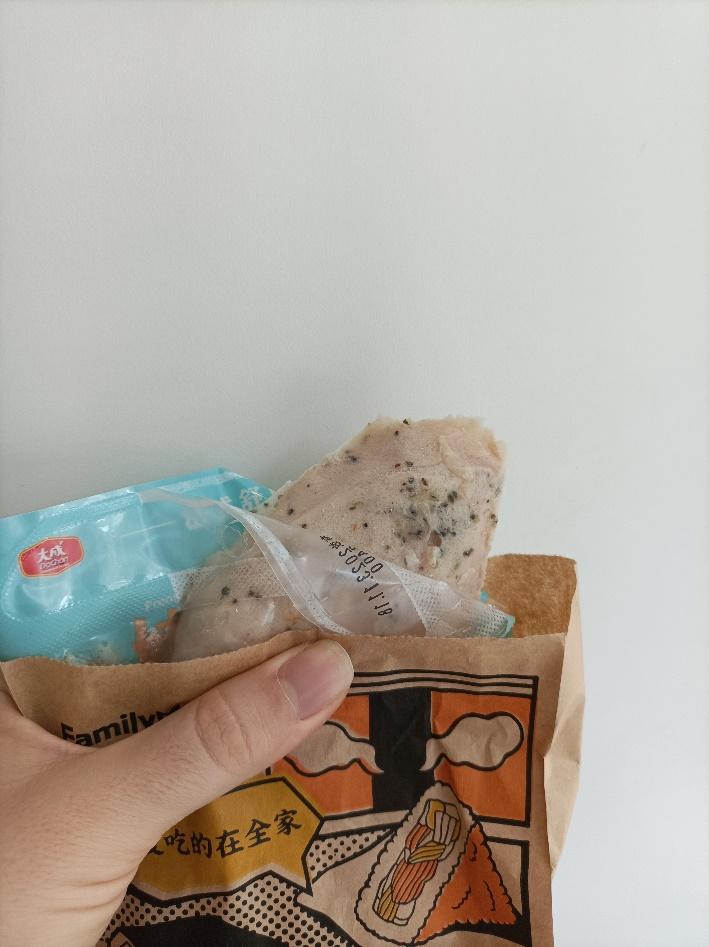

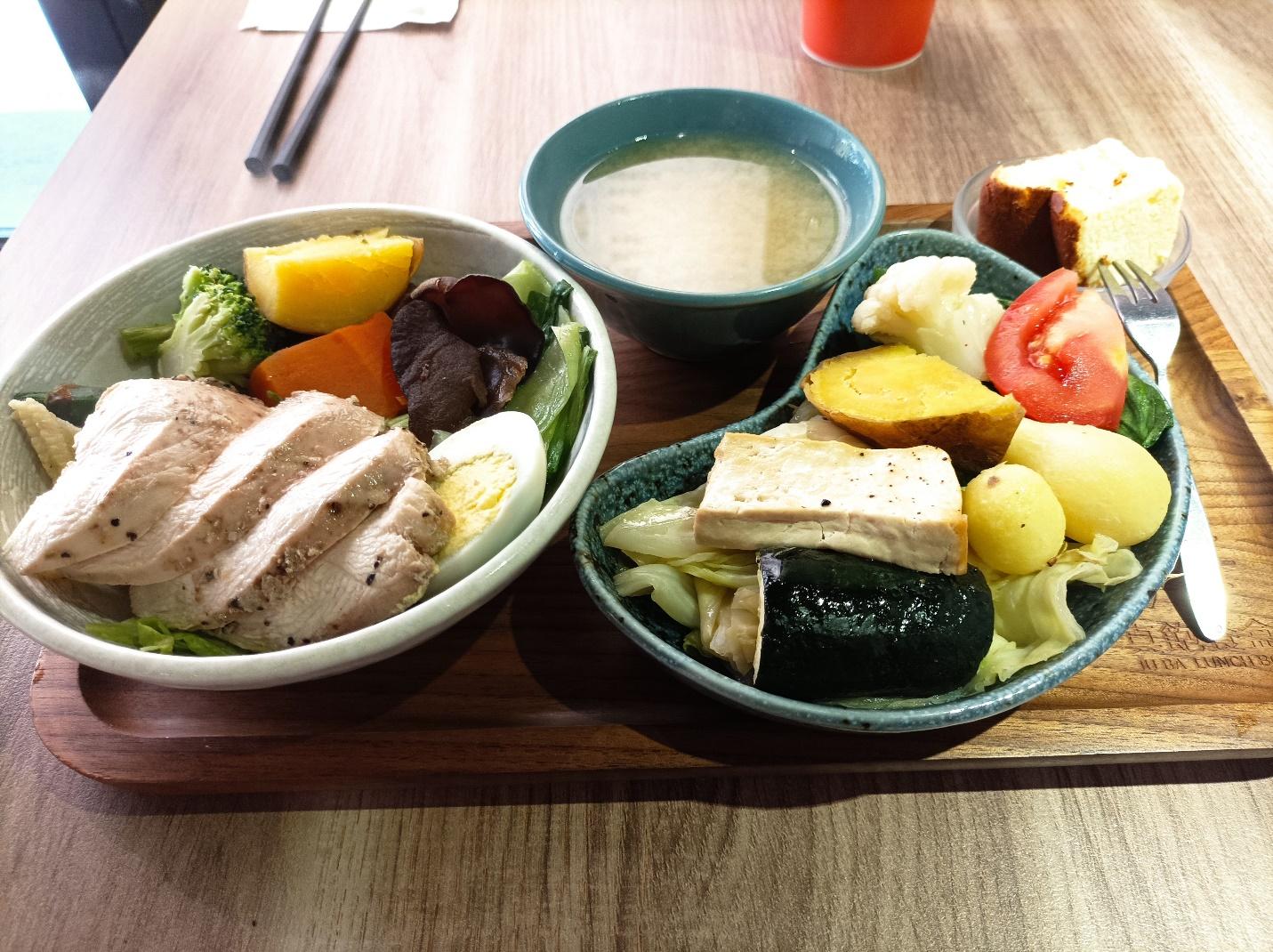


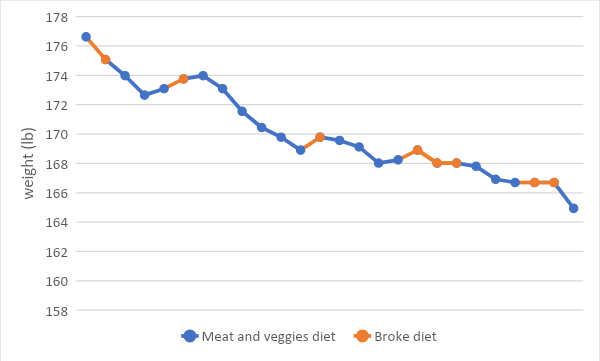

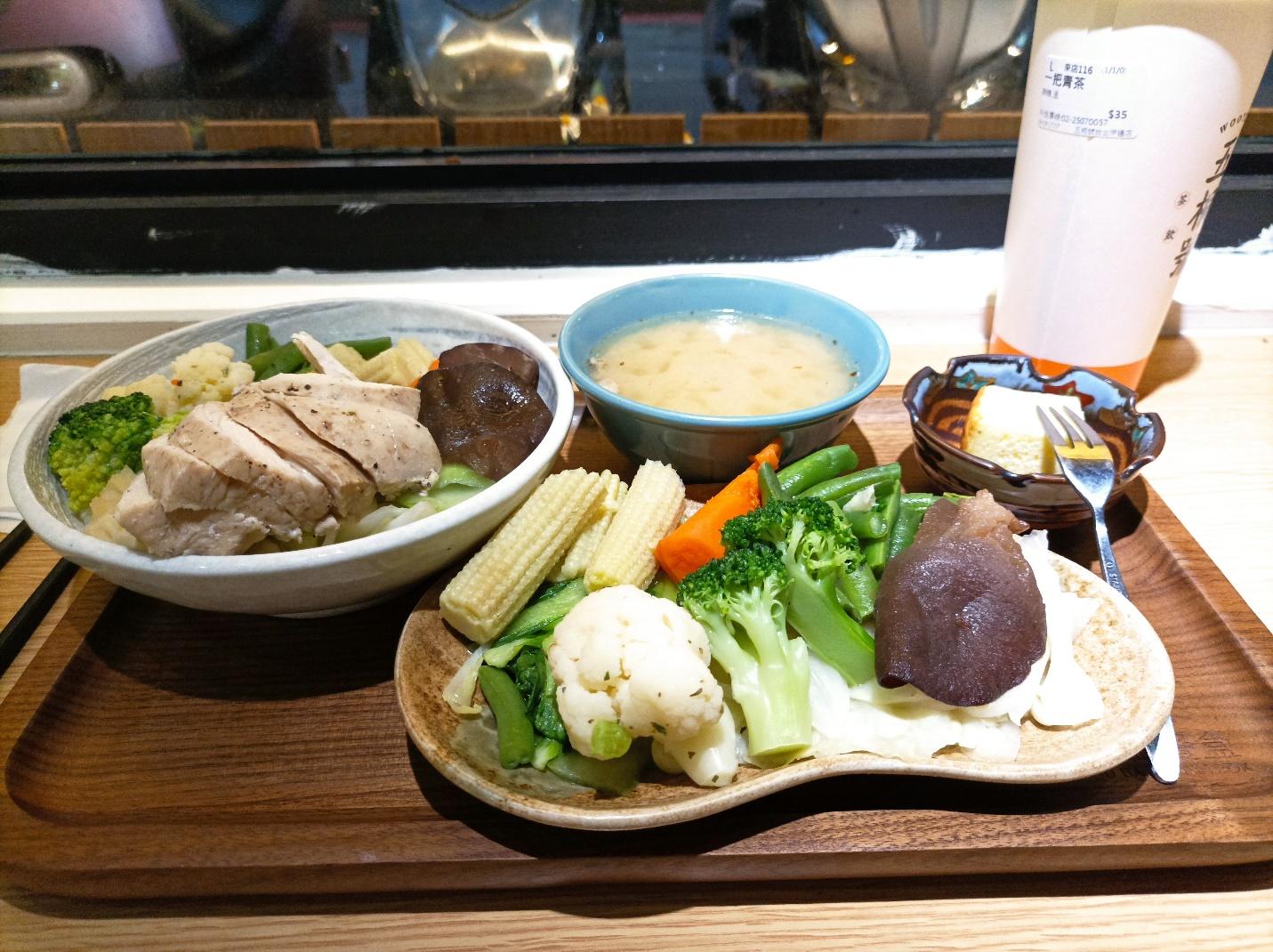








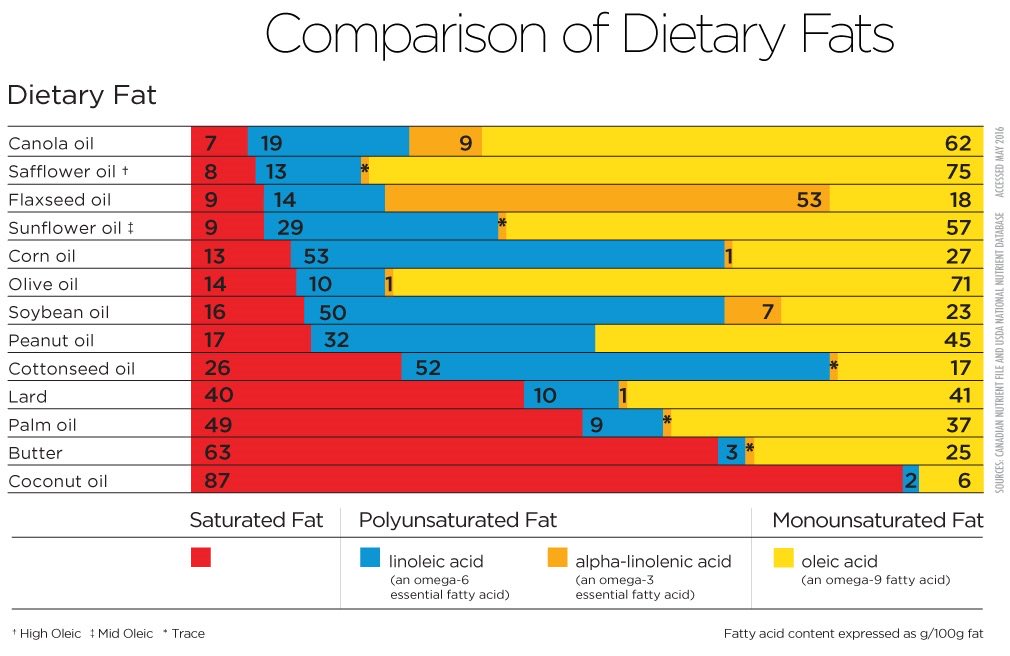

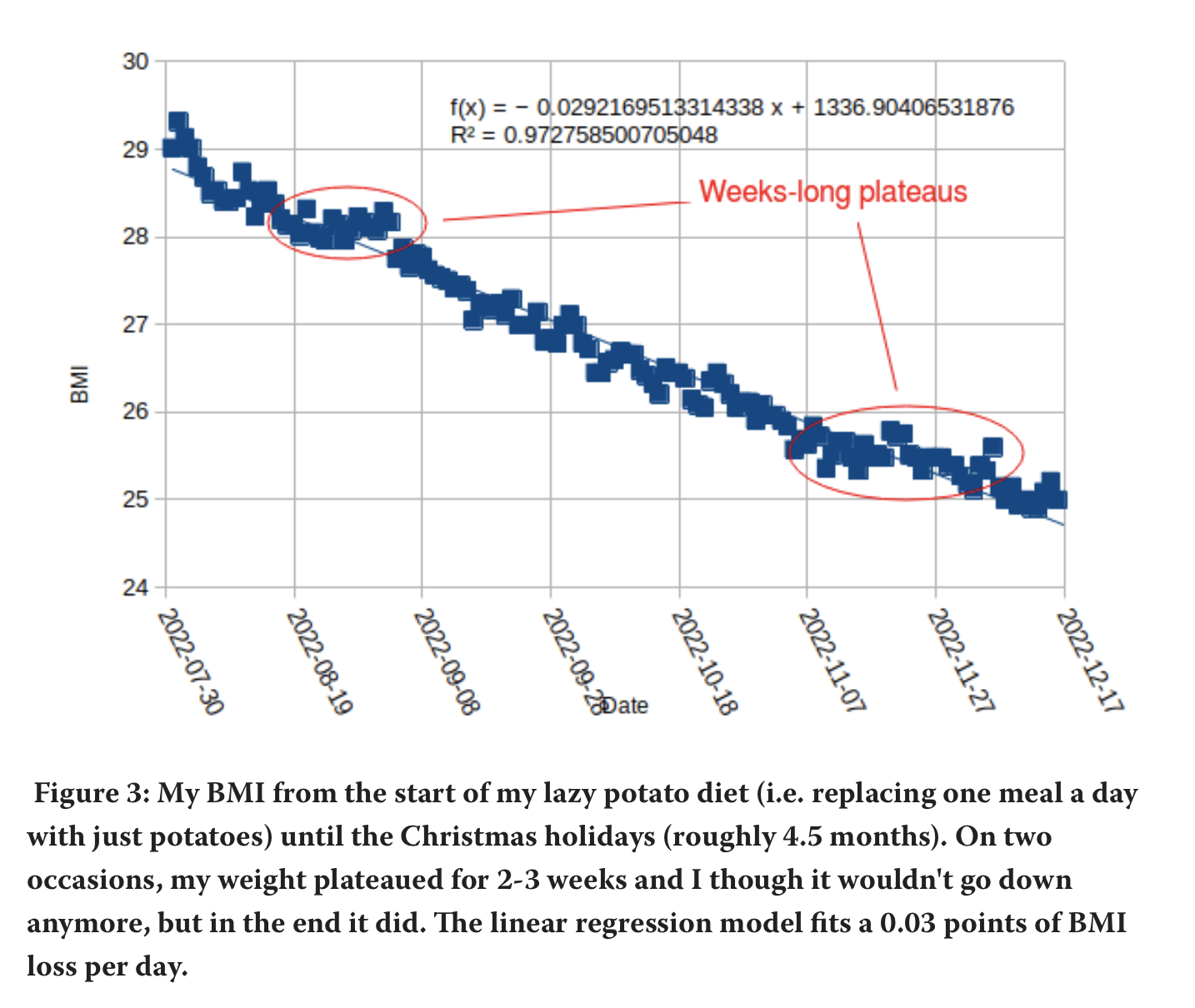

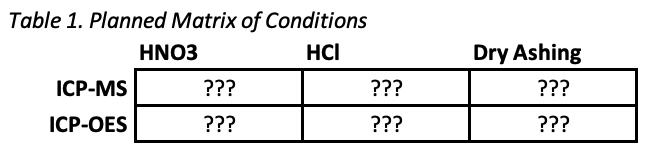
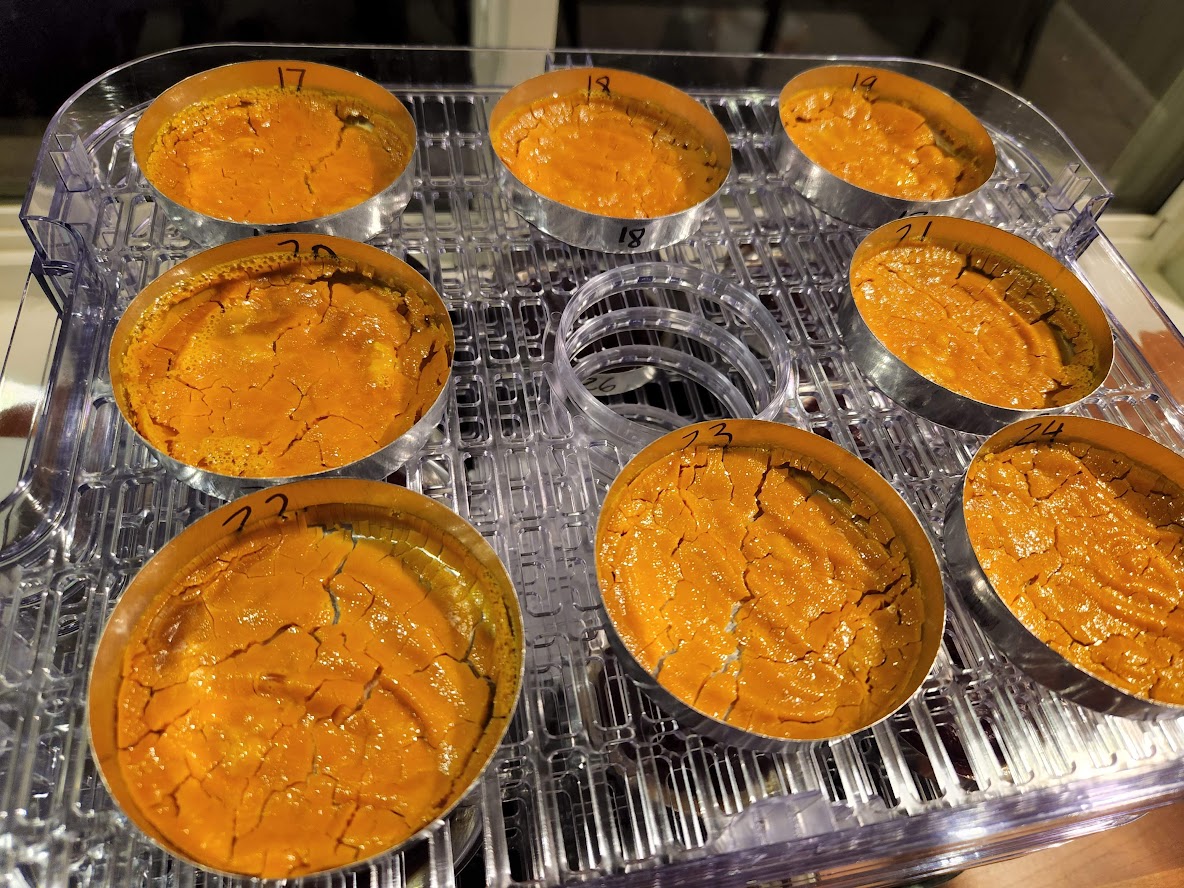

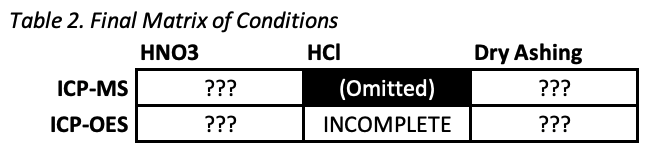


 SLIME MOLD TIME MOLD