Philosophical Transactions: Potato Serendipity (and FODMAP testing)

In the beginning, scientific articles were just letters. Eventually Henry Oldenburg started pulling some of these letters together and printing them as the Philosophical Transactions of the Royal Society, the first scientific journal. In continuance of this hallowed tradition, here at SLIME MOLD TIME MOLD we occasionally publish our own correspondence as a new generation of philosophical transactions.

Today’s correspondence is from a husband and wife who wish to remain anonymous. This account has been lightly edited for clarity, but what appears below is otherwise the original report as we received it. 

The potato diet has mostly been used for weight loss, but it’s also notable for involving mostly one food and being close to nutritionally complete, which means you can use it as an elimination diet to study things like food triggers. We’ve been interested in this idea for a long time, and we find this case study particularly compelling because it’s a rare example of someone doing just that!


Since around 2018, K had been suffering from stomach pain, bloating, gas, and chronic constipation. Chronic constipation worsened after two pregnancies, so K sought medical intervention again in Feb 2025. K was prescribed medication (Linzess) to treat the constipation, which initially improved symptoms but was unreliable and had unpleasant side effects. She had been on that medication for 1 month before starting the potato diet.

Family and friends were bewildered to hear our plan, warning us of muscle loss and blood sugar problems since potatoes are ‘bad’.

Her initial goal was to lose 5-10 pounds from a starting BMI of 23.4 and test out the claims we read online about the diet. K actually joked, “wouldn’t it be funny if this diet fixes my stomach problems?”

We started the diet on 21MAR2025. The first two and a half days were 100% potato for both of us. Morale was suffering by the afternoon of day 3, so we caved and had a potato-heavy dinner with our kids. Afterwards, we agreed to eat only potatoes until dinner so we could still have a normal family meal time. We did make sure potatoes featured heavily in the weekly meal plan.

Within a week, K noticed improved symptoms and regularity without any medication. Initially, she thought she might have a lactose intolerance, so she switched to lactose-free milk and quit the potato diet once we reached the end of our planned testing window.

Back on a regular diet (but still avoiding lactose), K’s symptoms came back worse, with constant stomach aches and bloating. K realized that she had unintentionally been on a low-FODMAP diet while on the potato diet and decided to do intolerance testing. 

Her methodology for intolerance testing follows:

  1. Ate a high-potato, low FODMAP diet until minimal symptoms were present.
  2. Used NHS FODMAP rechallenging protocol to isolate FODMAP groups (lactose, fructans from wheat, fructans from onions, fructans from garlic, fructans from fruit, fructose, galactooligosaccharides, sorbitol, mannitol, fructose + sorbitol) and identify foods to use for testing each group
  3. Spent 3 days of rechallenging per group: day 1 – small portion, day 2 – med portion, day 3 – large portion of challenge food (ex: 1/4 cup milk, 1/2 cup milk, 1 cup milk)
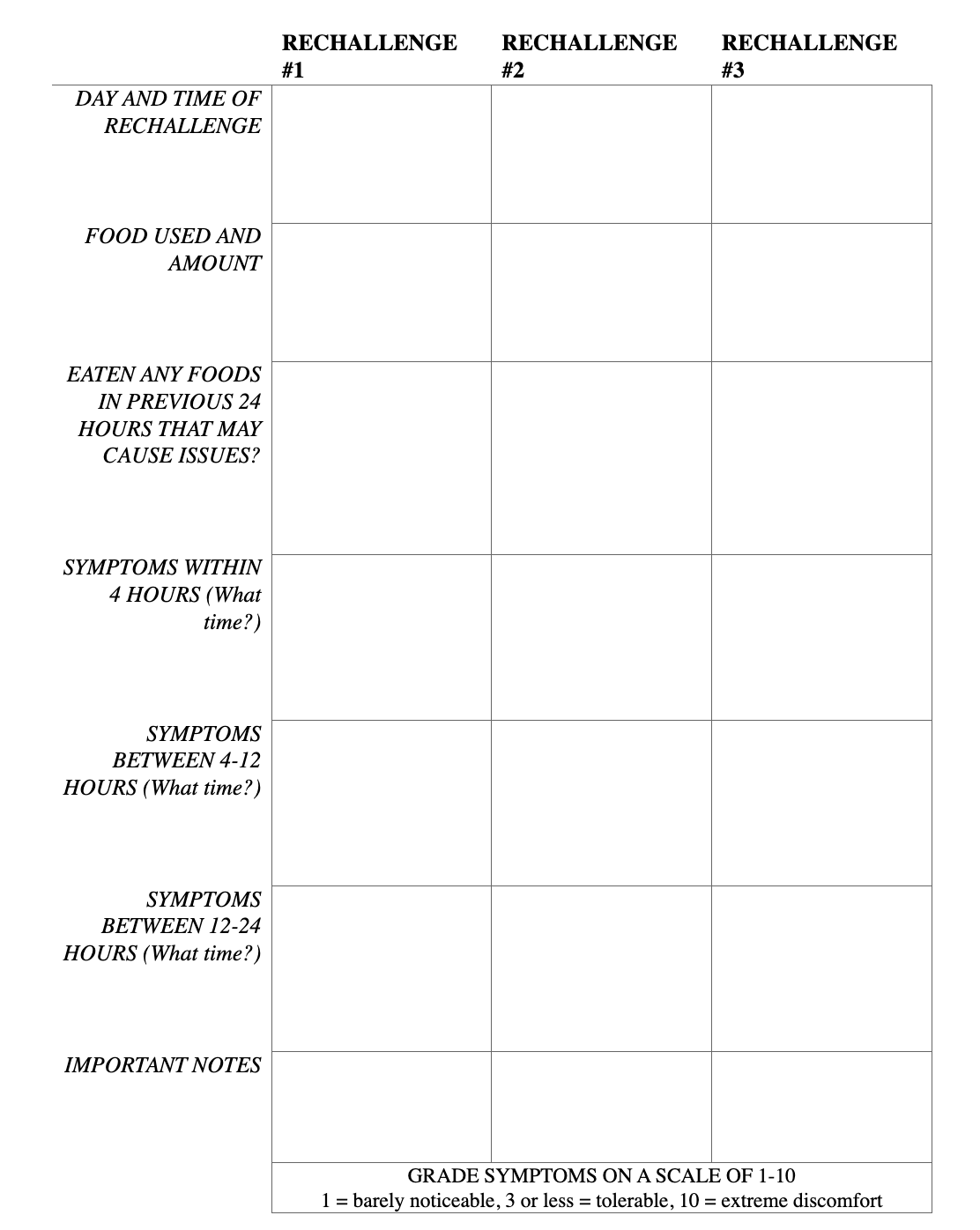
  4. Kept daily log of symptoms and severity
  5. Allowed 3 days of ‘washout’ after rechallenging
  6. Rechallenged next food group, but did not incorporate challenged foods into diet to avoid multiple FODMAP effects
  7. If symptoms appeared after a food challenge, waited till symptoms subsided and repeated the rechallenge over another 3 days

Incorporating lots of potatoes allowed K to test out food groups while still eating a well-balanced diet. The culprit for K is fructans from wheat, which is why cutting out daily servings of wheat has made her symptoms disappear.

K is finishing FODMAP testing (still a couple more groups to go), but has had reliable relief from all symptoms without any meds. Potatoes are a regular addition to meals these days. 

Below is the blank version of the log she used.

Philosophical Transactions: DECADENT Reader Reports Losing 50 Pounds Eating Buttery, Cheesy Potatoes

Previous Philosophical Transactions:

This account has been lightly edited for clarity, but what appears below is otherwise the original report as we received it. 


Hi Slimes,

I’ve recently wrapped up a year-long weight loss self-experiment. During this time I lost 50 lbs, most of it on a Potatoes + Dairy version of the potato diet.

This corroborates your recent case studies where Potatoes + Dairy caused just about as much weight loss as the standard potato diet. It certainly worked well for me. I found the diet really enjoyable, my meals were always delicious. I didn’t get tired of the potatoes, they remain one of my favorite foods. And there were a few other interesting findings as well, all described below.

I’m a longtime reader of the blog so this is me sending you my report, which you can publish if you like. Please list me as “Cole” (not my real name). I hope you find it helpful.

Background

First, my demographics. I’m a white male American in my early-mid 30s. I’m about 5 feet 11 inches tall, but I have a large frame. While you should feel free to calculate my BMI at any point, I don’t think it’s a very accurate measure of adiposity in my case. 

My first baseline is in mid 2022, when I weighed about 220 lbs. I know this because I tried a version of the potato diet at the time and lost about 10 lbs over about 40 days. I wasn’t seriously concerned with my weight at the time, I was mostly just curious about the potato diet and what it feels like “from the inside”. But this turned out to be relevant later on because it let me know that I’m a potato diet responder. 

In mid 2022 I was about to start a new job, one that involved a lot of hard work, stress, and late nights, and also a longer commute / a lot more driving than I am used to (I mention this because I’m sympathetic to the hypothesis that obesity is linked to motor vehicle exposure in some way).

I didn’t notice at first, but after starting this new job, I started to gain weight. Around April 2024, I realized that I weighed almost 250 lbs. This was heavier than I had ever been before, and also quite uncomfortable. For anyone who’s never gained 10+ lbs before, let me tell you, it makes everything in your life just a little more difficult, including things like sleeping, and that sucks.

But this crisis turned into an opportunity: I was about to change jobs again, this time to a job with much more reasonable hours and that required almost no driving. I wanted to lose the weight anyways, so I decided to take this opportunity to run a series of diet experiments and investigate some of the findings you’ve presented on the blog. 

The Experiment

I began the study on May 12, 2024, with a starting weight of 247.6 lbs. Per previous potato diet experiments, I weighed myself in my underwear every morning for consistency. 

To track my weight and my progress, I used a google sheet based on the one you shared from Krinn’s self-experiment with drinking high doses of potassium. I found her columns tracking 7-day average, personal best, and “ratchet” to be pretty helpful. Would recommend for anyone else trying a weight loss self-experiment. 

I didn’t start any new exercise habit, though as I mentioned, I did start a new job and was driving less, I no longer had a weekly commute. So it’s possible that some of the weight loss is from “lifestyle changes” but I don’t think it could be much. According to my phone I’ve averaged about 7,000 steps per day the entire time, while gaining the weight and then while losing it. 

The self-experiment can be broken into three main phases: the high-potassium brine phase, the Potatoes + Dairy phase, and a short run-out phase at the end.

Potassium

I had already lost some weight on the potato diet in the past, so from the perspective of pure science, starting with the potato diet didn’t seem very interesting. Instead, I figured I would investigate the hypothesis that high doses of potassium are part of the reason the potato diet causes weight loss.

For the first 147 days of the experiment, I tried different high-potassium brines, and lost about 12 lbs. 

All brines started with a base of two 591 ml blue Gatorades, mixed in a liter bottle with whatever dry electrolytes or other ingredients I was trying. Potassium was always added as KCl in the form of Nu-Salt.

I tried a wide variety of different brine mixtures, using different amounts of KCl as well as NaCl, sodium bicarbonate (baking soda), magnesium malate, iodine (as Lugol’s 2% solution), and glycine powder. But I don’t think these mixtures are worth reporting individually, because I wasn’t able to seriously distinguish between them. Regardless of the mix, I mostly kept losing weight at a very slow pace.

My impression is that magnesium is important, and that brines with added sodium work better than brines without, but I’m the first to admit that the data isn’t strong enough to back this intuition up. The most I can say is that I seemed to lose weight in kind of a sine-wave pattern, which you can see on the graph. These ups and downs roughly lined up with the 14-day cycles where I tried different brine recipes (i.e. I tried most recipes for 2 weeks), but I might have imagined a pattern where in reality there were just natural fluctuations.

While I originally hoped to get around 10,000 mg a day of potassium from my brine, like Krinn did, this wasn’t possible. I found doses above 6,600 mg/day K hard to drink, so I settled at that dosage, reasoning that Krinn lost weight even at lower doses. 

In general, the brines made me feel weird. I sometimes became anxious, sometimes fatigued, sometimes got headaches, and sometimes it did weird things to my sense of smell. I did sometimes feel very energetic, and sometimes it seriously reduced my appetite. Some days I ate almost nothing and had almost no appetite. But even with a clear reduction in my appetite, even when I was eating very little, I didn’t lose much weight. (This itself was kind of striking.) 

In terms of results, 12 lbs isn’t nothing. But over 147 days, it’s only about 0.08 lbs lost per day. That’s not very much. 

I take this as evidence in favor of the hypothesis that high doses of potassium are part of why the potato diet causes weight loss. Even on only 6,600 mg/day K, I experienced many of the effects of the potato diet (reduced appetite, weird anxiety) and I did lose some weight, though not much. 

But I also think my results suggest that potassium may not be enough, and that the “potato weight loss effect” really comes from something like high doses of potassium plus something else in potatoes / with potatoes—maybe high doses of magnesium, maybe sufficient sodium to balance the potassium, etc. 

Potatoes & Dairy

The brine seemed to work, but my rate of weight loss was really slow. It seemed like it was time to try the potato diet. In addition to hopefully losing more weight, I saw two benefits. 

First, I could compare the effect of the brine directly to the effect of the potato diet, to see if I was already losing weight as fast as I could, or if there was something missing from the formula.

Second, I could test out the success of Potatoes + Dairy. The original potato diet was very strict, but by this point you had already reported a few case studies where people had lost a lot of weight on versions of the potato diet where they also ate various kinds of dairy. 

My version of Potatoes + Dairy was decadent. Every meal was potatoes, but I always added as much butter, cheese, and sour cream as I wanted, which was usually a lot. For a while I made a lot of scalloped potatoes, but eventually I got lazy and from that point on I mostly ate baked potatoes or turned old baked potatoes into homefries. I didn’t get tired of this because butter is great. 

When I didn’t have time to prepare potatoes, I would have cheese, milk, or ice cream as a snack. Yes, I ate as much ice cream as I wanted, and still lost weight (which is in line with the literature).

In case anyone wants to replicate my approach, my mainstays were:

  • Kerrygold salted butter, or occasionally Cabot salted butter
  • Cabot sour cream
  • Cabot cheeses, especially Cabot Seriously Sharp Cheddar Cheese 
  • Ben & Jerry’s Ice Cream, most often Peanut Butter Cup

Despite this decadence, I lost about 40 lbs more over 187 days.

Looking closer, the weight loss really happened over two spans, one before the 2024 December holidays, and one after. I first lost about 16 lbs over 75 days, gained about 8 of that back during late December and January, then lost about 28 lbs over the next 86 days. At the point of greatest descent (early March 2025), I lost 10 lbs in two weeks. 

I wasn’t very strict and I did cheat pretty often. My notes mention times and places that I had pizza, candy, or sometimes burritos. Sometimes I had cheat meals where I would go out to lunch or get hot pot with friends. Sometimes I went on dates, where I ate normal food. This mostly didn’t make a difference as long as I also kept up with the potatoes. 

You might think that potatoes are a neutral food, and they just help you survive while your body returns to normal, or something. But my sense is that potatoes actively cause the weight loss. On days where I didn’t prepare potatoes, and mostly just snacked on ice cream and cheese, I didn’t seem to gain much weight back, but I didn’t lose it, either. 

This leads to another counterintuitive recommendation: the potato diet can really reduce your appetite, sometimes to the point where you don’t want to eat. But I think that you actually lose more weight on days where you eat potatoes than on days where you don’t eat at all. So if your goal is to lose weight, don’t assume that not eating is a good strategy—eat your taters.

I’m pretty confident that the potato diet was causing the weight loss, in part because I started losing weight right when I switched from brine to potatoes. Also, when I cheated for more than just a meal or two, it was obvious on the graph. Halloween, Thanksgiving week, and the December Holidays stand out in particular. Here’s version of the graph with those days singled out:

My holiday weight re-gain continued well into January because I was travelling and helping to organize some professional conferences, and I wasn’t able to keep up with the potatoes very well. As soon as I got back on potatoes around Jan 20, my weight started dropping again, this time faster than before. 

I was pretty surprised when I blew past not only 220 lbs, but 210 lbs. I had thought that 220-210 might be the healthy range for me, and expected the diet to stall out there. But instead I blew past those milestones. Turns out that 220 lbs is at least 20 lbs overweight for me. I had no idea, because I felt pretty healthy at 220, but I guess I had forgotten what it was like to be a normal weight.

Run-Out

I first dropped below 200 lbs on March 20, 2025. Soon after that, my weight started to plateau, never falling much below 200 lbs but showing no signs of increasing. 

I also noticed that I suddently started craving foods that weren’t potatoes, something that I hadn’t experienced on the previous 170 days. First I started craving fruit, and the next day, I started seriously craving Mexican food. Soon I was craving broccoli and chocolate.

This made me think that I might have reached a plateau, possibly my “natural” weight. According to BMI I am still “overweight” at < 200 lbs, and I am definitely not “lean”. But I do feel trim, and the girl I’ve been dating keeps putting her hands on my chest and talking about how good I look, so I’ll take this as some evidence that “just under 200 lbs” is a reasonable weight for me. 

Because I already seemed to have hit a plateau, I decided to spend the last 31 days on a run-out period to see what would happen as I eased off the diet. During this time I still ate potatoes pretty often, but I started bringing in other foods, and I went whole days without eating any potatoes at all. Somewhat surprisingly, I didn’t gain back the weight as I relaxed the diet. 

I do kind of wonder if my weight would have fallen even further if I had remained on Potatoes + Dairy, but the fact that I was developing cravings for other food suggests to me that I had encountered a real state change. It might have been possible to force my weight lower, but the magic of the potato diet is that the weight loss happens without any force. If you start forcing things, you’re back in the territory of restriction diets. 

I officially ended the experiment on May 12, 2025, 365 days after I started, weighing 198.8 lbs. This was down from an original high of 247.6 lbs, and my all-time low was 194.4 lbs on April 22nd. 

I’ll probably keep eating a diet high in potatoes, since even after several months, I still love them very much (and you wouldn’t believe how much I’ve saved in groceries). But I seem to have reached a plateau and a healthy weight, and also, while potatoes are powerful, they come at a terrible cost (mostly joking but read on).

A Few Things People Should Know

Hair Loss

When you lose a lot of weight very quickly, you often lose some hair. I’d never heard of this before but apparently it’s common knowledge among women. Who knew? It’s called “telogen effluvium” and it definitely happened to me. In early January, after my first period of intense Potato + Dairy weight loss, I noticed my hair was seriously thinning on top and in the back. 

The good news is that hair lost in this way usually grows back on its own, though it can take a couple of months. That seems to be happening for me too. My hair is clearly thicker now than it was in January. And it’s pretty weird: looking at my scalp, I can see short hairs and even some very short hairs mixed in among the long ones. While my head hasn’t returned to normal yet, the hair is clearly growing back.

So in the end this doesn’t seem to be a serious concern. And it’s not specific to the potato diet, this just happens when you lose weight really fast. Even so, anyone who wants to copy my results should be aware that this might happen, but also that it’s usually temporary. 

Emotional Effects

Some people get really intense negative feelings of fear or anxiety while on the potato diet. This also happened to me. 

I’m glad I read Birb’s account of her experience with the potato diet before trying it for myself, because it really prepared me for my own experience. Here’s what she said: 

To anyone who wants to do this diet, or is considering it after the benefits I described above: I encourage you to do it, but please be extra cautious that your mental state might be altered and that you are not necessarily in your right mind. The feelings you experience during this diet may not be how you actually feel.

Like I said above, potato diet is fucking weird. I mention this and the above because towards the end of the third week, I found myself crying every day. I was having actual meltdowns… five days in a row. 

I am not talking “oh I am so sad, let a single tear roll down my cheek while I stare out of a window on a rainy day” levels of gloom and general depression. I am talking “at one point I couldn’t fold some of my laundry in a way that was acceptable to me, and this made me think I should kill myself, so I started crying”. 

Is this a really dark to drop in the middle of a sort of lighthearted post about potato diet? Yes. I am sorry if you are uncomfortable reading it. Personally, I think I have a responsibility to talk about it, because the mentally weird aspect of this diet cannot be stressed enough.

My experience was somewhat different from Birb’s, manifesting more as a sense of overwhelming dread or doom than as a feeling of depression. And unlike Birb, I didn’t start to seriously feel this way until several months into the diet. But I definitely recognize her description.

As far as I could tell, these feelings were somewhat related to how quickly I was losing weight, though maybe not in the way you expect. The faster I was losing weight, the more of an overwhelming sense of doom I felt. Hooray. That said, it wasn’t a very strong relationship. I still felt the doom during times when I was cheating on the diet, and even when I was losing a lot of weight, I sometimes felt ok. 

I suspect that these feelings may have something to do with how the body uses epinephrine and norepinephrine to release energy from adipose tissue, which would explain why you feel so crazy anxious and such intense dread when actively losing the most weight, but I’m not a doctor™.

The feelings might also be the result of a vitamin or mineral deficiency. We know that the potato diet is deficient in Vitamin A, and while I wasn’t rigorous about testing this, I found that eating some sweet potatoes (high in vitamin A) often made me feel better. I also found during the run-out period that eating mushrooms (selenium?), broccoli, and spinach (iron?) maybe helped as well. So if you’re having a bad emotional time on the potato diet, think about trying sweet potatoes or one of these other foods.

It’s interesting to me that these feelings of doom got stronger the further along I got in my weight loss. Maybe this is just because I was losing weight faster over time. But another (kind of crazy) possibility is that something is stored in our fat reserves and as I dug deeper into them, I released more of it. Or in general that something is flushed out from somewhere? I don’t know if I believe this but I wanted to mention it. 

That’s just my speculation. It could also have been ordinary anxiety from other causes that happened to line up with the weight loss. I’ve got some personal things going on in my life right now, maybe the anxiety is coming from those. Plus, a few friends have recently had similar feelings of dread, and they’re not losing extreme amounts of weight on a highly unusual diet.

Conclusions

My results make me very confident that Potatoes + Dairy works. The potato diet makes you lose weight, and that still works even if you add dairy, including butter and ice cream, no matter if you’re eating as much of it as you want.

While my data can’t speak to how well Potatoes + Dairy will work for anyone else, I hope this ends the idea that the potato diet works because it’s unpalatable. I lost 50 lbs and every meal was delicious. I also hope this finishes the idea that the potato diet works because it’s a “mono diet”. You can’t reasonably call something a mono diet when it includes potatoes, sour cream, and ice cream with tiny peanut butter cups.

I also think this is some evidence for the potassium hypothesis. I lost weight when I was taking high doses of potassium, though not nearly as much as on the potato diet. Maybe this was because I was taking too small of a dose, and a higher dose would have caused a similar amount of weight loss as what I eventually saw on the potato diet.

But I suspect this is because the potato effect doesn’t come from potassium alone, but from an interaction between potassium and something else, possibly other electrolytes like sodium and magnesium. 

If you could find the right mixture, maybe you could reproduce the potato effect in a brine. But if so, I wasn’t able to find it. For now, the state of the art is Potatoes + Dairy.

Philosophical Transactions: AS on Potatoes-By-Default (Plus Sauce)

Previous Philosophical Transactions:

This account has been lightly edited for clarity, but what appears below is otherwise the original report as we received it. 


From April 21 of this year until today (August 5), I’ve been on a potatoes-by-default diet. This was inspired by the email by M (Philosophical Transactions: M’s Experience with Potatoes-by-Default). In that time, I went from a weight of 173.0 pounds to a weight of 155.4. I’m giving myself a slight handicap, because I actually started the diet about two weeks earlier and my weight was ~180, but I didn’t track my meals or get a digital scale until the 21st and my analog scale was unreliable. Depending on how robust you want to be about it, I’ve lost 17 or 24 pounds in 107 or 121 days. About half of that weight loss was concentrated in the first few weeks, but I kept it off and continued losing over the rest of the diet period.

The most interesting thing I have to say about this is that I have nothing interesting to say. My experience matches what I expected from reading this blog and other sources. I’ve lost weight, and noticed no adverse health effects. That made me almost not want to share here, but it’s important to share replications!

The Details

Here are the eccentricities of my particular case:

1. The diet variation I chose. 

I chose “potatoes by default” because I was interested in testing it, and because my social life puts me in group meal settings regularly. And then I added sauce because I had some sauce in the fridge I was hoping to use up. Initially I was going to discontinue the sauce after finishing it up, but I realized it wasn’t adding very many calories and I was curious whether it would affect the diet. My usual meal was a bowl of potatoes with roughly 2 tablespoons of sauce for dipping.

My favorite sauces after four months include the Zesty Secret Sauce by Marie’s, the Creamy Buffalo Sauce by Sweet Baby Ray’s, and the Gold BBQ Sauce by Kinder’s. Sometimes I would add some everything bagel seasoning and melted butter to the buffalo sauce – absolutely amazing!

One question discussed on the blog has been whether some ingredient serves as a blocker, and these sauces contained a whole lot of supposed blockers, which I think is interesting data. The percent of my meals with/without potatoes was inconsistent over the course of the diet, but sauce with potatoes was a constant, so if there’s a complete potato-diet-effect blocker, it wasn’t in the sauces.

I cooked the potatoes by cutting off the skin, cutting them in half or thirds depending on the size, and baking them in the oven on parchment paper at 425 for around 70 minutes. Potato varieties used were mostly russet and gold, sometimes red, and “baby” varieties if they were on sale.

The rest of my diet was very standard – all the normal-American-diet ingredients that might be blockers were involved, and there was no particular portion control beyond not eating when I was full.

2. Exercise.

I don’t believe exercise played a substantial role in the weight loss, but I had two exercise habits going on during this experiment and I did lose weight, so it’s worth reporting on them.

First, I walked a minimum of 10,000 steps each day, although that actually undersells the average (15,313).

Second, roughly 10 times during the experiment period, I played dance video games (DDR or Just Dance) for a minimum of 2 hours at a relatively intense difficulty mode. These mostly happened in the first two months, and were discontinued for personal reasons and not for diet or health-related reasons.

“I Could Never Do That,” Said The Person Who Never Tried

Some friends I discussed this diet with said they were interested, but could never do it, because they get cravings for specific foods when they’re hungry. I find this absolutely unpersuasive. The rules I followed let me have snacks when I got cravings; I still lost weight, and the cravings were less common than before the potato diet.

Some people in previous experiments writing on this blog noted that their desire to have junk food largely subsided while in “potato mode”. It was pretty easy for me to control what I ate at home. But sometimes I would be outside the house, and I would be a little bit hungry and get a small meal at a restaurant, and then I was in trouble! Because if I ate something small, I suddenly found myself hungry for dessert too. But if I didn’t eat out, and I went about my day, I would be perfectly happy not following that impulse. 

At any rate, if you’re going to follow any diet, potato dieting is about as close as a diet can be to Pareto optimal: (e.g. it’s better in every possible way than any diet you compare it to)

  • It’s easy to do. The rules are simpler than any other diet; the shopping is simpler; the meal prep is simpler.
  • It’s easy to stick to; it’s the only diet I’ve ever kept for more than a week. My experience with other diets is that you are constantly thinking about the food and fighting cravings for other food. For some reason, a potato diet doesn’t create that for me, especially with the leniency of “-by-default.”
  • It’s less expensive than any other diet. I spent roughly $500 a month less on groceries over the period, despite eating the same proportion of my meals at home.

No Grand Conclusion

Ultimately, this is an N=1 replication. There were times when I ate better and times when I ate worse. I didn’t always lose weight when I was having non-potato meals, but if I gained weight (e.g. on travel) I would quickly lose it again when going back to potatoes. This feels like the “lipostat” hypothesis to me; eating a lot of potatoes did something to make my set point weight lower than it otherwise would be.

I’m happy to have lost weight and even happier to be able to provide a tiny bit more data in support of the potato diet. 

Chart created by SMTM from data provided by AS

Philosophical Transactions: Leo on Swamp Taters

Previous Philosophical Transactions:

From deep within the metabolic mire, “Leo” sent us a transmission on a potato riff: SWAMP TATERS. Potatoes as high fat, high carbs, low protein. The exchange is reproduced below, lightly edited for clarity.


First Exchange

Leo:

Hey y’all:

A friend of mine and I have been doing an unsanctioned potato-riff (didn’t get around to signing up, didn’t get a good initial weigh-in). Also I can’t remember what day we started but it was probably around January 8. 

I’m down 10+ pounds (from somewhere around 240 to 227; used different scales before I started going to a nearby pharmacy every day or so to use the big ‘health station’) and he’s down probably 20 to 375 (he doesn’t have a scale big enough, is also going to the pharmacy), but was 390+. 

The riff is potatoes + saturated fat (mostly butter, some coconut oil), with calories from the fat no more than maybe 40%. We’ve been strict even about cheat days — only having protein refeeds using bone broth powder for the BCAA restriction as in Brad Marshall’s emergence diet, with a tiny bit of cheese. (The refeed meal is potatoes au gratin boulangeres, with broth in the potatoes and pepper-jack on top). So far a success — we’re both visibly thinner and feeling good. 

A couple of notes:

  • I seem to lose -more- weight after refeed meals. If this keeps up, I’ll experiment with adding bone broth every day. 
  • I ate a bag of potato chips one day, and then fried up a bunch of potato chips in coconut oil the next day, then went up 4 pounds next weigh-in. Possibly just noise, but have religiously avoided both since.
  • He hasn’t eliminated alcohol during this trial, and is still making progress. 

Oh and to make it explicit — we’ll be continuing with the potatoes until we reach our goal weights, and our data for the second month will be better than the first.

SMTM:

So good to hear from you! This is wonderful news.

We’re very interested in this observation about refeeds. We’ve wondered for a while if there might be some kind of second fuel that is the limiting factor, to whatever is causing the weight loss from potatoes. If there were, that would maybe explain why half-tato sometimes works, but often doesn’t, and why some people have so much more success with the potato diet than others.

We like the idea of adding bone broth every day for a week, but then maybe consider following up with a week off, followed by a week adding it back in or something, like an ABA model. If that shows support for bone broth making a difference, maybe folks can riff from there.

We can also imagine that bone broth might have an impact once per week but not the same if done daily. In this case, alternating weeks would also be helpful — you’d see a big weight drop on the first few days of a bone broth week and then less effect after that. 

Leo:

Good thoughts. let’s see:

  • On the refeeds:
    1. The motivation behind adding the bone broth was diet adherence: I’m a lifelong lifter, and my (very large) co-experimenter is a now-crippled former athlete, so we both have a history eating a TON of protein. I implemented the refeed protocol in response to him reporting a tendency to cave late at night and eat cheese sometimes, which matched a certain interior discomfort I had been experiencing. Quite possibly just psychological, but we’ve been maintaining adherence better/easier since implementing them.
    2. My understanding of Brad Marshall’s bone broth (in his emergence diet) is to get enough protein without any of the obesogenic BCAAs. I helped a friend out yesterday in the kitchen but the timing was off — by the time my potatoes were done everyone else was eating burritos, and I ended up eating several spoonfuls of cooked hamburger. Weight went up a pound or so this morning and I don’t believe that’s an accident. 
  • You’re right about A:B testing. I’ll buy some cream today (I tend not to keep it on hand because it’s too easy to overserve yourself adding it to beverages) and try making the au gratin for a week with no broth and no cheese (the cheese was a confounder, anyway). A recipe I’ve invented for the purposes of this diet is a low-protein au gratin dauphinoise that involves making the ‘crust’ on the top (gratin means crust) out of potato flakes mixed with cream. It works as well for the crustiness without the casein. What I expect is that this will have no effect on weight loss in either direction, assuming we control for cheating.
  • Comments on palatability:
    1. Fries defeat the satiating nature of potatoes. Maybe the hot oil and the thin cut allows the heat to more easily destroy the protease inhibitors in potatoes, but i’d have to see the interior temp of potatoes cooked different ways accurately compared to even fully guess this is the case. What I do notice is that even oven-‘fried’ potatoes, if I do them just right, become a food I can eat a ton of without noticing whether or not I’m still actually hungry.
    2. The cheeseless au gratin + colcannon appear the best currently-demonstrated goldilocks option for palatability vs calories. If bone broth clears further trials I’d say that collagen-broth potato chowder and au gratin boulangeres (broth instead of cream) would be the best. Colcannon (mashed potatoes with minimal vegetables in it, traditionally cabbage) requires a lot of butter or cream for appropriate texture.

SMTM:

Great, the ABA designs should tell us a lot! Testing the bone broth is a good starting point. You might also at some point test some of the hypotheses about causes. For example, your results so far are consistent with the BCAA restriction hypothesis, but not very specific evidence for it.

That hypothesis suggests that you should be able to add anything that doesn’t contain BCAAs to this diet without any negative effect, so you could try adding in non-BCAA foods one at a time or something. You could also do an ABA design where you add BCAA powder to your meals directly, to (hopefully) avoid confounders. Hamburger contains BCAAs but it contains a lot of other things too (including lithium, as far as we can tell), it’s suggestive but not a clean test of the hypothesis. 

The most interesting test from a scientific standpoint will be the one where we think there’s a chance one of the conditions might stop the weight loss — see our post about biting the bullet if you haven’t already. From a practical standpoint it’s annoying to interrupt your weight loss, but will be the best sign that we’re getting close to finding the “switch” (or one of the switches at least).

Looking forward to hearing how it goes! 🙂 

Leo:

Ah, yes! I hadn’t read your N=1 series but I agree entirely. 

I’d from the beginning been planning on running this in an ABBB[…]BBBA form, in the sense that I started out making food that was at least 50% potato by calorie, with the rest being saturated fat and cabbage/onions/garlic (sometimes in the form of sauerkraut that I make), with the intention of increasing the tater until I started losing weight. That’s the B. When I reach my goal weight (which barring some miracle will be far sooner than my friend will, given he’s got 150 pounds and negative-6 inches on me, though he’s built like a bull) I’d just add back beef to my own portions (but not his) until I stopped losing weight. 

I’d been thinking of beef as the most obvious source of isoleucine, but you make a good point about the lithium. I have in the past bought bulk BCAA powder and empty capsules and filled them myself (eight years ago on a stint of strictly lifting in the morning despite intermittent fasting on a 20:4 pattern — in retrospect the whole thing was laughable but that’s what I get for not biting the bullet), so I might just buy a big bottle of BCAA tablets and see if I can stop the weight loss with them instead of beef. 

I can already say that adding cabbage (cooked or fermented) appears to have no effects on weight loss, nor does eating massive amounts of capsaicin.

Another thing: I’m experiencing something approaching normal satiety for perhaps the first time in my life. I’ve been doing intermittent fasting for a long time just because once I start eating I don’t stop, and once I eat I crash. So usually I go all day on decaf coffee with butter in it, then eat 4500 kcal of e.g. greasy beef tacos on corn tortillas fried in butter, then become dead to the world. I was never able to lift, barely able to hike after eating. 

That’s all changed. I can eat a bunch of potatoes and lift, or even wait a couple of hours and do sprints or burpees. My IBS is much better, my testosterone levels seem more consistent over the whole day (judging by steady libido and no maudlin period in the evening), and have been sleeping through the night better (less ‘maintenance’ insomnia). I’m a convert already — potato is life.

Second Exchange

Leo: 

Brethren:

Apologies for the long delay, and for this not being as robust a run as I’d intended. I’ve had a lot going on. Only got 3.5 weeks of good weigh-ins. Started a week earlier at probably 240-2, but not on a good scale.

First, the dates with the (good scale) weights:

1/25 – 238
1/26 – 238
1/27 – 236
1/28 – 232
1/29 – 233
1/30 – 233
1/31 – 231
2/1 – 233
2/2 – 231
2/3 – 227
2/4 – 227
2/5 – 226
2/6 – 227
2/7 – 225
2/8 – 225
2/9 – 224
2/10 – 225
2/11- 224
2/12- 223
2/13 – 223
2/14 – 224
2/15 – 224
2/16 – 224
2/17 – 221

We’ve added a graph for the visual learners :‎

My ‘riff’ was adding saturated fat. I wanted to test the metabolic ‘swamp’: high fat, high carbs, low protein. Other potato riffs had reported some dairy, some french fries, etc., but I wanted to control and report the fat intake. 

Protocol was ~7+ pounds of potatoes and at least one stick of butter (often 1.5). After initial weight loss demonstrated that this was working, I wanted to see if additional non-BCAA aminos (i.e. bone broth) would halt it. It didn’t, and I intended to flip that and add just BCAAs, but it’s a good thing I didn’t — I hit a plateau that lasted a week, and would surely have attributed the stoppage to the BCAAs if I’d been taking any. 

17 pounds down in four weeks is a good proof-of-concept of swamping, though. Note that I’m a big guy, and fairly metabolically healthy (I’m barely overweight at 221 and have a fair bit of lean body mass). I was doing this with a friend who was eating roughly equivalent food (slightly less fat) but not weighing in daily. He estimates he lost 15-20 pounds, but he has more LBM than I do. I’d love to see a chart of potato-diet weight loss by LBM rather than by total weight. 

Other consistent elements of the diet were the use of seasonings including MSG and KCl, copious hot sauce, and homemade sauerkraut. Both of us engaged in some kind of intermittent fasting daily as well — my fat intake daily was higher due to blending butter in my coffee in the morning, he just wasn’t eating before noon.

Other notes: a couple of women who ate the same swamp-tater diet a few days reported a reduction in weight of a few pounds, but this isn’t much of a sample. 

Towards the end of the plateau, I was wondering if my metabolism was slowing down (I felt tired and cold more often — this may have been illusory). A couple of days I experimented with stimulating FGF21 in the mornings by eating ~500 calories of table sugar in the am (and no butter). I felt amped while fasting all afternoon, but then ate just as much for supper as I would have eaten between dinner and supper. Probably gained a couple pounds but wasn’t weighing those days. 

I’ll start being more strict with the swamp tater protocol again soon. Overtrained a bit the last few days and hurt all over. Just trying not to psych myself into eating protein as recovery fuel. I should mix up some collagen right now.

Oh, here are my three most successful ‘swamp tater’ recipes. 

Colcannon: (peeled) red potatoes boiled barely enough, then whipped with butter or cream (roughly half stick per five pound bag). while potatoes are boiling, sautee a small head of cabbage, two or three onions, five cloves of garlic pressed (or granulated), and maybe a sliced jalapeno or two. (for sliced, use a mandolin, i’ll link below)

Au gratin: mandolined (peeled) russet potatoes, (optional) cream, hot water, and low-protein bullion (and garlic powder). liquid goes up slightly more than halfway in the taters. then a TINY bit of cheese on top, just barely enough to seal in moisture

Sheet-baked wedges: quartered (peeled) gold potatoes. heat them up by pouring boiling water over them in a bowl, stir until separated and warm, then drain. toss them in a wok with the following: heat a third of a stick of butter, whisk in some frank’s red-hot, a little bullion powder, and granulated garlic. toss them until they’re coated, then put onto baking sheets and cook at 400 until crispy. (do not make these smaller than quarters or they will become ‘fries’ and derange your satiety signaling).

Leo:

I’ve had a lot going on since shortly after I emailed you last, and have found it more or less impossible to stay on any diet. I’ve been largely eating potatoes, sometimes eating a little bread, often eating sugar. 

It feels a bit as I have after weight loss in the past, like what could imagine the experience of an embattled person with an outraged lipostat and part-empty WAT cells might be. Hard to say, beyond 1) fructose sure doesn’t work for me, next time I experiment with using sugar to upregulate my metabolism it’ll be pure glucose; 2) haven’t seemed to suffer as a result of not having more protein; 3) I can now cliff-young-shuffle in zone two (i.e. not even noticing my breathing) as long as I’m not going uphill. This hasn’t been the case for a while, might just be that I’ve been doing a lot of cardio and am 20 pounds lighter; 4) potatoes still taste fine. 

I’m interested in helping map brinespace and will be acquiring a big bucket of confectioner’s glucose as well as bulk supplement bags of magnesium and potassium (maybe in citrate form — KCl makes my teeth hurt). 

I’ll spare you any further reflections I have, as I’ve become a fanatic on linoleic acid (falling short of the colloquial definition of a fanatic: someone who can’t change his mind and won’t change the subject). 

Thanks again for all your good work.

Philosophical Transactions: Neoncube on The Meat and Veggies Diet

Previous Philosophical Transactions:

Neoncube recently sent us some emails about a self-experiment where he ate mostly meat and veggies. The exchange is reproduced below, lightly edited for clarity.


Neoncube’s First Email

Dear Slime Mold Time Mold,

I’ve followed your writings with great interest, and now I’m enthused to write to you about the rather astounding success that I’ve had with a “meat and veggies” diet, where I lost 6% of my body weight in one month!

The story

Everyone had told me that when I hit 30 years old, I’d get fat, but I was still surprised when it actually happened. I’d always been skinny, and keeping off weight wasn’t something that I’d had to worry about much. Two years after I hit 30, though, I was 176lb (80kg), with a BMI of 25 and the beginnings of a belly.

Despite all this, I still wasn’t taking my weight very seriously. Things finally came to a head when I attended an aerobics class where I had to exercise in front of a full length mirror for an hour. The hour was rather torturous. Neither my physique nor my stamina were what I had imagined. I was fat and out of shape, and something needed to change.

After my shock, I decided to depart on a meat and veggies diet. My sister had used this diet and “lost so much weight that [she] had to stop”, and the person who had told her about the diet (my brother) has never been anywhere close to fat.

It seemed there was hope! And thus, I began the meat and veggies diet.

The diet

The rules of the diet were simple: Eat only meat and veggies, all day, every day. No sugar, no carbs, no fruit, and no dairy. The meat should be lean, and the veggies should be cooked. Try to eat a good mix of veggies.

For me, this meant something like this:

Breakfast: Chicken breast.
Lunch: Lean meat and veggies.
Dinner: Lean meat and veggies.
Afternoon snack: Chicken breast(s)
After-dinner snack: Chicken breast!

That might sound a bit boring, and truth be told, it was, but the insane amount of weight loss per day made for strong motivation to keep going!

Pictures

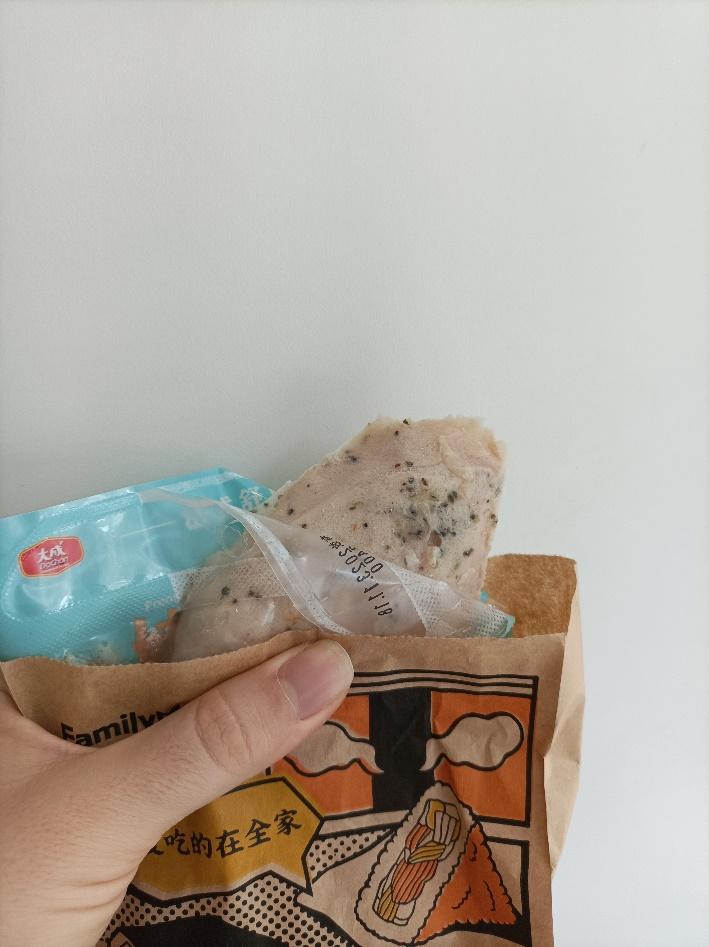
Breakfast, afternoon snack(s), and after dinner snack(s) generally consisted of one or two prepackaged, preseasoned, microwaveable chicken breasts. These are available in all of the convenience stores in Taipei, which made my life a lot easier! My favorite flavors were “smoke flavoring” and “black pepper” (pictured below).


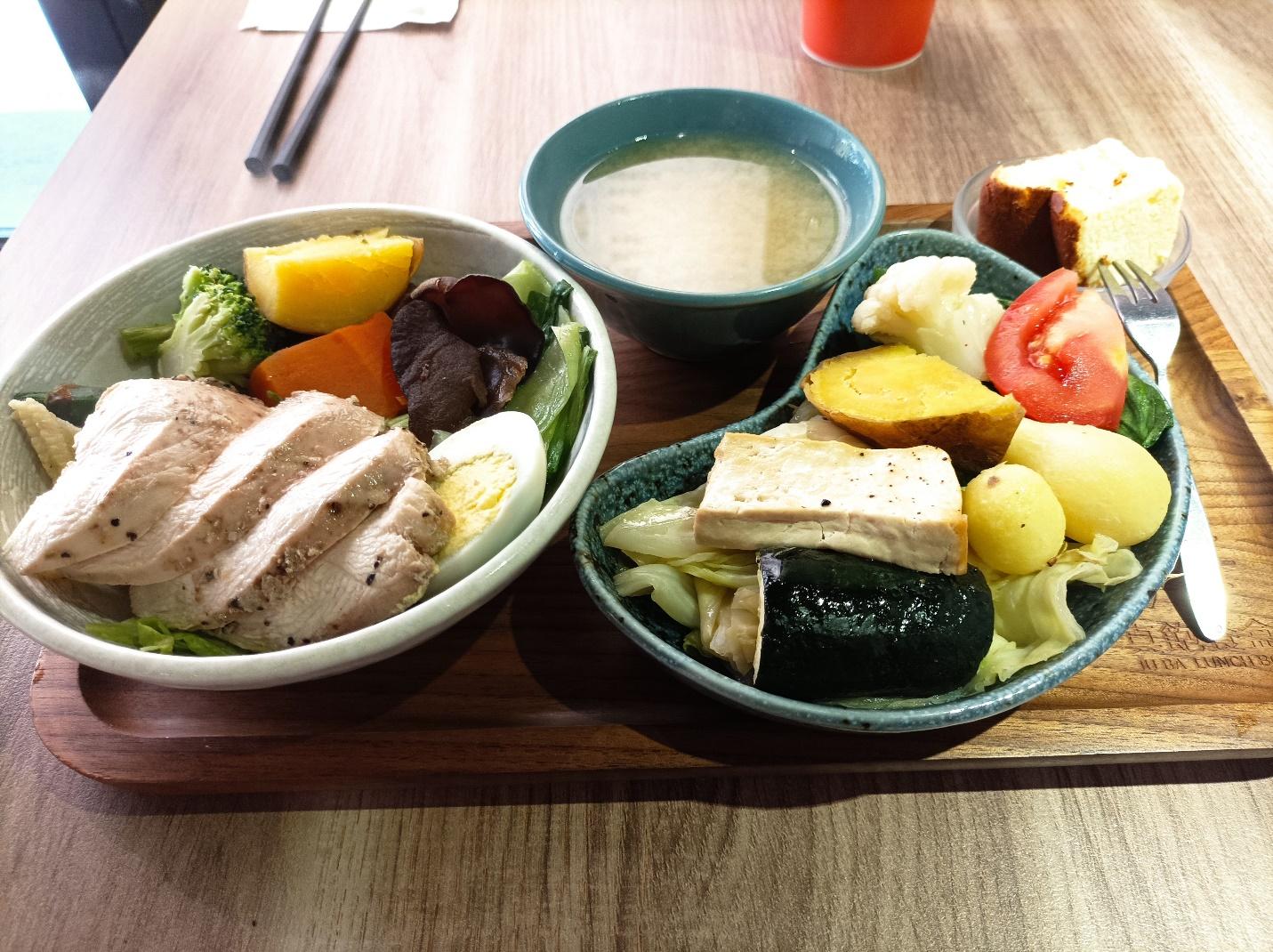
Lunch was meat and veggies. I often would get chicken breast and another type of meat, as in the picture below. The leanness of the meat was, at times, arguable! Perhaps eating slightly fattier meat sometimes was a good thing, though? 

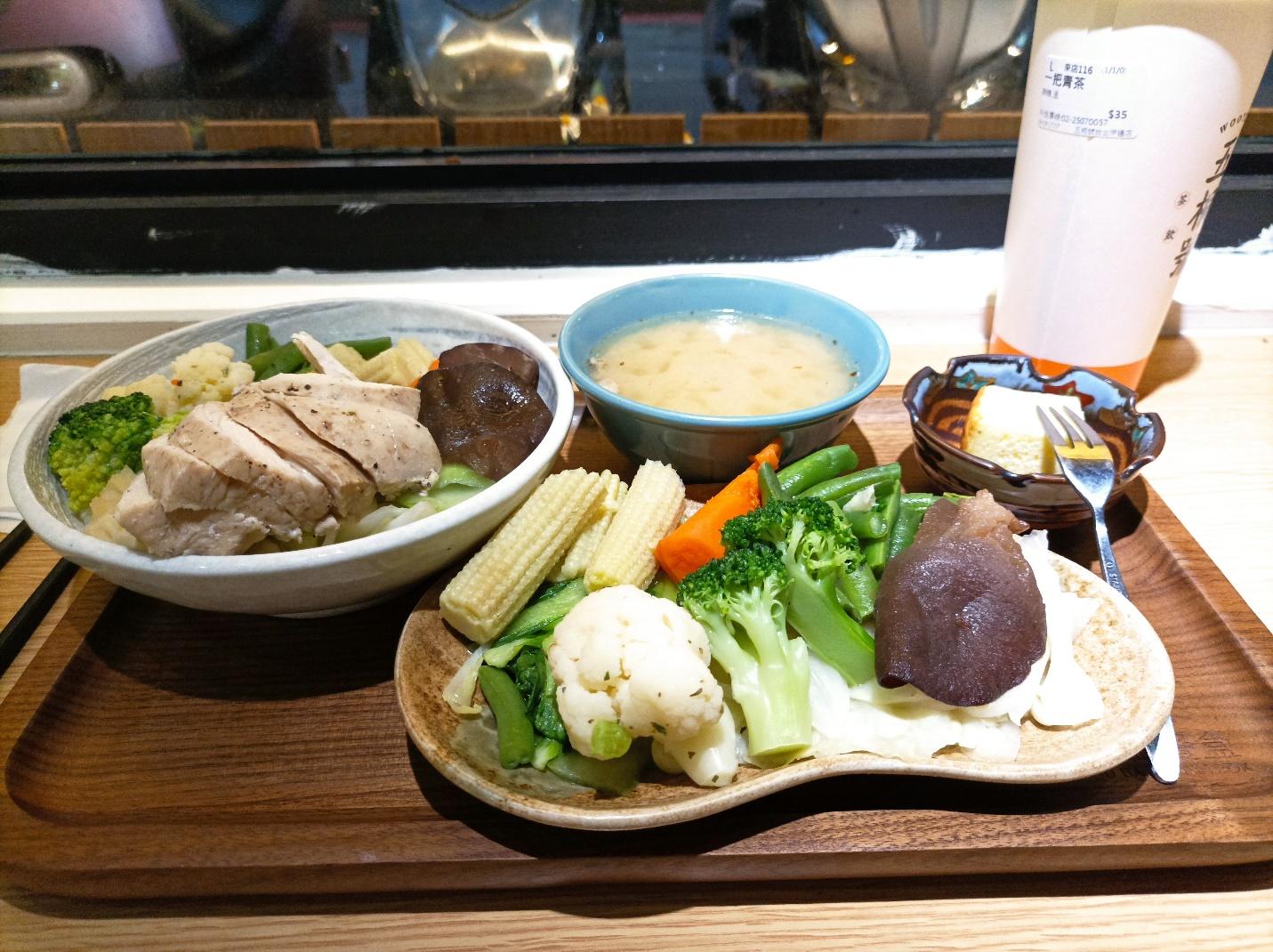
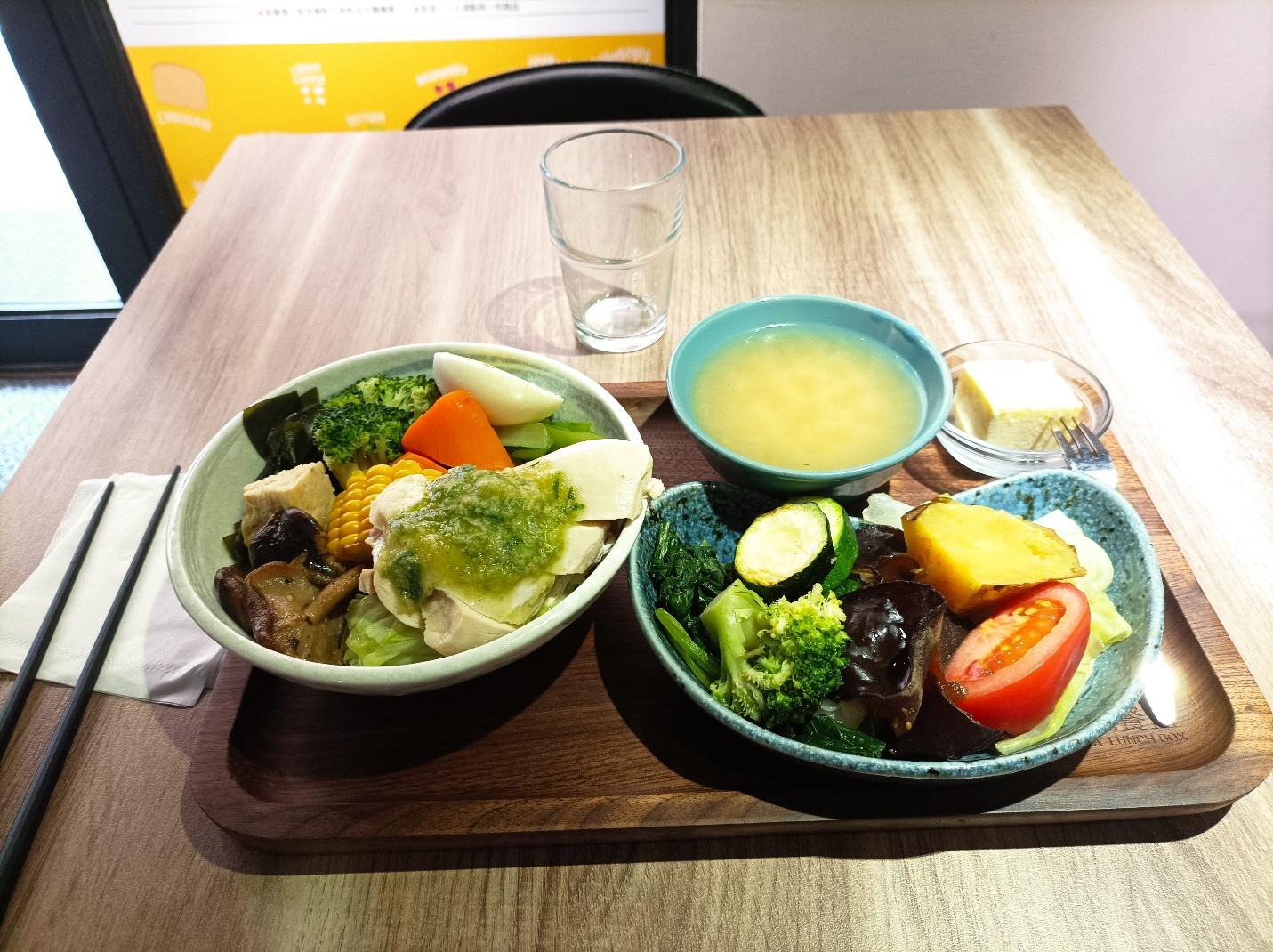
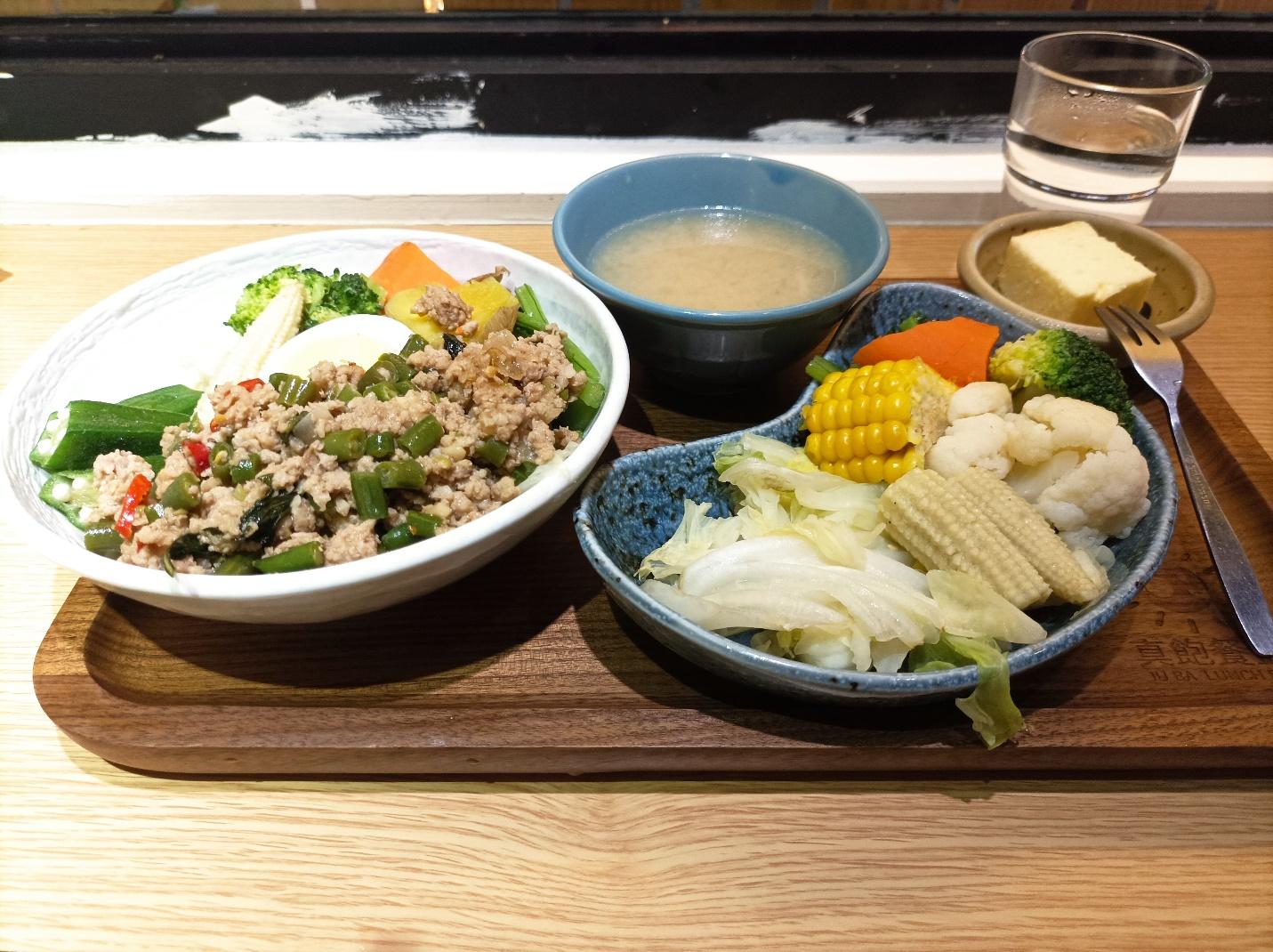
For dinner, I generally ate the same meal, at the same restaurant, every day, because it was really good and relatively filling! The vegetables were different every day, depending on what the restaurant had on hand:

Looking at the above picture, you can see that I was pretty flexible with my definition of “veggies.” I considered cooked potatoes and cooked sweet potatoes to be fine.

I didn’t eat any tomatoes that were included in my meals, because I don’t like tomatoes, but I did sometimes eat tofu, considering it a sort of protein, although I later regretted this.

Dinner came with a small bowl of miso soup and a small block of spongy cheese cake, which I happily ate. This didn’t seem to affect the diet.

Results

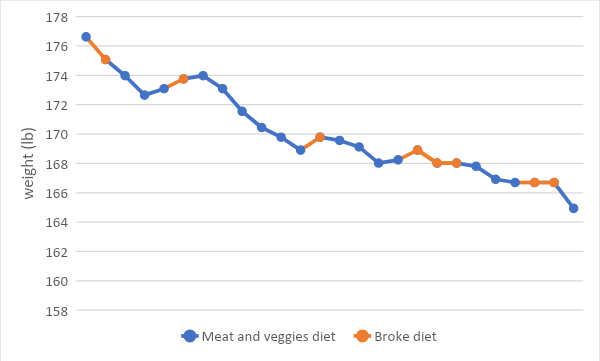
The graphs below are provided in both pounds and kilograms.

I started my diet around 177lb (80.1kg) and ended around 165lb (74.8kg). Over 30 days, I’d lost 11.5lb (5.3kg), for an average loss of ~0.4lb (0.177kg) per day!

I did take a five day vacation during the diet, where I gained 2.5lb (1.1kg), but amazingly, I lost it all again the first day that I returned to the diet!

I feel like the vacation clutters the graph a bit, so here’s another version with it omitted:


If we don’t count the vacation, then I only dieted for 25 days and averaged a loss of 0.5lb (0.18kg) per day. I’m not sure that’s a fair way to look at the data, but it’s interesting to consider.

Analysis

On the very first day, I broke the diet (lol) and had some bread with lunch but still lost weight.

Other than the first day, I gained weight whenever I broke the diet. This was a bit surprising. I would have imagined that eating curry rice for lunch, spicy tofu rice for dinner, or a strawberry cream puff as an afternoon snack would have resulted in less significant weight loss for the day, but instead it made me gain weight. Not only that, but every time I broke the diet, it took another day or two to start losing weight again! Another way to say this is that pretty much every time I broke the diet, even minorly, it derailed my weight loss for about three days.

On days where I actually stuck to the diet, though, I lost 0.7lb (0.3kg) per day, which was insane.

Feelings

I’d like to talk about how the diet felt.

The diet felt hard. I often felt like my blood sugar was low, causing me to break out in sweat. My energy was lower than normal. Sometimes I had heart palpitations. I’d get heat flashes a couple of times a day, and my body temperature sometimes felt higher than normal.

The saving grace was that losing 0.7lb every day that I kept to the diet was very motivating. I’d be tempted to quit nearly every day, but I’d convince myself to at least wait until the next morning. On days where morning came and I’d lost a ton of weight, I had good motivation to keep going, and on mornings where I hadn’t lost any weight, at least I knew it was probably because I’d recently broke the diet.

The general flow of the diet felt something like this: Diet hard for several days. Feel as though I just could not continue and eat some carbs. Resume the diet but not lose weight for 2-3 days. Start losing weight again. Repeat.

Although my overall memories of the diet were that it was hard and I often wanted to quit, I also remember having a few positive feelings. Having a goal and working hard towards that goal felt really good. It’d been a while since I’d had a goal that I’d worked hard towards. I also remember having feelings of being “healthy” and “clean,” although those feelings were usually soon overshadowed by hunger.

Other thoughts

Especially in the afternoon, I’d often experience strong feelings of anger or sadness and would break out in cold sweat. In my experience, these are signs of having low blood sugar. The solution was simple: Even if I wasn’t hungry, eat a couple of chicken breasts.

I think this bears repeating: If you attempt this diet, you may find yourself getting very emotional, perhaps even dangerously so. Please be very careful, and go eat if you’re feeling terrible! And if you feel like you’re dying, consider stopping the diet!

During the diet, I drank much more caffeine than normal, mainly black coffee, very strong black tea, and very light green tea. In my experience, caffeine can act as a blood sugar regulator, and that may have been particularly important during this diet.

Back when I was skinny, I used to consume a lot more caffeine, and I remember thinking several times during the diet “This is how I felt during college!” Perhaps there’s something to be said for eating little and drinking lots of caffeine.

I was also amazed at how much fuller eating large amounts of cooked veggies made me feel. Indeed, I think there is much potential for designing a diet centered around eating a massively increased amount of cooked veggies.

Future improvements

If I were to do this diet again, I’d probably try to avoid tofu. It felt like every time I ate tofu, I either gained a bit of weight or didn’t lose as much as I should have. I didn’t keep good enough notes to be sure of this, though.

Thanks

Thanks be to God, always!

Thanks to my brother for teaching my sister this diet, and thanks to my sister for teaching it to me! And thank you to Slime Mold Time Mold for publishing this! 🙂

Closing thoughts

Although I did lose an insane amount of weight during the meat and veggies diet, I’m not sure I’d advise other people to try it. There were several times where I literally felt like I was dying (did I mention the heart palpitations?), and I think it’s possible that if I hadn’t broken the diet as many times as I did, I might not have made it.

I did learn quite a bit from this diet, though. Chicken breast is now my go-to breakfast food and snack, and I try to work a lot more cooked veggies into my diet.

If you do attempt this diet (or a variation of it), I’ve created r/meatveggiesdiet for people to share their experiences, or feel free to use the #meatveggiesdiet hashtag on Twitter/Instagram. Again, I’m not recommending that people try this diet, but if you do, it might be good to have a support group!

Finally, I’d like to include some more pictures of what I generally ate each day. Eating lean meat and veggies doesn’t have to be boring!

Chicken breast with black pepper seasoning:

Chicken breast with green onion (scallion) sauce:

Steamed/boiled ground pork (This was one of my fattier meals, and I didn’t eat this often):


SMTM’s Response

Hi Neoncube! 

Amazing, this is so cool! We did have a few questions:

First, what do you normally eat? This looks kind of like it works by elimination, so it would be interesting to know what you are eliminating. A lot of bread? Omelettes? Rice? Tofu? 

Second, we can’t remember, have you tried the potato diet before? It would be interesting to know whether or not that works for you, given that meat + veggies works.

Your Friends,
SLIME MOLD TIME MOLD


NeonCube’s Response

Yay, I’m glad you like it! ^_^

About a year ago, I tried the potato diet for 13 days (with a few cheat days), losing 2.3kg (5lb). The potato diet and the meat and veggies diet had some similarities, with me experiencing heat flashes, sudden depression/anger, and general feelings of weakness during both diets.

It’s interesting that you mention this possibly being an elimination diet. I’d done some thinking along those lines, too, although most of my thinking for this diet had focused on a different question: Why did this diet make me lose weight so quickly? I have a few theories:

  • Protein is a complex molecule. Perhaps every time I ate, a significant portion of the meal’s energy was spent on breaking down the protein in the meal.
  • Perhaps the diet allowed me to run a caloric deficit without putting my body into starvation mode.
  • Perhaps a diet of all meat and veggies is lacking something that the body needs, and it has to tap into its fat stores to get that crucial element.

Let me gather some pictures of what I used to eat. I think that’ll be more entertaining and informative than just descriptions.

Here they are, pictures of what I often ate before starting the meat and veggies diet!

Breakfast was the same every day: A light, unfilled piece of bread called a “cow horn”:

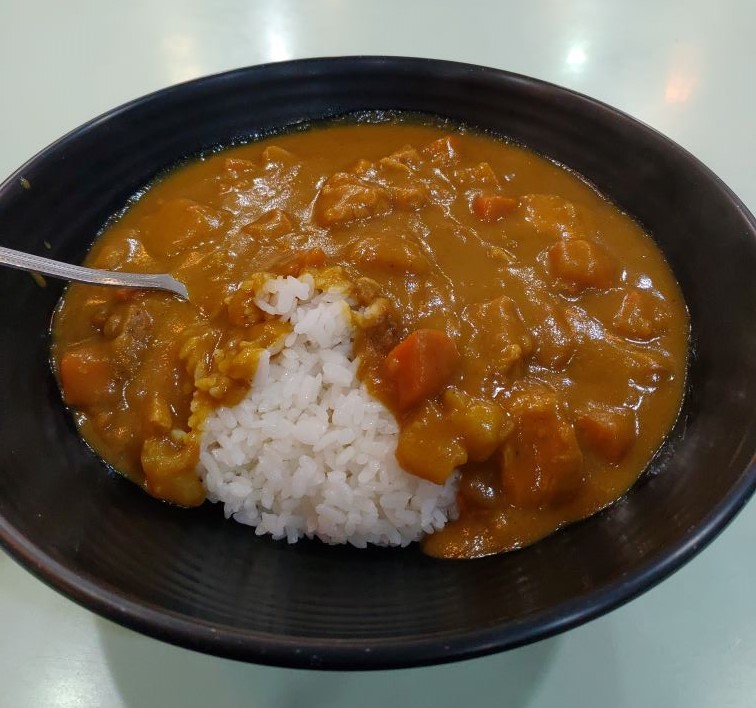
My favorite lunch was curry (chicken, carrots, and potatoes) and rice:

Dinner varied a lot, but one of my mainstays was this Mexican rice bowl. I may have been adding grated cheese and guacamole:

I also split something like this with my girlfriend a couple of times a week (tofu, stir-fried beans, Kung Pao chicken, and 1-2 bowls of rice):

For dessert, the convenience stores have soft-serve ice cream:

Shaved ice was also another option. Pictured here: Unsweetened ice with chocolate syrup, cereal flakes, bananas, sweetened condensed milk, and pana cotta.

P.S.

A random thought: I drank a fair amount of Chinese bitter tea (“kucha” – 苦茶) during this diet. Specifically, I drank about 3/4cup of it once every 2-3 days, pretty much always immediately after dinner. I think bitter tea is supposed to be somewhat of a dieting drink. For me, it seemed to have a stabilizing effect on my blood sugar levels, and it also had the effect of very quickly inducing bowel movements. (I can’t find much English information about bitter tea, but Wikipedia has an article about Theacrine, which is apparently the tea’s active ingredient. Interestingly, that article says that Theacrine is similar to caffeine, which I also found helped me regulate my blood sugar levels).


SMTM’s Response to the Response

This is great! 

One other question: We’re wondering if this diet would work in other places (like the USA) or if it would only work in Taiwan. The other people you mention who had success with this approach are your brother and your sister (already interesting since they’re close genetic relatives) — do they live in Taipei, or did they try the diet while living somewhere else? 


Neoncube’s Response to the Response to the Response

Good question! Both my brother and sister were in the U.S.A. when they did diets like this one. My brother was in Boise, Idaho. I’m not sure which part of the U.S. my sister was in.

I do know of one non-relative who’s done this diet: My Taiwanese ex-girlfriend. I didn’t mention her, because when she did the diet, she went hardcore and combined the meat and veggies diet with intermittent fasting. If I remember correctly, she ate just two meals each day, both consisting of meat and veggies, with the meat often being chicken breast or fish. I think she would also drink a liter of Coca-cola when she felt her energy was low, and she might have done some light snacking, as well. She did this for at least six months and was still doing it the last time that we spoke. I honestly don’t know how she did it. She did lose a ton of weight, though.

Philosophical Transactions: Jon on One Year Post-Potato-Diet

Previous Philosophical Transactions:

Jon was a participant in our Potato Diet Community Trial. He recently sent us an email with an update on how he’s doing, which is reproduced below with his permission.


I don’t know if you wanted a 1 year followup.

So last year at this time I’d just come off my first potato diet and it seemed like the weight was staying off at least partially out of sheer cussedness and a desire to see my much-touted diet work out as well as I’d hoped. Where am I at a year later?

At the end of that first potato diet I was at 168, having lost about 15 pounds from my start of 183.6. Last time I weighed myself I was at around 172. That’s practically within water-weight of that 168! And that 172 is approximately stable compared to a month ago or whenever I last weighed myself!

In the last year I’ve done a couple more tries at the potato diet, neither of which were as successful as that first one. But I think when it comes down to it the potato diet knocked my basic set-weight down by about 11 pounds! The biggest ongoing change in my diet is having tater tots and sausage for breakfast almost every day, generally replacing cereal in the old regime.

Anyway, absurdly pleased by that result–potato diet wasn’t a magic bullet for me but it halted the inexorable upward slide of my weight, got me down a little bit and has kept me stable for a year.

Even though it never worked as well again (probably lack of accountability from not being part of a study) the potato diet was still life-changing and has improved my health long term! Please let me know if you need any more data, I’m happy to provide it! Thanks,

Jon 

Philosophical Transactions: M’s Experience with Potatoes-by-Default

Previous Philosophical Transactions:

The below is an email we received from M, a reader who tried a limited form of the potato diet that has been the recent focus of our research. Corroborating similar reports like Nicky Case’s experience with the half-tato diet, he readily lost weight despite the relatively low dose of potatoes.

The email has been lightly edited for clarity and to help preserve anonymity, but otherwise what appears below is a faithful reprinting of the original report as we received it. 


Hello Slimes (Slime?),

I’m very excited to write to you. In some ways it is weird that you are the last to hear about my experience with the potato diet, since roughly everyone in my life has probably heard more potato-talk than they’d ever really want.

Starting in July, I ate “potatoes by default”, which is to say if I didn’t have anything better to eat, I’d eat potatoes. This meant that if I had plans for lunch or dinner, I would eat whatever it was I would’ve normally eaten ad libitum, and I tried actively to prevent the diet from materially interfering with my lifestyle (I drank alcohol socially as I normally would’ve, I participated in all the meals I normally would’ve participated in with friends, I tried arbitrary new dishes at restaurants, etc.). 

I started doing this because I was very intrigued by the reports of the changes to the psychological sensation of hunger in your study. I’ve always seen hunger as a psychologically weird thing. For example, I would often find myself physically extremely full to the point of discomfort, but would still want to eat more, especially if there was still food in front of me (often is not anywhere close to every day or every week, but frequently enough that this is an experience I feel pretty well-acquainted with). I would also tend to get super hungry around 5pm each day and couldn’t stop thinking about what I was going to have for dinner. I was also happy to lose some weight, but I value social life and food experiences pretty highly, and did not want any diet to interfere with these aspects of my life.

In practice, “potatoes by default” meant I was eating potatoes for roughly 1/3 of my meals, mostly for lunch when I was working from home during the week or on weekends, since I usually had dinner plans of some kind. My preferred preparation was to air-fry diced potatoes (unpeeled, though I’d typically use Yukon gold potatoes which have thin skins) tossed in some combination of {salt, soy sauce, pepper, dashi broth, herbs/spices, gochujang paste}, which I found to be both very tasty and time-efficient (~5 min of prep time and ~20 min in the air fryer). I would usually eat about 1 pounds of potatoes in a single sitting. I did experiment with a bunch of other preparations, and probably the most interesting thing I noticed here was that I seemed to be able to eat much more when the potatoes were sliced/grated (e.g. Swiss rosti, Chinese tudousi) than when they were closer to whole potatoes (i.e. diced, potato wedges, etc.). I’m not sure why.

I tossed my diced potatoes in olive oil before air frying, and more generally used olive oil, duck fat and avocado oil to cook other potato preparations. I probably used 1-2 “glugs” of oil per 1-1.5lb potatoes across these preparations (“lightly greased”, call it). And of course in my non-potato meals, I consumed whatever oil – and other ingredients – restaurants would be using to cook their food. Given my diet was substantially made up of non-potato meals that I actively tried to keep “as before”, I think it is a safe bet that there wasn’t any particular type of food (diary, oil, red meat, etc.) I stopped consuming, or even materially reduced my consumption in, as a result of potatoes by default (beyond the generic ~1/3 reduction from swapping out a third of my meals to be mostly potato). FWIW, I tend to have low belief in hypotheses like “zero of X is special”; in general, I’d expect the difference in response between “zero” and “some” of any given input to be closer to continuous than discrete in the setting of a complex system like the one we’re thinking about.

The most succinct way to summarize the experience is probably with the below set of charts, which I had actually shared as part of a talk I gave at my fiancee’s company about potatoes and your work on obesity (I did say people around me have heard a lot about potatoes). The right chart is just a zoomed-in version of the left chart. The vertical red line is when I began the potato diet and the gray bars are when I was traveling / ate no potatoes. I plotted the results of your study in orange to compare; my version of the diet seems to be strictly less effective, but not by much I think. I wonder if the orange line (100% potato) would just hit the plateau faster, or if it would reach a different stabilized endpoint.

I think my main reaction to the data was that it was kind of insane? I was eating potatoes a third of the time and literally whatever else I wanted the rest of the time, and losing weight almost as quickly as the full potato diet. The gray bars (cumulatively more than a month) appear to make no dent in the overall trend, especially the first two bars when the weight loss was most rapid. Potatoes just seem unreasonably effective.

While charts are often worth many words, I think the qualitative commentary around the experience is probably just as interesting:

  • Early on, maybe a two or three weeks in, for the first time in a really long time, I did not have the urge to finish off leftover food at dinner. That was a big “wow, what is going on” moment.
  • The second gray travel bar was me traveling through Singapore and Bali. I’m a big fan of food, and was excited to try different hawker stands, etc. But I found my appetite was significantly diminished and I couldn’t try as much food as I wanted to. This was particularly striking since I was not eating potatoes at all in this period – there seems to be something more going on than just the “mechanical” effect of having potatoes in your belly (although I do believe high satiety per calorie is an important but incomplete part of the story; I think it’s unlikely that I’d consume much more than ~1000 calories/day if I was only eating potatoes, on the sole basis of how satiating they are).
  • The third gray travel bar (the past week) was me spending time at my fiancee’s parents house for Thanksgiving. As a good future son-in-law, I basically just ate as much as they wanted to feed me, and of course it was a lot. So this was the first time during the course of the potato diet where I ate to the point of discomfort. Juxtaposed against the past couple of months, I was able to notice a very distinct difference in the sensation of full-ness here, which I think I can only describe as “physically full, but not spiritually full”. My stomach was mechanically full of food, but it was almost a completely different sensation of full-ness (and one that felt much “emptier”) than I’d have after eating a lot of potatoes.
  • It’s been 4.5 months since starting potatoes by default, but I spent five weeks of those 4.5 months traveling / not eating potatoes. Conditional on not traveling, I think I ate potatoes for 1/3 on my meals (maybe more like 50% early on, and more like 20% more recently), but that means overall, I was really eating potatoes for only 25% of my meals on average in this period.
  • After ~3 months, I went to my doctor to just make sure I was healthy, given the rapid and material weight loss I had been experiencing. He gave me a blood test for CBCD, CMP, a lipid panel, and HgbA1c, and apparently everything was fine (I have no idea what these tests are so just reporting them).
  • I was extremely aggressive about cutting out eyes and sprouts in my potatoes when preparing them. I basically figured it was extremely costly to get sick of potatoes (or live in fear of eating a chunk of potato that tasted gross) if my goal was to eat potatoes long-term, and potatoes are very cheap from a $ perspective. So I’d strongly recommend anyone considering a long-term potato diet to do the same.
  • I tended to keep skins on since I think they are good for fiber intake. But I find it harder to do this with thick-skinned potatoes like Russets. I have no issues at all with thin-skinned potatoes like Yukon gold.
  • I was mostly not worried about nutrition, getting enough protein, etc., since the majority/supermajority of my meals were regular food.
  • I play squash once or twice a week, and didn’t notice anything difference in my ability here. 
  • I didn’t experience a feeling of increased energy as some others reported. 
  • Given my experience, it seems like there is roughly no reason to go anywhere close to full potato. Just on priors, it seems kind of unlikely moving a relatively small portion of your diet to a single food would have any adverse health effects or other effects, and it seems you get pretty close to the benefits of full potato (though as noted above this depends a bit on whether the full potato diet gets you to the same plateau point faster, or gets you to a different plateau point). 
  • I am planning on more or less just continuing to eat potatoes by default, possibly forever? There’s basically just no downside for me to do so, beyond the ~30 min of prep work I have to do to make potatoes (instead of say, ordering delivery as I normally would).

So, that’s the summary of the last 4.5 months of my life. My friends/coworkers have bought into potatoes to varying degrees, from simply no longer avoiding potatoes, to a friend participating in your KCl study. I hosted a Potato Con at my apartment a few weeks ago; we had 10+ unique potato dishes and a great turnout. I’m guessing as a fraction of my personality, potatoes will begin to fall off going forward, but as above, I expect as a fraction of my diet, they will continue to be a meaningful presence.

Thanks for all the super interesting research you guys have been doing on this. I read A Chemical Hunger at the start of July (two weeks before starting the potato diet), and found it incredibly compelling and well-researched. I don’t know if lithium is the thing, but the environmental contaminants hypothesis seems pretty hard to argue against. Keep up the great work, and let me know if there’s anything else I can tell you about my experience or otherwise to be helpful.

Cheers,
M