When the Tofurky research division is working on new alternative protein products, they tend to worry about taste. They tend to worry about appearance. And they tend to worry about texture.
If they’re making an alternative (i.e. no-animals-were-harmed) turk’y slice, they want to make it look, smell, and taste like the real thing, and they care about proper distribution of fat globules within the alt-slice.
But here’s a hot take, might even be true: people don’t mainly eat food for the appearance. After all, they would still eat most foods in the dark. They don’t mainly eat foods for the texture, the taste, or even for the distribution of fat globules. People eat food for the nutrition.
Who’s hungry for a hot take?
This is why people don’t eat bowls of sawdust mixed with artificial strawberry flavoring, even though we have invented perfectly good artificial strawberry flavoring. You could eat flavors straight up if you wanted to, but people don’t do that. You want ice cream, not cold dairy flavor #14, and you can tell the difference. This is a revealed preference: people don’t show up for the flavors.
A food has the same taste, smell, texture, retronasal olfaction, and general mouthfeel when you start eating it as when you finish. If you were eating for these features, you would never stop. But people do stop eating — just see how far you can get into a jar of frosting. The first bite may be heavenly, but you won’t get very deep. The gustation features of the frosting — taste, smell, etc. — don’t change. You stop eating because you are satisfied.
Assuming you buy this argument, that the real motivation behind eating food is nutrition, then why do people care about flavor (and appearance, and texture, etc.) at all? We’re so glad you asked:
People can detect some nutrients as soon as they hit the mouth: the obvious one is salt. It’s easy to figure out if a food is high in sodium; you just taste it. As a result, it’s easy to get enough salt. You just eat foods that are obviously salty until you’ve gotten enough.
But other nutrients can’t be detected immediately. If they’re bound up deep within the food and need to be both digested and absorbed, it might take minutes, maybe hours, maybe even longer, before the body registers their presence. To get enough of these nutrients, you need to be able to recognize foods that contain these nutrients, even when you can’t detect them from chewing alone.
This is where food qualities come in. Taste and texture are signs you learn that help you predict what nutrients are coming down the pipeline. Just like how you learn that thud of a candy bar at the bottom of a vending machine predicts incoming sugar. The sight of a halal van predicts greasy food imminently going down your drunk gullet. How you learn that the sight of the Lays bag means that there is something salty inside, even though you can’t detect salt just from looking at it. You also learn that the taste of lentils means that you will have more iron in your system soon, even if you can’t detect the iron from merely putting the lentils in your mouth.
To give context, this is coming from the model of psychology we described in our book, The Mind in the Wheel. In this model, motivation is the result of many different drives, each trying to maintain some kind of homeostasis, and the systems creating the drives are called governors. In eating behavior, different governors track different nutrients and try to make sure you maintain your levels, hit your micros, get enough of each.
There’s still a lot we don’t know about this, but to give one example we’re confident about, there’s probably one governor that makes sure you get enough sodium, which is why you add salt to your food. There’s also at least one governor that keeps track of your fat intake, at least one governor clamoring for sugar, probably a governor for potassium. Who knows.
Governors only care about hitting their goals. Taste and texture are just the signs they use to navigate. And this is where the problem comes in.
Consider that for all its flaws, turkey is really nutritious. Two slices or 84 grams of turkey contains 29% of the Daily Value (DV) for Vitamin B12, 46% of the DV for Selenium, 49% of the DV for Vitamin B6, and 61% of the DV for Niacin (vitamin B3).
Tofurkey is not. As far as we can tell, it doesn’t contain any selenium or B vitamins. Not clear if it contains zinc or phosphorus either. Maybe this is wrong, but at the very least, it doesn’t appear that Tofurkey are trying to nutrition-match. And that may be the key to why these products are still not very popular. If you try to compete with turkey on taste and texture, but people choose foods based on nutrition, you’re gonna have a problem.
This is just one anecdote, but: our favorite alternative protein is Morningstar Farms vegetarian sausage links. And guess what food product contains 25% DV of vitamin B6, 50% DV of niacin, and 130% DV of vitamin B12 per two links? Outstanding in its field.
In the Vegan War Room
We believe this has strategic implications. So please put on your five-star vegan general hat, as we lead you into your new imagined role as commander of the faithful.
General, as you may be aware, the main way our culture attempts to change behavior is by introducing conflict. We attempt to make people skinny by mocking them, which pits the shame governor against the hunger governors. We control children by keeping them inside at recess or making them stay after class, which pits the governors that make them act up in class against the governors that make them want to run around with their friends. Or we control them by saying, no dessert until you eat your brussel sprouts.
This is an unfortunate holdover from the behaviorists, who once dominated the study of psychology. In behaviorism, you get more of what you reward, and less of what you punish. Naturally when they asked themselves “how to get less of a behavior?” the answer they came up with was “punish!” But this is a fundamentally incomplete picture of psychology. Reward and punishment don’t really exist — motivation is all about governors learning what will increase or decrease their errors. While you can decide to pit governors against each other, this approach has serious limitations. It just doesn’t work all that well.
First of all, conflict between governors is experienced as anxiety. So while you can change someone’s behaviour by causing conflict, you’ll also make them seriously anxious. This is fine, we guess, if you hate them and want them to feel terrible all the time. But it’s more than a little antisocial.
Anyone who’s the target of punishment will see what is happening. They don’t want to feel anxious all the time, and they especially don’t want to feel anxious about doing what to them are normal, everyday things. If you try to change their behavior in this way, they will find you annoying and do their best to avoid you, so you can’t create so much conflict inside them. Imagine how much less effective this strategy is, compared to finding a method of convincing that people don’t avoid, or that they might even actively seek out.
On top of this, conflict dies out without constant maintenance. In the short term you can convince people that they will be judged if they have premarital sex, but this lesson will quickly fade, especially if they see people getting busy without consequence. The only way to keep this in check is to run a constant humiliation campaign, where people are reminded that they will be shamed if they ever step out of line. This is expensive, neverending, and, for the obvious reasons, unpopular. Scolding can work in limited ways, but nobody likes a scold.
Many attempts to convince people to become vegan, or even to simply eat less meat, follow this strategy — they try to make people eat less meat by taking the governors that normally vote for meat-eating (several nutritional governors, and perhaps some other governors, like the one for status) and opposing them with some other drive.
You can tell people that they are bad people for eating meat, you can say that they will be judged, shamed, or ostracized. You can tell them that eating meat is bad for their health or bad for the environment. This might even be true. But just because it’s true doesn’t mean it’s motivating. This strategy won’t work all that well. It only causes conflict, because the drives that vote against eating meat will be strenuously opposed by the drives that have always been voting to eat meat to begin with.
But you don’t need to fight your drives. Better to provide a substitute.
No one takes a horse to their dentist appointments anymore. Cars are just vegan carriages; hence “horseless carriage”. We used to kill whales for oil. We don’t do that anymore, and it’s not because people became more compassionate. It’s because whale oil lamps got beat out by better alternatives, like electric lighting. People substitute one good for another when it is either strictly better at satisfying the same need(s), or better in some way — for example, not as good, but much cheaper, or much faster, or much more convenient.
Whale oil lamps burned bright, but with a disagreeable fishy smell. Imagine if in the early days of alternative lighting, they had tried to give whale oil substitutes like kerosene or electric lights the same fishy smell, imagining that this would make it easier to compete with whale oil. No! They just tried to address the need the whale oil was addressing, namely light, without trying to capture any of the incidental features of whale oil. They offered a superior product, or sometimes one that was inferior but cheaper, and that was enough to do the job. We don’t run whale ships off Nantucket any more.
So if you want people to eat less meat, if you want more people to become vegan, you shouldn’t roll out alternative turkey, salami, or anything else. You should provide substitutes, competing superior products, that satisfy the same drives without any reference to the original product. Ta-daaaa.
No one eats yogurt because they have an innate disposition for yogurt. Instead, they eat it because yogurt fulfills some of their needs. If they could get those needs met through a different product, they probably would, especially if the alternative is faster / easier / cheaper.
For the sake of illustration, let’s say that turkey contains just three nutrients, vitamins X, Y, and Z.
If you make an alternative turkey that matches the real thing in taste and texture, but provides none of the same nutrients, then despite the superficial similarity, you’re not even competing in the same product category. It’s like selling cardboard boxes that look like cars but that can’t actually get you to work — however impressive they might look, they don’t meet the need. People will not be inclined to replace their real turkey with your alternative one, at least not without considerable outside motivation. You will be working uphill.
Making a really close match can actually be counterproductive. If an alternative food looks/tastes/smells very similar to an original food, but it doesn’t contain the same nutrition, this is basically the same as gaslighting your governors. And the better the taste match, the more confusing this is.
Think about it from the perspective of the selenium governor. You’re trying to encourage behaviors that keep you in the green zone on your selenium levels, mostly by predicting which foods will lead to more selenium later. But things have recently become really confusing. About half the time you taste turkey flavor and texture, you get more selenium a few hours later. The other half of the time, you encounter turkey flavor and texture, but the selenium never arrives.
By eating alternative proteins that taste like the “real thing”, you end up seriously confusing your governors, with basically no benefit.
We recently tried one of these new vegan boxed eggs. It did have the appearance of scrambled eggs, and it curdled much like scrambled eggs. It even tasted somewhat like scrambled eggs. But the experience of eating it was overall terrible. Not the flavor — the deep sense that this was not truly filling, not a food product. Despite simulating the experience of eggs quite closely, we did not want it. Maybe because it was not truly nutritious.
If you make an alternative turkey that contains vitamins X, Y, and Z, you will at least be providing a real substitute. People will have a natural motivation to eat your alternative turkey. But if you do this, you’re still in direct competition with the original turkey. You’re in its niche, it is an away game for you and a home game for turkey. You have to convince the consumer’s mind that your alt-turkey is worth switching to, and that takes a lot of convincing. People prefer the familiar. Unless the new product is much better in some way, they won’t switch.
If you are trying to replicate turkey, you need to make a matching blob that matches real turkey on all the dimensions people might care about. A product exactly like that is hard to make at all, and forget about doing it while also being cheap, available, and satisfying. This is why it’s an uphill battle, you’re trying to meet turkey exactly.
Those of us who have never tasted tukrey are in ignorance still, our subconscious has no idea that turkey slices would be a great source of vitamin X. We’re not tempted. But people who have tried turkey before have tasted the deli meat of knowledge, and there’s no losing that information once you have it. Vitamin X governor gets what vitamin X governor wants, so these people will always feel called to the best source of vitamin X they’re aware of. You’ll never convince the vitamin X governor that turkey is a bad source of vitamin X; you’ll get more mileage out of giving it a better way to get what it wants!
So instead of shaming, or offering mock meats, the winning strategy might be to just come up with new, original vegan foods that are very good sources of vitamins X, Y, and/or Z. Just make vitamin X drinks, vitamin Y candies, and vitamin Z spread. If you don’t try to mimic turkey, then you’re not in competition with turkey in any way. You don’t need to convince people that it’s better than turkey — you just need to convince them that it’s nutritious and delicious. Why try to copy turkey when you can beat it at its own game?
You don’t need alt-turkey to be all turkey things to all turkey people. As long as people get their needs covered in a way that satisfies, they’ll be happy.
It seems like it would be easier to make a good source of phosphorus, than to make a good source of phosphorus PLUS make it resemble yogurt as much as possible. Alternative proteins that try to mimic existing foods will always be at a disadvantage in terms of quality, taste, and cost, simply because trying to do two things is harder than doing one thing really well. You’ll lose out on a lot of tradeoffs.
If we created new food products that contain all the nutrients that people currently get from meat, except tastier, cheaper, or even just more convenient, people would slowly add these foods to their diet. Over time, these foods would displace turkey and other meats as superior substitutes, just like electric lights replaced gas lamps, or like cell phones eclipsed the telegraph. Without even thinking about it, people will soon be eating much less meat than they did before. And if these new foods are good enough sources of the nutrients we need, then in a generation or two people may not be eating meat at all. After all, meat is a bit of a hassle to produce and to cook. Not like my darling selenium drink.
We see this already in some natural examples. Tofu is much more popular in countries like China, Korea, Japan, where it is simply seen as a food, than it is in the US, where it is treated as a meat substitute. You don’t frame your substitute as being in the same category as your competitors unless you really have to. That’s just basic marketing.
We have a friend whose family is from Cuba. She tells a story about how her grandmother was bemused when avocado toast got really popular in the 2010s. When asked why she found this so strange, her grandmother explained that back in Cuba, the only reason you would put avocado on your toast was if you were so dirt poor you couldn’t afford butter. It was an extremely shameful thing to have to put avocado on your toast, avocados grew on trees in the back yard and were basically free. If you were so very poor as to end up in this situation, you would at least try to hide it.
In Cuba, where avocado was seen as a substitute for butter, it was automatically seen as inferior. But when it appeared in 2010s America in the context of a totally new dish, it was wildly popular. And in terms of food replacement, avocado is a stealth vegan smash hit, way more successful than nearly any other plant-based product. It wasn’t framed that way, but in a practical sense, what did avocado displace? Mostly dairy- and egg-based spreads like butter, cream cheese, and mayonnaise. There may be no other food that has led to such an intense increase in the effective amount of veganism, even if the people switching away from these spreads didn’t see it that way. They just wanted avocado on the merits.
This product space is usually thought of as “alternative proteins”. Which is fine, protein is one thing that everyone needs. But a better perspective might be, “vegan ways to get where you’re going”. And just because some of these targets happen to be bundled together in old-fashioned flesh-and-blood meat, doesn’t mean they need to be bundled together in the same ways in the foods of the future.
Extreme corn allergies aren’t common, but over the course of our lives we’ve happened to meet two people who have them. “Extreme” means they couldn’t eat corn, couldn’t eat corn products, and couldn’t eat any product containing corn derivatives. One of them was so allergic, she couldn’t even eat apples unless she picked them from the tree herself — apples in the store have been sprayed with wax, and some of those waxes contain corn byproducts.
Both of these people were also extremely lean, we mean like rail thin. It’s easy to imagine alternative explanations for this — if you have to carefully avoid any food that has ever been within shouting distance of corn, it might be harder to get enough to eat. But there’s no rule saying you can’t grow fat on pork and rice, and it occurs to us that if corn were somehow in the causal chain that’s causing the obesity epidemic, this is exactly what you would see.
If corn were a direct cause of the obesity epidemic — maybe if it concentrates an obesogenic contaminant like lithium, maybe if obesity is caused by a pesticide massively applied to corn — then people with serious corn allergies should be almost universally thin, or should at least have an obesity rate much lower than the general population. Our sample size of two is far too small to draw this conclusion right now, but every sample of 100 or 10,000 passes through a sample size of 2 at some point.
Easy enough to test. So, if you or someone you know has a serious corn allergy, are you really lean? We would love to know! Do you have access to the talk.kernelpanic.zero mailing list? Is there a secret r/cornwatchers subreddit? Can we send them a survey?
Corn aside, we can generalize this argument. The obesity rate in the US is about 40%. If people with an allergy to soy, fish, sesame, etc. are less than 40% obese, that implicates the food they’re allergic to. And if their obesity rate is < 5%, that’s a smoking gun.
You could also say, maybe people with food allergies have a lower overall rate of obesity, on account of their food allergies. This is probably true. Let’s say that the general rate of obesity in people with serious food allergies is 25%, instead of the 40% of the general population. But if people with serious avocado, kiwi, and banana allergies are 27%, 23%, and 24% obese, and people with serious tomato allergies are 2% obese, that’s kind of a signal.
There are some complications, like the fact that people with one food allergy are more likely to have another food allergy. But let’s not worry about that until we have the data.
One of our most counterintuitive beliefs is that the obesity epidemic may not have much to do with what we eat. But if it does, there should be some signal in the allergy cohorts.
Today’s correspondence is from a husband and wife who wish to remain anonymous. This account has been lightly edited for clarity, but what appears below is otherwise the original report as we received it.
The potato diet has mostly been used for weight loss, but it’s also notable for involving mostly one food and being close to nutritionally complete, which means you can use it as an elimination diet to study things like food triggers. We’ve been interested in this idea for a long time, and we find this case study particularly compelling because it’s a rare example of someone doing just that!
Since around 2018, K had been suffering from stomach pain, bloating, gas, and chronic constipation. Chronic constipation worsened after two pregnancies, so K sought medical intervention again in Feb 2025. K was prescribed medication (Linzess) to treat the constipation, which initially improved symptoms but was unreliable and had unpleasant side effects. She had been on that medication for 1 month before starting the potato diet.
Family and friends were bewildered to hear our plan, warning us of muscle loss and blood sugar problems since potatoes are ‘bad’.
Her initial goal was to lose 5-10 pounds from a starting BMI of 23.4 and test out the claims we read online about the diet. K actually joked, “wouldn’t it be funny if this diet fixes my stomach problems?”
We started the diet on 21MAR2025. The first two and a half days were 100% potato for both of us. Morale was suffering by the afternoon of day 3, so we caved and had a potato-heavy dinner with our kids. Afterwards, we agreed to eat only potatoes until dinner so we could still have a normal family meal time. We did make sure potatoes featured heavily in the weekly meal plan.
Within a week, K noticed improved symptoms and regularity without any medication. Initially, she thought she might have a lactose intolerance, so she switched to lactose-free milk and quit the potato diet once we reached the end of our planned testing window.
Back on a regular diet (but still avoiding lactose), K’s symptoms came back worse, with constant stomach aches and bloating. K realized that she had unintentionally been on a low-FODMAP diet while on the potato diet and decided to do intolerance testing.
Her methodology for intolerance testing follows:
Ate a high-potato, low FODMAP diet until minimal symptoms were present.
Used NHS FODMAP rechallenging protocol to isolate FODMAP groups (lactose, fructans from wheat, fructans from onions, fructans from garlic, fructans from fruit, fructose, galactooligosaccharides, sorbitol, mannitol, fructose + sorbitol) and identify foods to use for testing each group
Spent 3 days of rechallenging per group: day 1 – small portion, day 2 – med portion, day 3 – large portion of challenge food (ex: 1/4 cup milk, 1/2 cup milk, 1 cup milk)
Kept daily log of symptoms and severity
Allowed 3 days of ‘washout’ after rechallenging
Rechallenged next food group, but did not incorporate challenged foods into diet to avoid multiple FODMAP effects
If symptoms appeared after a food challenge, waited till symptoms subsided and repeated the rechallenge over another 3 days
Incorporating lots of potatoes allowed K to test out food groups while still eating a well-balanced diet. The culprit for K is fructans from wheat, which is why cutting out daily servings of wheat has made her symptoms disappear.
K is finishing FODMAP testing (still a couple more groups to go), but has had reliable relief from all symptoms without any meds. Potatoes are a regular addition to meals these days.
This account has been lightly edited for clarity, but what appears below is otherwise the original report as we received it.
Hi Slimes,
I’ve recently wrapped up a year-long weight loss self-experiment. During this time I lost 50 lbs, most of it on a Potatoes + Dairy version of the potato diet.
This corroborates your recent case studies where Potatoes + Dairy caused just about as much weight loss as the standard potato diet. It certainly worked well for me. I found the diet really enjoyable, my meals were always delicious. I didn’t get tired of the potatoes, they remain one of my favorite foods. And there were a few other interesting findings as well, all described below.
I’m a longtime reader of the blog so this is me sending you my report, which you can publish if you like. Please list me as “Cole” (not my real name). I hope you find it helpful.
Background
First, my demographics. I’m a white male American in my early-mid 30s. I’m about 5 feet 11 inches tall, but I have a large frame. While you should feel free to calculate my BMI at any point, I don’t think it’s a very accurate measure of adiposity in my case.
My first baseline is in mid 2022, when I weighed about 220 lbs. I know this because I tried a version of the potato diet at the time and lost about 10 lbs over about 40 days. I wasn’t seriously concerned with my weight at the time, I was mostly just curious about the potato diet and what it feels like “from the inside”. But this turned out to be relevant later on because it let me know that I’m a potato diet responder.
In mid 2022 I was about to start a new job, one that involved a lot of hard work, stress, and late nights, and also a longer commute / a lot more driving than I am used to (I mention this because I’m sympathetic to the hypothesis that obesity is linked to motor vehicle exposure in some way).
I didn’t notice at first, but after starting this new job, I started to gain weight. Around April 2024, I realized that I weighed almost 250 lbs. This was heavier than I had ever been before, and also quite uncomfortable. For anyone who’s never gained 10+ lbs before, let me tell you, it makes everything in your life just a little more difficult, including things like sleeping, and that sucks.
But this crisis turned into an opportunity: I was about to change jobs again, this time to a job with much more reasonable hours and that required almost no driving. I wanted to lose the weight anyways, so I decided to take this opportunity to run a series of diet experiments and investigate some of the findings you’ve presented on the blog.
The Experiment
I began the study on May 12, 2024, with a starting weight of 247.6 lbs. Per previous potato diet experiments, I weighed myself in my underwear every morning for consistency.
To track my weight and my progress, I used a google sheet based on the one you shared from Krinn’s self-experiment with drinking high doses of potassium. I found her columns tracking 7-day average, personal best, and “ratchet” to be pretty helpful. Would recommend for anyone else trying a weight loss self-experiment.
I didn’t start any new exercise habit, though as I mentioned, I did start a new job and was driving less, I no longer had a weekly commute. So it’s possible that some of the weight loss is from “lifestyle changes” but I don’t think it could be much. According to my phone I’ve averaged about 7,000 steps per day the entire time, while gaining the weight and then while losing it.
The self-experiment can be broken into three main phases: the high-potassium brine phase, the Potatoes + Dairy phase, and a short run-out phase at the end.
For the first 147 days of the experiment, I tried different high-potassium brines, and lost about 12 lbs.
All brines started with a base of two 591 ml blue Gatorades, mixed in a liter bottle with whatever dry electrolytes or other ingredients I was trying. Potassium was always added as KCl in the form of Nu-Salt.
I tried a wide variety of different brine mixtures, using different amounts of KCl as well as NaCl, sodium bicarbonate (baking soda), magnesium malate, iodine (as Lugol’s 2% solution), and glycine powder. But I don’t think these mixtures are worth reporting individually, because I wasn’t able to seriously distinguish between them. Regardless of the mix, I mostly kept losing weight at a very slow pace.
My impression is that magnesium is important, and that brines with added sodium work better than brines without, but I’m the first to admit that the data isn’t strong enough to back this intuition up. The most I can say is that I seemed to lose weight in kind of a sine-wave pattern, which you can see on the graph. These ups and downs roughly lined up with the 14-day cycles where I tried different brine recipes (i.e. I tried most recipes for 2 weeks), but I might have imagined a pattern where in reality there were just natural fluctuations.
While I originally hoped to get around 10,000 mg a day of potassium from my brine, like Krinn did, this wasn’t possible. I found doses above 6,600 mg/day K hard to drink, so I settled at that dosage, reasoning that Krinn lost weight even at lower doses.
In general, the brines made me feel weird. I sometimes became anxious, sometimes fatigued, sometimes got headaches, and sometimes it did weird things to my sense of smell. I did sometimes feel very energetic, and sometimes it seriously reduced my appetite. Some days I ate almost nothing and had almost no appetite. But even with a clear reduction in my appetite, even when I was eating very little, I didn’t lose much weight. (This itself was kind of striking.)
In terms of results, 12 lbs isn’t nothing. But over 147 days, it’s only about 0.08 lbs lost per day. That’s not very much.
I take this as evidence in favor of the hypothesis that high doses of potassium are part of why the potato diet causes weight loss. Even on only 6,600 mg/day K, I experienced many of the effects of the potato diet (reduced appetite, weird anxiety) and I did lose some weight, though not much.
But I also think my results suggest that potassium may not be enough, and that the “potato weight loss effect” really comes from something like high doses of potassium plus something else in potatoes / with potatoes—maybe high doses of magnesium, maybe sufficient sodium to balance the potassium, etc.
Potatoes & Dairy
The brine seemed to work, but my rate of weight loss was really slow. It seemed like it was time to try the potato diet. In addition to hopefully losing more weight, I saw two benefits.
First, I could compare the effect of the brine directly to the effect of the potato diet, to see if I was already losing weight as fast as I could, or if there was something missing from the formula.
Second, I could test out the success of Potatoes + Dairy. The original potato diet was very strict, but by this point you had already reported a few case studies where people had lost a lot of weight on versions of the potato diet where they also ate various kinds of dairy.
My version of Potatoes + Dairy was decadent. Every meal was potatoes, but I always added as much butter, cheese, and sour cream as I wanted, which was usually a lot. For a while I made a lot of scalloped potatoes, but eventually I got lazy and from that point on I mostly ate baked potatoes or turned old baked potatoes into homefries. I didn’t get tired of this because butter is great.
When I didn’t have time to prepare potatoes, I would have cheese, milk, or ice cream as a snack. Yes, I ate as much ice cream as I wanted, and still lost weight (which is in line with the literature).
In case anyone wants to replicate my approach, my mainstays were:
Kerrygold salted butter, or occasionally Cabot salted butter
Cabot sour cream
Cabot cheeses, especially Cabot Seriously Sharp Cheddar Cheese
Ben & Jerry’s Ice Cream, most often Peanut Butter Cup
Despite this decadence, I lost about 40 lbs more over 187 days.
Looking closer, the weight loss really happened over two spans, one before the 2024 December holidays, and one after. I first lost about 16 lbs over 75 days, gained about 8 of that back during late December and January, then lost about 28 lbs over the next 86 days. At the point of greatest descent (early March 2025), I lost 10 lbs in two weeks.
I wasn’t very strict and I did cheat pretty often. My notes mention times and places that I had pizza, candy, or sometimes burritos. Sometimes I had cheat meals where I would go out to lunch or get hot pot with friends. Sometimes I went on dates, where I ate normal food. This mostly didn’t make a difference as long as I also kept up with the potatoes.
You might think that potatoes are a neutral food, and they just help you survive while your body returns to normal, or something. But my sense is that potatoes actively cause the weight loss. On days where I didn’t prepare potatoes, and mostly just snacked on ice cream and cheese, I didn’t seem to gain much weight back, but I didn’t lose it, either.
This leads to another counterintuitive recommendation: the potato diet can really reduce your appetite, sometimes to the point where you don’t want to eat. But I think that you actually lose more weight on days where you eat potatoes than on days where you don’t eat at all. So if your goal is to lose weight, don’t assume that not eating is a good strategy—eat your taters.
I’m pretty confident that the potato diet was causing the weight loss, in part because I started losing weight right when I switched from brine to potatoes. Also, when I cheated for more than just a meal or two, it was obvious on the graph. Halloween, Thanksgiving week, and the December Holidays stand out in particular. Here’s version of the graph with those days singled out:
My holiday weight re-gain continued well into January because I was travelling and helping to organize some professional conferences, and I wasn’t able to keep up with the potatoes very well. As soon as I got back on potatoes around Jan 20, my weight started dropping again, this time faster than before.
I was pretty surprised when I blew past not only 220 lbs, but 210 lbs. I had thought that 220-210 might be the healthy range for me, and expected the diet to stall out there. But instead I blew past those milestones. Turns out that 220 lbs is at least 20 lbs overweight for me. I had no idea, because I felt pretty healthy at 220, but I guess I had forgotten what it was like to be a normal weight.
Run-Out
I first dropped below 200 lbs on March 20, 2025. Soon after that, my weight started to plateau, never falling much below 200 lbs but showing no signs of increasing.
I also noticed that I suddently started craving foods that weren’t potatoes, something that I hadn’t experienced on the previous 170 days. First I started craving fruit, and the next day, I started seriously craving Mexican food. Soon I was craving broccoli and chocolate.
This made me think that I might have reached a plateau, possibly my “natural” weight. According to BMI I am still “overweight” at < 200 lbs, and I am definitely not “lean”. But I do feel trim, and the girl I’ve been dating keeps putting her hands on my chest and talking about how good I look, so I’ll take this as some evidence that “just under 200 lbs” is a reasonable weight for me.
Because I already seemed to have hit a plateau, I decided to spend the last 31 days on a run-out period to see what would happen as I eased off the diet. During this time I still ate potatoes pretty often, but I started bringing in other foods, and I went whole days without eating any potatoes at all. Somewhat surprisingly, I didn’t gain back the weight as I relaxed the diet.
I do kind of wonder if my weight would have fallen even further if I had remained on Potatoes + Dairy, but the fact that I was developing cravings for other food suggests to me that I had encountered a real state change. It might have been possible to force my weight lower, but the magic of the potato diet is that the weight loss happens without any force. If you start forcing things, you’re back in the territory of restriction diets.
I officially ended the experiment on May 12, 2025, 365 days after I started, weighing 198.8 lbs. This was down from an original high of 247.6 lbs, and my all-time low was 194.4 lbs on April 22nd.
I’ll probably keep eating a diet high in potatoes, since even after several months, I still love them very much (and you wouldn’t believe how much I’ve saved in groceries). But I seem to have reached a plateau and a healthy weight, and also, while potatoes are powerful, they come at a terrible cost (mostly joking but read on).
A Few Things People Should Know
Hair Loss
When you lose a lot of weight very quickly, you often lose some hair. I’d never heard of this before but apparently it’s common knowledge among women. Who knew? It’s called “telogen effluvium” and it definitely happened to me. In early January, after my first period of intense Potato + Dairy weight loss, I noticed my hair was seriously thinning on top and in the back.
The good news is that hair lost in this way usually grows back on its own, though it can take a couple of months. That seems to be happening for me too. My hair is clearly thicker now than it was in January. And it’s pretty weird: looking at my scalp, I can see short hairs and even some very short hairs mixed in among the long ones. While my head hasn’t returned to normal yet, the hair is clearly growing back.
So in the end this doesn’t seem to be a serious concern. And it’s not specific to the potato diet, this just happens when you lose weight really fast. Even so, anyone who wants to copy my results should be aware that this might happen, but also that it’s usually temporary.
Emotional Effects
Some people get really intense negative feelings of fear or anxiety while on the potato diet. This also happened to me.
To anyone who wants to do this diet, or is considering it after the benefits I described above: I encourage you to do it, but please be extra cautious that your mental state might be altered and that you are not necessarily in your right mind. The feelings you experience during this diet may not be how you actually feel.
Like I said above, potato diet is fucking weird. I mention this and the above because towards the end of the third week, I found myself crying every day. I was having actual meltdowns… five days in a row.
I am not talking “oh I am so sad, let a single tear roll down my cheek while I stare out of a window on a rainy day” levels of gloom and general depression. I am talking “at one point I couldn’t fold some of my laundry in a way that was acceptable to me, and this made me think I should kill myself, so I started crying”.
Is this a really dark to drop in the middle of a sort of lighthearted post about potato diet? Yes. I am sorry if you are uncomfortable reading it. Personally, I think I have a responsibility to talk about it, because the mentally weird aspect of this diet cannot be stressed enough.
My experience was somewhat different from Birb’s, manifesting more as a sense of overwhelming dread or doom than as a feeling of depression. And unlike Birb, I didn’t start to seriously feel this way until several months into the diet. But I definitely recognize her description.
As far as I could tell, these feelings were somewhat related to how quickly I was losing weight, though maybe not in the way you expect. The faster I was losing weight, the more of an overwhelming sense of doom I felt. Hooray. That said, it wasn’t a very strong relationship. I still felt the doom during times when I was cheating on the diet, and even when I was losing a lot of weight, I sometimes felt ok.
I suspect that these feelings may have something to do with how the body uses epinephrine and norepinephrine to release energy from adipose tissue, which would explain why you feel so crazy anxious and such intense dread when actively losing the most weight, but I’m not a doctor™.
The feelings might also be the result of a vitamin or mineral deficiency. We know that the potato diet is deficient in Vitamin A, and while I wasn’t rigorous about testing this, I found that eating some sweet potatoes (high in vitamin A) often made me feel better. I also found during the run-out period that eating mushrooms (selenium?), broccoli, and spinach (iron?) maybe helped as well. So if you’re having a bad emotional time on the potato diet, think about trying sweet potatoes or one of these other foods.
It’s interesting to me that these feelings of doom got stronger the further along I got in my weight loss. Maybe this is just because I was losing weight faster over time. But another (kind of crazy) possibility is that something is stored in our fat reserves and as I dug deeper into them, I released more of it. Or in general that something is flushed out from somewhere? I don’t know if I believe this but I wanted to mention it.
That’s just my speculation. It could also have been ordinary anxiety from other causes that happened to line up with the weight loss. I’ve got some personal things going on in my life right now, maybe the anxiety is coming from those. Plus, a few friends have recently had similar feelings of dread, and they’re not losing extreme amounts of weight on a highly unusual diet.
Conclusions
My results make me very confident that Potatoes + Dairy works. The potato diet makes you lose weight, and that still works even if you add dairy, including butter and ice cream, no matter if you’re eating as much of it as you want.
While my data can’t speak to how well Potatoes + Dairy will work for anyone else, I hope this ends the idea that the potato diet works because it’s unpalatable. I lost 50 lbs and every meal was delicious. I also hope this finishes the idea that the potato diet works because it’s a “mono diet”. You can’t reasonably call something a mono diet when it includes potatoes, sour cream, and ice cream with tiny peanut butter cups.
I also think this is some evidence for the potassium hypothesis. I lost weight when I was taking high doses of potassium, though not nearly as much as on the potato diet. Maybe this was because I was taking too small of a dose, and a higher dose would have caused a similar amount of weight loss as what I eventually saw on the potato diet.
But I suspect this is because the potato effect doesn’t come from potassium alone, but from an interaction between potassium and something else, possibly other electrolytes like sodium and magnesium.
If you could find the right mixture, maybe you could reproduce the potato effect in a brine. But if so, I wasn’t able to find it. For now, the state of the art is Potatoes + Dairy.
The riff trial is a new type of study design. In most studies, all participants sign up for the same protocol, or for a small number of similar conditions. But in a riff trial, you start with a base protocol, and every participant follows their own variation. Everyone tests a different version of the original protocol, and you see what happens.
As the first test of this new design, we decided to riff on one of our previous studies: the potato diet. For many people, eating a diet of nothing but potatoes (or almost nothing but potatoes) causes quick, effortless weight loss, 10.6 lbs on average. It’s not a matter of white-knuckling through a boring diet — people eat as much (potato) as they want, and at the end of a month of spuds, they say things like, “I was quite surprised that I didn’t get tired of potatoes. I still love them, maybe even more so than usual?!”
Why the hell does this happen? Well, there are many theories. The hope was that running a riff trial would help get a sense of which theories are plausible, try to find some boundary conditions, or just more randomly explore the diet-space. We thought it might also help us figure out if there are factors that slow, stop, or perhaps even accelerate the rate of weight loss we saw on the full potato diet.
In the first two months after launching the riff trial, we heard back from ten riffs. Those results are described in the First Potato Riffs Report. Generally speaking, we learned that Potatoes + Dairy seems to work just fine, at least for some people, and we saw more evidence against the idea that the potato diet works because you are eating only one thing (people still lost weight eating more than one thing), or because the diet is very bland (it isn’t).
Between January 5th and March 18th, 2024, we heard back from an additional seventeen riffs. Those results are described in the Second Potato Riffs Report. Generally speaking, we learned that Potatoes + Dairy still seems to work just fine. Adding other vegetables may have slowed progress, and the protein results were mixed. However, the Potatoes + Skittles riff was an enormous success.
Between March 18th and October 9th, 2024, we heard back from an additional eleven riffs. Those results are described in the Third Potato Riffs Report. Generally speaking, we saw continued support for Potatoes + Dairy.
The trial is closed, but since the last report, we’ve heard back from an additional two riffs, which we will report in a moment. This gives us a total of 40 riffs in this riff trial. Note that this is not the same as 40 participants, since some people reported multiple riffs, and a few riffs were pairs of participants.
Participant 87259648 did a Fried Potatoes riff, specifically, “mostly fried in a mix of coconut oil and tallow or lard” and continuing her “normal daily coffees with raw whole milk, heavy cream, honey and white sugar.”
Despite consuming only “around 30 percent potato on average”, she lost a small amount of weight and “found [the] diet to be easy and enjoyable, I never felt sick of potato although I did have a hard time getting myself to eat MORE potato each day.”
Participant 80826704 was formerly participant 41470698, but asked for a new number to do a new kind of riff. In Riff Trial Report Two, he had done Potatoes + Eggs as participant 41470698 and lost almost no weight. This time, he did a full potato diet and lost a lot of weight, more than 13 lbs:
Mean weight change was 6.4 lbs lost, with the most gained being 5.2 lbs and the most lost being two people who both lost 19.8 lbs. One person gained weight, one person saw no change, one person reported no data, and the rest lost weight. One person also gained 6.3 lbs on “Whole Foods” + Chocolate, but this was not a potato diet (only about 10% of her diet was potatoes).
Here are all the completed riffs, plotted by the amount of weight change and sorted into very rough riff categories:
There are also a large number of people who signed up, but never reported closing their riff. We’re not going to analyze them at this point, but all signup data is available on the OSF if you want to take a look at the demographics.
Things we Learned about the Potato Diet
The potato diet continues to be really robust. You can eat potatoes and ketchup, protein powder, or even skittles, and still lose more than 10 lbs in four weeks.
The main thing we learned is that Potatoes + Dairy works almost as well as the normal potato diet. There were many variations, but looking at the 10 cases that did exclusively potatoes and dairy, the average weight lost on these riffs was 9.2 lbs. This is pretty comparable to the 10.6 lbs lost on the standard potato diet, suggesting that Potatoes + Dairy is almost as good as potatoes by themselves (though probably not better).
We didn’t see much evidence that there might be a protocol more effective than the potato diet. This is sad, because it would have been really funny if Potatoes + Skittles turned out to be super effective.
That said, three riffs did do unusually well, and it’s still possible that there is some super-potato-diet that causes more weight loss than potatoes on their own, or that’s better in some other way.
There’s some evidence that meat, oil, vegetables, and especially eggs make the potato diet less effective. But with such a small sample, it’s hard to know for sure. This could be a productive direction for future research. You could organize it as an RCT, and compare a Just-Potato condition to a Potato + Other Thing condition. Or an individual could test this by first doing a potato diet with one of these extra ingredients for a few weeks, then removing the extra ingredient and doing a standard potato diet for a few weeks as comparison.
The strongest evidence is against eggs, because participant 41470698 / 80826704 did exactly that. First he did a Potatoes + Eggs riff and lost only 1.8 lbs. Then he did a standard potato diet and lost 13.2 lbs. That’s not proof positive, but it’s a pretty stark comparison. If that happens in general, it would be hard not to conclude that eggs stop potatoes from working their weight-loss wonders.
Current Potato Recommendation
If you want to try the potato diet for weight loss, our current recommendation is this funnel:
Start by getting about 50% of your diet from potatoes and see how well that works.
If you want to be more aggressive, switch to Potatoes + Dairy. Try to get at least 95% of your diet each day from potatoes and dairy products, but don’t worry about small amounts of cheating.
If you want to be more aggressive, switch to the original potato diet. Try to get at least 95% of your diet each day from potatoes, but don’t worry about small amounts of cheating.
If you want to be more aggressive, switch to a strict potato diet. Try to get almost 100% of your calories each day from potatoes, allowing for a small amount of cooking oil or butter, salt, hot sauce, spices, and no-calorie foods like coffee.
If dairy doesn’t work for you for some reason (like you’re a vegan, or you just hate milk), consider replacing Step 2 with a different riff that showed good results, like Potatoes + Lentils or Potatoes + Skittles.
Remember to get vitamin A. Mixing in some sweet potatoes is a good idea for this reason.
Remember to get plenty of water. Thirst can feel different on the potato diet, you will need to drink more water than you expect.
Remember to eat! In potato mode, hunger signals often feel different. But if you don’t eat you will start to feel terrible, even if you don’t feel hungry. If anything, eating a good amount of potatoes each day may make you lose weight faster than you would skipping meals.
If the potato diet makes you miserable, try the three steps above. If you try those three steps and you’re still miserable, stop the diet.
Things we Learned about Doing Riff Trials
This is the first-ever riff trial. But it won’t be the last. So for the next time someone does one of these, here’s what we’ve learned about how to do them right.
#1: It Works
We hoped that riff trials would use the power of parallel search to quickly explore the boundary conditions of the base protocol, and discover what might make it work better or worse.
This works. We had suspected that dairy might stop the potato effect, but we quickly learned that we were wrong. We saw that the potato effect is also sometimes robust to lots of other foods, like skittles. And we saw that other foods, like eggs and meat, seem like they might interfere with the weight-loss effect.
#2: You May Have to Encourage Diversity
That said, there was not as much diversity in the riffs as we might have hoped.
Most people signed up for some version of Potatoes + Dairy. This was great because it provided a lot of evidence that Potatoes + Dairy works, and works pretty damn well. But it was not great for the riff trial’s ability to explore the greater space of possible riffs.
In future riff trials, the organizers should think about what they can do to encourage people to sign up for different kinds of riffs. If you don’t, there’s a good chance you’ll find that most of your scouting parties went off in the same direction, and that’s not ideal if you want to really explore the landscape.
One way to do this would be to run a riff trial with multiple rounds. First, you have a small number of people sign up and complete their riffs. Then, you take some of the most interesting riffs from the first round and encourage people to sign up to riff off of those. You could even do three or four rounds.
In fact, this is kind of what we did. Since we reported the results in waves, and had rolling signups, some people were definitely inspired to try things like Potatoes + Dairy or Potatoes + Lentils because of what they saw from completed riffs. But we could have done this even more explicitly, and that might be a good idea in the future.
#3: Riff Trials Harness Cultural Evolution
There’s no formal skincare riff trial. But it does kind of exist anyway. People get interested in skincare, and go look at other people’s routines. They copy the routines they like, but usually with some modifications. This is all it takes for skincare protocols to mutate, combine, and spread through the population, getting better and better over time.
The same is true of any protocol floating out there in the culture, including the potato diet itself. Even if we hadn’t run the riff trial, people would have experimented with potato diets for the next 10 or 20 years, trying new variations and learning new things about the diet-space. But this process would have been slow, and it would have been hard to tell what we were learning, because the results would have been spread out over time and space.
The fact that we planted our flag and ran this as a riff trial didn’t change the nature of this exploration. But making it one study, clearly marking out its existence, definitely sped things up, and helps make all the riffs easier to compare and interpret.
87259648 – Fried Potatoes
Riff
Potatoes, mostly fried in a mix of coconut oil and tallow or lard. I will continue with my normal daily coffees with raw whole milk, heavy cream, honey and white sugar. Maybe occasional fruit on cheat days but mostly just potatoes, dairy, coconut oil, tallow, coffee and honey/sugar. 28 days. My reasoning for choosing this is that fried potatoes are delicious, i really don’t want to give up my coffee routine, or waste the raw milk that i get through a cow share, and anecdotally, coconut oil and stearic acid have both been reported to help with weight loss.
Report
So I didn’t lose a lot of weight, but I definitely lost somewhere between 3 – 6.5 lbs (hard to tell due to fluctuations in water weight) and an inch off my waist despite doing a pretty relaxed version of the diet.
What I ended up doing was a diet of around 30 percent potato on average (even though I only ate potatoes for dinner and “grazed” on smallish things throughout the rest of the day, it was hard for me to get past around 30 percent potato calorie-wise). The rest of my diet was mostly dairy (raw milk, heavy cream, sour cream, butter, cheese and occasional ice cream), fruit, sugar (and sugary drinks), honey, chocolate and saturated fats (coconut oil and beef tallow).
I rarely boiled the potatoes so the potato portion of the diet was mainly peeled yellow or red potatoes pan-fried in a mixture of tallow and coconut oil, baked russet potatoes with the skins, or roasted red and yellow baby potatoes with the skins.
I occasionally supplemented extra potassium, as well as other supplements. Around day 5 I started drinking coconut water in order to get extra potassium.
I found this diet to be easy and enjoyable, I never felt sick of potato although I did have a hard time getting myself to eat MORE potato each day. The skins didn’t seem to bother me. Something about the diet definitely seemed to have an appetite lowering effect, although my appetite did fluctuate from day to day. I never intentionally cut calories or deprived myself of anything I really wanted. So even on the very low calorie days I ate as much as I felt like eating that day. (i am used to doing extended fasts so this is not super unusual for me, but I DO think that the extra potassium or something DID result in more days than usual where I didn’t feel like eating as much).
I didn’t exercise any more or less than I usually do.
My husband and another male family member did even less strict versions of the diet along with me (potatoes for dinner, whatever else they wanted the rest of the day) and they both seemed to lose more weight than I did, but they didn’t keep track of any data. I’m a 49 year old female, the other two men are 49 and 66. In the last couple years it has gotten much harder for me to lose weight, and I have been pretty fatigued in general. I didn’t notice any extra energy on this diet, but appetite did often seem suppressed.
I didn’t observe any noteworthy reduction in pulse or body temperature over the course of the diet. Three weeks after finishing the diet I have not been able to keep the weight off and am back up to 190.
I kept track of everything in the Cronometer app, so if you have any questions I can access some data that’s even more specific from there, let me know!
80826704 – Only Potatoes
Riff
Formerly participant 41470698, who asked for a new number: “I would like to try the full potato diet at some point during 2024. Could you prepare a new Google Sheet for me for this purpose?”
Report
I completed the potato only version in August, but neglected to send you a report. Happy to report that I’ve completed it and filled the 4 week sheet.
In terms of feeling it was very similar to my riff experiment. In terms of results this has been completely different. One thing I am now throughly convinced about is the “ad libitum” part. I am hungry, I eat. It’s so simple it’s scandalous, but it’s been buried under years of well meant status quo advice.
From that point it simply matters which food types I eat. Even if the lithium hypothesis turns out wrong, this part I am thoroughly convinced about now.
Difficulty
In a way this was easier than potatoes + eggs. One reason I remember for this was the forced pre-planning. Because I knew I was going to eat only potatoes I generally tried to peel way more potatoes than I was hungry for. Because of this, for the next meal I would have potatoes already lying around. I could then eat those as-is, or more tasty, (re-)baking them in a frying pan.
Somehow I had less inclination to cheat.
I’ve also gone to McDonalds like 6 times, ordering only fries without sauce. And a lot of fries from a Snackbar (https://nl.wikipedia.org/wiki/Snackbar). It’s super convenient when going by train to just order a big portion of fries without sauce.
Fun stuff
Potatoes are fucking delicious by the way. I’ve taken to eating them without sauce, because now it just feels like potatoes with sauce taste like sauce. And then I’m missing the potato flavor. Maillard reaction for the win.
With a group of friends I did a “potato tasting”. I bought 8 breeds of potatoes and cooked them with the oven or boiled. So we tasted 16 different kinds. People were truly surprised by the amount of variation.
My surprise was mostly about how difficult the different breeds were to peel. Some potatoes are truly monsters.
Krinn also added an exercise habit that she described as a “naïve just-hit-the-treadmill exercise regimen”. Even with this in mind, her results still seem remarkable, because most people do not lose 50 lbs from starting a moderate treadmill habit:
We published a short review of that original post on this here blog of ours. That was in July 2023. Now, Krinn is back, and more powerful than ever, with an untitled post we’ll call A Year And Change After The Long Post About The Potassium Experiment (AYACATLPATPE).
The long and short of it is that Krinn kept taking high doses of potassium and kept losing weight, eventually reaching her goal of 200 lbs. There was a long plateau in the middle after she first brushed up against her goal, but she maintained the original weight loss and eventually lost the remaining weight:
In personal communication (see very bottom of this post), Krinn noted that:
One of the few things the graphs say really, really, really loudly is “Krinn lost 30+ pounds _and stayed that way for at least a year._” … one of the overwhelmingly common failure modes of existing interventions: people lose some weight and then gain some weight and end up fairly close to where they started. Whatever else happened in my experiment, it sure wasn’t that: I lost a significant amount of weight and then _stabilized._ That seems important.
This time we don’t have much to add, but as before we wanted to reproduce her post for posterity. And we do have a few thoughts, mainly:
This seems like more evidence that high doses of potassium cause weight loss. It suggests that potassium is probably one of the active ingredients, maybe the only active ingredient, in the weight loss caused by the potato diet. Krinn was taking about as much potassium as you would get if you were eating 2000 calories of potatoes per day, and experienced similar weight loss.
It’s good to be skeptical of single case studies, however rigorous and careful they may be, but here are a few things to keep in mind:
Remember that participants in the Low-Dose Potassium Community Trial lost a small but statistically significant amount of weight (p = .014) on a dose much lower than what Krinn was taking — only about 2,000 mg of potassium a day on average, compared to Krinn’s ~10,000 mg per day. This can’t confirm the effects of the higher dose, but it is consistent with Krinn’s results, and the final sample size was 104 people.
There’s also at least one successful replication. Inspired by Krinn’s first report, Alex Chernavsky did a shorter potassium self-experiment and lost about 4 pounds over a two-month period, otherwise keeping his diet and exercise constant. He also provided this handy table:
Finally, we know of two other people who are losing weight on high-potassium brines, at least one of them without any additional exercise. They’re both interested in publishing their results, probably in early 2025. So watch this space. :)
As before, we want to conclude by saying that Krinn is a hero and a pioneer. She is worth a hundred of the book-swallowers who can only comment and couldn’t collect a data point to save their life. If you want to do anything remotely like what Krinn did, please feel free to reach out, we’d be happy to help.
Here’s a reproduction of Krinn’s full report as it appears in her tumblr post:
A Year And Change After The Long Post About The Potassium Experiment
A year and change after the long post about the potassium experiment, I reached my weight-loss goal. This is a quick, minimally-structured thought-dump about it. As before, this is part of a wider conversation that starts with A Chemical Hunger.
Methodology: I mostly kept doing what I’d been doing. Turned up the exercise dial a bit, turned down the potassium dial a bit. Both still, AIUI, quite high compared to American baseline. Some bad news — in addition to whatever confounding factors were present last time, there’s a few extra ones now from my life in general going very poorly. As before, here’s the data, Creative Commons Zero, good luck with whatever you try on it. After making it to one year of being fairly diligent, I decided to let things vary and see what happened — on the one hand, I’d gotten far enough towards my personal goal that I wasn’t too fussed about the last 10%, and on the other hand, if this works in general and even work when you’re kinda half-assing it, that too is great news.
Interpretations: There’s multiple ways this could go. Here are a few that were easy to think of.
Potassium or potassium-plus-exercise caused me to lose weight
Exercise caused me to lose weight and potassium was irrelevant
Something else caused me to lose weight
I would prefer to believe that potassium-plus-exercise caused me to lose weight. The data I have and my experience of gathering/being that data, to some extent support that conclusion. Flipping that around, if I ask “does that data rule out this conclusion?” no it absolutely does not. But it’s important to note that the exercise-only conclusion is only slightly less-well-supported and the none-of-the-above explanation is much-less-well-supported but certainly not ruled out. I have a preferred explanation, but all three of these explanations are live.
My subjective experience of the thing was that there was an easy part and a hard part. In the easy part I lost weight at a pretty rapid and consistent pace. In the hard part, my weight changed less and went back and forth more than it went down. If you buy into SMTM’s “something is screwing up people’s lipostats” theory, this is very consistent with that theory: potassium reduced or removed the something, my weight briskly dropped back to a healthy range (the first 9 months of the graphs) and then stabilized. However, the competing theory of “Krinn was super out of shape and then she started exercising” is also supported by the graphs (not shown on the graphs: my fairly poor 2022 exercise habits — my long-term exercise habits have had some good stretches, but the plague years did not do good things for me there!). I’m not sure whether it matters that I shifted from mostly treadmill time to having a couple of walks around the neighborhood that I can do pretty much on autopilot (shout-out to Mike Duncan’s Revolutions, this show is the first time podcast as a medium has clicked for me and it’s a great show). I do think, though, that exercise is a bit more complicated than I was really grasping. That, in turn, makes me glad that I’m tracking three exercise metrics rather than just one — if I was going to track only one, it’d be exertion, but exertion, exercise minutes, and step count, together make it possible to at least take a guess at what qualities a day’s exercise had.
Regarding my own questions from the first post:
• How safe is this? When I made the first post I was antsy about “adding this much potassium to your diet is probably safe for people in generally good health” but now I’m pretty sure it’s true. Some health problems can take a long time to present themselves, but adding this much of something to your diet for two years and having it be fine, is pretty persuasive evidence that the thing is probably fine. It could still easily turn out to have negative health impacts that are important, but a huge swath of the things you’d be worried about, are vanishingly unlikely once you’ve hit the point of “I’ve been taking this for two years and I’m fine.”
• Does this replicate? Well, it’s self-consistent for me, and I don’t want to gain 50 pounds and try again. I did not like the shape of my body at +50 pounds from where I am now! So this is a question for others.
• How much do other nutrients matter? I don’t know. Mostly not equipped to rigorously check.
• Does HRT matter? I’ll let you know if I can get back on HRT. I would definitely like to investigate this.
• Does dieting matter? Probably: my diet changed involuntarily over the course of two years and that certainly matters to some extent, but one of my ground rules is that I’m focusing on controlling exercise and potassium, the things I can control. Diet is far more complex and also in my life particularly, more susceptible to unplanned, involuntary change, so I’m writing it off as a factor.
• Does this help with cannabis-induced hunger? I think I was off-base/over-optimistic with this one and it either doesn’t matter or matters a small amount.
• Is there a point where I get really hungry/tired or start accidentally starving? I did not reach such a point. I felt basically fine the whole time.
I was cooking with this though:
If you tell someone you want to lose weight and would like their advice, it is overwhelmingly likely that the advice will involve exercising more. Everyone has heard this advice. And yet, as Michael Hobbes observes in a searing piece for Highline, “many ‘failed’ obesity interventions are successful eat-healthier-and-exercise-more interventions” that simply didn’t result in weight loss. Even if we as a society choose to believe “more exercise always leads to weight loss, most people just fuck up at it,” that immediately confronts us with the important question, why do they fuck up at it? and its equally urgent sibling, what can we learn from those who succeed at it to give a hand up to those who have not yet succeeded?
Conclusion: I’m gonna keep writing things down in my spreadsheet for the same reasons as last time. I’m not sure what exactly I’m going to do as far as twiddling the factors, because now my main goal is somewhere between “don’t gain weight again” and “see what happens,” but I do know that writing down what happens is Good Actually, so I’m going to keep doing that.
Slightly after publication, Krinn sent us these comments, which she agreed we could publish:
Personal Communication
Dangit now I’m having the first draft effect: writing the first draft and sleeping on it tells me things I should have written. In this case, I think there’s a plausible reading that my experience supports the “potassium does something good at a high enough effect size to care about” line of argument because while the peaks of how much effort I put in were fairly high — the periods of combined high exercise and high potassium intake — the most noticeable effect was when I was ramping up on both of those in the first 9 months, and when I was in just-bumbling-through-like-an-average-human mode, the effect didn’t reverse itself. There were plateau periods and there were slow-reversion periods, but there was definitely no “you slacked off and now there’s rapid weight gain mirroring the rapid weight loss” effect. I think that’s positive? I think it’s plausible to read it as “once I got the majority of the weight loss effect, locking in that benefit was easy.”
In any case one of the questions I was interested in was “if this works, does it work well enough that an average person can successfully implement it?” and I am now convinced that that’s a clear “Yes”.
I wouldn’t say there’s any part of this experiment that I’m actively unhappy about, but I do find it a little frustrating that this is basically just another piece of evidence on the pile of “here’s something that is consistent with the lithium/potassium hypothesis, but that is also consistent with some other stuff, and my main observation is that Something Happened” — intellectually I feel sure that much solid science is built by assembling big enough piles of such evidence and then distilling it into “now we know Why Something Happened,” but putting one single bit of evidence on the pile is still something where I need to make my own satisfaction about it rather than having a well-established cultural narrative rushing to bring me “yes! you did the thing! Woohoo!”
Also thinking more about the potassium experiment I’m having one of those “hold on a minute, this should have been obvious to me” moments — one of the few things the graphs say really, really, really loudly is “Krinn lost 30+ pounds and stayed that way for at least a year.” That’s one of the crucial parts of the whole obesity thing, that second half, right? That’s one of the overwhelmingly common failure modes of existing intervention: people lose some weight and then gain some weight and end up fairly close to where they started. Whatever else happened in my experiment, it sure wasn’t that: I lost a significant amount of weight and then stabilized. That seems important.
Yessssss I get the smug clever-kitty feeling, this is exactly why I have that “ratchet” column in the spreadsheet: the last ratchet-tick day from more than a year ago (i.e. it’s locked in) was July 10th 2023, on which day my week-average weight was 212.4lbs, down 33.6lbs from the start of the year.
So that early period of dramatic weight loss is noteworthy because we can be confident that whatever the cause was — potassium, exercise, or something else — it caused durable weight loss, which is exactly the thing we are looking for.
This is a conclusion we couldn’t have reached in July 2023, with the major writeup I did, because at that point “something else happens and Krinn gains the weight back” was very possible, was one of the likely answers to “what comes next?”
For many people, eating a diet of nothing but potatoes (or almost nothing but potatoes) causes quick, effortless weight loss. It’s not a matter of white-knuckling through a boring diet — people eat as much (potato) as they want, and at the end of a month of spuds they say things like, “I was quite surprised that I didn’t get tired of potatoes. I still love them, maybe even more so than usual?!” And some people lose a similar amount even when eating only 50% potato.
Why the hell does this happen? Well, there are many theories. To help get a sense of which theories are plausible, try to find some boundary conditions, or just more randomly explore the diet-space, we decided to run a Potato Diet Riff Trial.
In this study, people volunteer to try different variations on the potato diet for at least one month and let us know how it goes. For example, they might eat nothing but potatoes and always cook their potatoes in olive oil. Or they might eat nothing but potatoes and leafy greens. Or they might eat nothing but potatoes but always eat their potatoes with ketchup.
The hope is that this will help us figure out if there are other factors that slow, stop, or perhaps even accelerate the rate of weight loss we saw on the full potato diet. This will get us closer to figuring out why potatoes cause weight loss in the first place, and might get us closer to curing obesity. We might also discover a new version of the diet that is easier to stick to, or causes more weight loss, or both.
In the first two months after launching the riff trial, we heard back from ten riffs. Those results are described in the First Potato Riffs Report. Generally speaking, we learned that Potatoes + Dairy seems to work just fine, at least for some people, and we saw more evidence against the mono-diet and palatability hypotheses.
Between January 5th and March 18th, 2024, we heard back from an additional seventeen riffs. Those results are described in the Second Potato Riffs Report. Generally speaking, we learned that Potatoes + Dairy still seems to work just fine. Adding other vegetables may have slowed progress, and the protein results were mixed. However, the Potatoes + Skittles riff was an enormous success.
Since then, we’ve heard back from 11 new riffs. (Specifically, these are the riffs we heard back from between March 18th and October 9th, 2024.)
A few riffs are ongoing, but signups have slowed to a crawl. So while there may be a few more riff trial results in your future, signups are now closed. We may do more potato diet studies in the future, perhaps even another riff trial, but we are going to wrap this one up for now. Expect a final riffs retrospective around January 2025.
But let’s see what we’ve learned so far. First we’ll review the overall results, and talk about our interpretation. Then, at the end we’ve included the actual riff proposals and reports from all 11 participants in an appendix, if you want to read about them in more detail.
Unless otherwise indicated, weight loss numbers are over a period of about 28 days, comparable to the original Potato Diet Community Trial.
Potatoes + Dairy
Participant 07566174 ate “Potato plus a bit of dairy, ice cream for a treat”. At the end they said, “overall very successful despite rampant cheating!” and you know what, that’s entirely right:
In this case, cheating wasn’t “take a day-long break from eating potatoes”, instead it meant more like “ate less than 100% potato”. For example, one cheat day entry said: “Had some cake, and a couple chocolates. Otherwise, potato. Plus a beer instead of ice cream.”
This participant actually gave us six weeks of data, here is the longer chart:
Participant 28818306 took to the true spirit of the riffs trials, “trying to combine what looks like working riffs (potatoes + dairy + lentils)” along with adding “some lettuce to the mix to see if it keeps working”.
This worked ok. “It went well in the first 2 weeks,” 28818306 reported, “the other 2 were kind of slow, and harder to follow.”
Participant 92679541 did a riff of potatoes + oil + dairy (mainly cream and butter), with a more casual protocol and cheating most days, but had to stop the diet early. Despite all this, he lost a couple of pounds:
Participant 97027526 did a riff starting with potatoes plus butter, ghee and spices, and added raclette cheese after a few days.
Chalk another one up for the potato diet making people fall even deeper in love with potatoes: “I discovered I LOVE baked potatoes (first cooked in the microwave then finished off in the oven to crispen them up) and over 70% of my potatoes were cooked like that. … I am surprised that after four weeks I still really like potatoes! I’m going to continue with the potatoes for a while”.
She lost exactly 10 pounds over 28 days:
We then later received an update, where she said, “I am almost at the end of 8 weeks and still going strong. … My diet now exclusively consists of baked potatoes, butter, salt (a few pinches once a day), pepper and sometimes garam masala. … I’m not nearly as hungry as I used to be.”
Between Day 1 and Day 53, she lost a total of 15.9 pounds:
Potatoes + Meats
Several people tried riffs that aimed for the most classic meat & potatoes.
50108266 and 20953986 are a husband and wife team who started with the plain potato diet then added organ-based meat. Their full protocol was a bit complicated, see the appendix for more detail.
The results: Two weeks of just potatoes, “lost weight, but hated it”. Two weeks of potatoes + organ meat, “lost less weight, enjoyed much more. We will keep going.” It’s interesting that such a small change could so strongly affect their perceived enjoyment of the diet, especially while not strongly affecting how quickly they lost weight.
54084282 said, “I feel a diet that I could stick to for 30 days would be potato, bacon, black coffee, and Guinness. The bacon would help supplement fat and protein missing from the potatoes and reduce the need for extra seasonings. The coffee and Guinness are mostly for personal preference.”
Thirty days later, we got this update: “I have modified from my original riff! I’d characterize my current plan as fermented food/drinks + potatoes, along with a serving or two of protein daily. It is resulting in steady weight loss while alleviating the bloating and unpleasant constipation feeling that I experienced initially. I have lost about 5 pounds this month while feeling generally satisfied and still surprisingly not tired of potatoes. Only real remaining issue is eating out. I just cannot bring myself to order only French fries for a meal (especially around the kids). I just cheat in those situations but still manage to steadily drop weight, lol.”
Checking the data now, we see that 54084282 kept recording data up to day 58, and continued the trend of losing weight:
83842317 says, “potato + meat (chicken, beef, pork, fish)”. Then after the diet, “The convenience of eating tater tots, hash browns, chips, fries, and meat has been very easy and I’ll be sticking to it”.
There was no weight entry for Day 29, so here’s 83842317’s data up to the last weight entry on Day 34:
Participant 22179922 did a riff she came to call “potatoes and cows”, starting with potatoes and ramping up to first include dairy and then include other animal products (see appendix for full details).
Chocolate-Style Riffs
Two people did riffs that sort of involved chocolate.
59960254 did something like “Potatoes with Fire in a Bottle Characteristics”, meaning potatoes and a small amount of fat from sources like butter, tallow, coconut, cacao, etc. and also including fruit, honey, dates, and dark chocolate. This lead to a weight loss of exactly 10 lbs by Day 29:
We actually have 12 weeks of data from this participant, here is the longer version. The fluctuations in the middle are a sad story that have little to do with the diet itself; his cat got sick around the three week mark.
95078099 followed a riff of “potato + soy products + chocolate”. Note that he started off quite lean, with a BMI of around 20, but that “this is the result of a long, hard calorie restriction. My personal aim is not to lose weight, but to keep the weight down. If I stay at the same weight, and not drift up by a few pounds, I’d consider that a success!” So in this case the question is not really whether 95078099 can lose weight on the potato diet, but whether he can maintain weight on the potato diet without calorie restriction.
Ultimately, 95078099 lost 1.5 lbs between the first and the last measurement over four weeks. But based on the moving average, he concludes, “for myself, and for the purpose of keeping my weight down, I’d consider my potato riff ineffective.” See the appendix for a lot more detail, including additional charts with several years of data.
Skittles Update
Previously, participant 22293376 tried a Potatoes + Skittles riff, and was “astonished at just how well it went.” Here are those original results:
This was in January 2024. By July, he had started gaining weight and decided to do a second run of the riff, with some minor changes. This time it was potatoes plus: butter, oil, sweet potatoes, “low-calorie vegetables (onions, peppers, broccoli, green chile, etc.)”, and “skittles (in moderation)”. And for this second round, the results look like this:
The y-axis is fixed to match 22293376’s previous graph.
22293376 says, “I generally didn’t eat more than 20-30 skittles a day, and sometimes none. I don’t really recommend eating skittles-only meals but you do you!” Also check out the appendix for more detail on this riff.
Interpretation
As before, Potatoes + Dairy seems to work for many people, and it seems quite resistant to cheating. Every Potatoes + Dairy riff in this roundup lost some weight, and some lost as much as 10 lbs.
People lost some weight on different versions of Potatoes + Meats, but this seems to be inconsistent. It’s possible that the kind of meat, or its origin, could make a difference.
“Potatoes with Fire in a Bottle Characteristics” worked quite well. While the sample size is only one, it’s a nice proof of concept. These various fats and sweets don’t seem to interfere at all with the potato effect, at least not for this participant.
It’s also wonderful to have a skittles replication. The results are still from the same person, which means we can’t be sure if it will work equally well for other people, but it’s nice to see that this can happen twice. And it’s certainly more evidence against the idea that the potato effect is purely the result of cutting out processed foods and sweets. If sweets were always a potato-effect-killer, they would have stopped the effect here. They didn’t, so they aren’t.
Of course, we’d love to see replications from other people too. So if you’ve been on the fence, consider trying potatoes + skittles.
If so, please let us know how it goes! But it will have to be your own self-experiment, because as mentioned above, signups for the riff trial are closed. Expect a final report and a retrospective some time around January 2025.
07566174 – Potato + Dairy (ice cream)
Riff
Potato plus a bit of dairy, ice cream for a treat
Report
Hello,
I’m emailing to share results after 6 ish weeks of potato diet. Overall very successful despite rampant cheating! I’ll be continuing for a few weeks more.
28818306 – Potatoes + Dairy + Lentils + Lettuce
Riff
I’m trying to combine what looks like working riffs (potatoes + dairy + lentils) and add some lettuce to the mix to see if it keeps working and makes it “healthier” (at least according to my wife :-))
Report
Hi just wanted to let you know that I ended the 4 week of the potato riff trial.
It went well in the first 2 weeks, the other 2 were kind of slow, and harder to follow.
My diet consisted of a lentils burrito for breakfast (lentils flat bread + cooked lentils as filling + cheese). A mix of baked potatoes + cheese during the rest of the day. I tried to keep it mostly potatoes and use cheese for variety or as a snack.
I usually cooked 2 big batches of potatoes every week and I reheated them on a pan with a bit of olive oil.
I happened to take a blood test at the end of the diet and notice a drop in a few markers.
I’ve attached 2 pdfs. One is the most recent and another was 6 months before for comparison.
You can use them in your posts if you anonymize them.
They were translated by AI but look ok
Cheers
92679541 – Potatoes + Oil + Dairy
Riff
My plan is potatoes + oil + dairy (mainly cream and butter)
Report
I’m stopping the diet early (after two weeks). I ended up doing a *very* loose protocol – basically potatoes + anything that would be fine on Keto (i.e. potatoes intended to be basically my only carb). As you can see from my entries, I cheated most days, typically with sweets, for which I experienced really wild cravings. I am down ~ a couple of pounds from my first weigh in.
97027526 – Potatoes plus butter, ghee, cheese, and spices
Riff
Not 100% decided yet! Perhaps potato + butter/ghee + spices or potato + butter/ghee + cheese + spices. Planning to do this with another person in my household. We intend to do this just for 4 weeks but if it is going really well and I don’t find it difficult I may continue for another few weeks
Report
Dear Slimemold Timemold team,
August:
I’ve just found the below updates in my drafts from months ago. Not sure if it’s still interesting, but I did eat the potatoes! I ended up going back to my normal diet and I am almost back to my starting weight now. Thinking of giving it another go in September.
February:
I saw your latest potato riffs article today and when I didn’t see my own results there I realised I forgot to send you the following email almost a month ago when I completed the four weeks… So here it is:
Note from the end of the first four weeks
I have completed the four weeks!
I initially planned to do potatoes plus butter, ghee and spices but ended up adding cheese after a few days. This added a bit of interest and I think made me more likely to comply with the diet. I am exclusively eating raclette cheese (a Swiss cheese normally eaten with potatoes). The first two or three days were a bit tough, but after that I had no problems. I discovered I LOVE baked potatoes (first cooked in the microwave then finished off in the oven to crispen them up) and over 70% of my potatoes were cooked like that. After reading about the increased resistant starch in cooled potatoes I decided to cook potatoes the day before. I only managed this sometimes so about 40%-50% of potatoes were pre-cooled. At the start of the diet I ate lots of spices on my potatoes (home ground garam masala and chili flakes) but as time goes on I find myself satisfied with butter and sometimes salt as flavourings.
I am surprised that after four weeks I still really like potatoes! I’m going to continue with the potatoes for a while (probably another 2 weeks maybe another 4) and will keep using the spreadsheet in case that’s useful.
Update from 21/03/2024
I am almost at the end of 8 weeks and still going strong. I have removed the cheese because I suspected it was behind some bowl complaints. No complaints since I stopped the cheese. My diet now exclusively consists of baked potatoes, butter, salt (a few pinches once a day), pepper and sometimes garam masala. Potatoes are about 60% pre-cooled 40% freshly cooked. I’m not nearly as hungry as I used to be.
Thanks for organising!
50108266 and 20953986 (Potatoes + Organ meat)
Riff
Hi!
We are planning to participate in a trial with my husband / wife. So, there will be two very similar applications. [SMTM’s note: as indeed there were!]
We want to start with the plain potato diet and then add organ-based meat to it.
Reasoning includes personal preferences and curiosity about BCAA and PUFA theories.
Our current diet is 70% “Steak and Salad,” “Fish and Salad,” or “Plain Yogurt, Steak and Salad.” Some days, we binge on processed sugary sweets, then do steak and salad again. Our main dietary sacrifice is starch. And despite most of the time having a “colorful and diverse plate,” straight from the dietary recommendations brochure cover, we both consistently gain weight. So now we want to try to revert our diet.
We both search for dopamine in food and have difficulties fighting cravings, so as a second ingredient, we need something we will be very interested in. We had two main candidates – something sweet or something meaty.
The results of the Potatoes + Beef riff were not good, and we already know that eating lots of beef doesn’t work for us either. So we had to find meat we like, but don’t eat often. In our case, it’s the organ-based meat. It is common in our home cultures but is absolutely not popular in the country where we live now. So, we did not eat organs and bones for a long time, but we used to eat them when we were thinner. And we really miss it, so it makes us excited.
Regarding the PUFA theory: to be consistent, we had to decide which type of fat to use for frying the potatoes. We decided to go with butter and leave seed oils aside.
The plan is the following:
1. We start with the 2 weeks plain potato diet
– We eat potatoes of all available types and in all forms, ad libitum
– We season the potatoes to make them tasty. It includes adding salt, garlic, different peppers, fresh dill. If the potatoes stop being tasty, we try to add something else in controlled amounts – parsley, soy sauce etc.
– We fry with butter, preferably ghee. We don’t cook with seed oils during the diet.
– We may eat restaurant fries, which probably will be cooked with seed oils, but we don’t make it the main part of our diet
– We may eat store-bought chips, but we don’t make it the main part of our diet
2. We drink our usual amounts of water, tea, Coke Zero, and coffee, but we don’t add milk to our coffee anymore.
3. We do our cheat meals on weekend breakfasts. Usually, it’s some kind of “balanced European breakfast” – avocado, egg, toast with butter and cheese, smoked salmon, croissant, orange juice
4. We keep taking the supplements we are used to take, which are
Wife’s case
Lion’s mane – 2500 mg
Vitamin B complex (includes 50 mcg B12)
CoQ10 – 200 mg
Liposomal vitamin C – 500 mg
Saw Palmetto – 500 mg
Myo-inositol – 1000 mg
Husband’s case
Lion’s mane – 2500 mg
Vitamin B complex (includes 50 mcg B12)
CoQ10 – 200 mg
Liposomal vitamin C – 500 mg
5. We stop taking
Omega 369 – 500 mg – Because it’s seed-oil based
Kalium-Magnesium Citraat – 270 mg – Because we increase potassium intake with the potatoes
6. We keep taking prescribed medications
Wife: I don’t have any
Husband: Fluoxetine
7. We follow the second 2 weeks by adding the protein but trying to keep it on the low-BCAA side. It will be beef and chicken:
– Bone broth
– Tongue
– Liver
– Heart
– Stomach
– Intestine
– Kidney
– Other organs we may find in the shop
– But not the muscle meat
8. We also intend to try to add the third component to the diet or change the component after 4 weeks, depending on the results of the first weeks.
Report
We, 50108266 and 20953986, did it. Here is our report!
TLDR
2 weeks potatoes – lost weight, but hated it
2 weeks potatoes + organs meat – lost less weight, enjoyed much more. We will keep going.
Report
We live in the Netherlands, another country of lean people (16% obesity rate) whose diet contains a significant share of bread and potatoes. The potato part of the diet was easy to organize, as there are tons of potato options in the supermarket, and french fries are available in any restaurant. For the first week, we bought as many options as possible – different brands of potatoes sliced for fries, more starchy and less starchy potatoes for baking and boiling, and potatoes sliced and mixed with various spices.
We ended up with a pretty stable diet. For breakfast, we ate air-fried fries. For lunch, we baked potatoes in the oven with their shells and seasoned them with salt, garlic, dill, and butter. For dinner, we baked potatoes again or boiled potatoes with the same seasoning. Usually, after dinner, we had one more snack with store-bought chips.
The first week was especially difficult, as we were constantly bloated, constipated, dehydrated, and hungry. We were eating smaller volumes than we were used to, feeling satiated by the meal’s end but also hungry shortly after. Because of our diet mood, on the first days, we were hesitant to eat more; also, despite our hunger, potatoes were not attractive enough to get up and cook some. Some nights, I was struggling to fall asleep because of growling hunger mixed with a heavy feeling of being bloated. Some nights, we were binge-eating a big pack of chips per person.
We both felt we were not losing enough weight for such a struggle. We both have experienced losing significant amounts of weight with calorie-restricted low-carb diets, and we both felt that “at that time we were losing more weight and faster.” However, I have weight records for myself for those times, and actually, weight-loss speed in absolute amounts was the same.
The second week was easier as we found preferred options and ate more boiled potatoes. In the middle of the second week, 20953986 started to add a little bit of mayonnaise “for the taste.” It’s an interesting choice, as he usually is a hot sauce person. Maybe mayonnaise was easier to reach, or perhaps he was attracted to protein in it. For me, 50108266, the smell of eggs in mayonnaise was extremely tempting, and I spent the whole 12th evening thinking about eggs obsessively. On the 13th day, I also accidentally felt sick at night, like I had food poisoning or a stomach bug; both are not common to me.
On the morning of the 15th day, 20953986 almost cried over his morning potatoes because he was hungry and disgusted at the same time.
I learned that I could not predict how much weight I was losing. I could not explain my weight fluctuations with bowel movements, water loss, water intake, or menstrual period. I also could not correlate how swollen I was with my weight. However, 20953986 sees the correlation between his bowel movements and weight. I also tried to find a correlation between weight loss and hunger and weight loss and eating processed foods. I was expecting to lose more weight after sleeping hungry, and less weight after eating a full pack of chips, but neither I nor 20953986 found such correlations for ourselves.
In the third week, we started with organs. Organ meat is not typical in Dutch culture but quite common in Turkish and Russian, so we love it and know how to cook it. We added pork liver sausage to our air-fried fries breakfast. For lunch, we usually had boiled beef tongue with boiled or baked potatoes. For dinner, we had either soup with chicken hearts, potatoes, and bone broth or fried beef liver with fries. The grilled liver was also relatively easy to find in Greek and Turkish restaurants, so we had quite a lot of it. We also tried kidneys and thymus, but we did not like them.
In the third week, our weight fluctuated in an unusual way. On the 15th day, the first day of the organ diet, I developed symptoms of an ear infection (even more unusual to me than a stomach bug) that lasted until the 17th day. On the 16th morning, I got +1 kg (2.2 lbs); on the 17th morning, my weight was the same, and after the infection symptoms were gone, my weight rapidly dropped. But the resulting weight loss in the third week was still a pitiful 0,7 kg (1.43 lbs). I assume the reason for the weight gain was an infection, but it could also be a change in the diet or a change in our cheating routine. On that day, we had our planned cheat moment, but because of how depressed 20953986 was, instead of cheat breakfast, we had cheat lunch, which, in my case, contained grilled chicken breast, bread, and yogurt mixed with spices.
20953986 also did not lose much weight that week, but he gained weight not at the beginning of the week, like me, but on the weekend. He also had a sick moment, but it was a chronic muscular pain problem that most possibly had nothing to do with the diet and weight.
On his rolling average graph, we see that there is no actual change in the weight loss velocity.
The fourth week was easy and enjoyable. We never felt too hungry, did not suffer from digestion problems, and got our second-best weight loss results in the four weeks.
The only thing that we noticed was a craving for vegetables and greens.
At the end of the report, I want to mention the cheat days. We were cheating on weekend breakfasts, as it is an important ritual for both of us. We went (except for one time that I mentioned) to the regular places where we go for breakfast; we always had several latte macchiatos and some kind of an assorted breakfast platter with greens, eggs, savory sandwiches, and pastry (you can imagine continental breakfast or Turkish breakfast). I noticed several things for myself that, however, did not work for 20953986:
I was less attracted to bread and pastry. Last time, I did not touch my bread at all. This also means that I ate less for breakfast than usual.
We had two breakfasts in a row, and every Sunday, despite the cheating, I had a weight decrease, but after the second breakfast on Monday or one time on Tuesday, I had a weight increase. This pattern included even the first Monday of a diet. We started our diet on Sunday; we ate a cheat breakfast, then ate only potatoes, and my weight increased the next day. I wonder whether it is a coincidence, whether something I eat stimulates some weight increase, or whether it is about waking up later on the weekend. When we had a holiday during the third week, I also had a weight decrease followed by an increase, although we did not cheat that day. But the third week was a mess anyway.
Because of this observation, we want to try some experiments around it. Considering that we are limited with our habits and working week, we can’t change much, but our current intention is to keep the same diet and try different times of the day on weekends for the cheat meals, which will also lead to different cheat foods. I am open to suggestions.
54084282 – Potato, Bacon, Black Coffee, and Guinness
Riff
I’ve recently been experimenting with potato dishes in anticipation of trying a potato diet to lose some weight I’ve gained in the past few years. I feel a diet that I could stick to for 30 days would be potato, bacon, black coffee, and Guinness. The bacon would help supplement fat and protein missing from the potatoes and reduce the need for extra seasonings. The coffee and Guinness are mostly for personal preference but also helps supplement nutrition. I plan to also use a variety of potatoes, including sweet and red with peel on.
Report
It’s now 30 days, just checking in but I plan to continue on my potato riff. I still hope to make it down to 135 lbs 🙂
I have modified from my original riff! I’d characterize my current plan as fermented food/drinks + potatoes, along with a serving or two of protein daily. It is resulting in steady weight loss while alleviating the bloating and unpleasant constipation feeling that I experienced initially.
I have lost about 5 pounds this month while feeling generally satisfied and still surprisingly not tired of potatoes. Only real remaining issue is eating out. I just cannot bring myself to order only French fries for a meal (especially around the kids). I just cheat in those situations but still manage to steadily drop weight, lol. Thanks for bringing this diet to my attention, it’s been good to me!
83842317 – Potato + Meat
Riff
potato + meat (chicken, beef, pork, fish). I had energy on the last round, but lacked the energy to continue heavy strength training and had to give up lifting the last two weeks. I’d like to see if having meat occasionally can help with recovery and keep my strength and training regimen up while losing weight.
Report
Done.
This was much easier. Strength and endurance workouts were fine and I never lacked for energy. I was lifting for maintenance and ramping up endurance for a marathon in October and never had to quit a workout for lack of energy.
There was a tracked 38h:32m:25s, 72.53 mi, 18856 kcal of workouts across hiking, walking, running, swimming, and various cardio machines during this period.
I had several trips throughout the period, so sticking to it was a challenge. I made do with bags of potato chips and cans of fish from grocery stores, but not always having access to an air fryer was tricky.
I took cream or half-and-half when available in my 1-3 coffees per weekday when in an office (maybe maybe 12 of the total days)
I caught a nasty cold on the 13th that kept me bedridden and alternating between eating and sleeping for days
Between all the travel, it was difficult to get access to a scale, so I wound up weighing myself on five different scales when I could find one.
The convenience of eating tater tots, hash browns, chips, fries, and meat has been very easy and I’ll be sticking to it out of mostly convenience. I’ll add in vegetables for other nutrients, but psychologically I haven’t craved variety in my diet for several years, and the convenience is unbeatable. All I need is a reliable option when traveling.
22179922 – Potatoes and Cows
Riff
I am primarily interested in learning more about how keto interacts with potatoes.
History: About a decade ago I lost weight, and kept it off, with keto (note: a sort of meat and veg keto, elements of paleo and Mediterranean, more butter and animal fats than vegetable oils, and lots of intermittent fasting). I felt great, and it removed the constant hunger that I didn’t even know I had (a commenter on your blog called it the Hunger). I then gained quite a bit of weight due to a high stress situation in 2020, and for various reasons (pregnancy, breast-feeding, loss of gall-bladder) have been unwilling to go back to that diet until now. Also my ancestors would have eaten a lot of potatoes and dairy, and it seemed to work for them.
Current situation: I need to lose 10-20 kg. I am still breastfeeding, and thus need more nutrients (particularly protein) than average. I also am often low on iron. There may be another pregnancy in my future, so I would like to lose this weight fast.
Riff: I will start with potatoes, dairy, salt, and spices at libitum for two weeks (to see whether potatoes works for me, and to put the diet most likely to work up front). I will then add in some animal products (especially fat, stock, and liver from beef, pork, lamb) for another two weeks.
After the four weeks are up, I would like to try alternating two weeks keto (as described above) with two weeks potato (potatoes + dairy + animal products) for as long as I need to (possibly two months).
If I become pregnant again, I would like to try keto + potatoes (at the same time, rather than alternating). I’m wary of doing any extreme diet during pregnancy in case hormones/epigenetics/etc affect the baby. However putting these two extreme diets together makes a diet that doesn’t seem extreme at all.
Reports
First Interim Email
Hello SMTM,
Participant number: 22179922
Riff: potatoes and cows (I think I called it something else when I first
pitched it, but this name is better).
I have finished the first four weeks of my riff. I intend to keep
going, but I’m sending you my interim report now. I’m not sure whether
you want to publish it now, or when I finish for good, or both, or
neither, but I’m at least sending you the interim report now since I
intend to keep going for the foreseeable future. It’s in txt format so
it’s easier for you to turn into whatever format you need, with whatever
formatting is required.
I’ve included some information in the report about my dieting history,
for context. I’ve also included my conclusions about obesity and weight
loss in general to get a better idea of how I felt over the course of
this diet and how it shaped my opinions. Should you prefer, you may
publish my report without those sections, but I’ve included them for
context; and as a reader I’d like to read similar things from others.
First Interim Report
Participant number: 22179922
Riff: Potatoes and cows
*The Riff*
I like dairy, so wanted to do potatoes + dairy. Aiming for potatoes garnished with dairy, rather than 50-50. But I am currently breastfeed and thus may need more protein than usual, as well as other micronutrients, so I decided to add in animal products too. I’ve heard rumours about too much protein, so I decided to focus on things like stock, fat, liver, and only eat flesh if I felt a craving for it. I’ve also been reading about seed oils recently, so I decided to focus on beef and lamb (yes, I know lamb is not from a cow) rather than chicken and pork (I rarely eat pork anyway). Since I’m allowed both butter and animal fat, there’s no point using any other sort of cooking oil.
But I also wanted to see whether potatoes would work for me at all, so I decided to start with two weeks of just potatoes and dairy, followed by two weeks of potatoes and cows. I did not end up following this to the letter, but I decided to split this diet up into multiple levels and record each day which level I did.
0 – Potatoes only (salt and butter allowed begrudgingly)
1 – Potatoes and dairy
2 – Potatoes and non-flesh animal products (i.e. fat, stock, organ meat)
3 – Potatoes and animal products
4 – Potatoes, animal products, and fruit and vegetables.
I never reached level 4 in the first month (unless you count cheat days), but I put it in because for the next few months I want to experiment with alternating between potatoes, keto, and keto+potatoes in two week blocks.
Some Q&A about this riff:
Why now? Baby is getting most calories from food rather than breastmilk, and I just came across the potato thing a few days ago, and I want to have another baby soon, so now’s my chance.
Why potatoes? Preliminary results seem pretty promising. Also I love potatoes. Also my ancestors ate lots of potatoes so they might work well with my genome.
Why dairy? Preliminary results seem pretty promising. Also I love dairy. Also my ancestors. But also, I’ve heard good things about butter in particular as a source of fat, and I love eating potatoes with cheese and/or butter.
Why add animal products? I need iron. Also frying potatoes in tallow. Also other animal nutrients.
Why not meat? I might add meat if I feel particularly protein hungry, but preliminary results for meat seemed not great, and I mainly wanted to test potatoes, rather than “meat and potatoes”. But someone (possibly me) should test “meat and potatoes” in the future. Or even “meat and potatoes and veg”/”meat and 3 veg”.
Why not chicken? Preliminary results for eggs seem bad, and also their high in lithium. I’ve heard rumours that chicken fat inherits its omega3/6 etc from its diet, and chicken diets are probably bad, so I think chicken might be a confounder that is worth testing separately. I’d like to test free-range vs feed lot chicken though.
Doesn’t pork have the same problems as chicken? Yes, but I rarely eat pork as I don’t particularly like it, and I especially avoid pork fat, so I’m not particularly fussed about it.
What about fish? I might add some fish as “meat” if I feel particularly protein hungry. But I don’t really eat fish stock, or want to fry potatoes in fish fat, etc.
*About me*
– I am female. Ever since puberty I’ve needed both red meat and iron supplements to stay ahead of deficiency.
– I’ve always been a bit on the chubby side, with my BMI hovering at the overweight border of normal all throughout childhood. I love food. Food makes me feel better and I stress eat and emotional eat and eat for enjoyment and very rarely forget a meal. (I suspect genetics makes some people feel this way about food more than others, and therefore people like me will overeat more than undereat, and thus will tend towards the overweight side of the spectrum, and will be more likely to be overweight/obese when there is an environmental issue. Whereas my husband often forgets to eat, so that probably counteracts whatever is in our environment)
– I need strict rules. I don’t do well with moderation.
– I need extrinsic motivation. I love food and don’t particularly care about appearance, and don’t really play sport. Being part of a study is particularly good for this.
– Related to the above, I am Catholic and find that I am able to “diet” during Lent in ways that I don’t have the willpower for during the rest of the year. I’ve recently been experimenting with trying to use this to help with both moderation and motivation, e.g. only having sugar on “Feast days”.
*My weight and dieting history*
Childhood: My normal/starting adult weight is 75kg. Both my parents have always been overweight. We would often flip flop between lots of take-away, and a strict wholefoods/mediterranean diet. My mother tried to be mostly low-carb, and used olive oil rather than canola/vegetable oil. We rarely ate wheat or junk food due to a coelic in the family. I never felt true satiety, but could feel physically full, and would also use social cues to determine when to eat or stop. I noticed a commenter on SMTM refered to “the Hunger”, and that’s exactly what I have. Eating Chinese take-away was an occasion for bingeing.
Anecdote about “the Hunger”: As and adult, I went to the USA with my family. I felt the Hunger stronger than ever before. At one point we’d just finished eating lunch and my (stick-thin) sister saw an interesting restaurant and decided to get a second lunch. I thought “Of course we could all eat a second lunch, but it’s not socially acceptable to admit that, and even less so to actually do it”. I now understand that not everyone feels this Hunger.
First weight gain: in my third year of uni I looked in the mirror and realised I’d gained a lot of weight. I was now 85kg. At the time, I attributed it to following my now-husband’s diet patterns (lots of carbs, we’d often share some hot chips together for lunch, very little meat or protein) rather than my mother’s (too many carbs are bad, eat some protein with every meal). However, having read “A Chemical Hunger”, I now see it could be due to moving house, moving daytime environment (from school to uni), the preponderance of on campus food options (pfas, seed oils), or even the increase in my wheat (glyphosate) or non-freerange chicken (antibiotics?) intake.
First weight loss (keto): I did a combination of keto and intermittent fasting. My keto diet was basically meat+veggies, with some dairy, as opposed to what I’ve heard called “Standard American Keto”. I never measured my ketone levels, but I determined ketosis based on how I felt, and in my opinion this was reasonably accurate. I would generally eat one meal a day, occasionally with one snack, occasional fast for the whole day, and every two weeks I would reintroduce carbs for two weeks. I rarely ate take-away, at mostly animal fats. I lost 20kg in 6 months and got down to my lowest adult weight (65kg). I very quickly gained those last 10kg back (within two weeks), and was stable at my old set point of 75kg for the next 5 years. For the first time in my life I no longer felt the Hunger. And even when I reintroduced carbs, I found the Hunger was still gone for the next week or so. I felt true satiety! And when the Hunger returned in force, I was able to kill it off with a week of keto, or stave it off with one day of keto/fasting every one to two weeks.
But this weight loss also co-incided with another change in environment, both moving house and moving workplace/school/uni.
Second weight gain (2020): I had a combination of a long term stressor, plus some acute stress, plus some physical influences, plus the covid lockdowns, all coalesce at once, and I gained about 15kg that year. But, having read “A Chemical Hunger”, I notice this weight gain also coincided with moving house, and a change in living arrangements (I got married), and a change in eating behaviour (I was now a short walk away from a supermarket that liked to mark down their products, so I would often go for a morning walk through the supermarket to grab a bargain, and ended up eating a lot of packaged and processed food (pfas? seed oils? glyphosate in wheat? etc).
Pregnancy etc: I was now 93kg and creeping up and up, and I became pregnant. Suddenly I couldn’t do keto (this is debatable, but I decided to be safe in case of hormones or epigenetics) or fast any more, so I could neither arrest this upward trend nor reverse it. Also I needed a lot of extra protein and extra nutrients (from what I understand, this is mostly for the mother’s sake, as the baby will generally steal her nutrients regardless). Morning sickness meant I could eat only carbs, fruit, and some dairy. I had strong cravings the whole pregnancy for carbs+dairy, and this continued into breastfeeding.
Gall bladder: a few months after giving birth, I went to hospital and needed my gall bladder removed. I did some research and realised that I needed the following diet for the rest of my life:
– high fibre (to slow down digestion and soak up gall that is produced)
– steady fat intake, so lots of small meals is better than one
– relatively stable diet.
– at first I thought I had to eat breakfast, but with some experimentation it seems that I can skip it as long as I’m consistent.
– I’ve heard rumours that different fats react differently (in particular, that coconut oil isn’t digested by gall, and that olive oil feels better the next day than fish and chips grease)
These rules are at odds with my previous success at keto and one meal a day. I was pretty scared to try anything slightly away from general medical establishment food recommendations, hesitant to try keto again, and scared to go too long without a meal, even when not hungry. I then gained another 10kgs, and ended up just over 100kg.
Second weight loss: I knew something had to be done, so I decided to try keto again. I kept starting and then cheating a day or two later, so I never made it to ketosis, but it did help me to feel comfortable with keto again, even without a gall bladder. I finally managed to reasonably consistently do keto during Lent (cheating every Sunday though), and I lost around 5kgs (from 102kg to 97kg). Then I discovered SMTM and the potato study a few months later. And if I can make keto+potatoes work, I can continue that through pregnancy and breastfeeding in the future. I lost about 2kg in a month with this riff.
*The month of potatoes*
I started off with just potatoes and dairy. I very quickly found myself eating a lot more dairy than envisioned, as a piece of cheese or a glass of milk made a good snack. I found myself always running out of potatoes at the beginning. Very excited, as potatoes and dairy are both delicious. At the beginning I would often find myself too hot, and fidgety, but as time went on I felt it a little less.
I started adding animal products earlier than envisioned, at day 5. Surprisingly, I didn’t yet have any cravings for them, but my husband wanted to feel included so I made us some sweet potatoes fried in animal fat. I also added meat earlier than expected, on day 8, due to wanting a bit more variety in my diet rather than a craving.
My typical meals were baked potato (usually microwaved, served with cheese and sour cream), soup (potato boiled in stock with cheese, often with lemon juice and pepper added, and usually with a potassium salt mix added too), fried potatoes (either fried in animal fat or ghee, sometimes steamed or microwaved before), and cepalinai (a lithuanian dish involving grated potato, wrapped around mince, boiled, then served with sour cream, onion, and bacon). I’d never made cepalinai before, and never did succeed perfectly, but I had a lot of fun this month trying very slight variations in the mixture to try to get them to work. Note that steaming, rather than boiling, is a great cheat’s way of cooking cepalinai without them falling apart.
I often had a bite of my child’s food when she wanted to share with me, but I didn’t count this as cheating. On Fridays I would eat a few bites of salmon with my potatoes. I would generally cheat when going out, which was mainly Saturday evening and Sunday brunch. Some days I would have a square of dark chocolate after dinner.
Early on, I tried two meals that I knew would have lots of leftovers (roast potatoes – potatoes that had been previously boiled with butter, garlic, lemon juice (I had been given lemons the day before I started this diet), herbs; and scalloped potatoes with a cream and garlic sauce). I gained 1.3kg, which is technically within uncertainty given how much my weight can vary day to day, but it was quite disheartening and I tried to troubleshoot. Here’s my diary entry from that day:
> Why am I gaining weight? Eating too much? Do I need less variety? Am I eating too much cheese? Does boiling reduce potassium too much? … I can gain/lose by up to 3kg just because (e.g. bloating, mensturation, etc), so idk.
From this point onwards I never boiled my potatoes unless I was going to eat the boiling water too. And I never made large oven tray meals either, or meals with garlic, because I noticed I overate those two meals.
From my fasting days, I had a jar containing a mix of potassium salt, sodium salt, and lemon-flavoured magnesium. The label has rubbed off and I no longer remember the quantities. I decided to try adding this to my food in case potassium made a difference. But I also hate the metallic taste of potassium and the weird fake lemon flavour of the magnesium, so I could only add this in small quantities, and only if I was also adding lemon juice, and practically this meant I only added it to soup.
On some days, especially day 8, I felt extremely hot and fidgety, and it was an internal heat, as though my metabolism was on fire. I started recording my daily morning temperature after that, but there was nothing out of the ordinary there. And on some days I was extremely cold, as though I was eating at a calorie deficit, but it was hard to say how much of that was due to the cold winter weather on those days.
Got sick around halfway through, but kept eating potatoes. Got very little sleep towards the end and probably overate.
While the Hunger never quite went away on this diet like it did during keto, I did get very attuned to noticing a certain variation on the Hunger, which I’ll call the Addiction. As far as I could tell, the Addiction cropped up whenever I ate seed oil (usually take-away foods like hot chips and Chinese, or packaged foods), but this could easily be confounded by pfas or some other problem. And when it cropped up, I felt a compulsion to eat that particular food, and never felt satiated by that food, and furthermore the Addiction seemed to hang around for about 12-24hrs.
I’ve realised that the Hunger seems to come in at least two parts, and on days when the Addiction wasn’t there I found myself occasionally feeling semi-satiated and happy to put my half-finished food away for later. If the seed oil blogs are right, I wonder if the Addiction is direct vegetable oil metabolic harm and the non-Addiction part of the Hunger is some sort of indirect metabolic harm from vegetable oil. Or they could be from at least two different sources of contamination etc.
I never got sick of potatoes, and in fact found a new appreciation for them. I particularly enjoyed feeling a connection with my european ancestors. However, towards the end I did feel a strong yearning to include other foods like onions, eggs, or a touch of flour. This was not a craving, but because I wanted to better emulate some of these ancestral recipes. In future I may decide to be a little more lax with things like that. On the other hand, I never managed to eat only potatoes (and salt). I tried eating only potatoes twice: the first time I caved and added butter at dinner, the second time I had butter with every meal and caved and added cheese and milk at dinner. I don’t think I could do a straight potatoes diet.
*My current theory*
I read “A Chemical Hunger”, and I generally agree that there is some sort of contamination in the modern world. Probably multiple. But I also think some things like seed oils and HFCS may be a problem too. It seems like certain diets (e.g. keto) may be a bit of a work-around for a broken metabolism, but I love carbs so I’d like to get to the bottom of this so I can eat carbs freely some day.
Mainly, I think that each of these issues probably causes obesity in some people, but none of them will be the cause of obesity in everyone. And if we remove one thing (e.g. pfas), some people will get completely better, and others will get a little bit better, and still others (hopefully very few) will have been permanently broken. For me personally, I think seed oils are one culprit, but I think there’s at least one other that I haven’t identified yet.
The fact that semaglutide has been found to work against addiction makes me wonder if one of it’s main pathways is preventing “the Addiction”, and thus that vegetable oil (or whatever similar thing in processed food (both ultra-processed packaged food and commercial restaurant/fast food)) is a culprit for many people.
*The future*
I’m going to have a few cheat days, maybe up to a week, and then try alternating between keto and potatoes+cow every two weeks. I may allow a few extra things like onions and eggs during the potatoes+cow phase. Next time I pregnant, I’d like to try some version of keto+potatoes, i.e. a sort of wholefoods diet that includes milk and excludes rice and wheat, so as to be sufficiently mainstream. I’d like to avoid vegetable oil, but that’s extremely difficult at the best of times. I’d also like to avoid packaged and ultra-processed food, and wheat.
Things I’d like to experiment with in the future (or see someone else try):
– Rice (I love rice and could eat it all day)
– Better bread (many variations, e.g. made without soy, without vegetable oil, from european wheat, etc)
– Free range vs. cage eggs (and chickens)
– Chicken (esp free range) vs. red meat
– Animal products vs. animal flesh
– Meat+veg+potato(+dairy)
– Alternating keto and potato, or keto and potato+keto
– Modern Catholic diet: preplan what fast (i.e. some sort of food restriction) and feast days mean, and preplan which days of the year are which (mix of long and short periods), and then follow that
– Medieval Catholic (or Orthodox) diet: as above, using medieval rules.
– Medieval peasant diet: as above, but with very little meat except on Sundays and feasts.
Second Report
Hello SMTM,
Here’s my next (probably final) report. This time there is less to say, so I’ll just say it here instead of attaching it:
————————————
Participant number: 22179922
After I completed 4 weeks of potato+cows, I decided to start alternating between 2 weeks “keto” and two weeks “potato”.
During my two weeks of keto, I tried to do something similar to ex150 from ExFatLoss. That is, one meal containing veggies + a limited amount of protein, and as much cream as I like the rest of the time. But because I don’t have a gall bladder, I require more fibre with my fat so I decided to add veggies or berries to the ad-lib cream. Overall, I don’t think this worked very well. When I exclude the initial water loss, I think I even gained weight here. And it took about a week for my gall-bladder to adjust, so I should have chosen a longer period. And towards the end I was craving carbs and protein and I had to switch to potatoes early.
I then intended to do a further two weeks of potato+cows, but it turned out I was pregnant. That probably caused the protein cravings, but I don’t think it caused the weight gain. Because I was pregnant, I decided to follow potato+cows very loosely, indulging in any cravings that came up ad lib. However, it turned out that most of my cravings were for meat, potatoes, and dairy anyway, so I actually followed my potato riff reasonably closely. Three common additions during this time were onions, eggs (free range), and flour (Italian to avoid glyphosate), mostly so I could follow certain potato recipes.
Overall, I didn’t seem to lose much weight in the initial 4 weeks, and to the extent that I did lose it I seemed to gain it all back in the following 4 weeks. I also felt very tired and hungry towards the end, but it’s unclear how much of that was due to a calorie deficit and how much was due to pregnancy. I would not attribute the weight gain to pregnancy though. It felt a lot closer to “weight loss by calorie deficit” rather than “weight loss by not feeling hungry”, both of which I have previous experience with.
I don’t think I’d try potatoes for weight loss in the future, but I did feel pretty good on them, discovered a few new satiety-related feelings, and I now have a new-found appreciation for potatoes. I’ve also made a big effort to avoid fast food, take-away, and packaged food, along with Australian and American wheat, and obvious sources of PFAS. And when I do buy pre-prepared food, I do my best to avoid fried food. I’m sure it’s healthier, but I’m yet to see an effect on my weight yet.
I will continue eating this way for the foreseeable future, but I don’t think I’ll fill in the spreadsheet – I’ve already noticed I’m putting in a lot less information than in the first month.
And I still haven’t managed to properly make cepelinai.
59960254 – Potatoes with Fire in a Bottle Characteristics
Riff
4 weeks. I am planning on incorporating the general idea/outlook of work like Fire in a bottle. So potatoes and a small amount of fat from sources that are not seed oils. Butter, tallow, coconut, cacao, etc.
Report
So my protocol was potato diet, low fat, low protein in the spirit of Brad Marshall’s “Fire in a Bottle” blog. So that meant the fat was generally saturated, and sources high in stearic acid. Fruit and honey were permissible, as well as dates for an evening sweet treat, or high cacao % dark chocolate. The one corner I cut on this was to frequently use this chili oil ( https://xiankits.com/products/xff-chili-oil-crisps-jar?Size=8oz ) to make the meals more palatable. In the spirit of FiaB this should be off limits because I’m sure the oil they’re using is some sort of seed oil but… can’t win them all.
For potatoes I tried a range of different styles, at first doing separate batches of regular and sweet, so that I had options. Eventually found I really enjoyed the yellow potatoes from Lidl and just make that. For prep/cooking I peel, boil, and mash all of them. At first I was weighing and tracking calories and titrating the amount of fat added to keep it below 10% of calories. After a week or 2 of this I got lazy and just eyeballed it. I experimented with all manner of combinations when eating. I found sweet potatoes often didn’t require the addition of anything beyond salt and pepper. Regular potatoes were eaten with various combinations of: butter, stearic enhanced butter (as Brad describes on his blog), chili oil, beef tallow, cacao butter, beef bone broth, honey, powdered glycine, and maybe something else I’m forgetting.
I found the diet reasonably easy to stick to, since I wasn’t eating strictly potatoes and could vary what I put in them. One concept that Brad has talked about is the idea that saturated fat causes a feeling of satiety much quicker than PUFA and why, down to a mitochondrial level, that might be. I really buy that argument now after the last several months. The speed and intensity of satiety I get when using tallow or cacao butter is a lot. I found my perception of hunger changed whenver I had a good stretch of following the diet strictly. I wouldn’t really feel actaul hunger, I would just at some point realize I was daydreaming about how good an entire pizza would be, or a steak, or piece of cake, whatever, and know that meant I was hungry.
Any time I’ve restarted the diet after a cheat day I find it takes at least a day to feel the effects kick in. Between potato diet and not drinking (which is still kinda a new thing for me) I find I wake up early and have good energy throughout the day. I’ve experimented with eating early in the morning to kickstart metabolism, another thing I believe I’ve heard Brad talk about, and at the other end of the spectrum waiting till at least noon or later to actually eat a substantial meal. The second option is more fun mentally because the morning fast allows me to log a lower weight for the day, and I’ll take any psychological trick that works. I found blood pressure improved pretty quickly with some weight loss and a few days into potato diet. Blood glucose was less quick to make changes, but perhaps I need to lose more weight.
I often cheated when going out to dinner with the wife, since in my mind eating fries in a restaurant is also a bad option due to the frying oil, so in those situations I just went with the flow and ordered what I wanted. I found between weight and waistline I could see some sort of progress near daily, however that progress would be quickly and temporarily undone by a cheat day or meal. Every cheat was reversed by getting back on the diet, but conversely, you could say as soon as I stopped the restrictive diet I immediately started reverting to the mean, which for me seems to be over 220.
I only ended up losing 10# during the month in part because of cheat meals, with a few days of travel, and my favorite cat getting sick at the 3 week mark, which threw everything out of whack for the 2 weeks that he was ill before we had to put him down. Since completing the month I’ve tried to stay on the diet however it’s summer time and there’s tons of plans and it’s hard not to cheat when out and about.
My interpretation of Brad and others work is that the increased PUFA in diet throws off a variety of mechanisms that disable or alter the lipostat and cause weight gain. If Brad is right then this is in part because the body normally sees PUFA as a sign of scarcity and depresses metabolism as part of a survival mechanism. My understanding of all that is that in theory if I could purge the excess PUFA from body fat, which would likely also mean losing quite a bit more weight, that maybe then I wouldn’t so immediately start putting weight back on when I stop eating potato diet.
At time of writing I’m at 213, up from a low of 207 after a week and a few days of being off diet. Will be interesting to see how long it takes to get back to 207 and make a new low. I am having a hard time of breaking and staying under 210, and I have not weighed less than 200 in over a decade. My goal weight is still < 180, and I plan to evaluate how much further to go when I get to that point. And while this has not been as immediate a change as I’d like, I am still 20# lighter than my heaviest weight.
Also today I shared a different version of the potato diet chart/vitals with you. I don’t love the horizontal scroll to fill in the info. Will be continuing on with the V2 I shared. This was a kinda free form rambling recollection of the experience. I should have done it sooner after the completion of 1 month but ya know, was dealing with the cat and life in general. Please hit me up with any followups as needed.
95078099 – Potatoes + Soy + Plain Vegan Chocolate
Riff
My riff is potato + soy products + chocolate! Sounds delicious, and will give me plenty of protein.
My main hypothesis for why the potato diet works is that it’s relatively bland, leading to less calorie intake. My chosen riff will hopefully not be very bland, though, and if it works, would make my hypothesis seem less likely to me.
Note that my starting weight is quite low, with a BMI of ~20. This is the result of a long, hard calorie restriction. My personal aim is not to lose weight, but to keep the weight down. If I stay at the same weight, and not drift up by a few pounds, I’d consider that a success!
I participated in the half-tato trial last year (participant ID 81471891), with a highly calorie-controlled approach, and I didn’t see a significant difference in weight loss speed between the baseline weeks and the potato weeks. This time, I plan to not count calories or track what I eat, but just to eat what I feel like, within the constraints of my riff.
Report
Hey SNTM 🙂
I finished my “potatos + soy products + plain vegan chocolate” riff!
Found it pretty enjoyable! I stuck to my riff very consistently, and didn’t break the diet.
– Potatos: Most of the time, I microwaved them, which I found extremely convenient! But I also ate them baked, fried, mashed, and as soup. I also occasionally ate french fries, potato dumplings, and store-bought hash browns. Once, I tried making “potato cookies” from potato starch.
– Soy products: This included soy milk, soy yoghurt, soy-based cream, lots of tofu, fermented tofu, tempeh, some soy-based meat substitutes, soy flakes, and soy flour. I was really happy with the variety here!
– Chocolate: I restricted myself to plain, dark, vegan chocolate, so I wouldn’t over-indulge. But I didn’t hold back here, and ate as much chocolate as I wanted. In the end, I was a bit bored by plain supermarket chocolate. I also put cocoa powder into my soy milk sometimes.
– Oil: This was allowed per the base protocol. I mostly had canola oil, olive oil, coconut oil, and — of course — soybean oil.
– Spices: A per protocol I also added spices to my food: Salt and pepper, herbs, garlic and onion powder, chili and paprika powder.
– Sugar: On two days, I made caramelized potatos, and some of the soy milk and soy yoghurt I ate had sugar in it.
So, what were the outcomes? It is important to mention that, because of my already low starting weight, my goal was not weight loss, bug weight maintenance. Between the first and the last measurement over the course of the four weeks, I lost 0.7 kg (1.5 lbs). However, as weight measurements have a high degree of noise to them, looking at a moving average of the data seems more meaningful.
This becomes especially clear when zooming out. I have *a lot* of data on my weight, and attached some graphs: Of the last two months, of the last 1.5 years, and of all data I have (12 years). As you can see, I did a calorie restriction diet for most of 2023, where I ate 1200-1800 kcal per day. Now, I’m trying to stay inside the 64-67 kg range by resuming that restriction once I hit the upper boundary of that range, until I hit the lower boundary again.
I started the potato diet immediately after such a calorie restriction phase. This way, I could compare how effective it would be in keeping my weight down. Overall, in the moving average, it looks like I gained about 1 kg of weight during the month. This seems typical for a phase where I’m not counting calories. So, for myself, and for the purpose of keeping my weight down, I’d consider my potato riff ineffective.
Finally, here are some suggestions for how I think you could improve your approach:
– Ask people to track their weight for one additional week before and after the potato period, to be able to build better moving averages, and to see how starting/stopping eating potatoes affects the weight.
– Have participants fill out a survey at the end of the four weeks, asking for more data. Questions like “How many meals were deep-fried potatoes?”, “What total volume of oil did you consume?” or “What food did you miss most?”
– Do yearly follow-up surveys with all participants (of all previous trials)! Ask for current weight, their current potato consumption, and other dieting experiences. This would allow you to see the long-term effects of the potato intervention.
I have a followup with results from a second round to share – feel free to post it if you want to.
It’s me, Skittles guy* again. I’m back to report on my second round of the potato diet. After my successful first attempt in January, I decided to give it another go this summer.
Quick Recap of Round One (January):
– Duration: 4 weeks
– Weight loss: 12 pounds (187 to 175 lbs)
– Protocol: Potatoes, fats, and Skittles (consumed in moderation)
The Interim Period:
After the initial success, I maintained my weight without much effort. However, by June-July, I noticed the scale creeping above 175 lbs, accompanied by some compulsive eating behaviors. So, I broke out the potato peeler once again…
Round Two (July 22nd – August 17th):
– Starting weight: 176 lbs
– Ending weight: 166.4 lbs
Modified Protocol:
This time, I allowed myself the following foods ad libitum:
– Butter and oil
– Sweet Potatoes
– Low-calorie vegetables (onions, peppers, broccoli, green chile, etc.)
– Skittles (in moderation)
Additional Factors:
– I’m in the midst of training for an Ultramarathon and averaged ~30 miles of running per week
– Allowed fresh fruit as a treat after runs of 2 hours or longer (4-5 times during the diet period)
– One cheat meal after a particularly long run
The Experience:
While not quite as enjoyable as the winter edition (hot potatoes are probably just less appealing in the summer?), the diet was still effective and compliance was relatively easy. Hash browns and mashed potatoes were my go-to meals, often with generous helpings of green chile. I had no particular difficulty running, and my estimated VO2Max (per Apple Watch) improved from 43.5 to 45.
Key Takeaways:
1. The potato diet once again proved effective, even at a lower starting weight.
2. Adding other vegetables was not incompatible with weight loss.
2. The diet is compatible with endurance training, supporting both weight loss and performance improvement.
The potato diet has been a game changer for me. It’s a real psychological comfort to know that I can drop weight (or even just reset my eating behaviors) with a simple protocol that doesn’t require a great deal of mental effort.
* I generally didn’t eat more than 20-30 skittles a day, and sometimes none. I don’t really recommend eating skittles-only meals but you do you!
This account has been lightly edited for clarity, but what appears below is otherwise the original report as we received it.
From April 21 of this year until today (August 5), I’ve been on a potatoes-by-default diet. This was inspired by the email by M (Philosophical Transactions: M’s Experience with Potatoes-by-Default). In that time, I went from a weight of 173.0 pounds to a weight of 155.4. I’m giving myself a slight handicap, because I actually started the diet about two weeks earlier and my weight was ~180, but I didn’t track my meals or get a digital scale until the 21st and my analog scale was unreliable. Depending on how robust you want to be about it, I’ve lost 17 or 24 pounds in 107 or 121 days. About half of that weight loss was concentrated in the first few weeks, but I kept it off and continued losing over the rest of the diet period.
The most interesting thing I have to say about this is that I have nothing interesting to say. My experience matches what I expected from reading this blog and other sources. I’ve lost weight, and noticed no adverse health effects. That made me almost not want to share here, but it’s important to share replications!
The Details
Here are the eccentricities of my particular case:
1. The diet variation I chose.
I chose “potatoes by default” because I was interested in testing it, and because my social life puts me in group meal settings regularly. And then I added sauce because I had some sauce in the fridge I was hoping to use up. Initially I was going to discontinue the sauce after finishing it up, but I realized it wasn’t adding very many calories and I was curious whether it would affect the diet. My usual meal was a bowl of potatoes with roughly 2 tablespoons of sauce for dipping.
My favorite sauces after four months include the Zesty Secret Sauce by Marie’s, the Creamy Buffalo Sauce by Sweet Baby Ray’s, and the Gold BBQ Sauce by Kinder’s. Sometimes I would add some everything bagel seasoning and melted butter to the buffalo sauce – absolutely amazing!
One question discussed on the blog has been whether some ingredient serves as a blocker, and these sauces contained a whole lot of supposed blockers, which I think is interesting data. The percent of my meals with/without potatoes was inconsistent over the course of the diet, but sauce with potatoes was a constant, so if there’s a complete potato-diet-effect blocker, it wasn’t in the sauces.
I cooked the potatoes by cutting off the skin, cutting them in half or thirds depending on the size, and baking them in the oven on parchment paper at 425 for around 70 minutes. Potato varieties used were mostly russet and gold, sometimes red, and “baby” varieties if they were on sale.
The rest of my diet was very standard – all the normal-American-diet ingredients that might be blockers were involved, and there was no particular portion control beyond not eating when I was full.
2. Exercise.
I don’t believe exercise played a substantial role in the weight loss, but I had two exercise habits going on during this experiment and I did lose weight, so it’s worth reporting on them.
First, I walked a minimum of 10,000 steps each day, although that actually undersells the average (15,313).
Second, roughly 10 times during the experiment period, I played dance video games (DDR or Just Dance) for a minimum of 2 hours at a relatively intense difficulty mode. These mostly happened in the first two months, and were discontinued for personal reasons and not for diet or health-related reasons.
“I Could Never Do That,” Said The Person Who Never Tried
Some friends I discussed this diet with said they were interested, but could never do it, because they get cravings for specific foods when they’re hungry. I find this absolutely unpersuasive. The rules I followed let me have snacks when I got cravings; I still lost weight, and the cravings were less common than before the potato diet.
Some people in previous experiments writing on this blog noted that their desire to have junk food largely subsided while in “potato mode”. It was pretty easy for me to control what I ate at home. But sometimes I would be outside the house, and I would be a little bit hungry and get a small meal at a restaurant, and then I was in trouble! Because if I ate something small, I suddenly found myself hungry for dessert too. But if I didn’t eat out, and I went about my day, I would be perfectly happy not following that impulse.
At any rate, if you’re going to follow any diet, potato dieting is about as close as a diet can be to Pareto optimal: (e.g. it’s better in every possible way than any diet you compare it to)
It’s easy to do. The rules are simpler than any other diet; the shopping is simpler; the meal prep is simpler.
It’s easy to stick to; it’s the only diet I’ve ever kept for more than a week. My experience with other diets is that you are constantly thinking about the food and fighting cravings for other food. For some reason, a potato diet doesn’t create that for me, especially with the leniency of “-by-default.”
It’s less expensive than any other diet. I spent roughly $500 a month less on groceries over the period, despite eating the same proportion of my meals at home.
No Grand Conclusion
Ultimately, this is an N=1 replication. There were times when I ate better and times when I ate worse. I didn’t always lose weight when I was having non-potato meals, but if I gained weight (e.g. on travel) I would quickly lose it again when going back to potatoes. This feels like the “lipostat” hypothesis to me; eating a lot of potatoes did something to make my set point weight lower than it otherwise would be.
I’m happy to have lost weight and even happier to be able to provide a tiny bit more data in support of the potato diet.
JV is a reader and intrepid high-dimensional pioneer who wrote us with some thoughts and comments on the exploration of brinespace. His email is reproduced below, lightly edited for clarity and to help preserve anonymity, but otherwise the same as we received it.
Hello Slimes
I’m a long time reader of your blog and greatly enjoyed your recent post wrt. explorations of brine space. I’ve engaged in somewhat similar experiments due to some health problems (IBS-D is a likely diagnosis but I’m still hoping for something a bit more actionable). Particularly, I had some temporary success about a year ago experimenting with potassium chloride which greatly improved my wellbeing for about two weeks but then, unfortunately, it stopped working. My experiment was similar to Krinn’s in terms of dosage but with the crucial difference that I did not add sugar to the solution. I now understand, thanks to several of your recent blogs and references therein, why this may have caused my experiment to fail.
I’ve decided to give potassium chloride another go, using Krinn’s experiment as a point of departure. In considering the optimal experimental strategy for searching brine space, I conducted a brief mathematical exercise that I think may interest you as well. My brief experiment can be replicated in the attached python script.
I should probably mention somewhere, that I’m a complete ignoramus wrt. chemistry, so this is a purely mathematical exercise with all the attendant risks of making stupid chemistry 101-level conceptual mistakes.
Anyway, I jumped right in and tried to replicate Krinn’s solution. I don’t have Gatorade easily available, so I used normal lemonade and added roughly two teaspoons of potassium chloride to 1 liter of water along with the normal amount of lemonade (1:4 mixing ratio) and a teaspoon of salt. In short order, I discovered two things: ingesting the solution 1) made me feel better and greatly reduced my appetite (yay!) and 2) made several subsequent visits to the bathroom urgently necessary (boo!). Reading a bit more about the formulation of ORS explained the latter phenomenon: I had inadvertently made a hypertonic solution, meaning that solution drew water into the intestines due to the osmotic gradient. Apparently, this amount of water was such that it could not be reabsorbed. Thus, I arrived at the conclusion that I should make future solutions isotonic (i.e. eliminate the osmotic gradient) or, like the more recent formulation of ORS, slightly hypotonic to facilitate absorption of the mineral salts.
You may have encountered the formulation of the reduced osmolarity ORS with an slightly hypotonic osmolarity of 245 mOsm/l relative to the previous formation with isotonic osmolarity of 311 mOsm/l (https://www.rehydrate.org/ors/low-osmolarity-ors.htm). It makes sense, to me personally, that the optimal tonicity of any ingested solution should be somewhere in this interval. After all, hypertonic solutions have the major disadvantage that the ingested mineral salts are rapidly excreted, rendering them useless. And so, I assume that any experimental brines should be, at the very least, isotonic but, probably, somewhat hypotonic to facilitate easy absorption. If this assumption is correct, it would have the major advantage, that it significantly reduces the amount of brine space that we need to investigate as the subset of ideally hypotonic brine space (say 245 mOsm/l) is much smaller.
First, I created a script to calculate the osmolarity of Krinn’s solution. In the attached script, the amounts correspond to the ingredients in blue gatorade which result in a calculated osmolarity of 245.6 mOsm/l. I assume it is no coincidence that this closely mirrors the osmolarity of the recent formulation of ORS and, in fact, googling the osmolarity of gatorade, I encountered several criticism of the osmolarity of Gatorade from 10-15 years ago, so I assume the formulation was changed in response.
Of course, this means that adding two heaping teaspoons (slightly less as Krinn was adding them to 20 oz bottles) creates a severely hypertonic solution, which explains my experience with my attempt at Krinn’s solution. This is in no way a criticism of Krinn’s post and, in particular, I note that she writes that she “sips” the solution during the day, which probably explains why she didn’t have any issues. For myself, however, I think it’s better idea to make a hypotonic solution so that I can drink as much as I want.
Second, I created a script to identify the optimally hypotonic subset of brine space in a solution of sugar, salt and potassium chloride. That is, I assume a certain target osmolarity (245 mOsm/l) and amount of sugar (20 g/l) and find the combinations of salt and potassium chloride that results in the optimally hypotonic solution. The result is illustrated below, showing me that I should use quite a bit less of both minerals, close to perhaps 1 teaspoon of potassium chloride and maybe 1/5 teaspoon of salt per liter.
Third, I created a script to do the same for three minerals, using calcium chloride as an example but you could use any mineral salt, really.
Based on these experiments, I conclude that the assumption of the optimally hypotonic solution leads to a subset of brine space that is a linear plane, which should drastically limit the combinations to investigate.
Anyway, I hope you find this interesting and/or useful. At any rate, this is the approach I will take to exploring brine space. If I make any further progress, I’ll let you know.
If you wish, you may freely use or reference this material and the attached script.
From deep within the metabolic mire, “Leo” sent us a transmission on a potato riff: SWAMP TATERS. Potatoes as high fat, high carbs, low protein. The exchange is reproduced below, lightly edited for clarity.
First Exchange
Leo:
Hey y’all:
A friend of mine and I have been doing an unsanctioned potato-riff (didn’t get around to signing up, didn’t get a good initial weigh-in). Also I can’t remember what day we started but it was probably around January 8.
I’m down 10+ pounds (from somewhere around 240 to 227; used different scales before I started going to a nearby pharmacy every day or so to use the big ‘health station’) and he’s down probably 20 to 375 (he doesn’t have a scale big enough, is also going to the pharmacy), but was 390+.
The riff is potatoes + saturated fat (mostly butter, some coconut oil), with calories from the fat no more than maybe 40%. We’ve been strict even about cheat days — only having protein refeeds using bone broth powder for the BCAA restriction as in Brad Marshall’s emergence diet, with a tiny bit of cheese. (The refeed meal is potatoes au gratin boulangeres, with broth in the potatoes and pepper-jack on top). So far a success — we’re both visibly thinner and feeling good.
A couple of notes:
I seem to lose -more- weight after refeed meals. If this keeps up, I’ll experiment with adding bone broth every day.
I ate a bag of potato chips one day, and then fried up a bunch of potato chips in coconut oil the next day, then went up 4 pounds next weigh-in. Possibly just noise, but have religiously avoided both since.
He hasn’t eliminated alcohol during this trial, and is still making progress.
Oh and to make it explicit — we’ll be continuing with the potatoes until we reach our goal weights, and our data for the second month will be better than the first.
SMTM:
So good to hear from you! This is wonderful news.
We’re very interested in this observation about refeeds. We’ve wondered for a while if there might be some kind of second fuel that is the limiting factor, to whatever is causing the weight loss from potatoes. If there were, that would maybe explain why half-tato sometimes works, but often doesn’t, and why some people have so much more success with the potato diet than others.
We like the idea of adding bone broth every day for a week, but then maybe consider following up with a week off, followed by a week adding it back in or something, like an ABA model. If that shows support for bone broth making a difference, maybe folks can riff from there.
We can also imagine that bone broth might have an impact once per week but not the same if done daily. In this case, alternating weeks would also be helpful — you’d see a big weight drop on the first few days of a bone broth week and then less effect after that.
Leo:
Good thoughts. let’s see:
On the refeeds:
The motivation behind adding the bone broth was diet adherence: I’m a lifelong lifter, and my (very large) co-experimenter is a now-crippled former athlete, so we both have a history eating a TON of protein. I implemented the refeed protocol in response to him reporting a tendency to cave late at night and eat cheese sometimes, which matched a certain interior discomfort I had been experiencing. Quite possibly just psychological, but we’ve been maintaining adherence better/easier since implementing them.
My understanding of Brad Marshall’s bone broth (in his emergence diet) is to get enough protein without any of the obesogenic BCAAs. I helped a friend out yesterday in the kitchen but the timing was off — by the time my potatoes were done everyone else was eating burritos, and I ended up eating several spoonfuls of cooked hamburger. Weight went up a pound or so this morning and I don’t believe that’s an accident.
You’re right about A:B testing. I’ll buy some cream today (I tend not to keep it on hand because it’s too easy to overserve yourself adding it to beverages) and try making the au gratin for a week with no broth and no cheese (the cheese was a confounder, anyway). A recipe I’ve invented for the purposes of this diet is a low-protein au gratin dauphinoise that involves making the ‘crust’ on the top (gratin means crust) out of potato flakes mixed with cream. It works as well for the crustiness without the casein. What I expect is that this will have no effect on weight loss in either direction, assuming we control for cheating.
Comments on palatability:
Fries defeat the satiating nature of potatoes. Maybe the hot oil and the thin cut allows the heat to more easily destroy the protease inhibitors in potatoes, but i’d have to see the interior temp of potatoes cooked different ways accurately compared to even fully guess this is the case. What I do notice is that even oven-‘fried’ potatoes, if I do them just right, become a food I can eat a ton of without noticing whether or not I’m still actually hungry.
The cheeseless au gratin + colcannon appear the best currently-demonstrated goldilocks option for palatability vs calories. If bone broth clears further trials I’d say that collagen-broth potato chowder and au gratin boulangeres (broth instead of cream) would be the best. Colcannon (mashed potatoes with minimal vegetables in it, traditionally cabbage) requires a lot of butter or cream for appropriate texture.
SMTM:
Great, the ABA designs should tell us a lot! Testing the bone broth is a good starting point. You might also at some point test some of the hypotheses about causes. For example, your results so far are consistent with the BCAA restriction hypothesis, but not very specific evidence for it.
That hypothesis suggests that you should be able to add anything that doesn’t contain BCAAs to this diet without any negative effect, so you could try adding in non-BCAA foods one at a time or something. You could also do an ABA design where you add BCAA powder to your meals directly, to (hopefully) avoid confounders. Hamburger contains BCAAs but it contains a lot of other things too (including lithium, as far as we can tell), it’s suggestive but not a clean test of the hypothesis.
The most interesting test from a scientific standpoint will be the one where we think there’s a chance one of the conditions might stop the weight loss — see our post about biting the bullet if you haven’t already. From a practical standpoint it’s annoying to interrupt your weight loss, but will be the best sign that we’re getting close to finding the “switch” (or one of the switches at least).
Looking forward to hearing how it goes! 🙂
Leo:
Ah, yes! I hadn’t read your N=1 series but I agree entirely.
I’d from the beginning been planning on running this in an ABBB[…]BBBA form, in the sense that I started out making food that was at least 50% potato by calorie, with the rest being saturated fat and cabbage/onions/garlic (sometimes in the form of sauerkraut that I make), with the intention of increasing the tater until I started losing weight. That’s the B. When I reach my goal weight (which barring some miracle will be far sooner than my friend will, given he’s got 150 pounds and negative-6 inches on me, though he’s built like a bull) I’d just add back beef to my own portions (but not his) until I stopped losing weight.
I’d been thinking of beef as the most obvious source of isoleucine, but you make a good point about the lithium. I have in the past bought bulk BCAA powder and empty capsules and filled them myself (eight years ago on a stint of strictly lifting in the morning despite intermittent fasting on a 20:4 pattern — in retrospect the whole thing was laughable but that’s what I get for not biting the bullet), so I might just buy a big bottle of BCAA tablets and see if I can stop the weight loss with them instead of beef.
I can already say that adding cabbage (cooked or fermented) appears to have no effects on weight loss, nor does eating massive amounts of capsaicin.
Another thing: I’m experiencing something approaching normal satiety for perhaps the first time in my life. I’ve been doing intermittent fasting for a long time just because once I start eating I don’t stop, and once I eat I crash. So usually I go all day on decaf coffee with butter in it, then eat 4500 kcal of e.g. greasy beef tacos on corn tortillas fried in butter, then become dead to the world. I was never able to lift, barely able to hike after eating.
That’s all changed. I can eat a bunch of potatoes and lift, or even wait a couple of hours and do sprints or burpees. My IBS is much better, my testosterone levels seem more consistent over the whole day (judging by steady libido and no maudlin period in the evening), and have been sleeping through the night better (less ‘maintenance’ insomnia). I’m a convert already — potato is life.
Second Exchange
Leo:
Brethren:
Apologies for the long delay, and for this not being as robust a run as I’d intended. I’ve had a lot going on. Only got 3.5 weeks of good weigh-ins. Started a week earlier at probably 240-2, but not on a good scale.
My ‘riff’ was adding saturated fat. I wanted to test the metabolic ‘swamp’: high fat, high carbs, low protein. Other potato riffs had reported some dairy, some french fries, etc., but I wanted to control and report the fat intake.
Protocol was ~7+ pounds of potatoes and at least one stick of butter (often 1.5). After initial weight loss demonstrated that this was working, I wanted to see if additional non-BCAA aminos (i.e. bone broth) would halt it. It didn’t, and I intended to flip that and add just BCAAs, but it’s a good thing I didn’t — I hit a plateau that lasted a week, and would surely have attributed the stoppage to the BCAAs if I’d been taking any.
17 pounds down in four weeks is a good proof-of-concept of swamping, though. Note that I’m a big guy, and fairly metabolically healthy (I’m barely overweight at 221 and have a fair bit of lean body mass). I was doing this with a friend who was eating roughly equivalent food (slightly less fat) but not weighing in daily. He estimates he lost 15-20 pounds, but he has more LBM than I do. I’d love to see a chart of potato-diet weight loss by LBM rather than by total weight.
Other consistent elements of the diet were the use of seasonings including MSG and KCl, copious hot sauce, and homemade sauerkraut. Both of us engaged in some kind of intermittent fasting daily as well — my fat intake daily was higher due to blending butter in my coffee in the morning, he just wasn’t eating before noon.
Other notes: a couple of women who ate the same swamp-tater diet a few days reported a reduction in weight of a few pounds, but this isn’t much of a sample.
Towards the end of the plateau, I was wondering if my metabolism was slowing down (I felt tired and cold more often — this may have been illusory). A couple of days I experimented with stimulating FGF21 in the mornings by eating ~500 calories of table sugar in the am (and no butter). I felt amped while fasting all afternoon, but then ate just as much for supper as I would have eaten between dinner and supper. Probably gained a couple pounds but wasn’t weighing those days.
I’ll start being more strict with the swamp tater protocol again soon. Overtrained a bit the last few days and hurt all over. Just trying not to psych myself into eating protein as recovery fuel. I should mix up some collagen right now.
Oh, here are my three most successful ‘swamp tater’ recipes.
Colcannon: (peeled) red potatoes boiled barely enough, then whipped with butter or cream (roughly half stick per five pound bag). while potatoes are boiling, sautee a small head of cabbage, two or three onions, five cloves of garlic pressed (or granulated), and maybe a sliced jalapeno or two. (for sliced, use a mandolin, i’ll link below)
Au gratin: mandolined (peeled) russet potatoes, (optional) cream, hot water, and low-protein bullion (and garlic powder). liquid goes up slightly more than halfway in the taters. then a TINY bit of cheese on top, just barely enough to seal in moisture
Sheet-baked wedges: quartered (peeled) gold potatoes. heat them up by pouring boiling water over them in a bowl, stir until separated and warm, then drain. toss them in a wok with the following: heat a third of a stick of butter, whisk in some frank’s red-hot, a little bullion powder, and granulated garlic. toss them until they’re coated, then put onto baking sheets and cook at 400 until crispy. (do not make these smaller than quarters or they will become ‘fries’ and derange your satiety signaling).
Leo:
I’ve had a lot going on since shortly after I emailed you last, and have found it more or less impossible to stay on any diet. I’ve been largely eating potatoes, sometimes eating a little bread, often eating sugar.
It feels a bit as I have after weight loss in the past, like what could imagine the experience of an embattled person with an outraged lipostat and part-empty WAT cells might be. Hard to say, beyond 1) fructose sure doesn’t work for me, next time I experiment with using sugar to upregulate my metabolism it’ll be pure glucose; 2) haven’t seemed to suffer as a result of not having more protein; 3) I can now cliff-young-shuffle in zone two (i.e. not even noticing my breathing) as long as I’m not going uphill. This hasn’t been the case for a while, might just be that I’ve been doing a lot of cardio and am 20 pounds lighter; 4) potatoes still taste fine.
I’m interested in helping map brinespace and will be acquiring a big bucket of confectioner’s glucose as well as bulk supplement bags of magnesium and potassium (maybe in citrate form — KCl makes my teeth hurt).
I’ll spare you any further reflections I have, as I’ve become a fanatic on linoleic acid (falling short of the colloquial definition of a fanatic: someone who can’t change his mind and won’t change the subject).


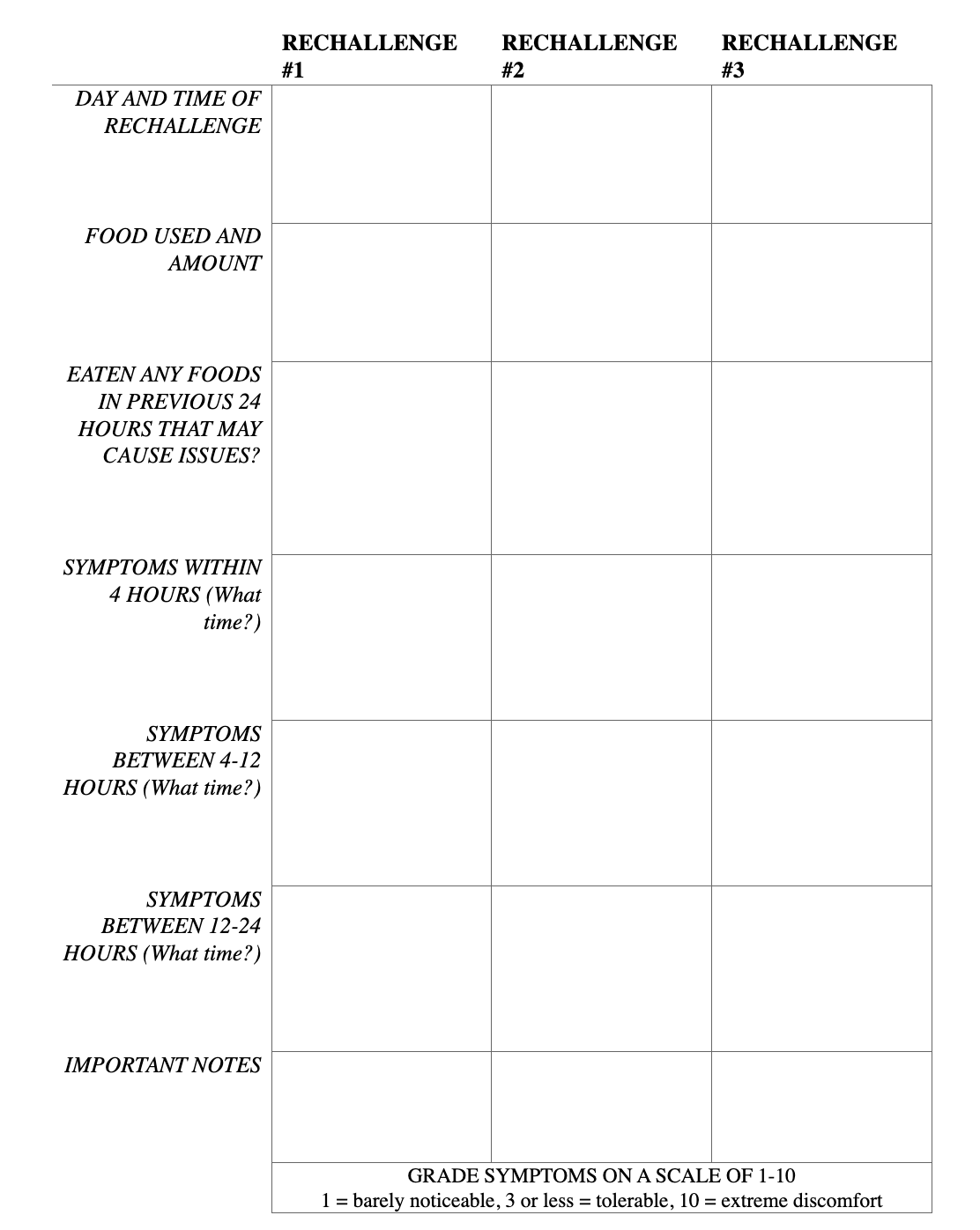


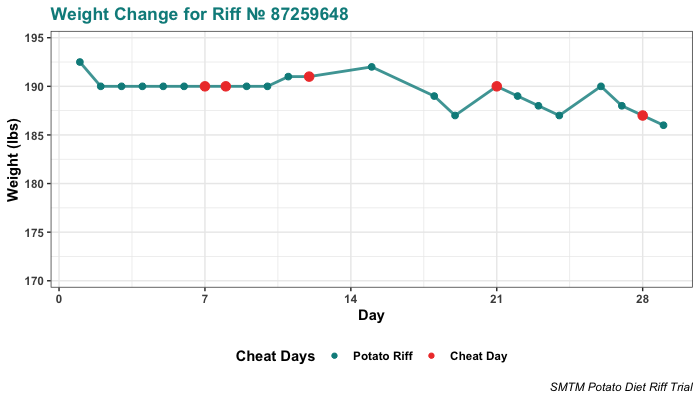
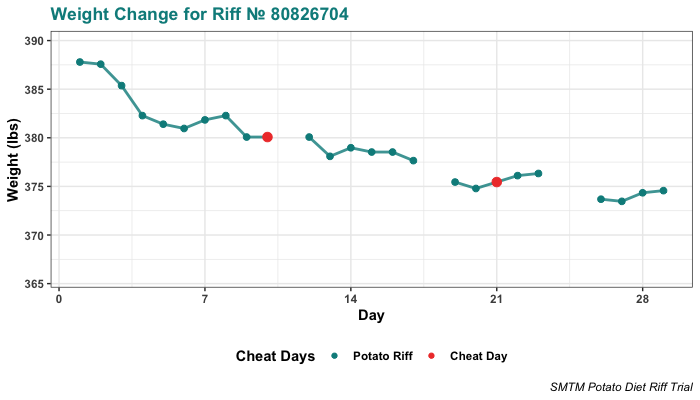
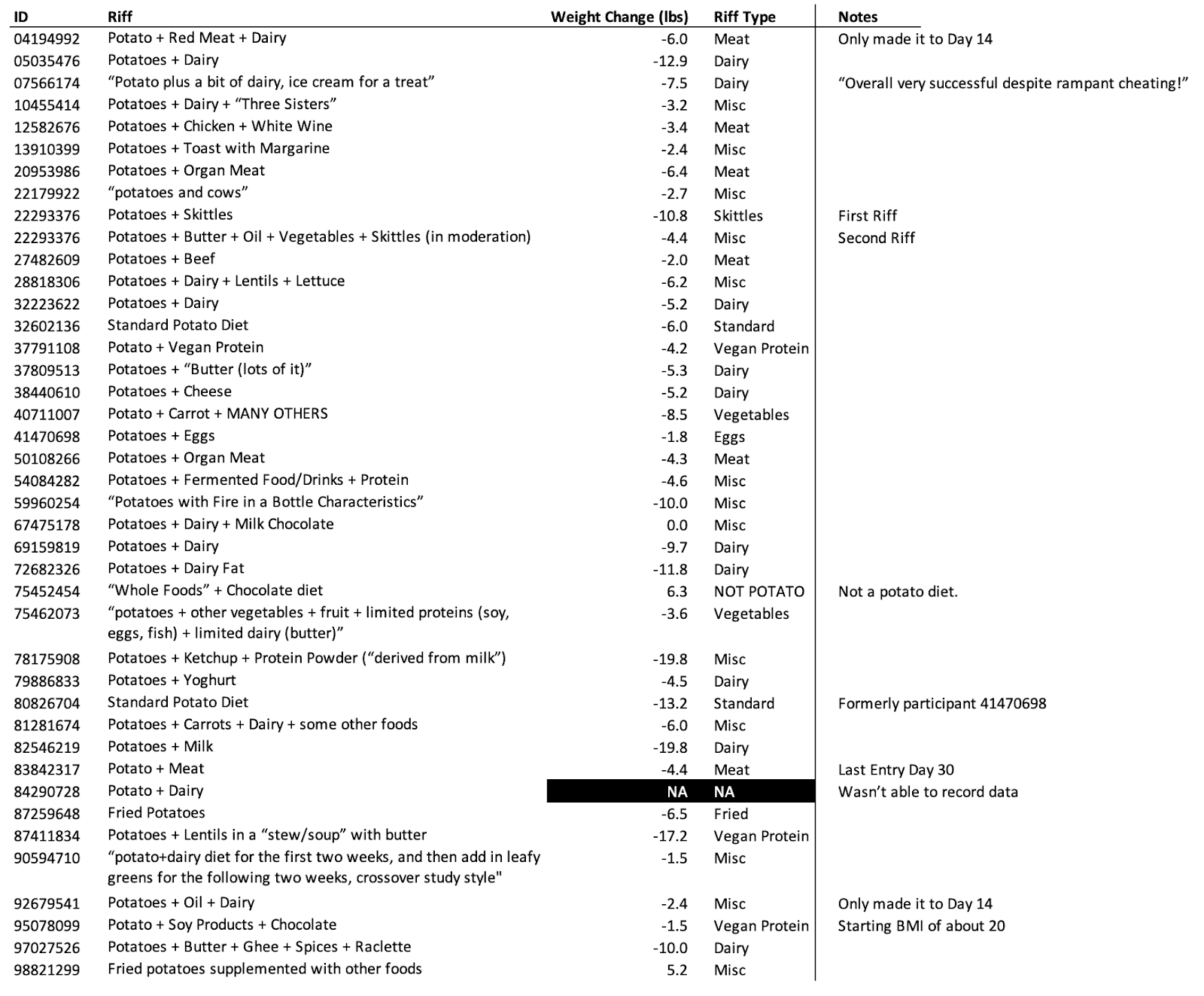
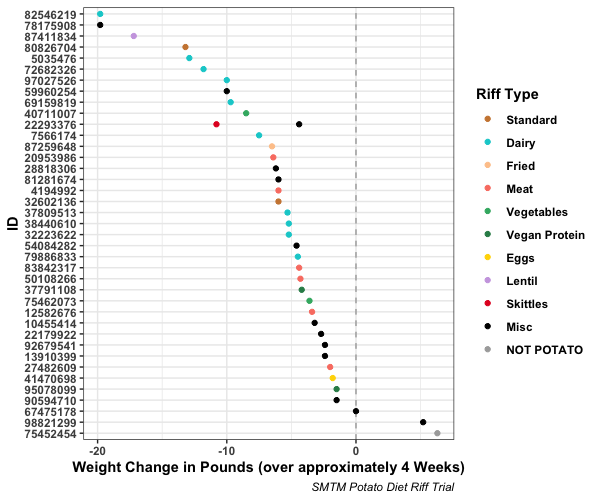
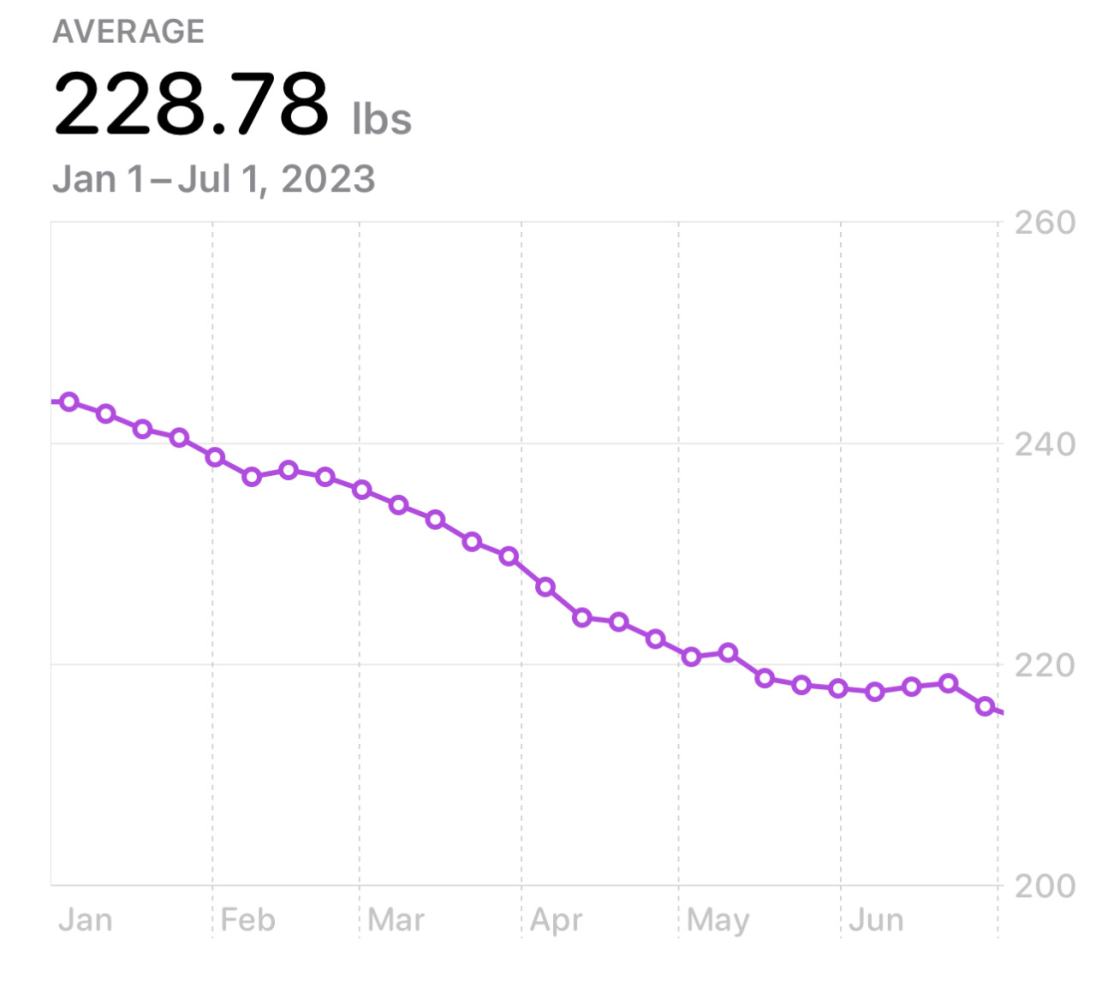

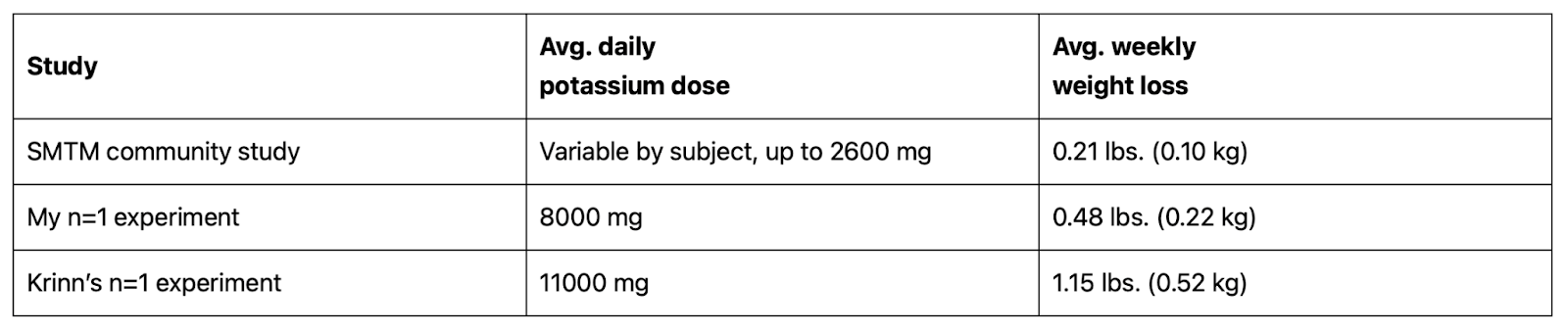
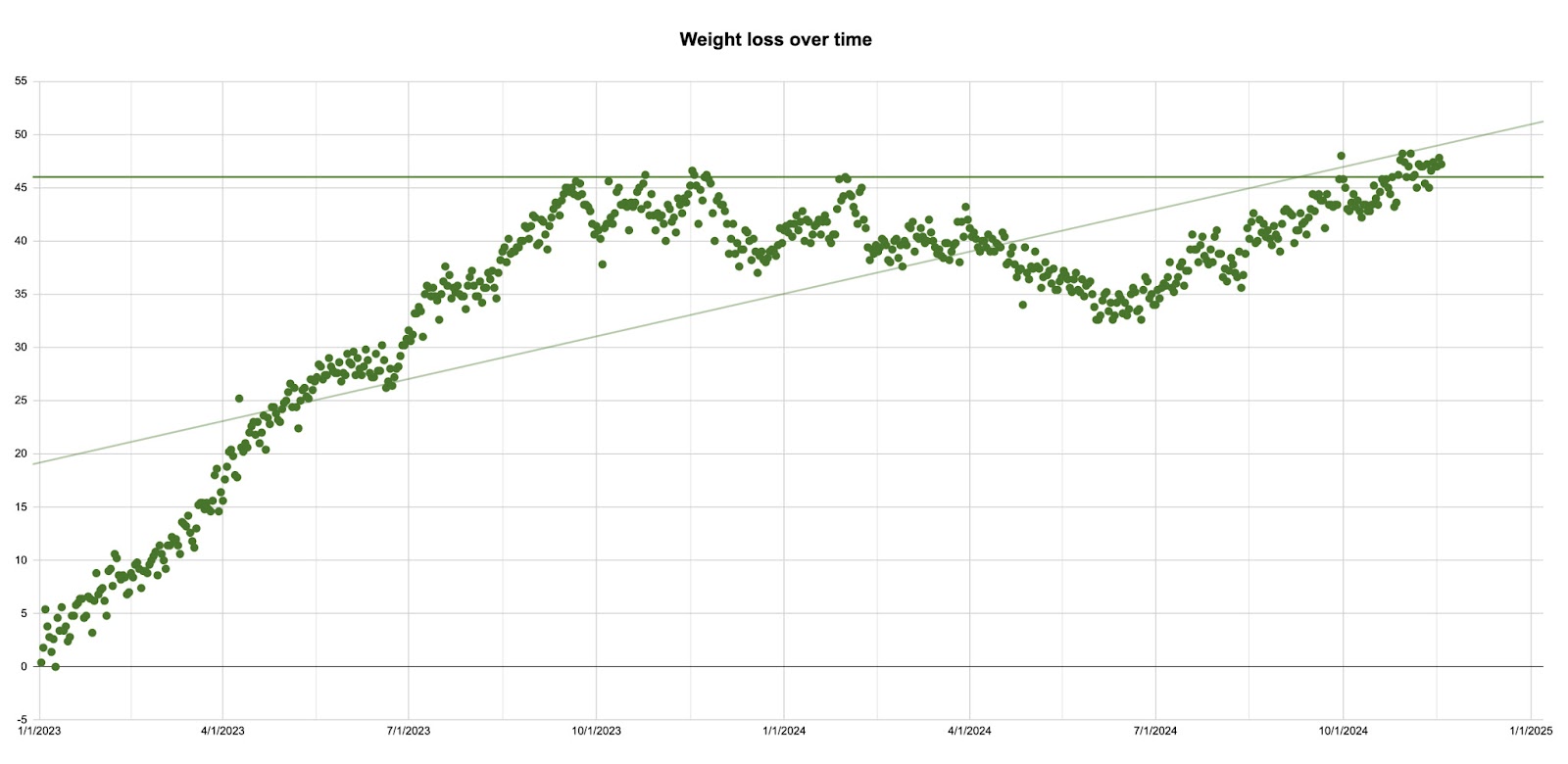
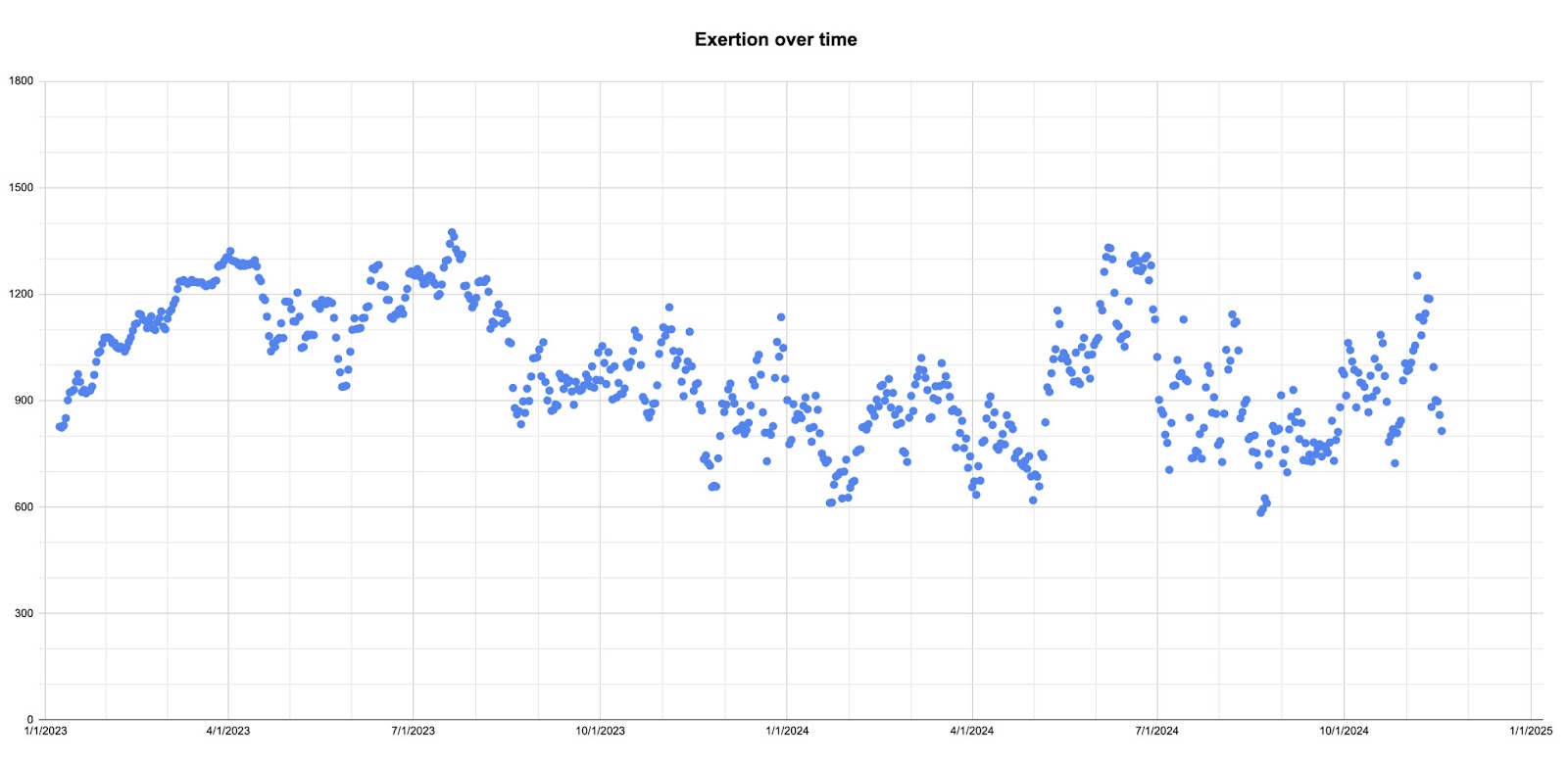
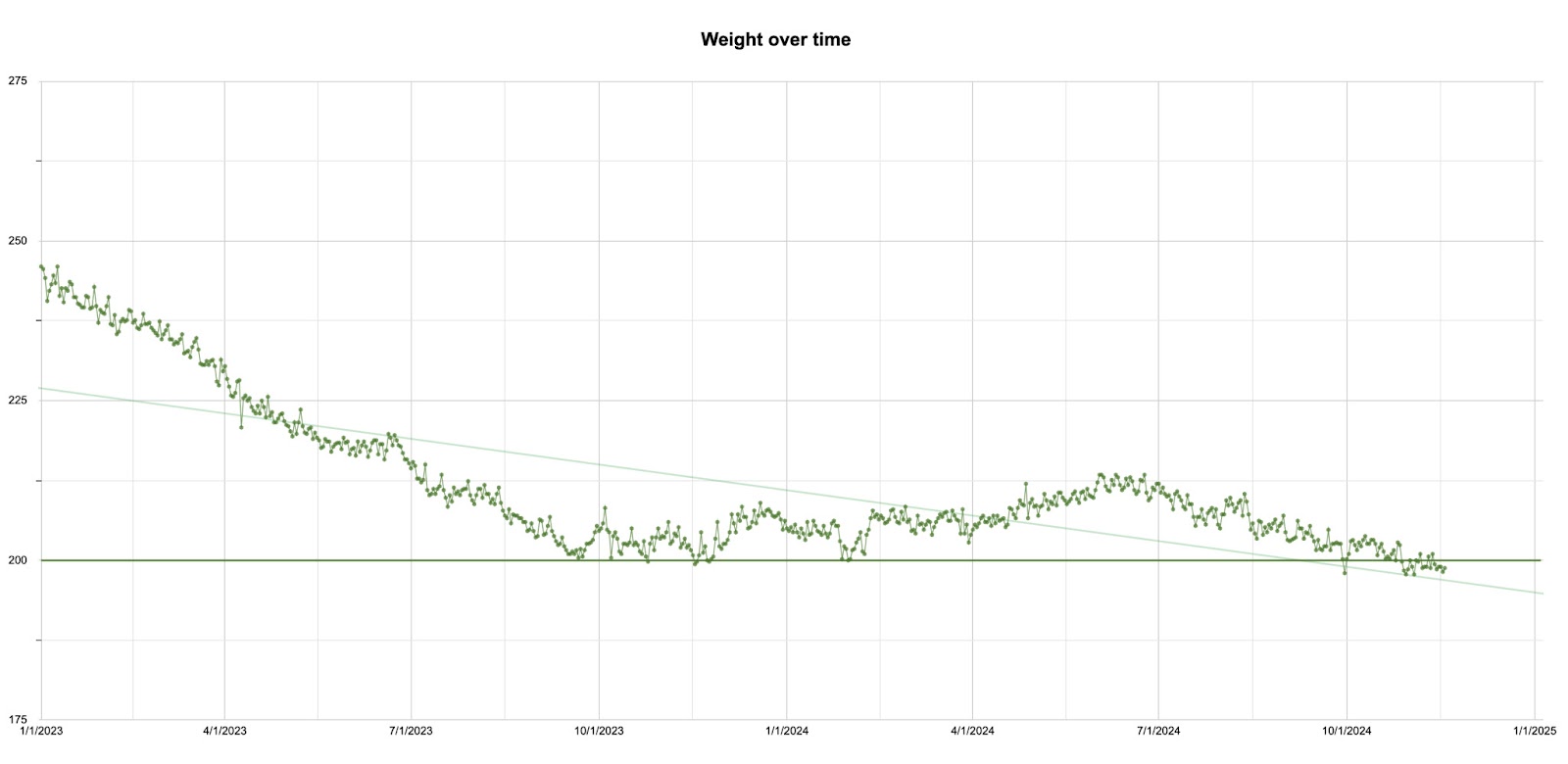

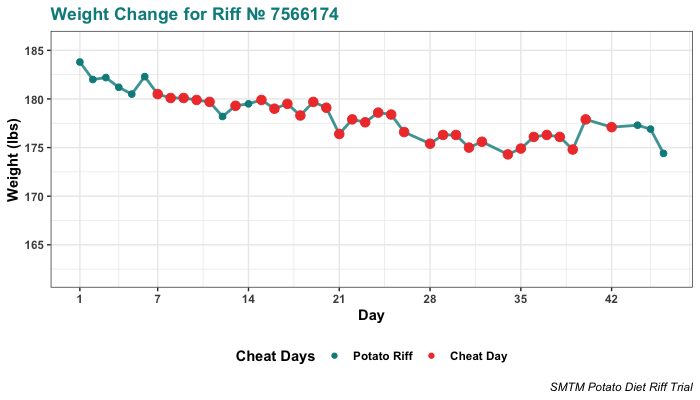
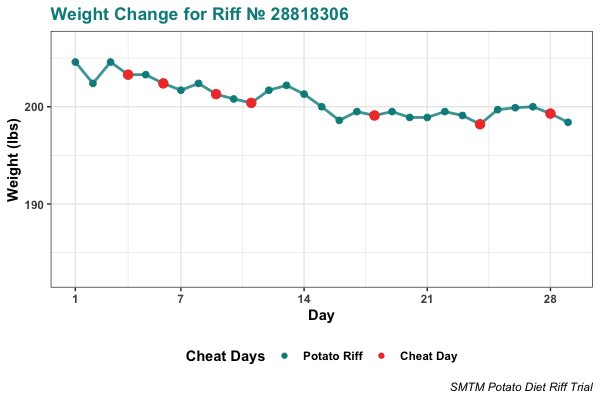

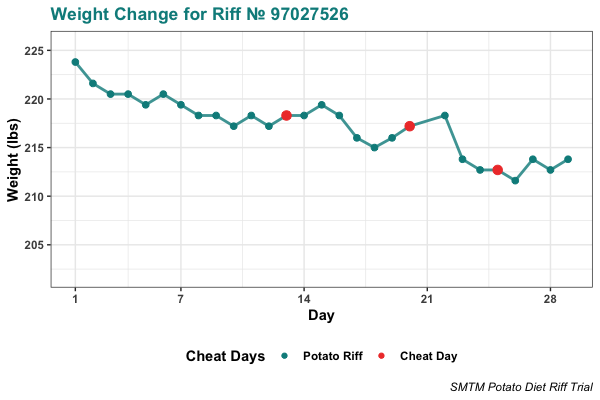


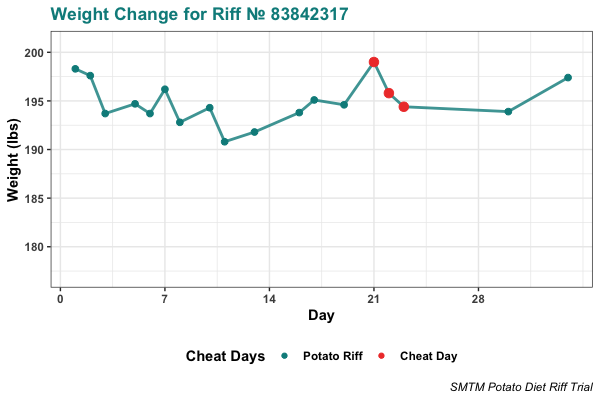

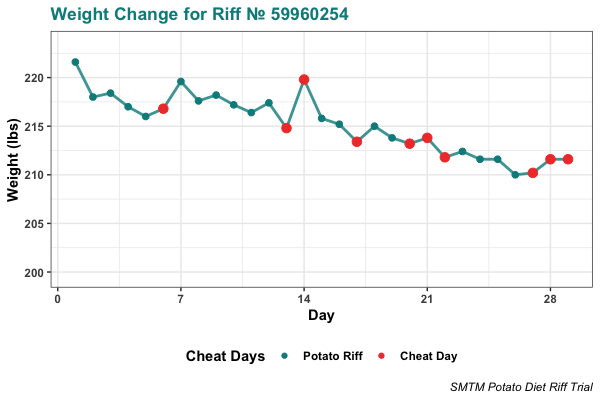
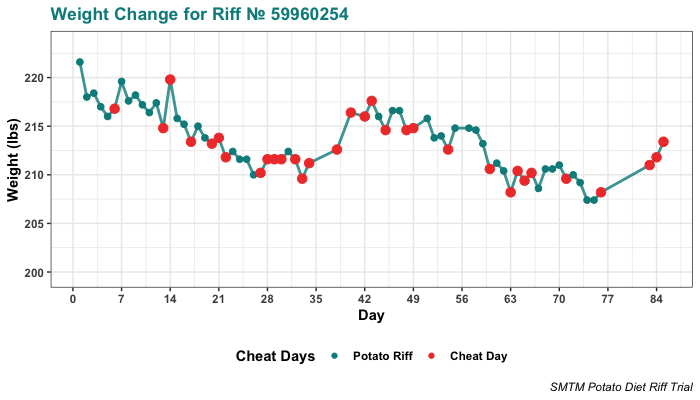
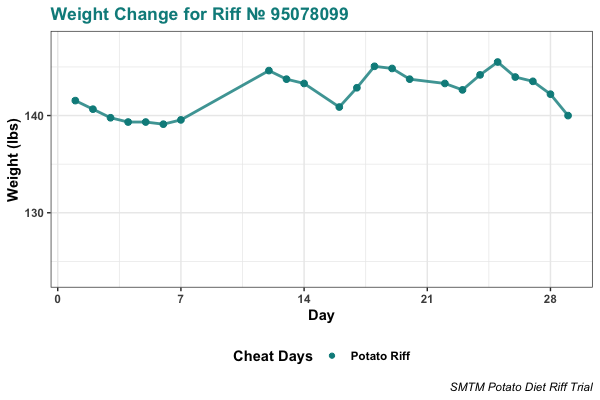


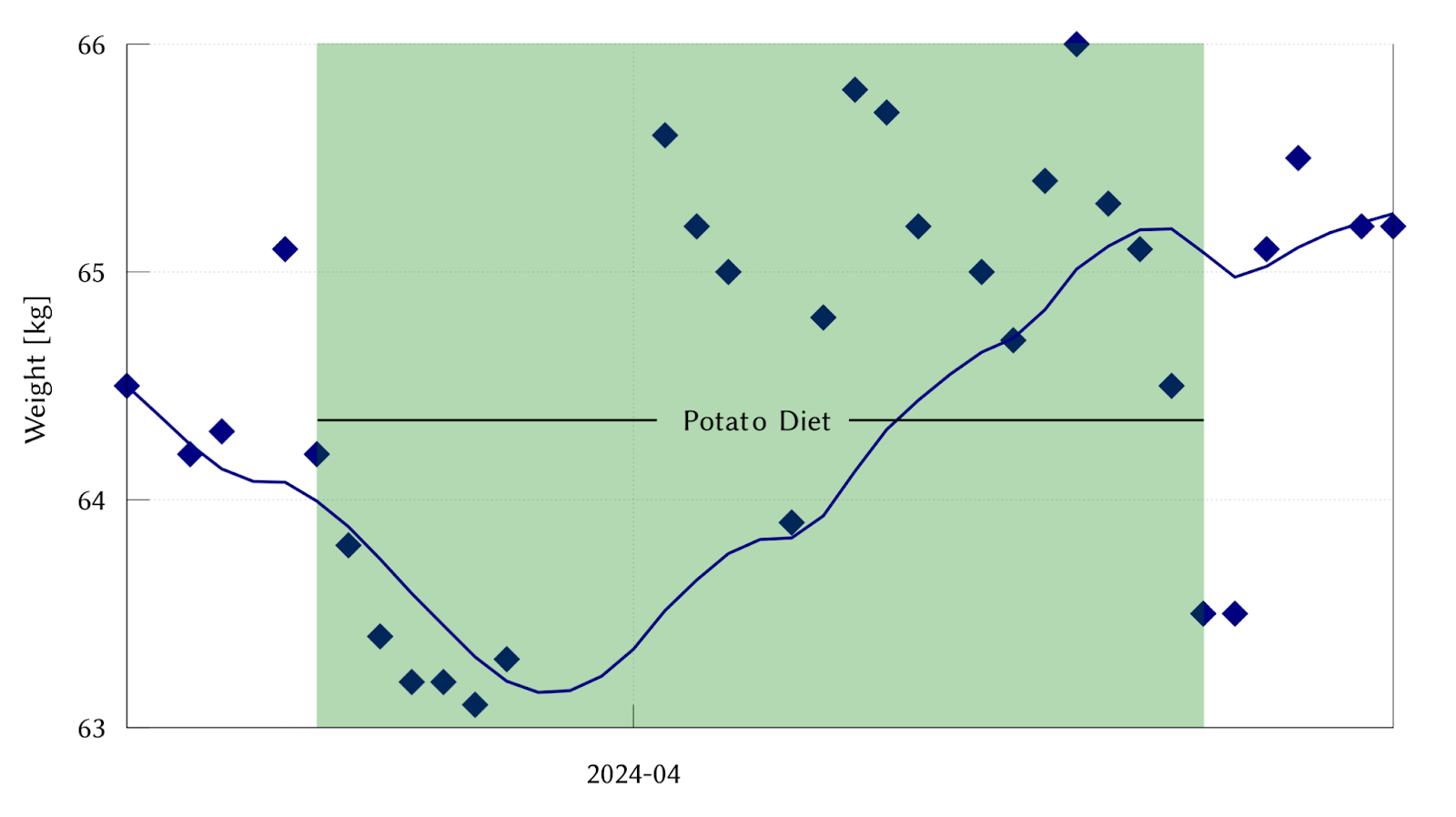


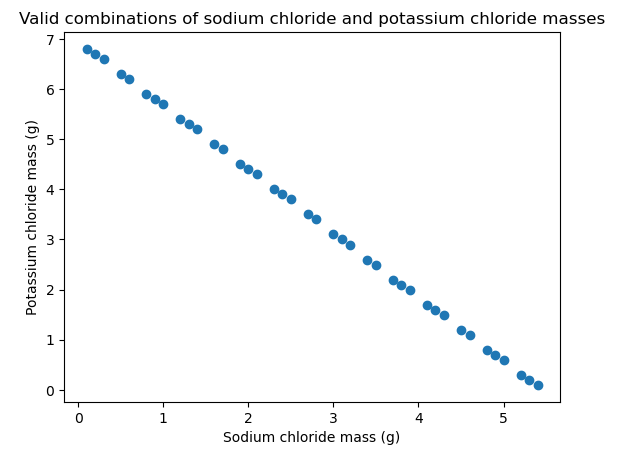


 SLIME MOLD TIME MOLD